Fabulous 5 days in Saudi Arabia: Riyadh, Jeddah

People ask me: “Why Riyadh? Why Saudi Arabia of all places?”
And honestly, it’s not such a straightforward answer. Riyadh was one of those destinations that kept popping up in conversations, social media, and occasionally elsewhere. Over time, it just stuck in my head. And one day, instead of overthinking it, I simply booked a flight. 


Practical considerations

1. Visa

The first step was to check the Saudi Arabia visa requirements. The official site, visitsaudi.com, is the place to start. In my case, I did need to apply for an e-visa, and the process couldn’t have been smoother. After filling out the form and making the payment, I received my e-visa within minutes, straight to my inbox. It’s a multiple-entry visa, valid for one year, and allows a maximum stay of 90 days.

2. Accomodation

My main objective was to find a hotel with a swimming pool/gym, as I wanted to combine sightseeing with some leisure time—especially given the heat in Riyadh at the end of September.

Here’s a serious tip—especially for women: double-check if the pool/gym is actually accessible to you. I found several hotels I really liked, but after digging deeper, I realized women weren’t allowed to use their pools/gym. Booking.com, which I normally use, does not provide this information. I was lucky to find out during my research related to Saudi Arabia. It is therefore important to check on the hotel’s website or directly with the hotel. Eventually, after what felt like a little search marathon, I found Aloft Olaya, which has dedicated gym and swimming hours for both men and women.

On top of it the hotel is close to the Blue Metro Line, which is the central one connecting most of the main attractions

3. Transportation

Metro: It is super modern and easy to use. All signs are in both Arabic and English, which makes it simple to navigate. There are vending machines to purchase tickets at each station. I purchased a 7-day card for 50 Saudi riyals and made full use of it. Check the metro website for details.

One thing that I, again, did not understand at first is that there are separate coaches for men and for families (women and children). It is important to check the signs above each door—see pictures. The first time, without knowing this, I started to walk into the men’s coach and was quickly pointed to the correct one.
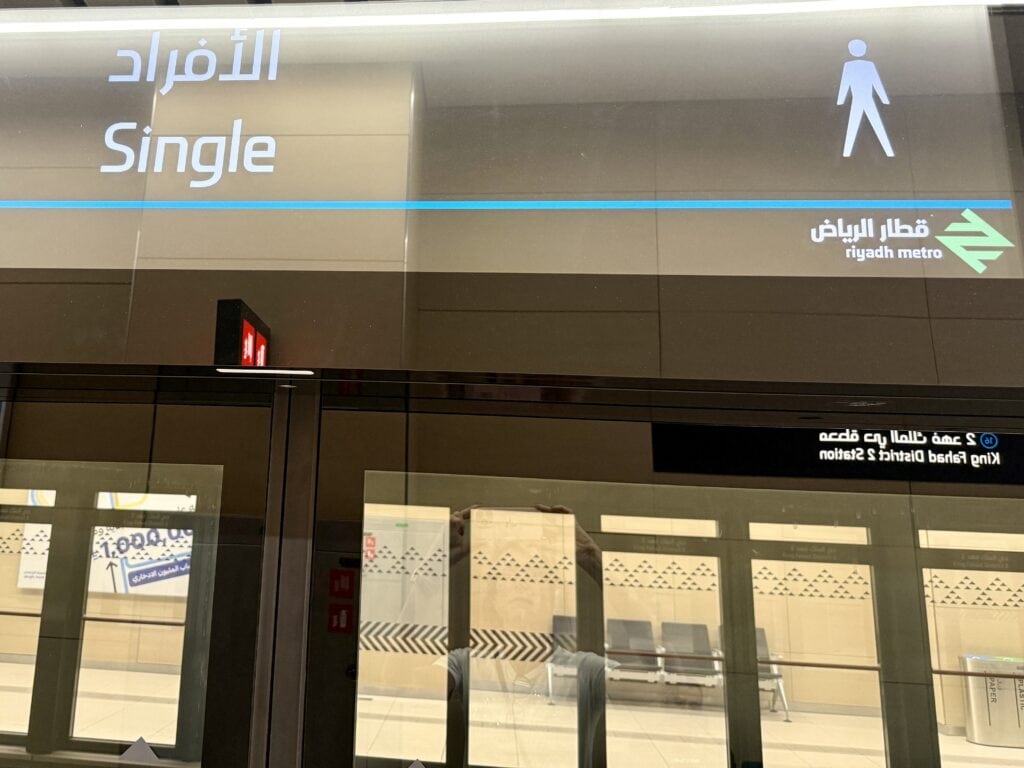
One useful tip: there are free-of-charge toilets available at the metro stations.

Uber or Bolt: Both are good alternatives to use, with Bolt generally being slightly cheaper than Uber but less available (I often received notifications that Bolt drivers were busy and I couldn’t book a ride).

4. Clothing

It was one of my biggest topics and concerns. From all the research I did, I understood that as a European woman, I can wear a full T-shirt and pants that cover my knees and most of my legs. No head cover needed. But I was still a bit afraid of whether my clothing would be acceptable. And it was. Even though the majority of local people dress according to their traditional dress code, they did not mind me, and I didn’t attract any unwanted attention. I also felt very welcome everywhere I went—coffee shops, restaurants, etc.

5. E-SIM card

As always, I went with an e-SIM from Airalo. Always works perfectly from the moment I land.


Day 1: Let the Exploration Begin

I landed in Riyadh late in the evening, so I just checked into the hotel. The next morning, I got up and started my explorations. Just to mention, it was the end of September, and the temperature at 8 a.m. was already around 30 °C. Also, it was Saturday, and I need to point out one thing — Friday and Saturday are the weekend days in Saudi Arabia. In fact, many places are closed on Friday mornings and reopen later in the afternoon.

King Fahad National Library

All my stops on the first day were along the Blue Metro Line. On my way to the King Fahad National Library metro stop, I found a coffee shop to have breakfast. At the same time, I looked at the King Fahad National Library — a large library complex and an interesting architectural structure.

Najd Oasis Walkway

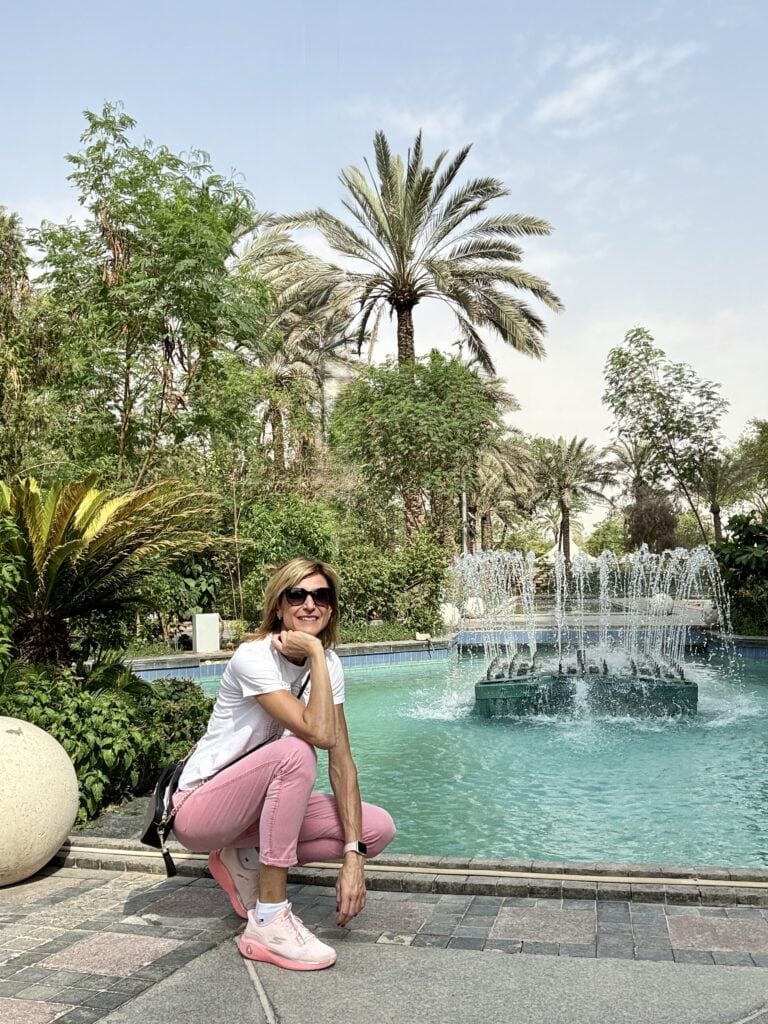
Next, I took continued to the STC metro station. Just around the corner from the station is Najd Oasis Walkway — a small green oasis in the middle of the city rush and heat. I walked around simply to enjoy a bit of nature.

Taibah Markets

After the walk and some picture-taking, I went back to STC Station and decided to visit Taibah Markets, located at the King Fahad District 2 metro station. It’s a large market complex with many shops and different goods. I quickly realized, however, that Saturday mornings are very quiet in Riyadh. Some of the small shops were open, but the place lacked the busy vibe I wanted to experience. So I decided it would be one of the places to come back to later.

Lunch break & swimming pool time

By the time I finished, it was around 11 a.m. — about the time to escape the heat and head to the hotel swimming pool. On the way back to the hotel, I stopped by a large shopping mall located right behind the King Fahad National Library and found Urt Coffee on the second floor. Since this coffee shop had come up several times during my research, I had to try it — and their iced cappuccino was absolutely delicious.

Kingdom Tower

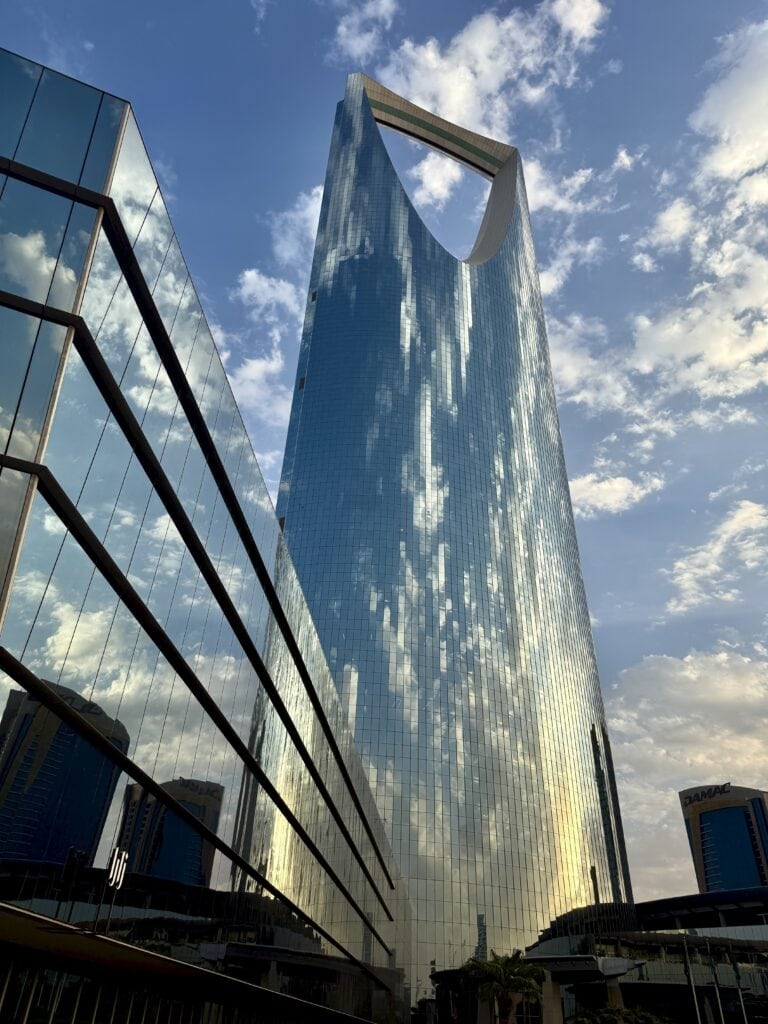
My next round of city walks started around 4 p.m., and this time I wanted to see one of the major city attractions — the Kingdom Tower and its Sky Bridge. The Kingdom Tower is located right next to the Al Urubah metro station, and it’s definitely not to be missed.

Finding the entrance to the Sky Bridge was a bit tricky. It’s actually located on the first floor of the Mamlaka Shopping Mall, which is attached to the Kingdom Tower. I had to ask around to find it. Eventually, I did — bought a ticket (it was about 140 SAR), took the elevator, and ended up in the skies. I was completely alone on the Sky Bridge, and it was a truly impressive experience. The view of the entire Riyadh is simply priceless.
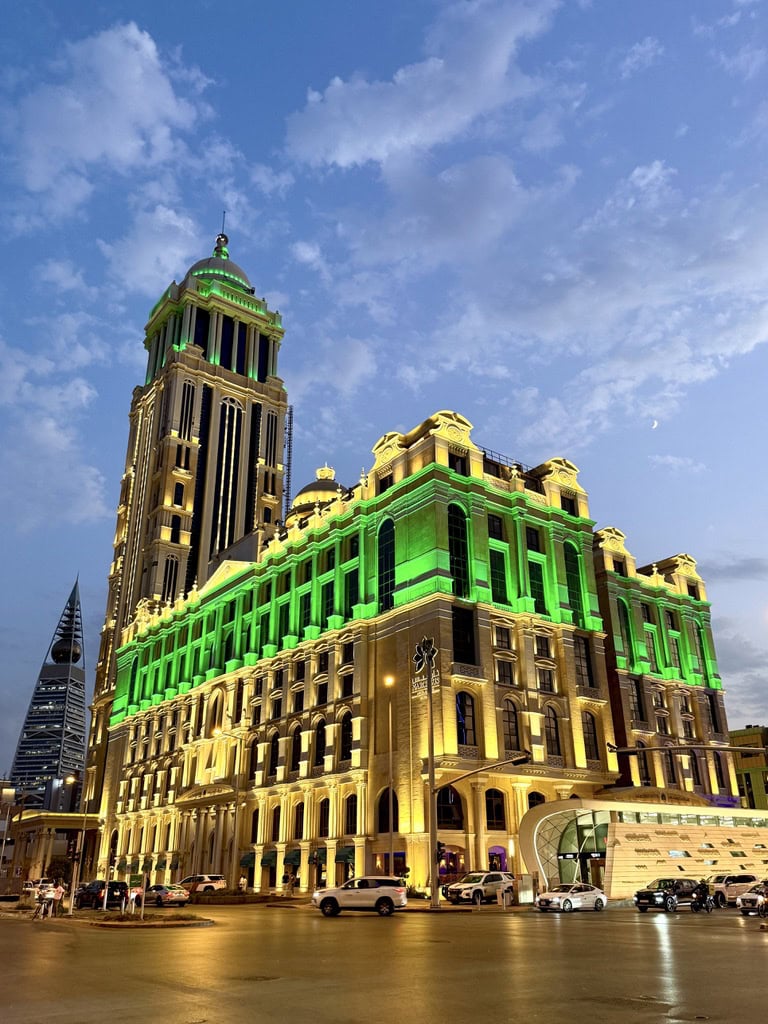
With that, I decided to start walking back alongside the metro line — just following the longOlaya Street, hoping to find a nice restaurant for dinner and to wrap up the day.

Day 2: Edge of the World

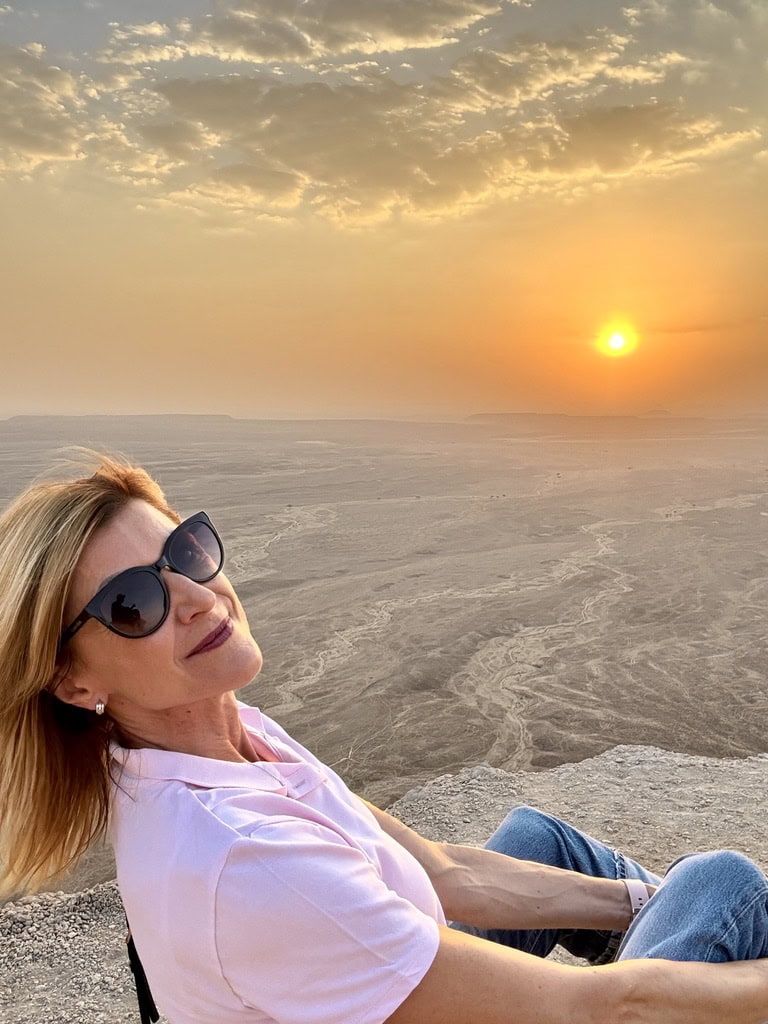
This is an absolute must-do trip. Located about 100 km from Riyadh, this place offers absolutely stunning views from 300-meter-high cliffs overlooking what used to be the ocean in ancient times. I did the tour with Riyadh Hiking.

The meeting point was right at a metro station (very convenient). We boarded a 4×4 vehicle and started the excursion. After a short stop to see camels and grab some refreshments, we reached the Edge of the World in about two hours. There, we climbed around, took lots of pictures, and watched the sunset. As the sun went down, we drove back to Riyadh. The company also offers the option to stay for an outdoor dinner at the site, but I didn’t opt for that.


Day 3: King Abdullah Financial District (KAFD), Murabba Palace, Al Masmak Fortress

Morning: KAFD

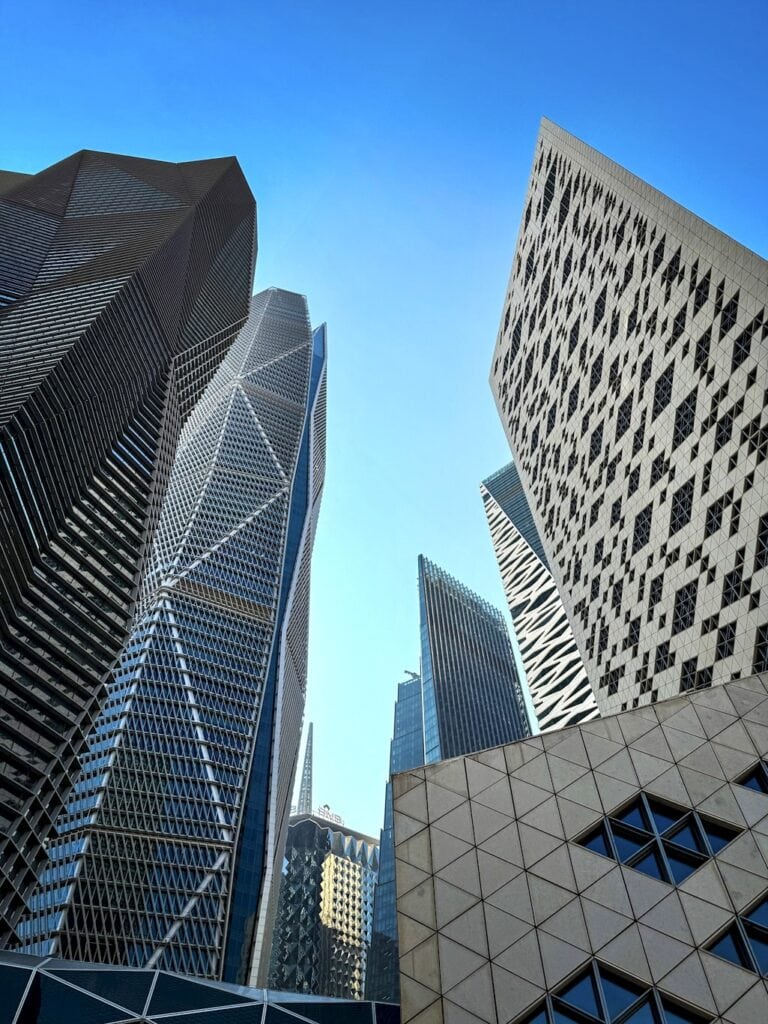
I started the day by taking the metro to the KAFD (King Abdullah Financial District) — the truly super modern business and lifestyle area in Riyadh. The key places to see are the Financial Plaza, KAFD Grand Mosque, and KAFD Conference Center. I simply walked around, sat down for a coffee, and eventually realized how easy it is to get lost among the skyscrapers (had to ask for some help at one point 😀.

Early evening: guided tour with Aziz

I was considering visiting Murabba Palace, Al Masmak Fortress and Souq Al Zal by myself until I found a guided tour — and signed up. It was the best decision. Aziz, the guide, was so knowledgeable and passionate about his job. I spent 3.5 hours walking with him, learning so many insights into local history and culture and seeing places I would have walked past without realizing their importance.

Murabba Palace

Established by King Abdulaziz Al Saud, the founder of the Kingdom of Saudi Arabia, who made it his family home in 1939. The palace is now open to the public and has 32 rooms divided over two floors, including receptions for the king’s guests and administrative offices for his aides and guards.

I should mention that close to Murabba Palace is the National Museum. It wasn’t part of our tour, and I didn’t visit it — but it might be something to add to the itinerary.

Al Masmak Fortress

The fortress was built in the 14th century and is now a symbol of heroism and the regaining of power. It has been turned into a museum (no entry fees) and showcases historical photographs and exhibits, including the story of the Battle of Riyadh in 1902.

Al Safat Square (also known as Chop-Chop Square)

This central square in Riyadh, located close to Al Masmak Fortress, is known as the place where people sentenced to death used to be publicly beheaded.
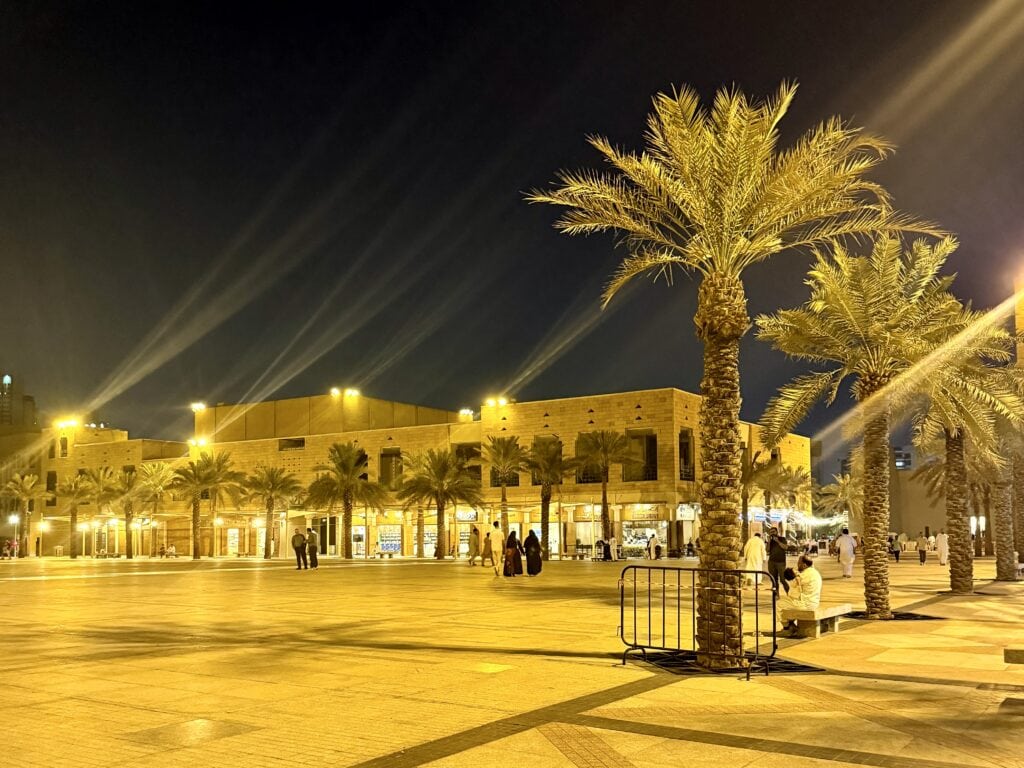
Chop Chop square, Riyadh
Souq Al Zal

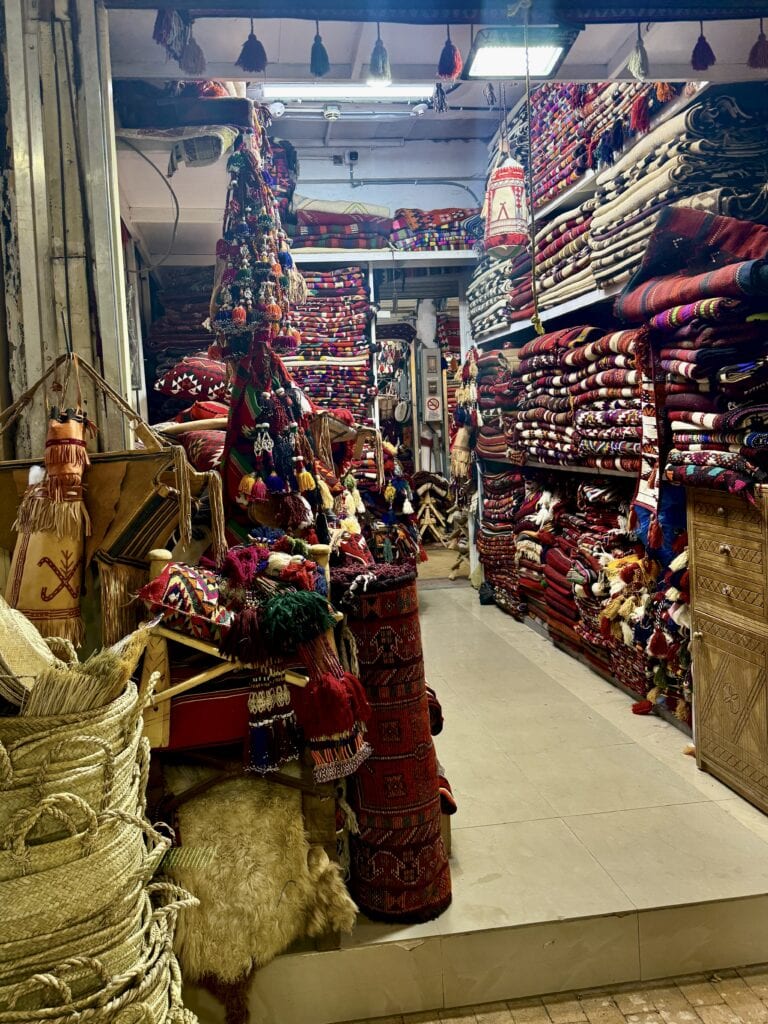
It is the oldest market in Riyadh, spreading across about 38,000 square meters. It’s filled with small shops selling traditional clothing, carpets, shoes, and perfumes. There is currently a project to move these traditional shops into a newly built market area next to the current one. I actually consider myself lucky to have seen the original setup.

Day 4: Day Trip to Jeddah

While being in Riyadh, I made the decision to catch a morning flight to visit Jeddah. There are regular, almost hourly flights between Riyadh and Jeddah, mostly with Flynas and Flyadeal, so it’s easy to book a ticket. My return flight was approximately 120 euros.

Morning: I landed in Jeddah around 9 a.m. I tried to book both Bolt and Uber, and it turned out Uber was the more reliable option. The first place to visit was Al-Balad, the historic city center.

Al-Balad

I wasn’t sure which street or square to enter when ordering the Uber from the airport, so I simply entered “Al-Balad.” I was dropped off on the main road, trying to orient myself, and later realized that the ideal place to start exploring Al-Balad is Al Dahab Square. There’s a city map and signs pointing to key landmarks there.

The other thing I wasn’t ready for was the combination of heat and humidity. As mentioned before, I visited at the end of September, and while wearing 3/4 pants and a T-shirt, I definitely felt the strain.

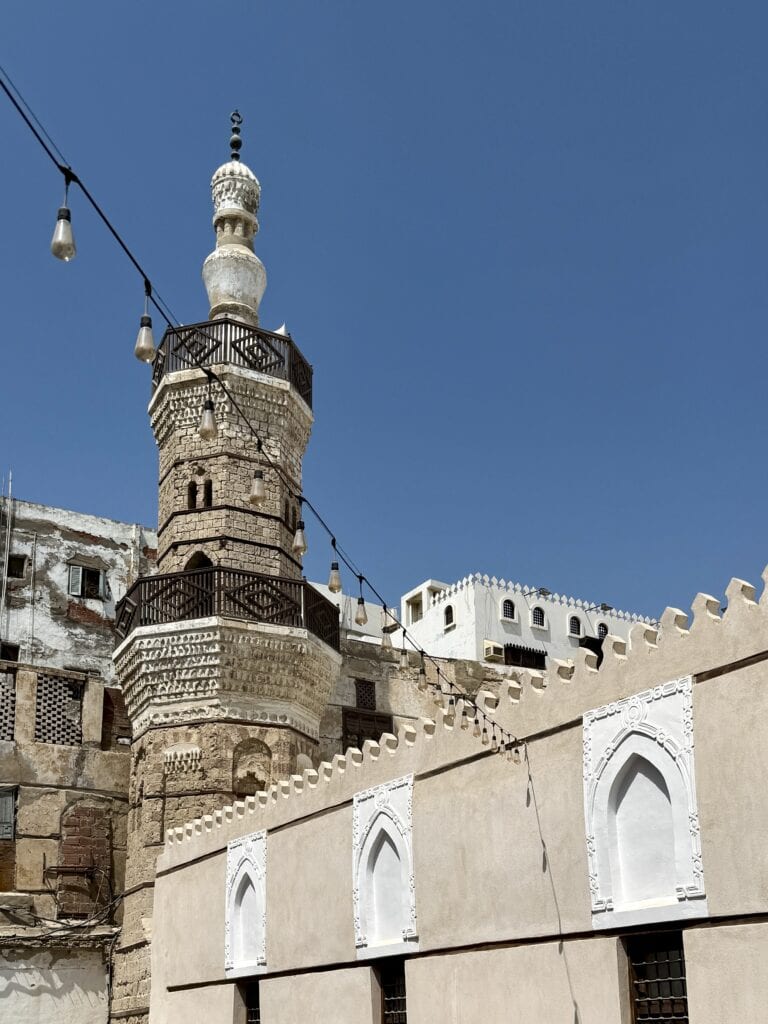
Al Shafei Mosque

Built in the 17th century, it’s considered the most important mosque in Jeddah. I only saw it from the outside, but there was a sign mentioning guided tours inside. However, participation requires wearing traditional women’s attire, including a covered head and face.

While walking through the narrow streets from Al Shafei Mosque, I got so hot that I was thrilled to find a small Noir Coffee Shop. It was cool inside, and I ordered an iced latte — just what I needed! The lady serving me was very kind and even offered me a printed map of Al-Balad.

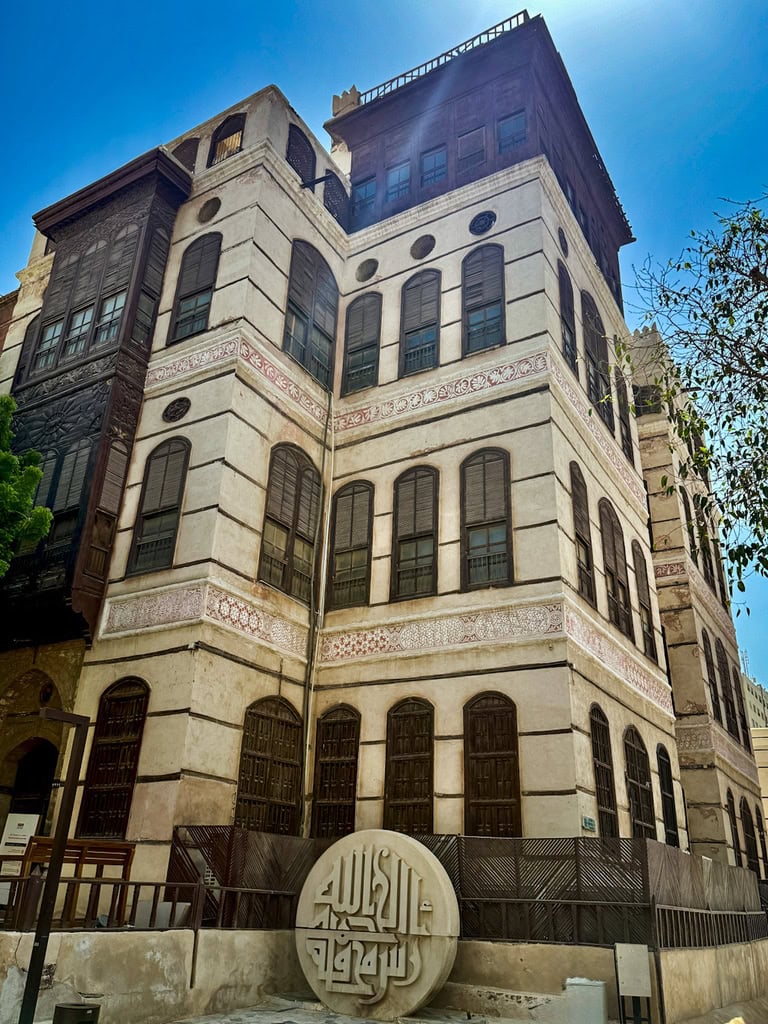
Nassif House Museum

Built in the 19th century for Omar Nasseef, a member of a wealthy merchant family and governor of Jeddah. It’s now a small museum open to the public, with no entrance fees.

One thing I quickly realized is that a lot of construction and renovation is taking place. It’s fantastic for the city, but it did slightly spoil the authentic charm of Al-Balad for now.

Local Shops

There are many local shops selling traditional goods and gold jewelry all along Al-Balad — perfect for browsing and soaking in the atmosphere.
Red Sea Corniche

Around lunchtime, I decided to leave Al-Balad and head to the Red Sea Corniche.

Fakieh Aquarium

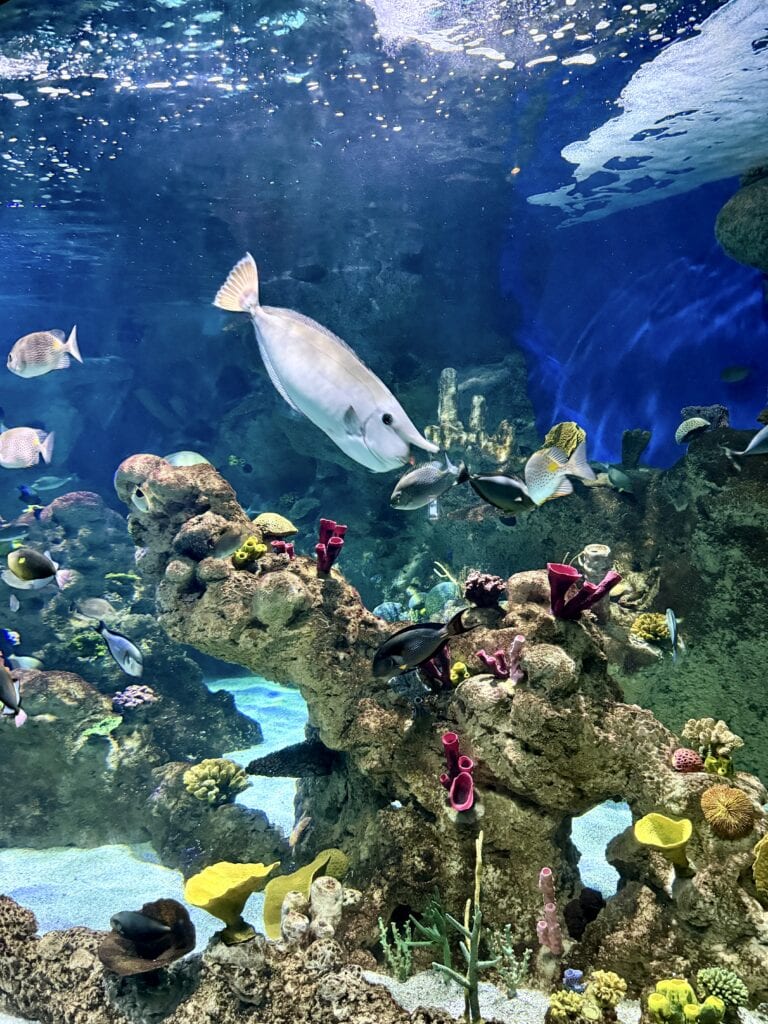
It took about 25 minutes by Uber to reach my next stop — the Fakieh Aquarium, currently the only aquarium in Saudi Arabia. I was almost the only visitor there — which was awesome! There are many tanks showcasing fish and marine life, and I especially enjoyed walking through the aquarium tunnel, watching small sharks and a big sea turtle glide above me.

Red Sea Promenade & Red Sea Mall

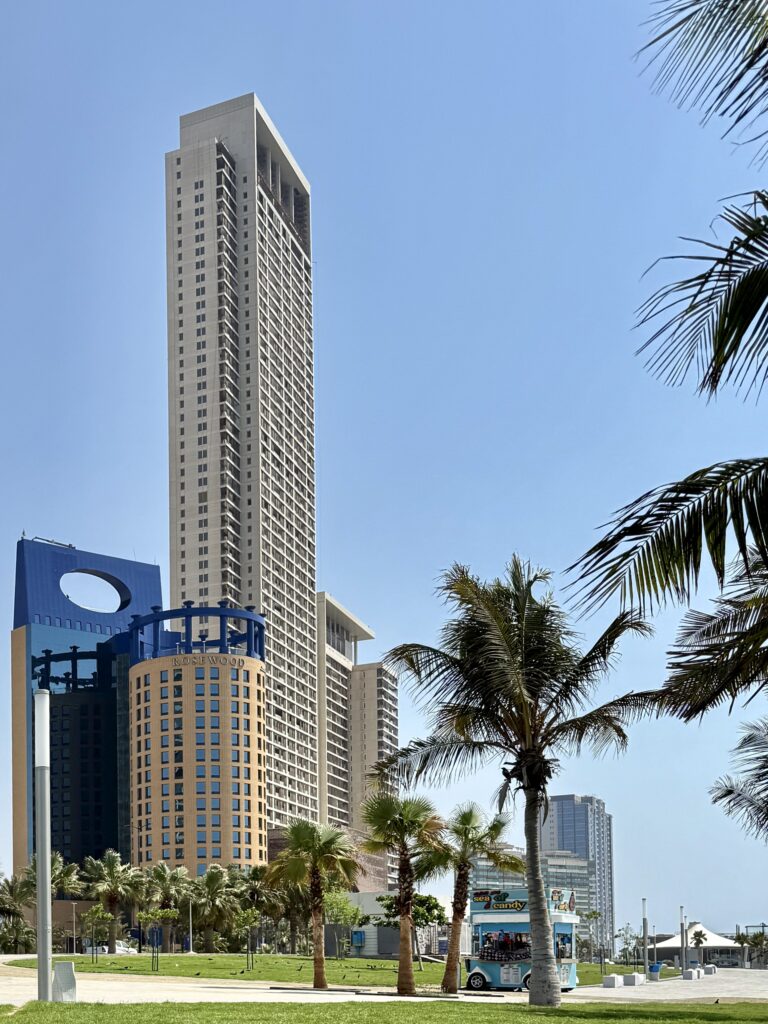
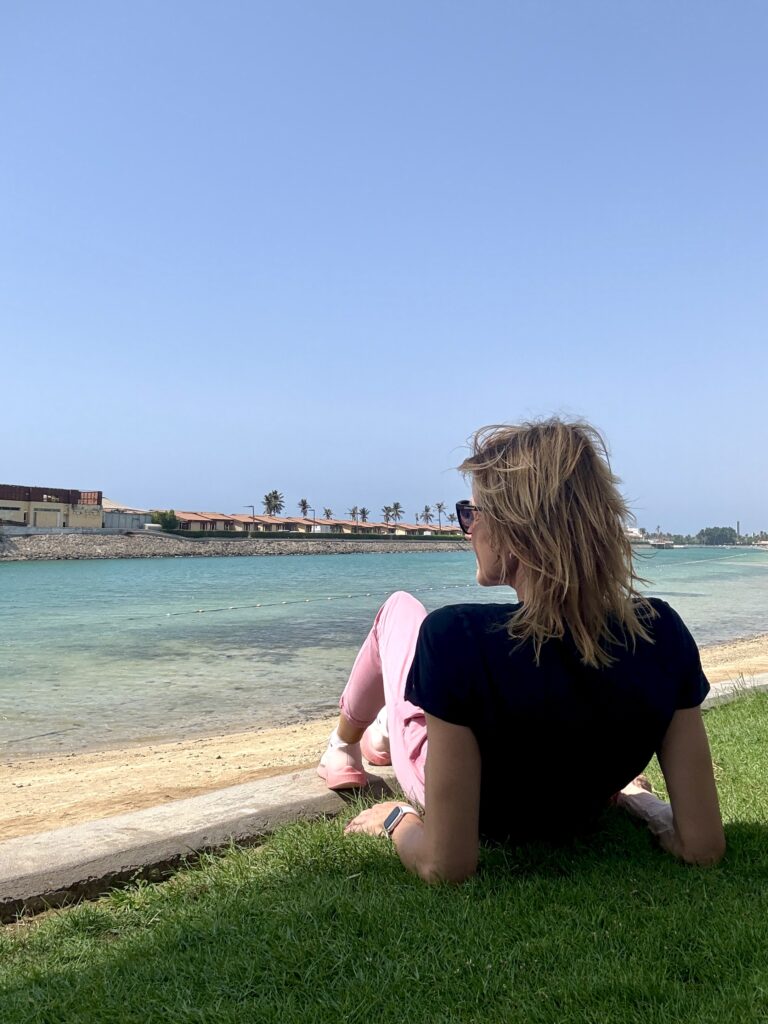
From the aquarium, I started walking along the Red Sea promenade toward the Red Sea Mall. I slightly underestimated both the heat and the distance between the two places. There was a pleasant sea breeze for a while, but eventually, it got too hot to continue. About halfway through, I called an Uber again to reach the mall.

It was the perfect place to cool down, sit in a coffee shop, enjoy a late lunch, and browse some shops.
Al Rahma Floating Mosque

This was the last place I wanted to visit. However, after realizing the distance from the Red Sea Mall and considering my flight schedule, I didn’t manage to see it. Well, perhaps a reason to return one day!

Returning to Riyadh in the evening, I took the metro back to my hotel. The Yellow Metro Line is located right at the terminal, and without luggage, it was very efficient.


Day 5: Diriyah

Often called the “birthplace” of the Kingdom of Saudi Arabia, Diriyah is a must-visit. It’s important to book a ticket online through the official website: https://www.diriyah.sa/en.

To book, I had to create an account on the website. I booked mine on the day of my visit, and it was free of charge. I received the ticket by email and added it to my Apple Wallet. My understanding is that I visited during the off-season, which is why entry was free. During the season, the ticket costs 50 SAR, which can be redeemed in one of the restaurants — but it’s best to check the latest details on their website.

I wasn’t entirely sure how to plan my visit, as there are several sections to explore. Luckily, I got advice from fellow travelers I met during the Edge of the World tour. So here’s how my evening visit went, considering that the key site, At-Turaif, opens at 5 p.m.

I took an Uber to the entrance of Bujairi Terrace, aiming to arrive around 5 p.m. (no metro stop nearby at this point). They checked my ticket and let me in. From Bujairi Terrace, I walked directly toward At-Turaif. The visitor center is located at the entrance, and local guides offer their services there. I decided to explore on my own, reading the information boards. Some stops also have QR codes that can be scanned to access an audio guide.

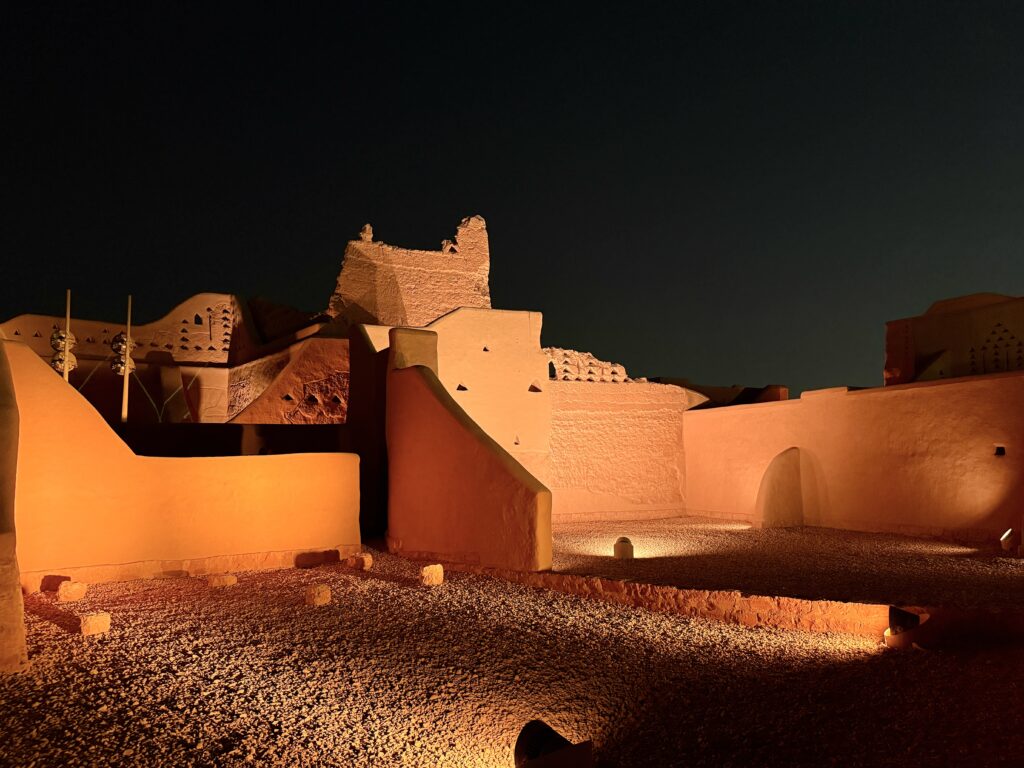
At-Turaif

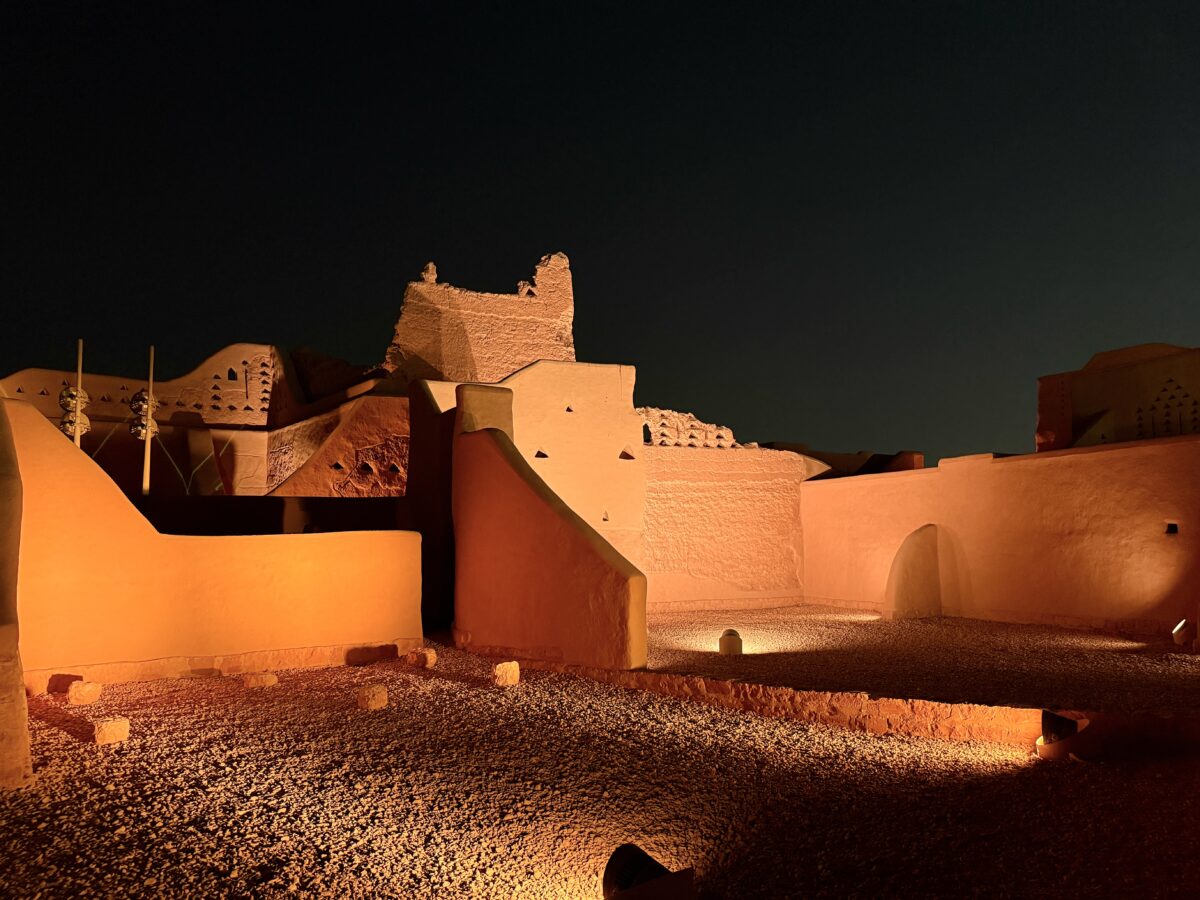
The original capital of the First Saudi State between 1727 and 1818, At-Turaif is now a UNESCO World Heritage Site.

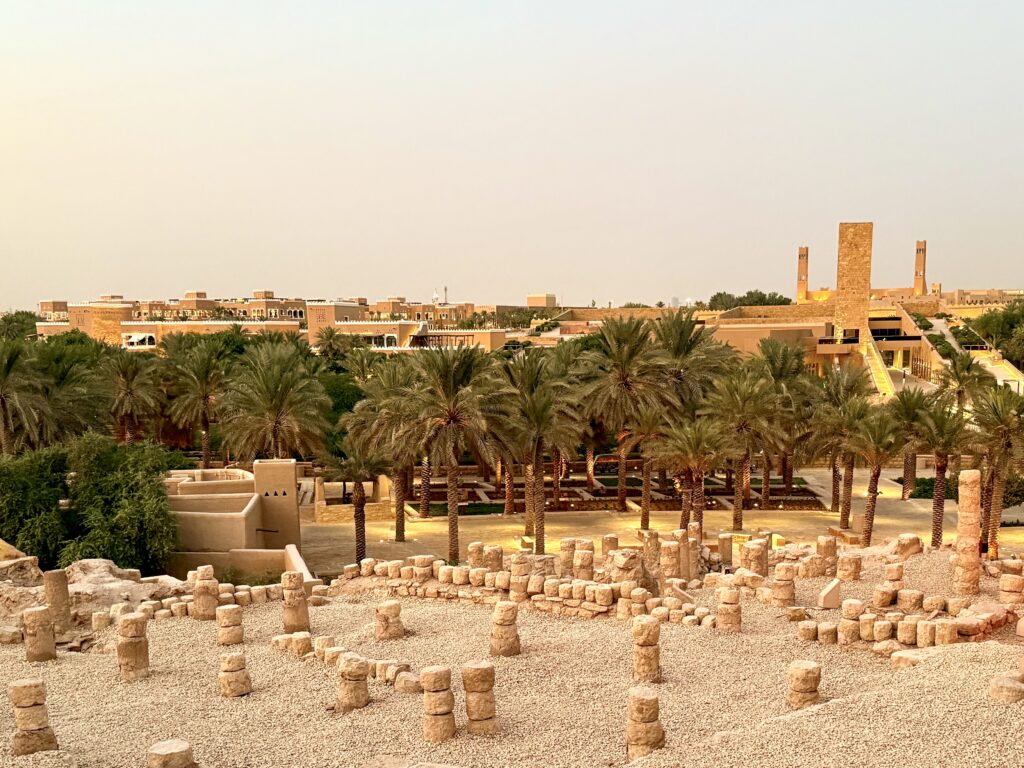
I spent about 1.5 hours wandering around the site and ended up near the entrance to Wadi Hanifa Park. Since it was already evening, I only walked through part of it before returning to the visitor center. I didn’t want to miss the interactive projection scheduled for 7 p.m. in English.

About 10 minutes before the show, they opened the staircase leading to the rooftop of the information center, where benches are set up for visitors to watch. It’s definitely worth including in your At-Turaif visit.

Bujairi Terrace

After the projection, I headed back to Bujairi Terrace to find a place for dinner. The truth is, the restaurants there are not cheap — but it’s part of the overall experience. Since I wasn’t in the mood for anything fancy, I found a smaller, simpler restaurant right at the entrance to the terrace.
And that’s how my time in Riyadh came to an end.

I should mention there were two places I wanted to explore but didn’t manage to:

  • World Boulevard: an entertainment district on the outskirts of Riyadh. It only opens for certain months of the year and was closed during my visit.
  • Diplomatic Quarter: with its parks and garden trails. I wanted to visit the Tuwaiq Garden, see the palace, and walk around the area.

Perhaps some other time! And if you’ve made it to the end of this blog — I wish you a wonderful stay in Saudi Arabia. 
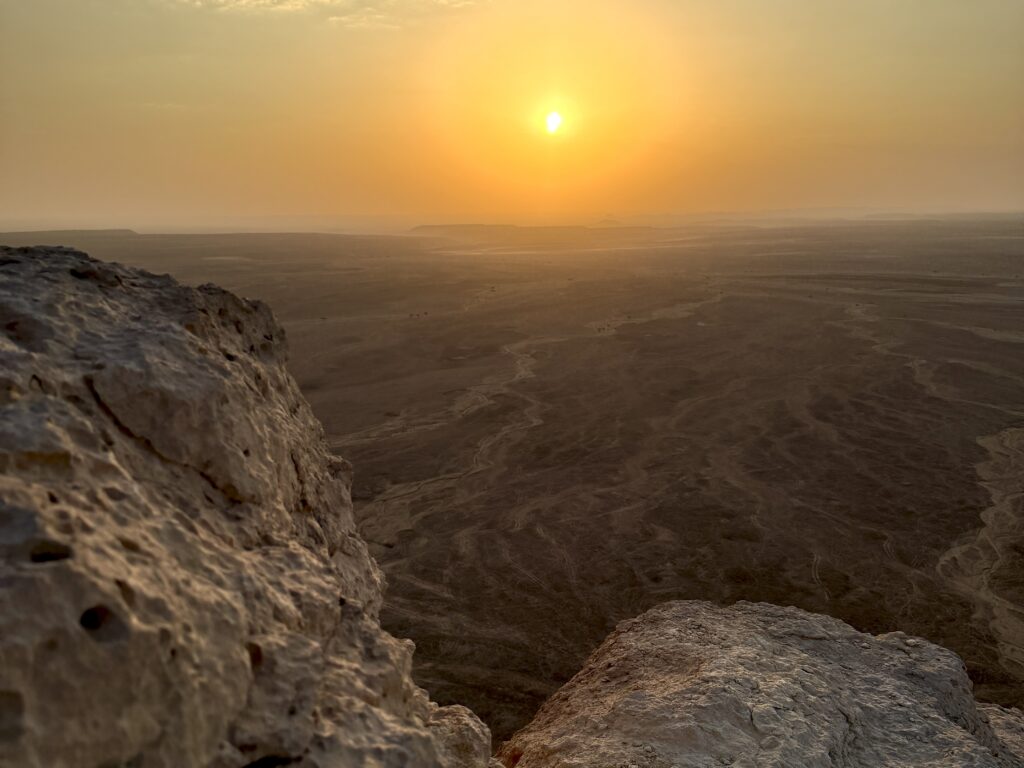

Sunset over The Edge of the World, Saudi Arabia

Enlightening 8-Days Road Trip to Israel 🇮🇱

The decision to go on a road trip to Israel arose while searching for an easily accessible and COVID-regulation-free country in 2022. Our road trip was purely tourist-oriented; it doesn’t adhere to the footsteps of any specific religion. As a result, there may be places we miss that hold significance for certain people. I am pleased that we managed to explore this culturally unique country and I am very hopeful that travel will be possible again shortly.

Practical Insights:

As usual, I checked the visa requirements and found that we do not need to worry. However, it depends on the country of your origin and the passport you hold.

Arrival to Israel:

Upon presenting our passports, we received a printed card instead of a stamp. This card is crucial to keep, as we needed it when checking in at the accommodation and when leaving the country.

Currency:

The currency is the Israeli New Shekel, with an exchange rate of about 1 USD = 3.7 ILS (Dec 2023). ATMs are easily accessible, I recommended to keep some cash. We used it f.e. to pay for parking outside Tel Aviv. But in the majority of the places I paid with my card.

Driving:

Driving around Israel is not difficult; the roads are in good condition, and drivers generally obey the rules. In big towns, drivers can be slightly more aggressive, and honking is a “cultural” habit. It’s recommended to use Waze navigation, which displays speed limits. As always, my recommendation is to drive defensively and let the locals pass by. It is your holiday at the end. 

Petrol Stations:

Finding a petrol station is easy. The challenge is that there are often “fuelmats”, and you can get fuel only by working with the machine, which preauthorizes your card and manages the payment after you finish. It is an easy process until the moment all instructions are written in Hebrew. Fortunately, I have always found someone to assist. 

Parking:

Parking in Israel can be difficult, especially in big cities like Tel Aviv or Jerusalem. There are paid parking areas, but it will cost you. I really recommend everyone to choose accommodation with private and guaranteed parking space. Many hotels will offer parking but they have only limited amount of spots. Therefore I always check customer reviews related to parking when choosing accomodation.

Shabbat:

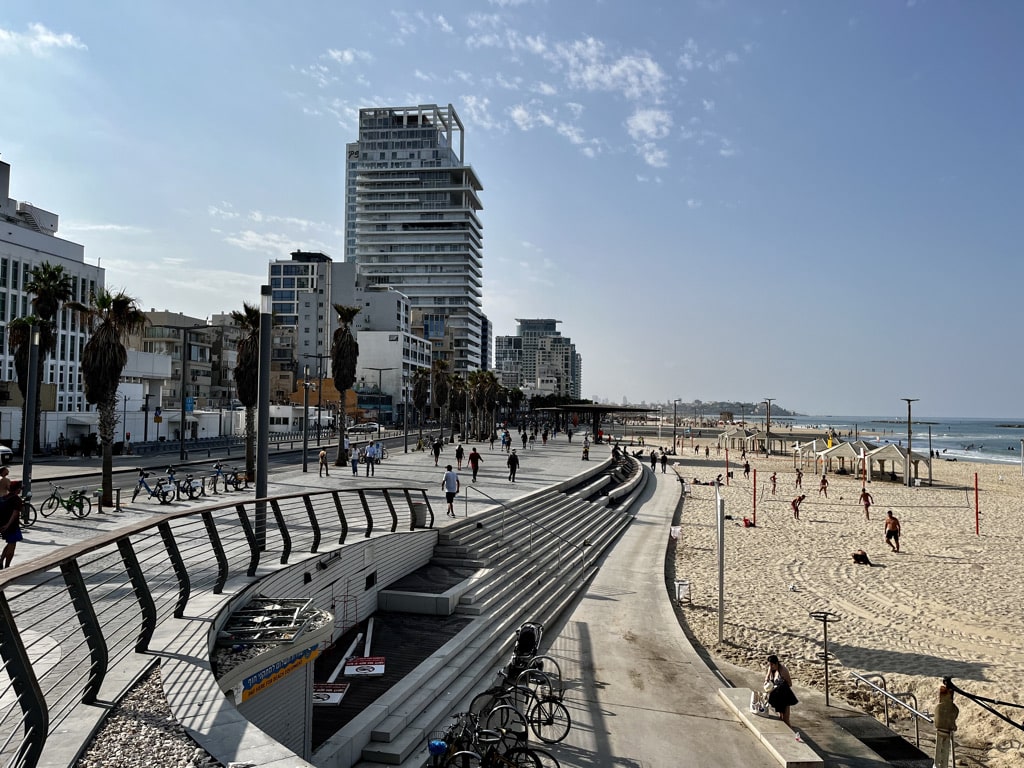
The Israeli Day of Rest starts on Friday afternoon and continues until Saturday evening. Tel Aviv’s Shabbat differs from Jerusalem; shops are closed in Tel Aviv on Saturday, but the Jaffa beachfront remains lively. Jerusalem is more conservative, with more closed businesses. However, the Arab community’s businesses in Jerusalem remain open. It’s better to be prepared and assume that Saturday is a quiet day.

Mobile Data:

For mobile data, I recommend using the Airalo app, which allows you to download a data e-SIM card for countries worldwide. It’s easy and hassle-free. I activate the data e-SIM in my phone settings upon arrival and I have instant access to the internet. 


Day 1: Tel Aviv – Jaffa

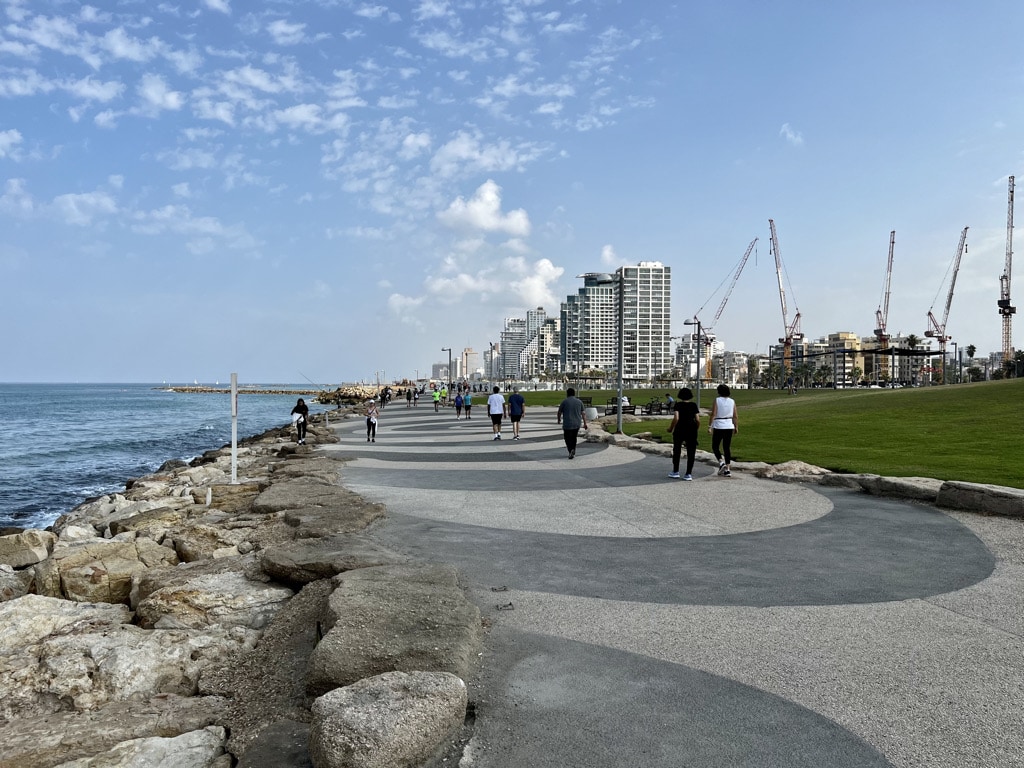
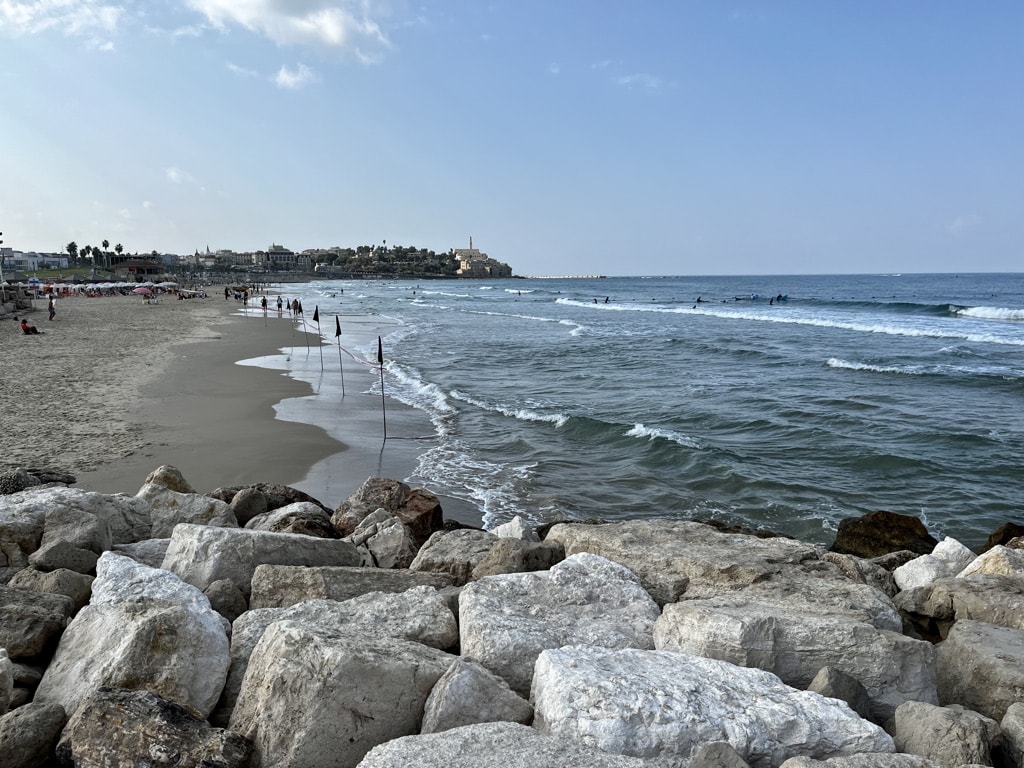
Upon our early morning arrival in Tel Aviv and completion of immigration procedures, we took a taxi to our hotel. I selected the Embassy Hotel Tel Aviv, with 24-hour reception located in very close proximity to the beach. After we woke up, our day started with a walk along the 7km beach promenade, extending all the way to Old Jaffa. It is a favorite among both locals and tourists, providing a great place to enjoy beach activities.

Old Jaffa:

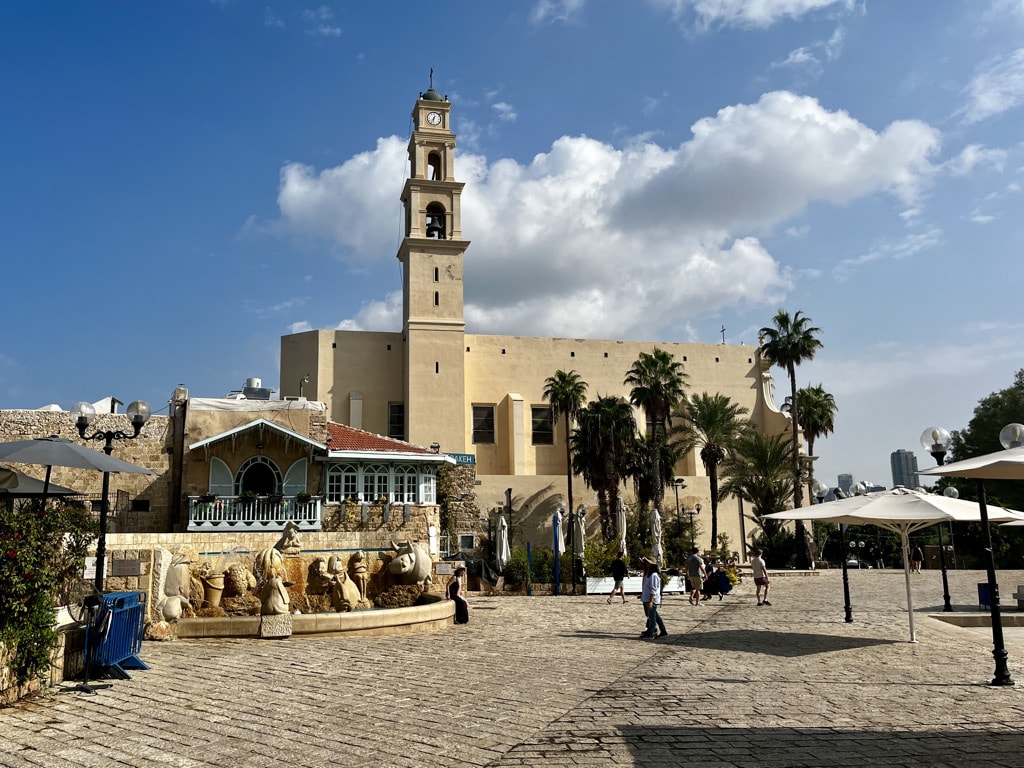
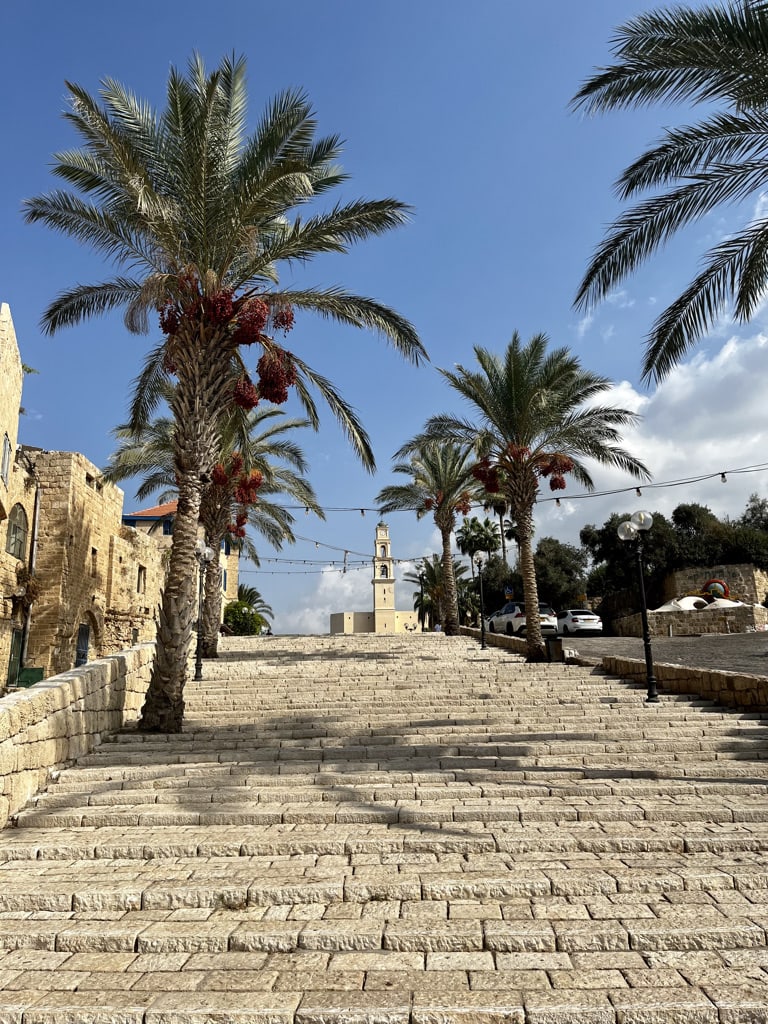
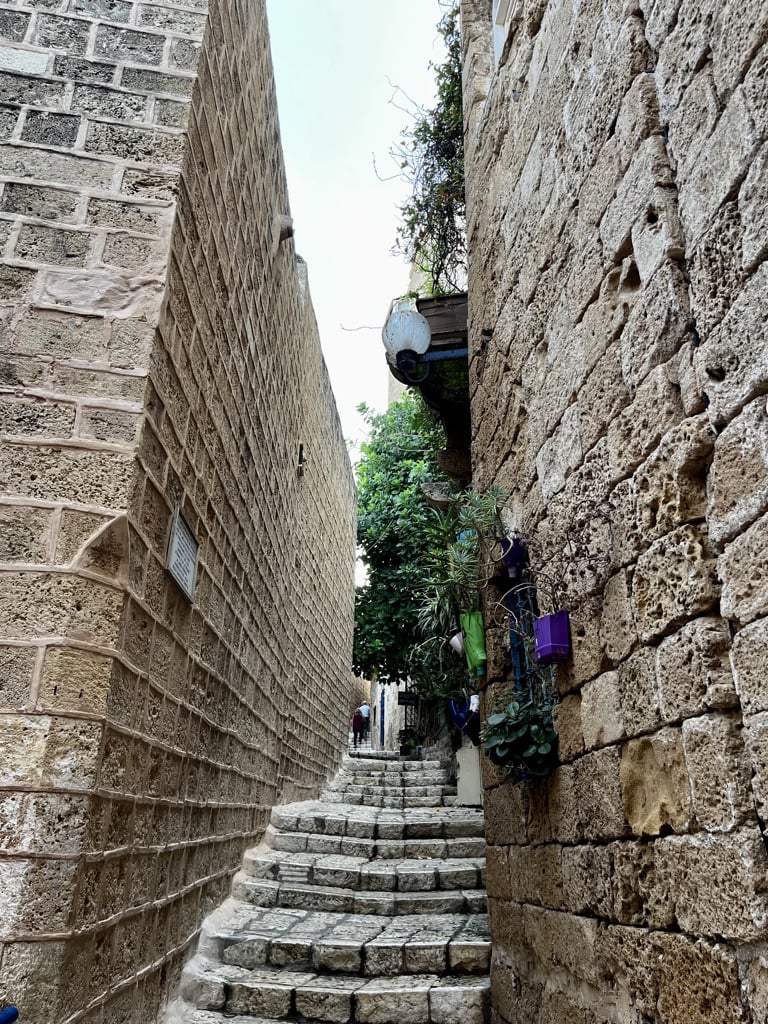
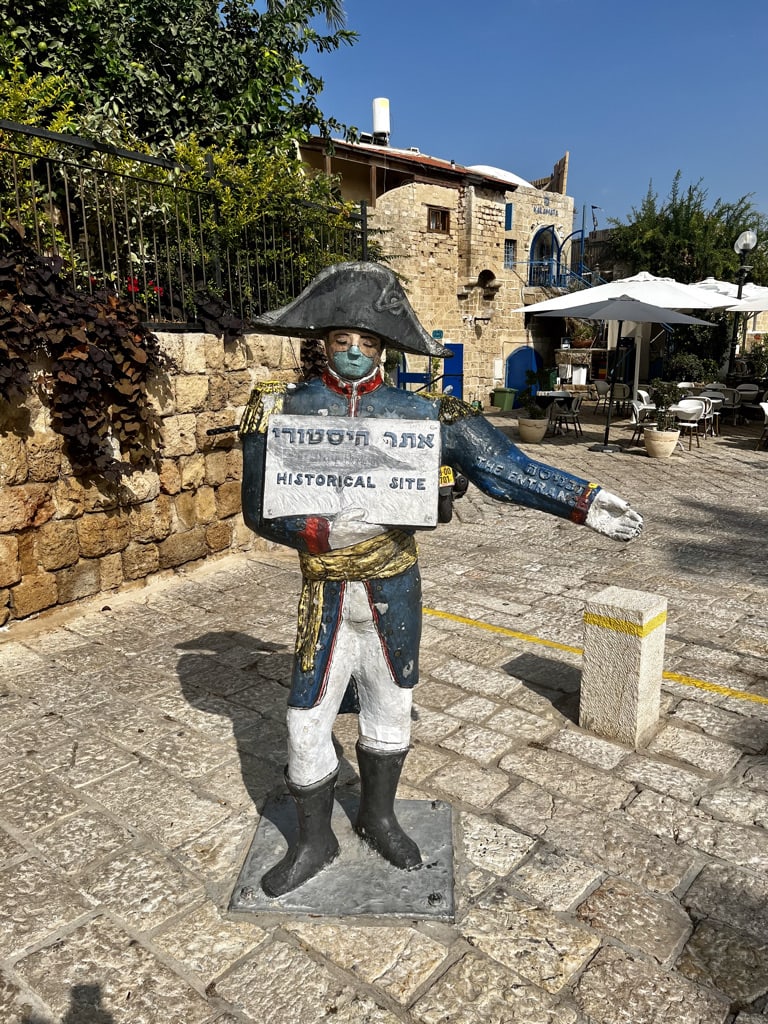
Jaffa is one of the oldest ports in the world, with a history dating back thousands of years. It is mentioned in various ancient texts, including the Bible. Stepping into Old Jaffa takes you to a different era compared to modern Tel Aviv. We walked past ancient houses, passing by galleries, and small shops. The main square is dominated by the Clock Tower. There were seven Clock Towers constructed in Ottoman Palestine. The additional towers are placed in Safed, Acre, Nazareth, Haifa, and Nablus. The one in Jerusalem was destroyed.

Following our exploration of Old Jaffa, we walked back to the beach promenade, continuing towards Neve Tzedek—the initial Jewish neighborhood established outside Jaffa. Navigating through the town, we eventually returned to our hotel.

The Beach

The rest of the day we spent on the beach, where the rental of beach chairs and umbrellas was well organized. We approached a vending machine, chose the desired quantity of chairs and umbrellas, completed the payment via card, and received a printed receipt. We then handed the receipt over the the beach attendant to get settled at our beach spot.

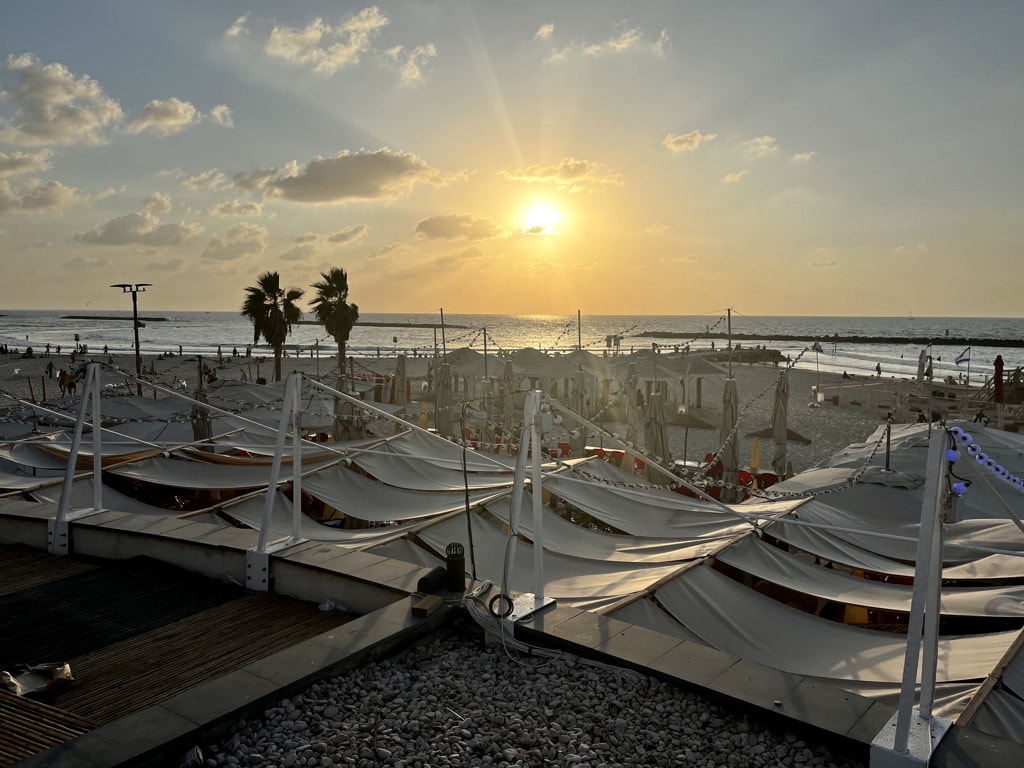
Sunset on the beach, Tel Aviv - Yafo

Day 2: Tel Aviv – Akko – Haifa

Tel Aviv-Yafo – Acre (Akko): 114km, 1,5 hour

It was time to hit the road the next day. I rented a car from Hertz and picked it up from their city office, just about a 10-minute walk from our hotel.
We loaded our suitcases and started to drive. I put on the Waze navigation and the funny thing happened – it started to speak Hebrew 😀. The lesson learned: adjust your navigation settings before hitting the road. Navigating out of Tel Aviv and onto the highway, my daughters took charge of my phone and resolved the language issue.
The navigation directed us to a parking area situated right behind the walls of the Old City. The parking was free of charge.

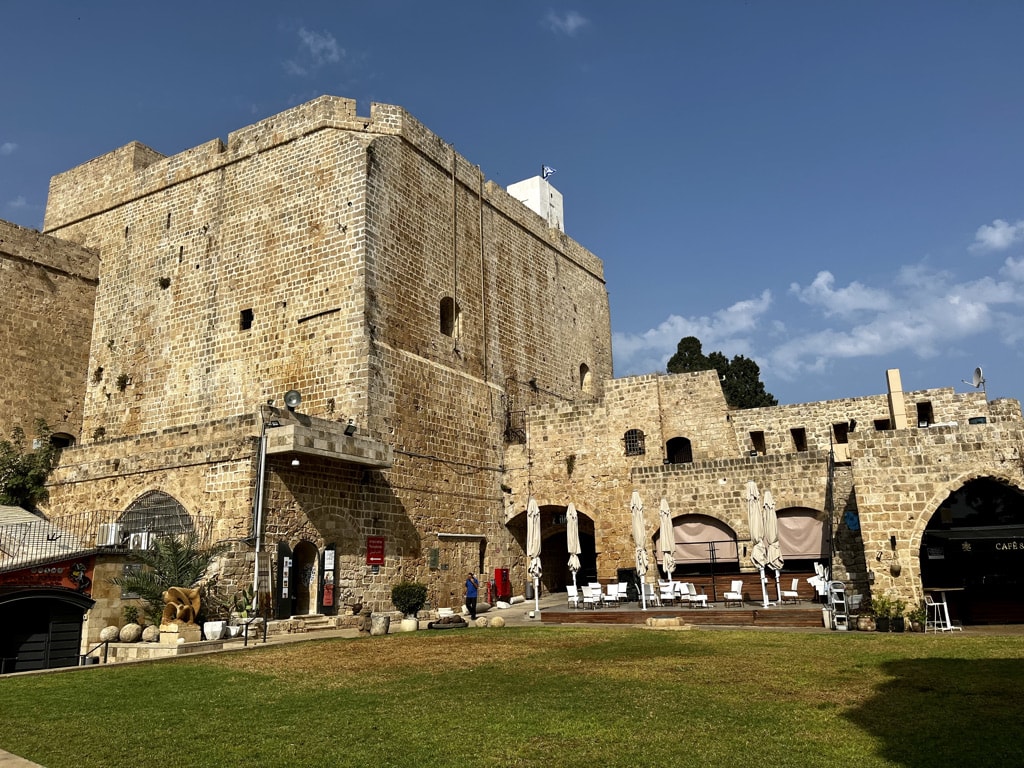
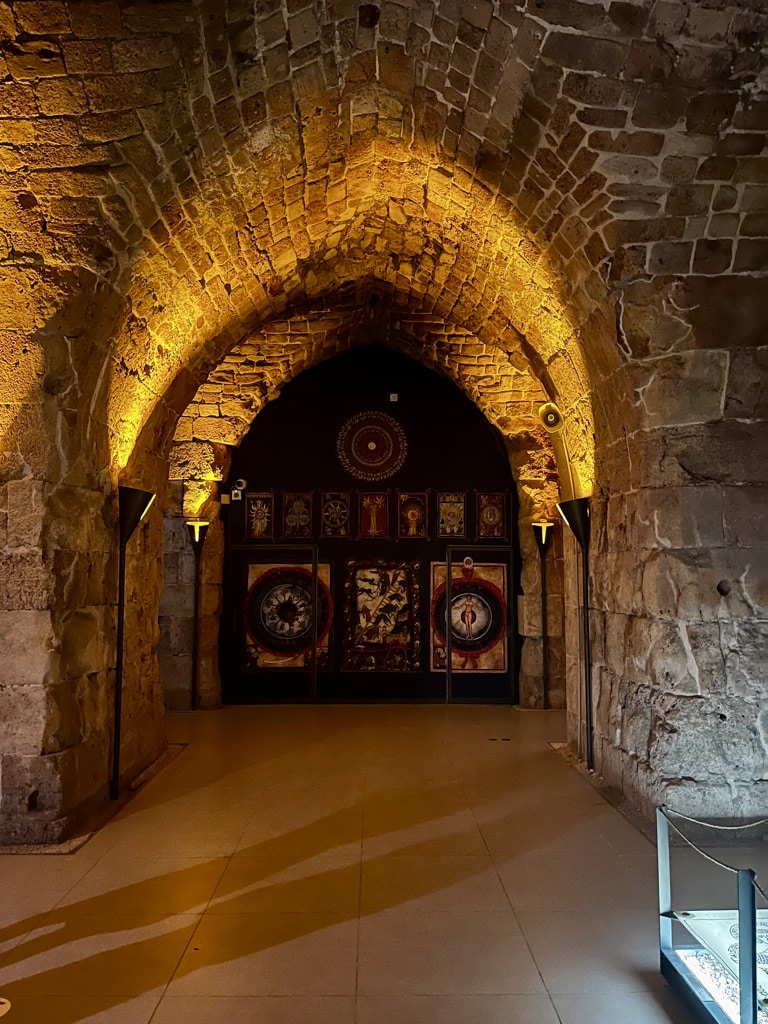
Akko is the local Hebrew name for Acre. It is one of the oldest continuously inhabited settlements on Earth. It played a crucial role during the Crusader’s times. The most important place to see is the Knights Hall.

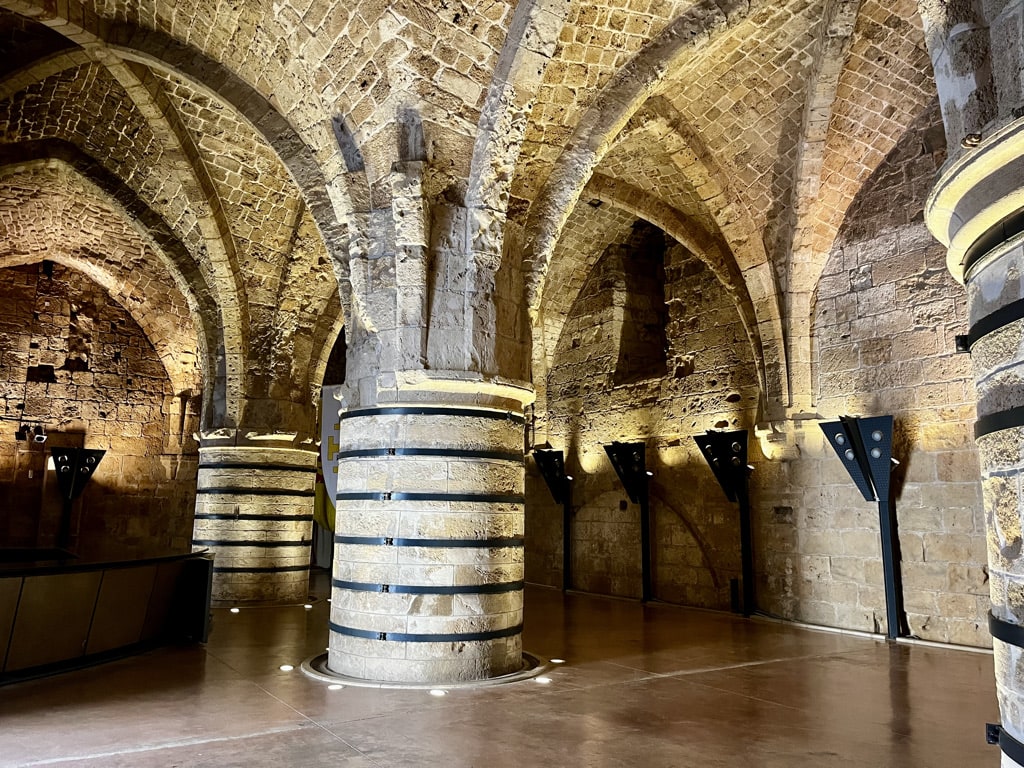
The Knights Hall
This Fortress and the nearest buildings functioned as a hospice and a hospital for the many pilgrims who came to the Holy Land during the Crusaders period in the 12th and 13th centuries.
It was awarded a World Heritage Site by UNESCO.

As we were visiting after the Covid pandemic, I didn’t organize tickets to enter the upfront. We arrived and bought it on the spot. It is, nevertheless, something that I would consider looking into if I planned the trip again.

We obtained the headphones and explored the fortress at our own pace while listening to the history of this awesome place.

After visiting The Knights Halls, we walked through the Old Town and found a great street food place to enjoy the local food. 

The Turkish Bath House:

Our visit transported us back in time to when this place served as the social center of the city. The citizens used to gather here to exchange the latest gossip.

The Templars Tunnel:

This is a must-see attraction. The 150-meter-long tunnel extends from the Templars fortress in the west to the city’s port in the east. There was great sea view once we reached the end of the tunnel

After exploring Old Akko, we set off to reach our accommodation in Haifa. 


Day 3: Haifa

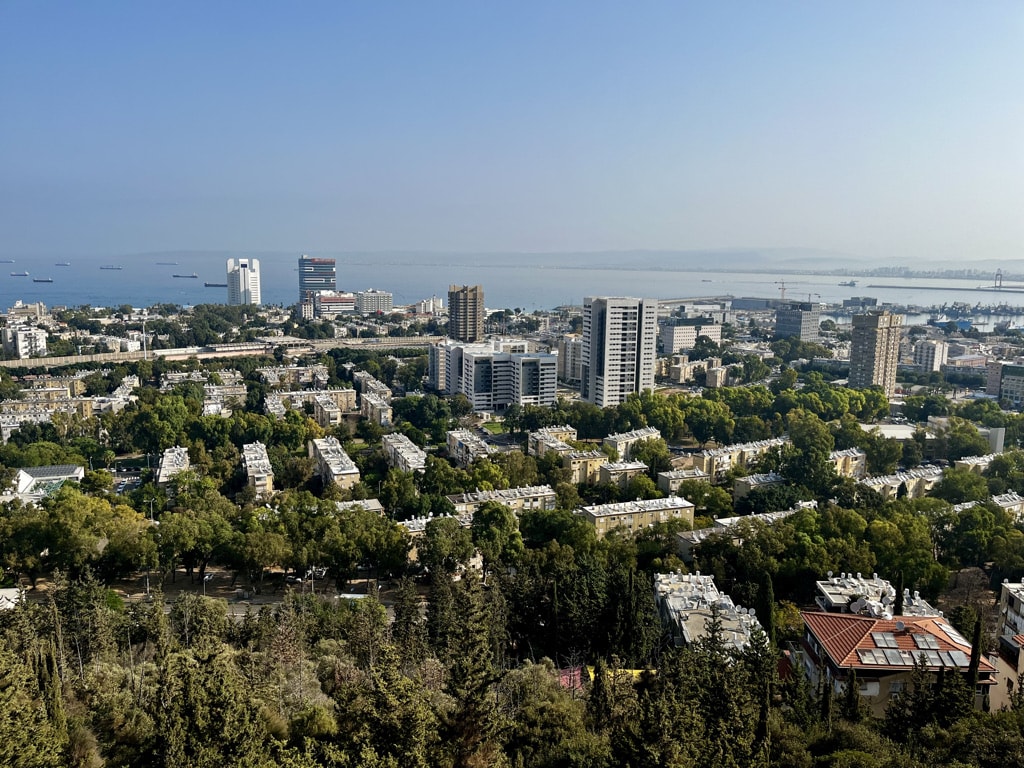
The reason I chose to stay in Haifa for a day was to explore a few landmarks in the city and enjoy some time on the beach. Haifa, the third-largest city in Israel, stretches from the Mediterranean up the north slope of Mount Carmel.

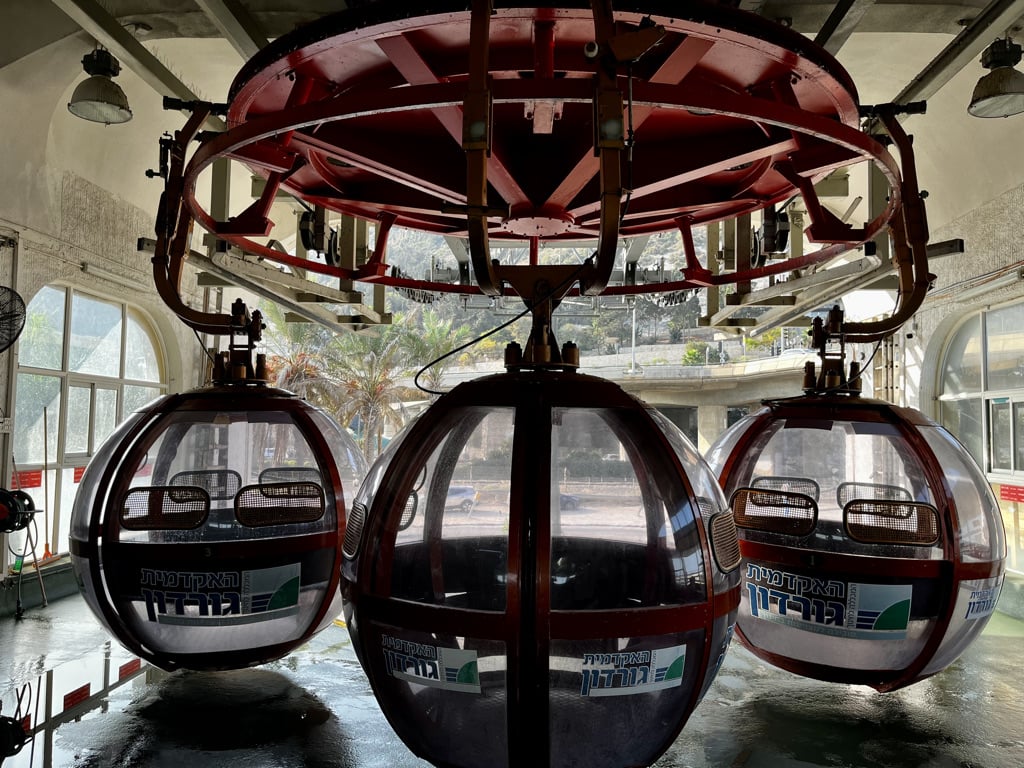
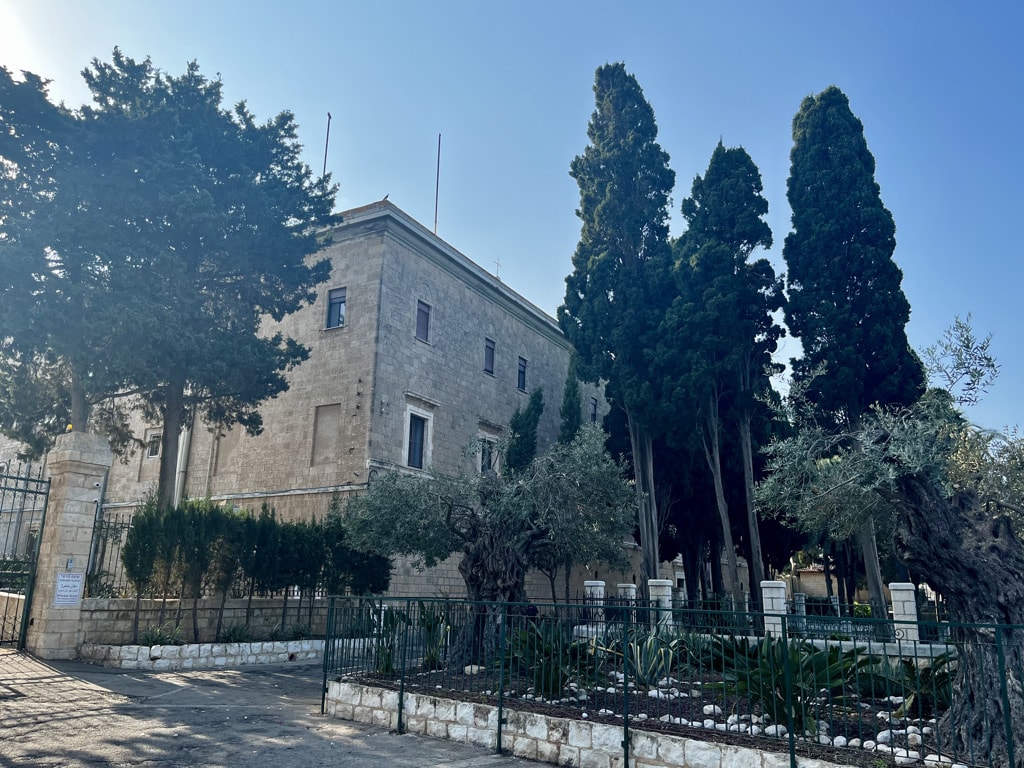
Our day began with a ride on the Haifa Cable Car, ascending Mount Carmel to visit the Stella Maris Monastery.

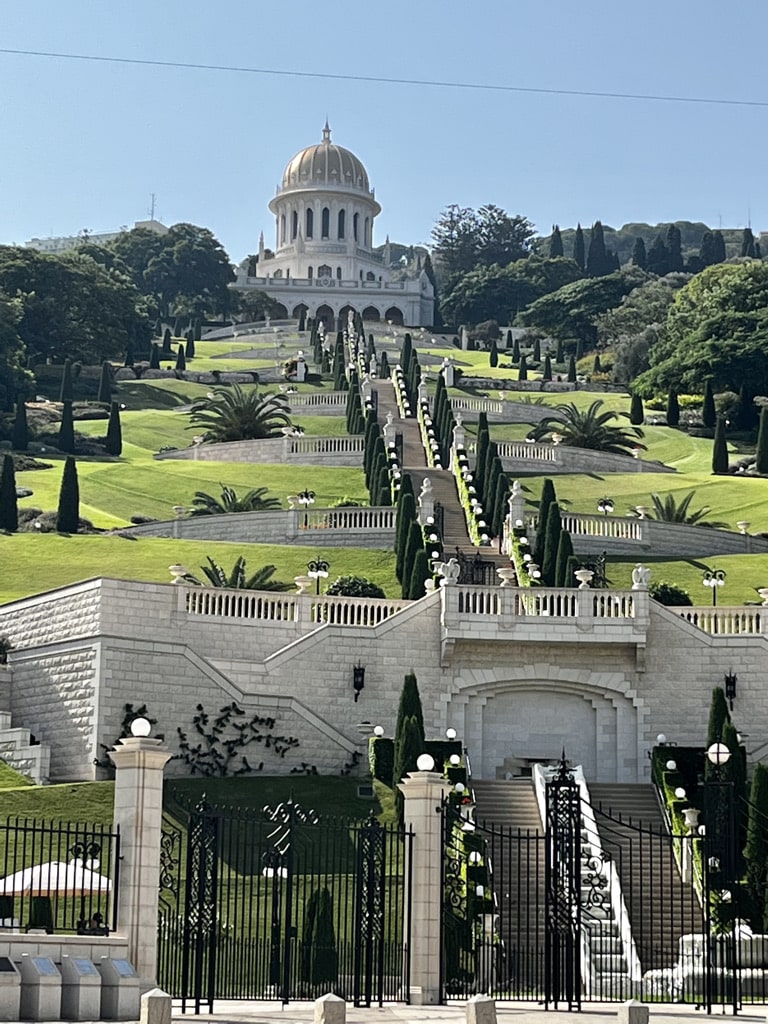
The Bahá’í Gardens in Haifa

From the mountain’s peak, we decided to walk down towards the middle of the Baha’i Gardens, assuming there was an entrance. It turned out to be quite a walk. Disappointment struck when we discovered that the gardens were closed to the public on Monday, contrary to information provided on various websites. Perhaps the opening hours were adjusted during the Covid time, but this information was not reflected on the official websites.

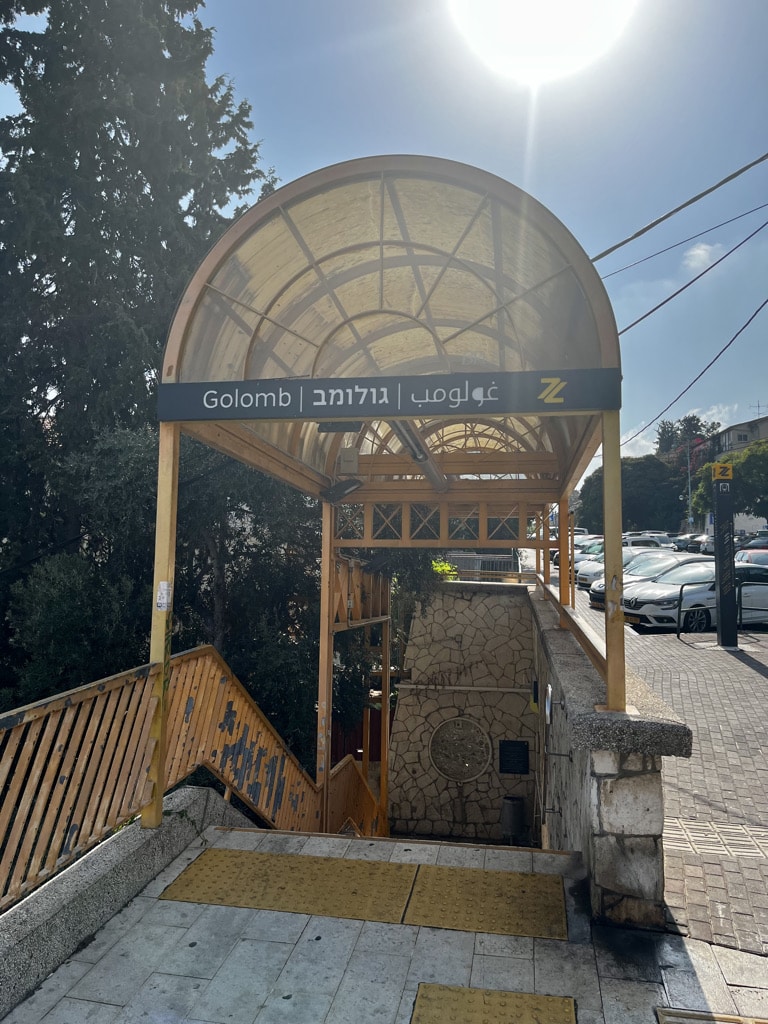
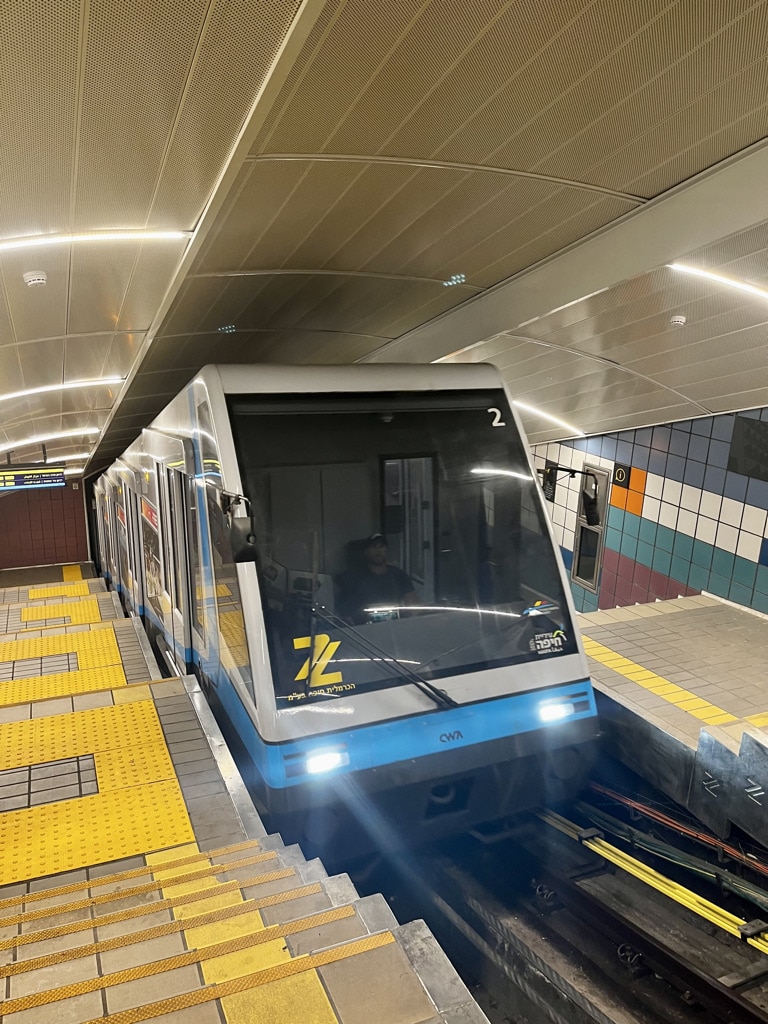
As, we couldn’t explore the gardens, we decided to experience at least the Carmelit, the underground funicular railway. After a bit of a struggle to locate the nearest station and some walking, we finally reached Golomb station and took the ride to the center of town.
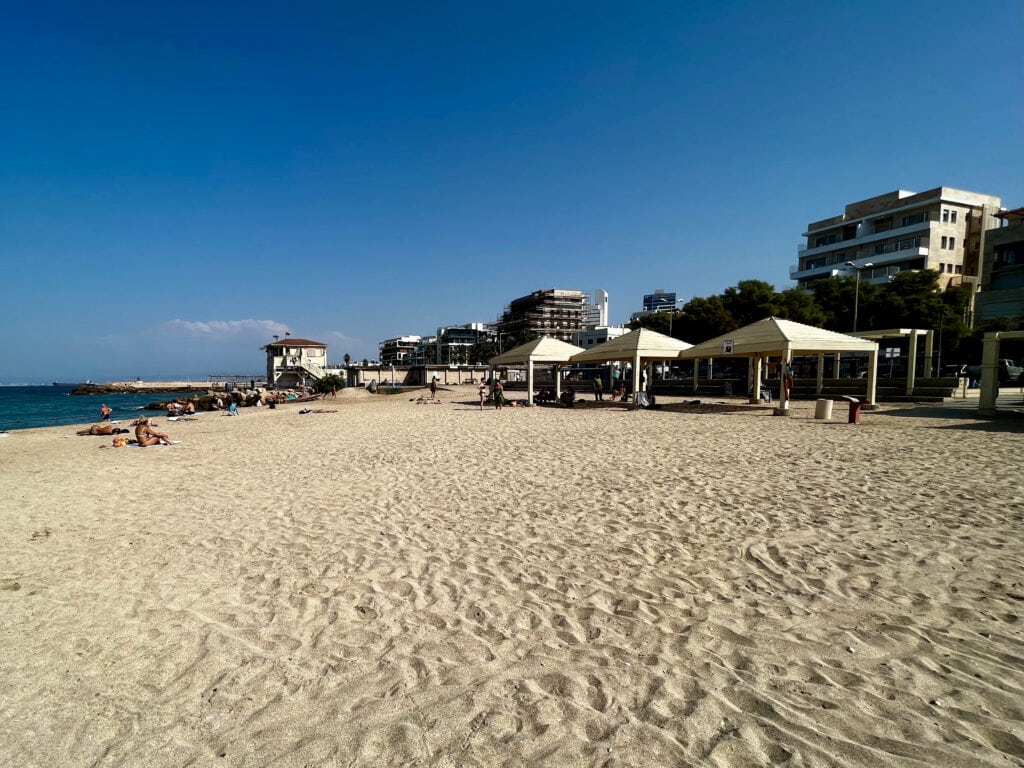
Upon returning to our accommodation, we packed up and spent the rest of the afternoon at Bat Galim Beach.


Day 4: Nazareth – Gan HaShlosha National Park – Jerusalem

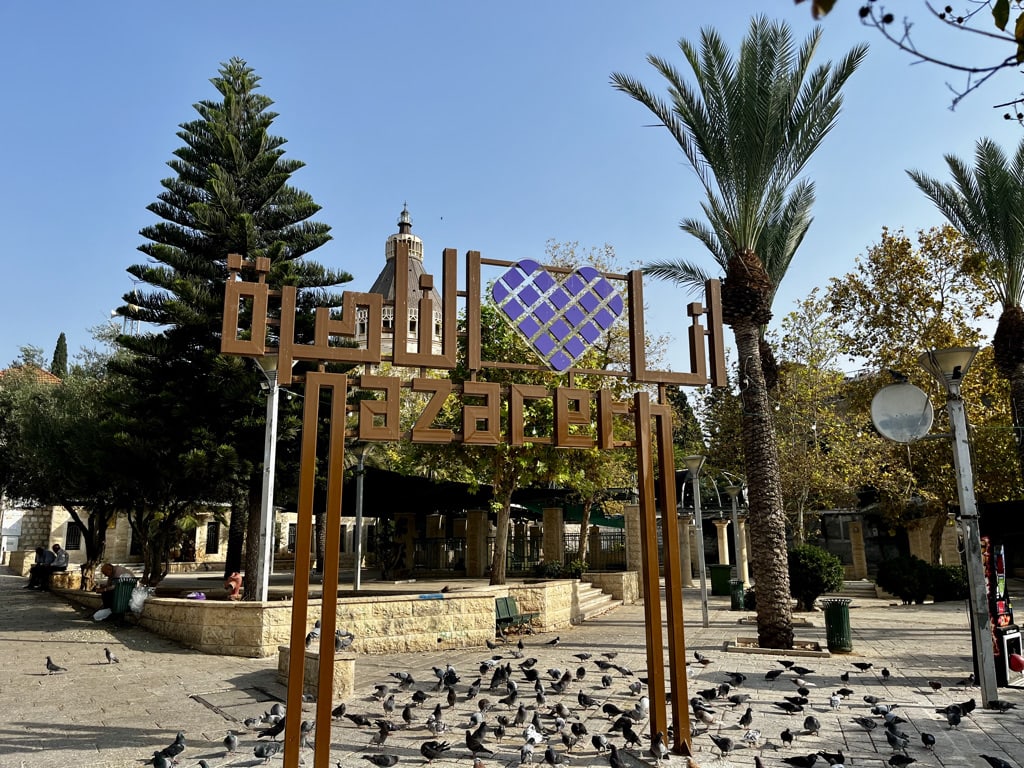
Nazareth

Haifa – Nazareth: 45km, about 40min

It was time to pack up in the morning, leave Haifa behind, and continue on our journey. The first destination of the day was Nazareth, the town of Galilee and the home of Mary, the mother of Jesus, as mentioned in Luke’s Gospel.

The city center of Nazareth is situated in a flat area, but the town extends to the hillside. Due to traffic conditions, or another reason, Waze navigation directed us to the hillside before guiding us to the city center. The inclines were steep, streets very narrow with numerous curves and blind spots, making the drive down a true adventure itself.

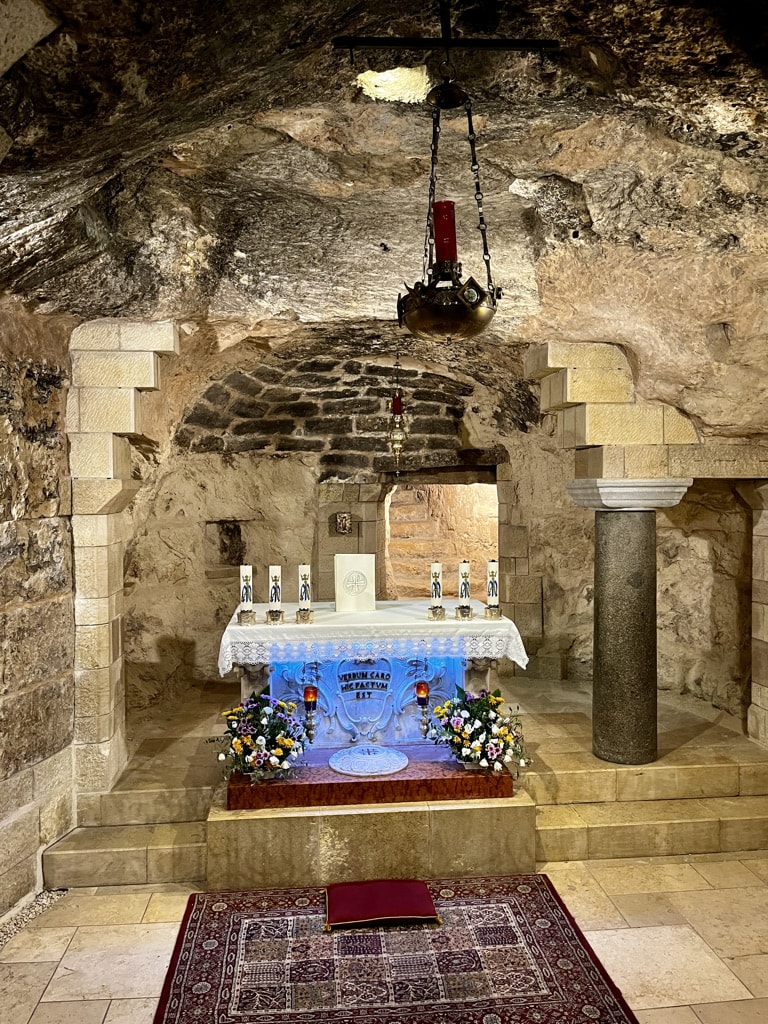
The house of Mary foundations in the Basilika of the Annuciation, Nazareth
The house of Mary

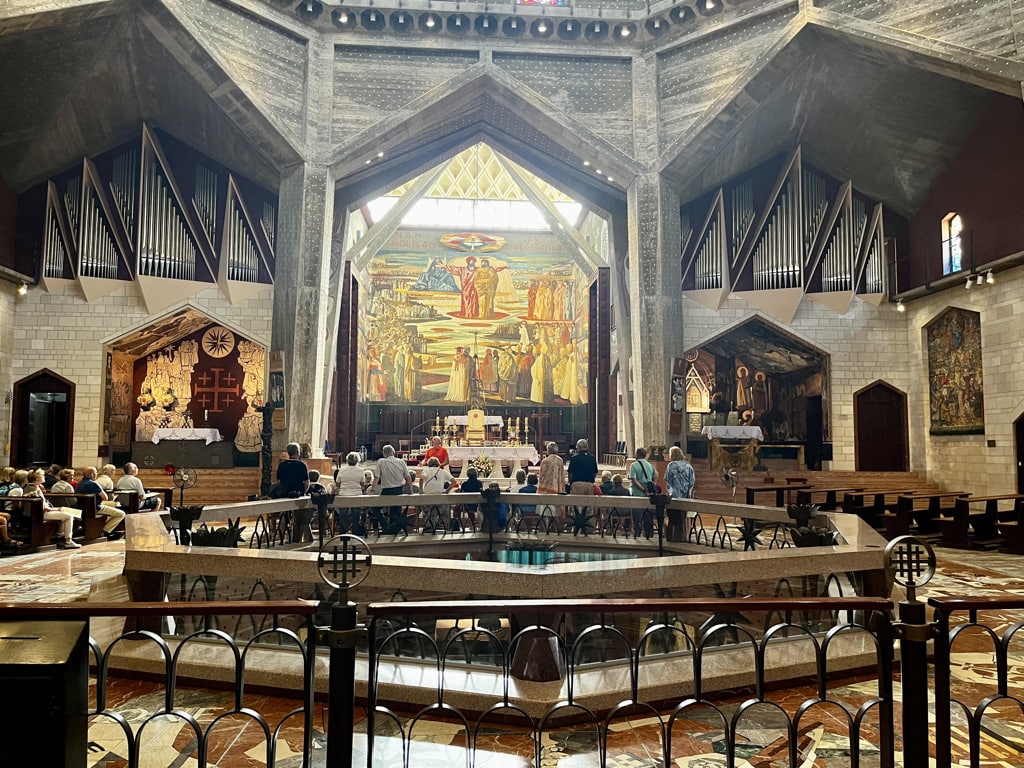
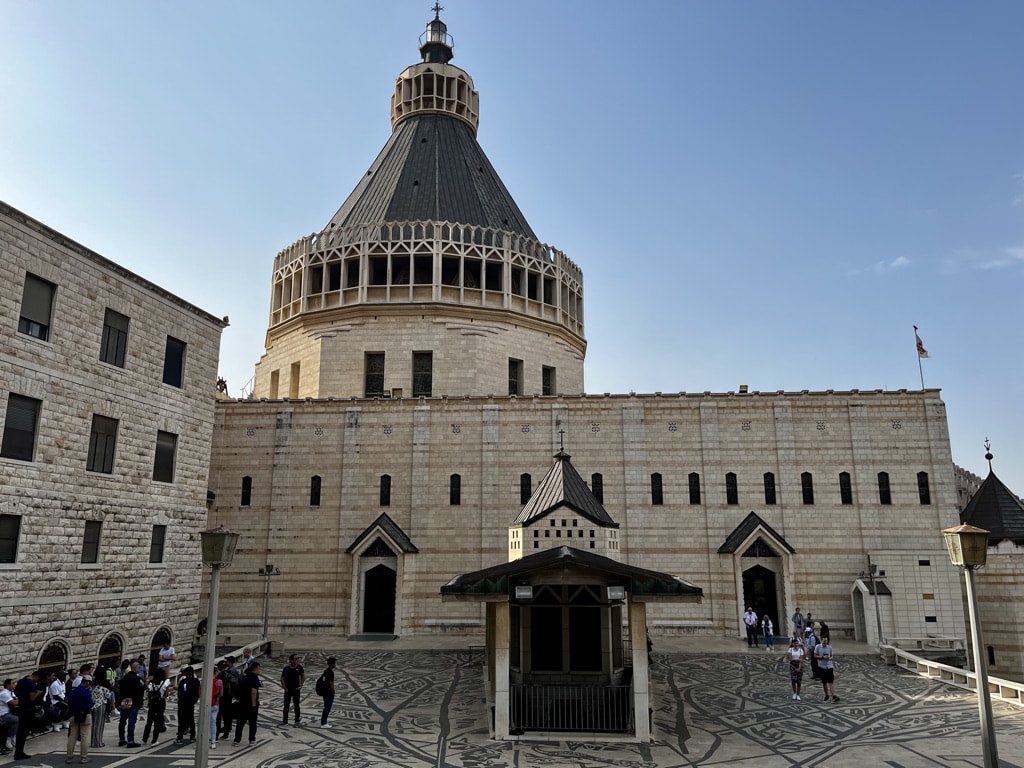
We parked in one of the private lots close to the main attraction, the Church of the Annunciation. This church is one of two contenders for the site of the Annunciation, where the angel Gabriel is believed to have appeared to the Virgin Mary, announcing the birth of Jesus. The church is believed to be where the house of the Virgin Mary originally stood.

Gan HaShlosha National Park

Nazareth – Gan HaShlosha park: 35km, 40min

Around lunchtime, we found ourselves at a crossroads, needing to decide our next destination. We had two options: continue towards the Galilee Lake or explore Gan HaShlosha National Park with its naturally warm water lakes. While I would assume that the majority of tourists would choose option 1, we opted for option 2.
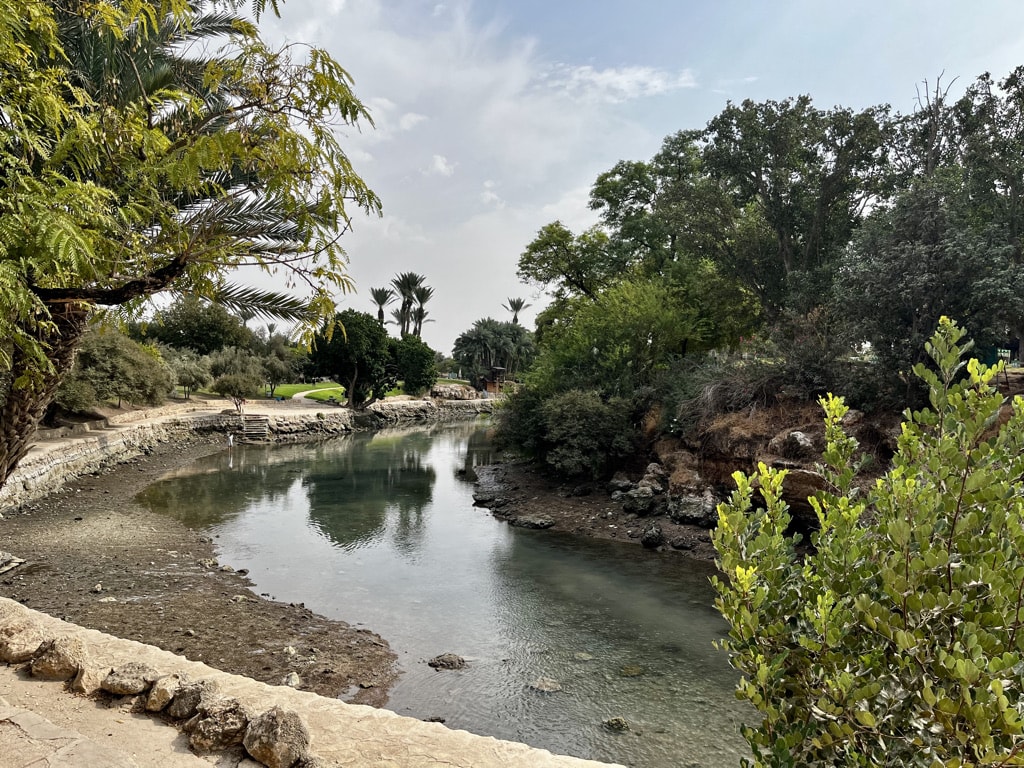
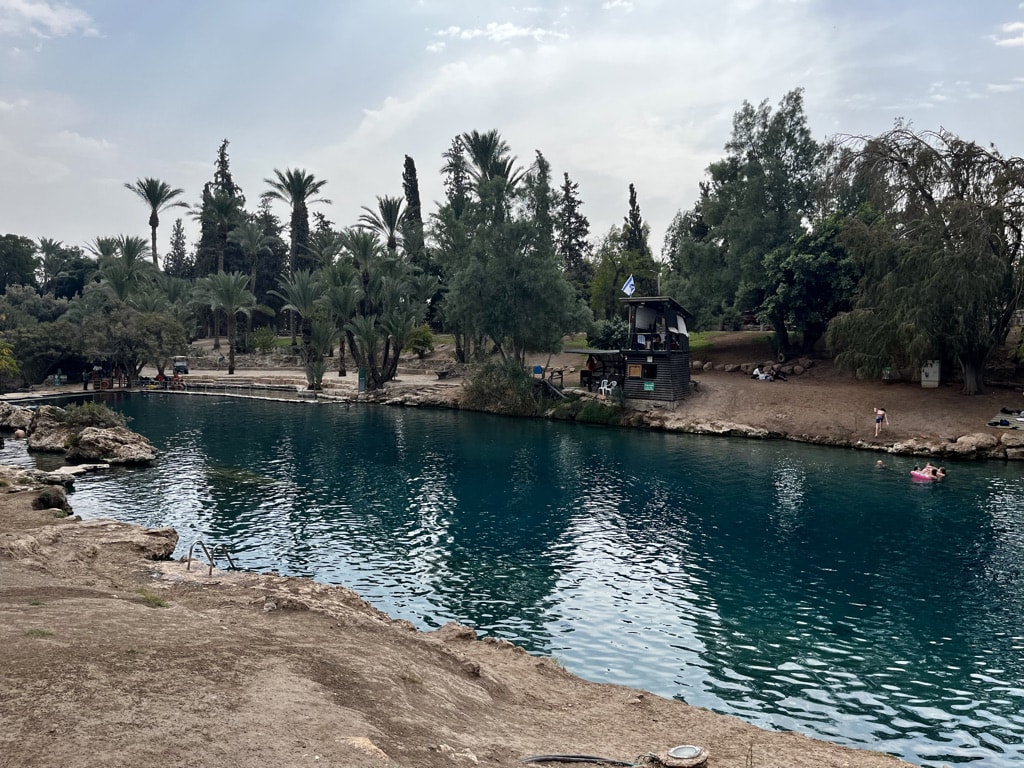
The lakes at Gan HaShlosha were amazing. We had a picnic lunch under the trees, swam in the lakes, and enjoyed the sun. It became evident that this is a destination not frequented by many tourists, as the majority of visitors were local.

Gan HaShlosha National Park – Jerusalem: 155km, 2h 15min

The final destination for the day was Jerusalem. I set up the navigation, and we hit the road, anticipating a journey of about 1.5 hours. However, reality proved a bit more complex. After driving for approximately 20 minutes, we reached the West Bank border. It was then that I realized the remainder of the trip would continue through West Bank territory. This didn’t seem like the right option, not only for security reasons (considering it was me with my two daughters in the car) but also because of concerns about the validity of the rental car insurance in the West Bank.


I made the decision to turn around, facing the challenge that both Waze and Google Maps insisted on the West Bank route. To outsmart the navigations, I input Haifa as our destination and, after about 30 minutes of driving, switched it to Jerusalem. This strategy worked, as the navigation found a route via the Yitzhak Rabin Highway (Route 6), and late that evening, we finally arrived in Jerusalem.

The most crucial aspect of planning our stay in Jerusalem was securing accommodation with guaranteed private parking. I dedicated a substantial amount of time to this search, and it proved to be a worthwhile investment.

Given the busy nature of Jerusalem, I couldn’t imagine arriving in the evening and attempting to find parking—it would be a “mission impossible” task. During my search, I also took into account reviews from other people. While I came across places offering private parking, the reviews often discouraged me, with many indicating that the parking was tight and difficult.
I consider myself fortunate to have found The Haneviim Court – Isrentals apartments. The building had a spacious, easily accessible underground garage, making parking hassle-free. Additionally, the apartment was located approximately a 10-minute walk from the Jerusalem Old City—a perfect and convenient place to stay.

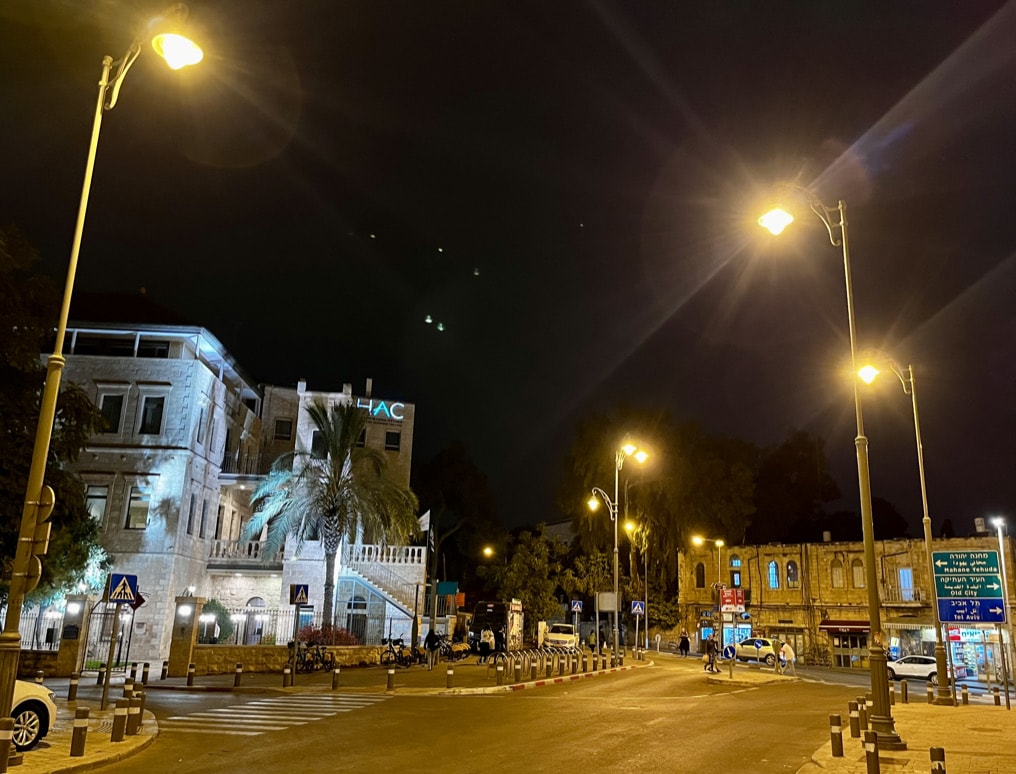
Evening in Jerusalem

Day 5-6: Exploring Old Jerusalem

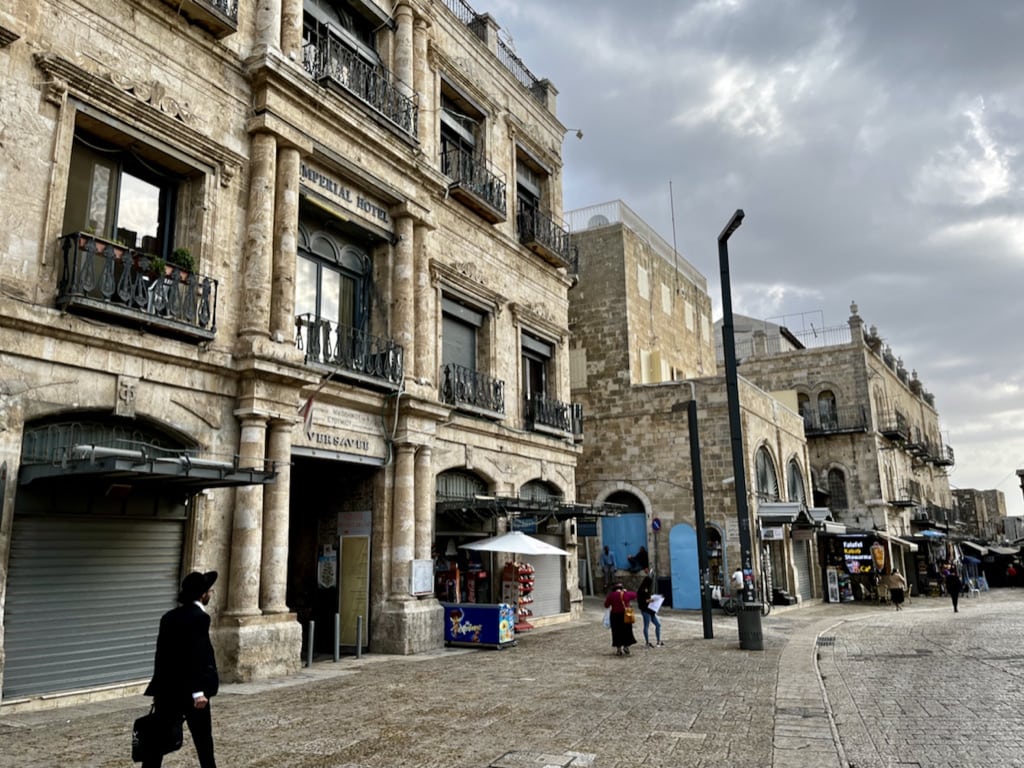
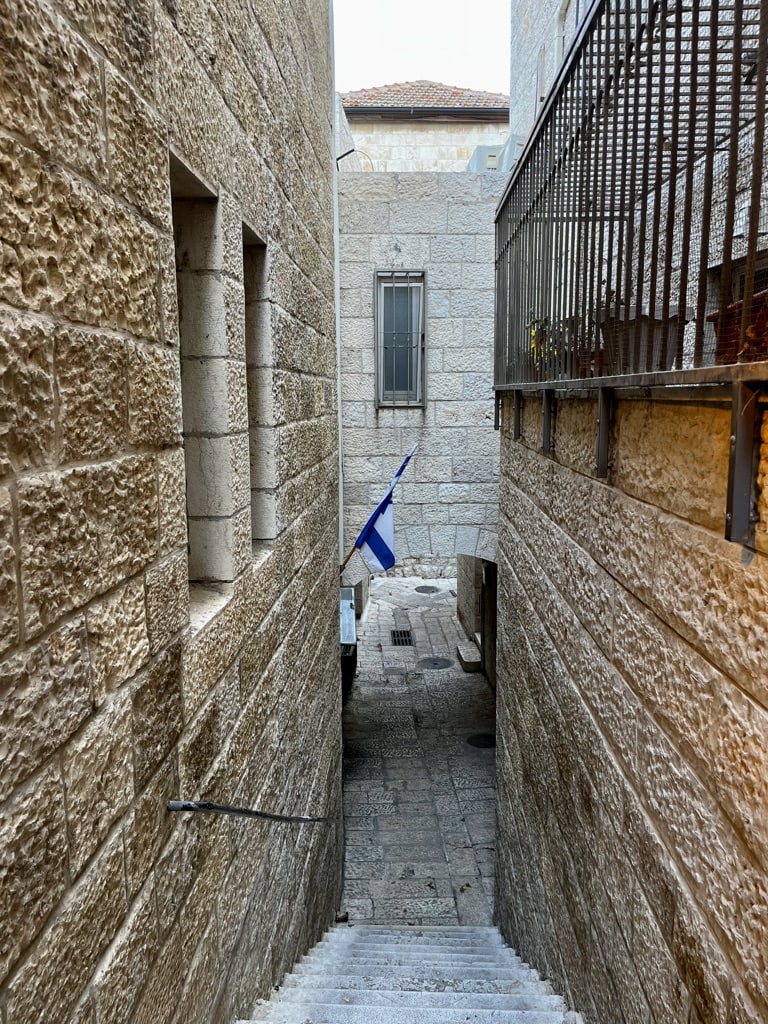
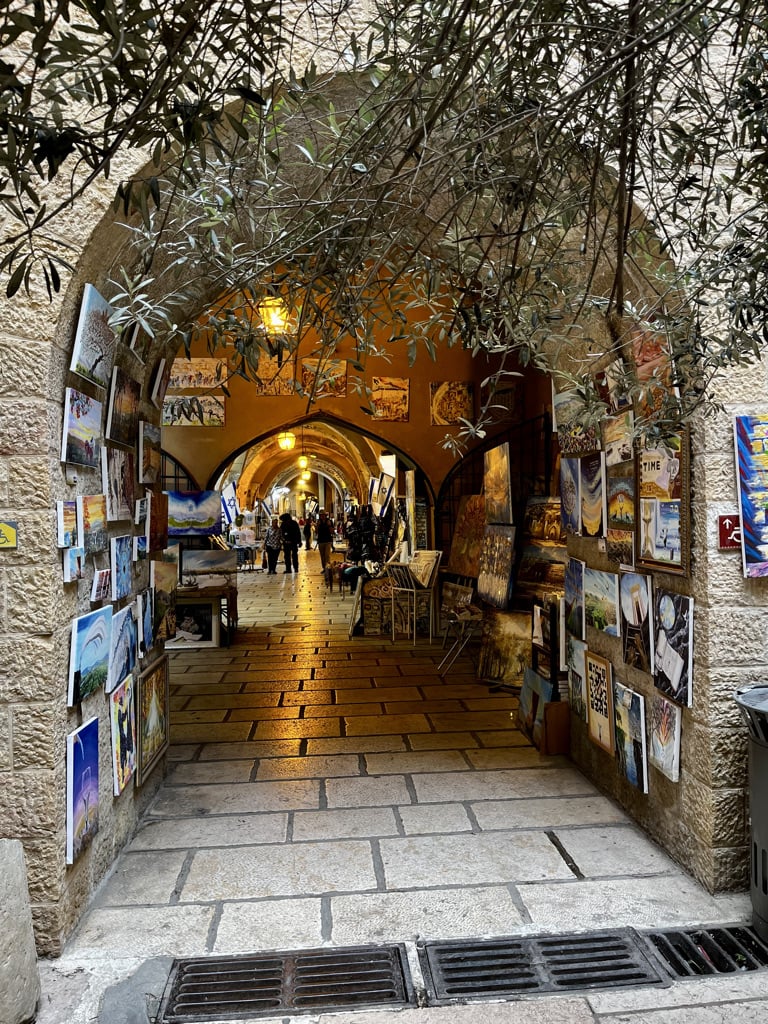
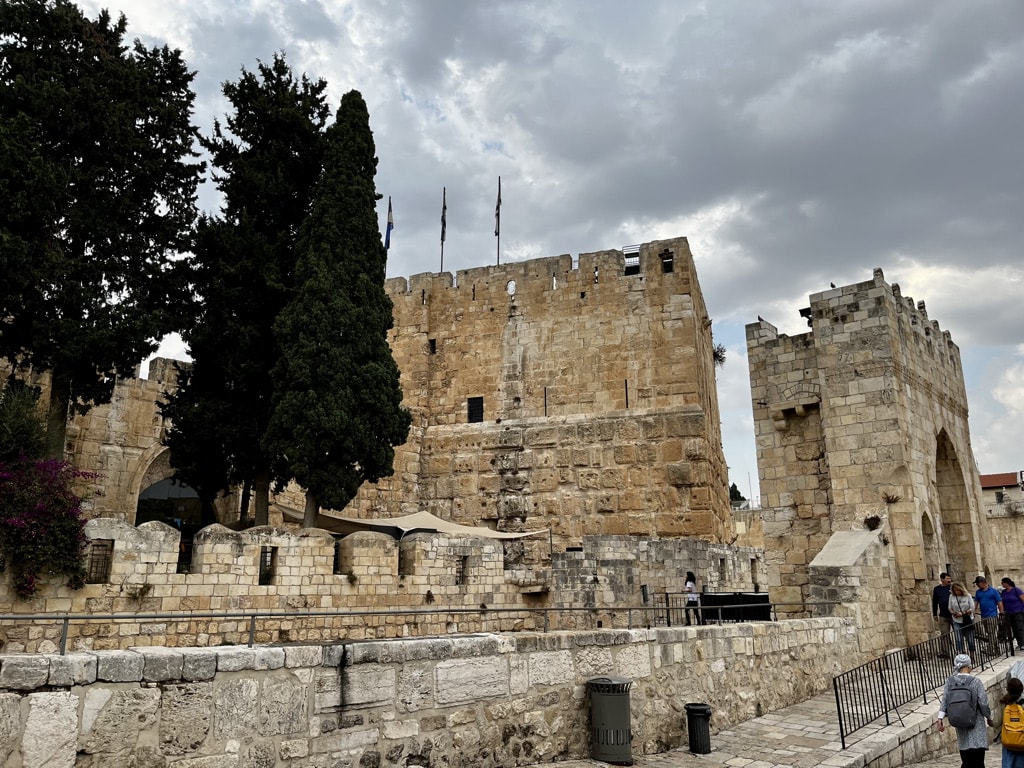
The moment we stepped into Old Jerusalem, we felt like we had entered a different world. The city is divided into four quarters: The Jewish Quarter, The Armenian Quarter, The Christian Quarter, and The Muslim Quarter. Each quarter is unique

The Christian Quarter:

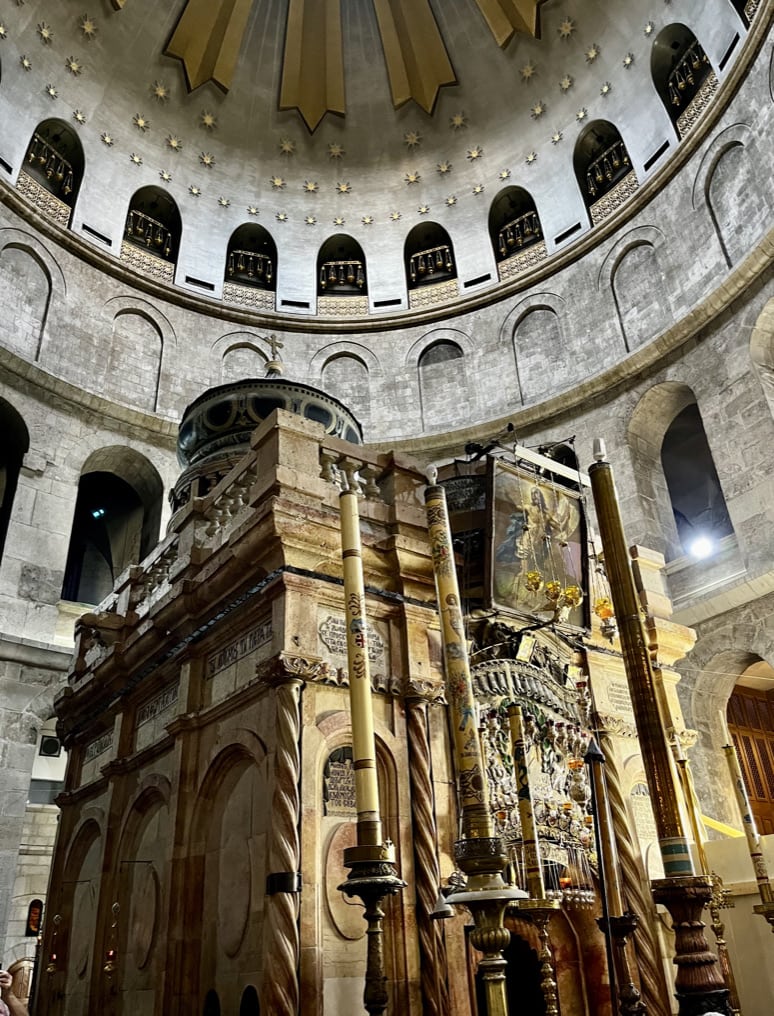
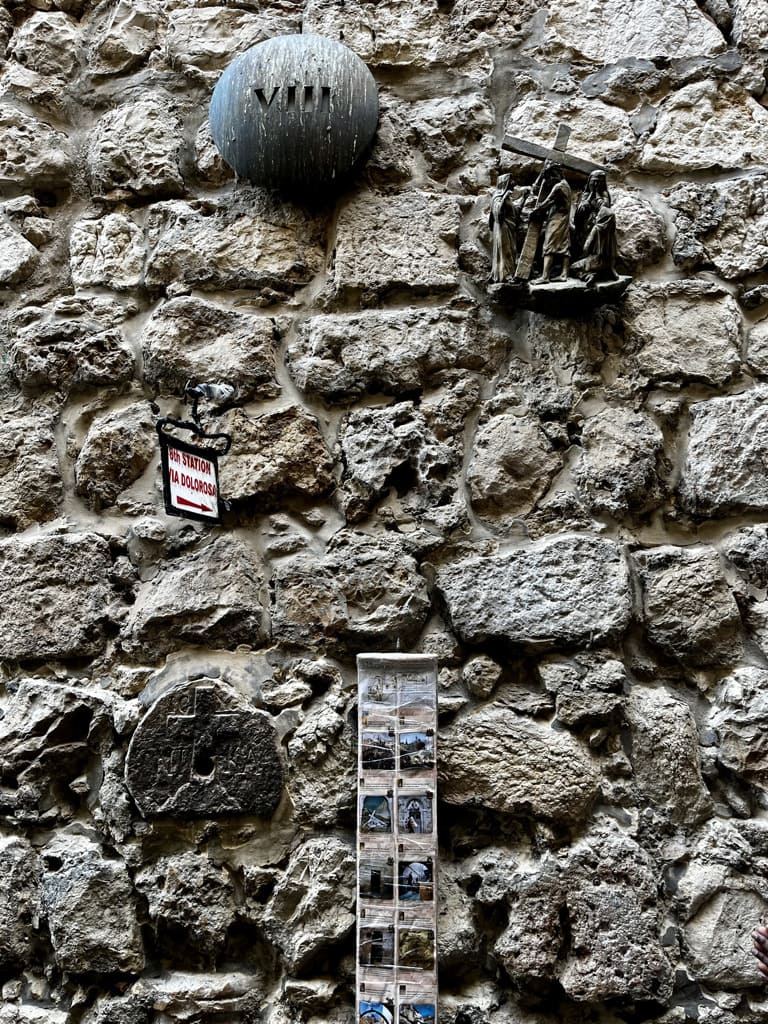
With the Via Dolorosa, the path that Jesus took, compelled by Roman soldiers, on his way to crucifixion. We met numerous prayer groups walking from one station to another along this path. The journey concludes at the Church of the Holy Sepulchre, considered the holiest site for Christians worldwide, housing Jesus’s empty tomb, where he was buried and resurrected.

The Jewish Quarter:

This quarter represents calmness, characterized by houses of Ultra-Orthodox Jewish families leading their everyday lives. 

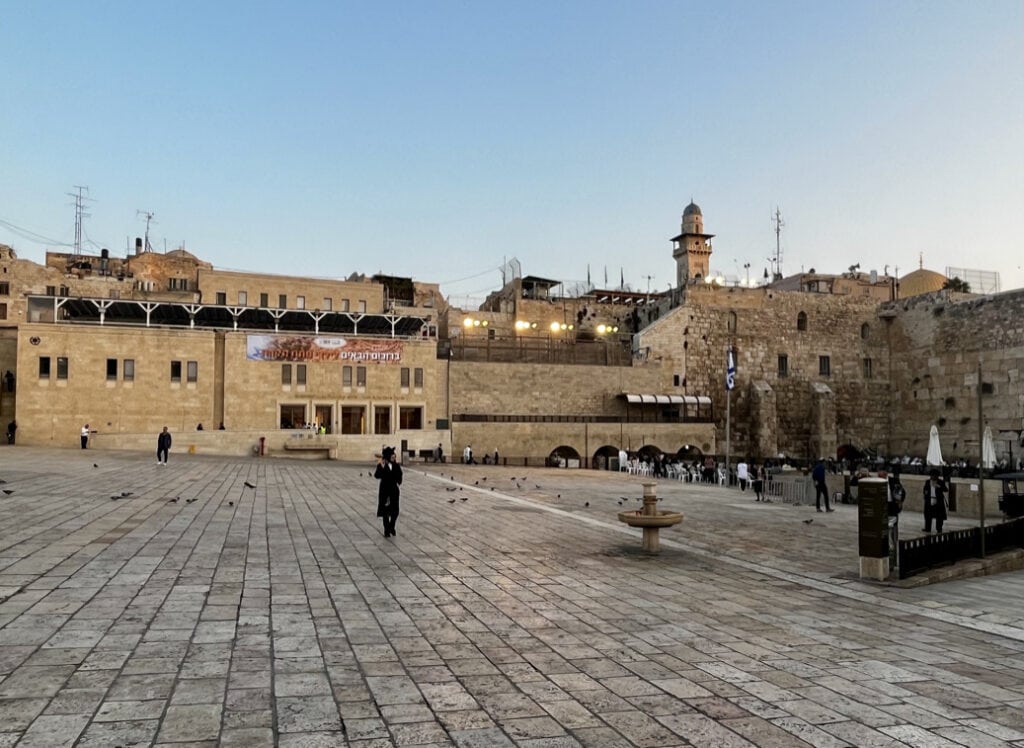
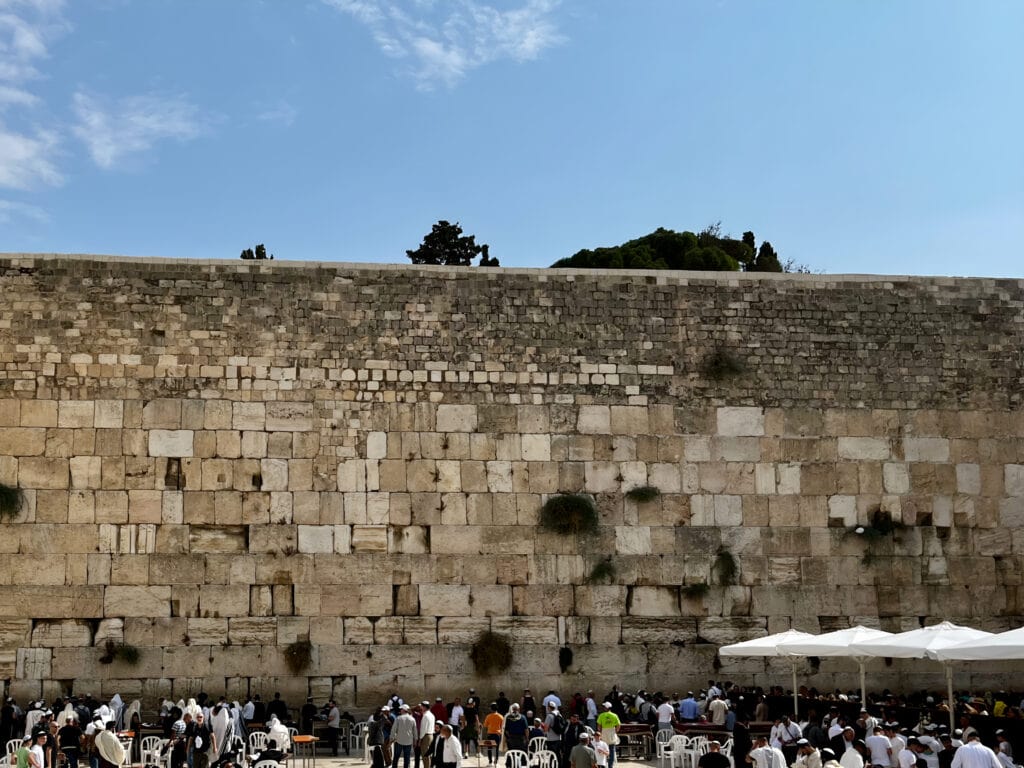
The Western Wall Plaza, home to the famous Western Wall, is situated here. The areas for men and women are segregated, to approach the wall, one must choose the appropriate area. 

Unfortunately, we missed the Western Wall Tunnels as tickets for the days we were in Jerusalem were sold out.

The Muslim Quarter:

It is characterized by bustling streets and vendors offering a variety of products. As the largest and most populous of the four quarters, it stretches from the Lions’ Gate in the east, along the northern wall of the Temple Mount in the south, to the Damascus Gate—Western Wall route in the west.

The Temple Mount:

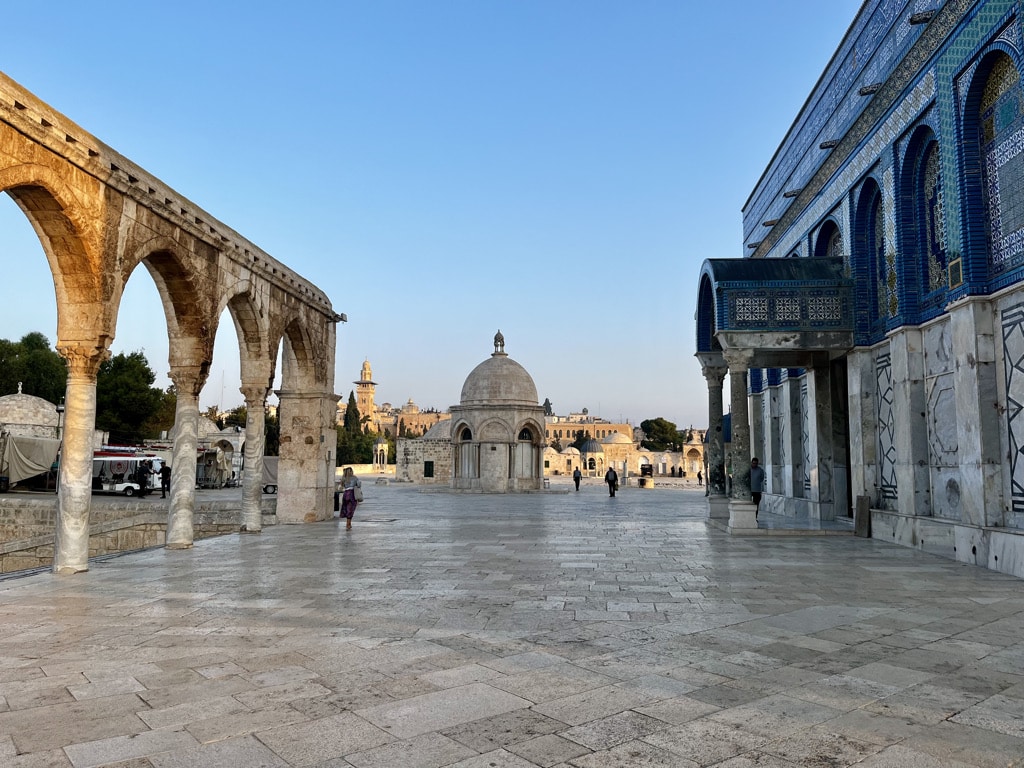
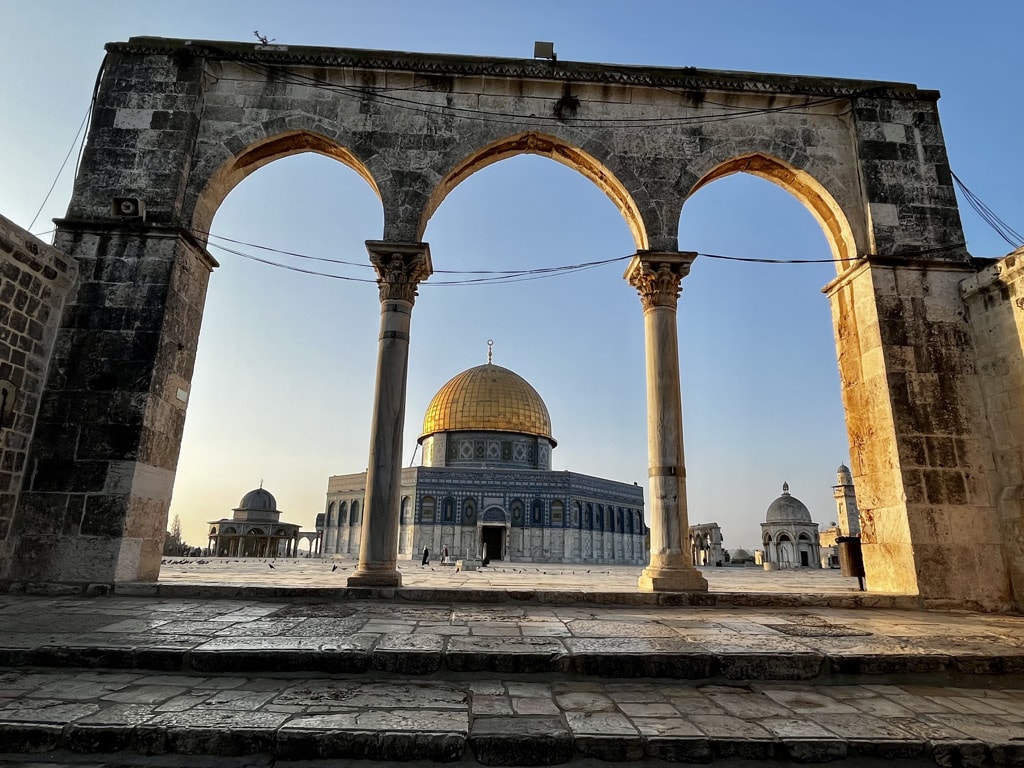
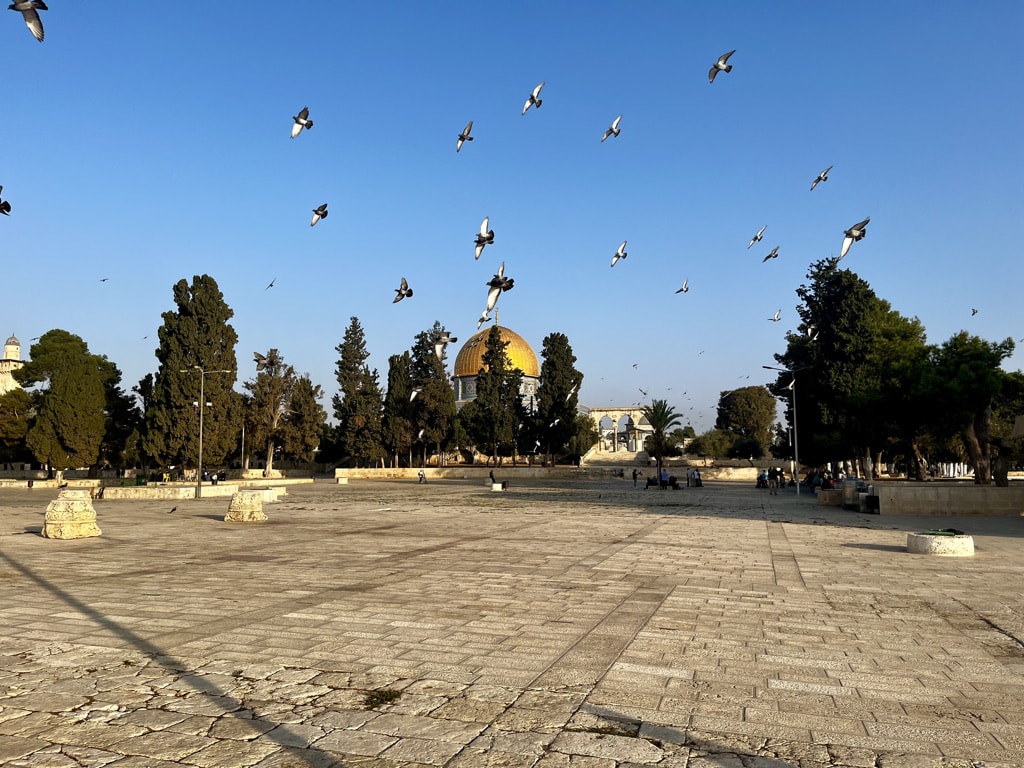
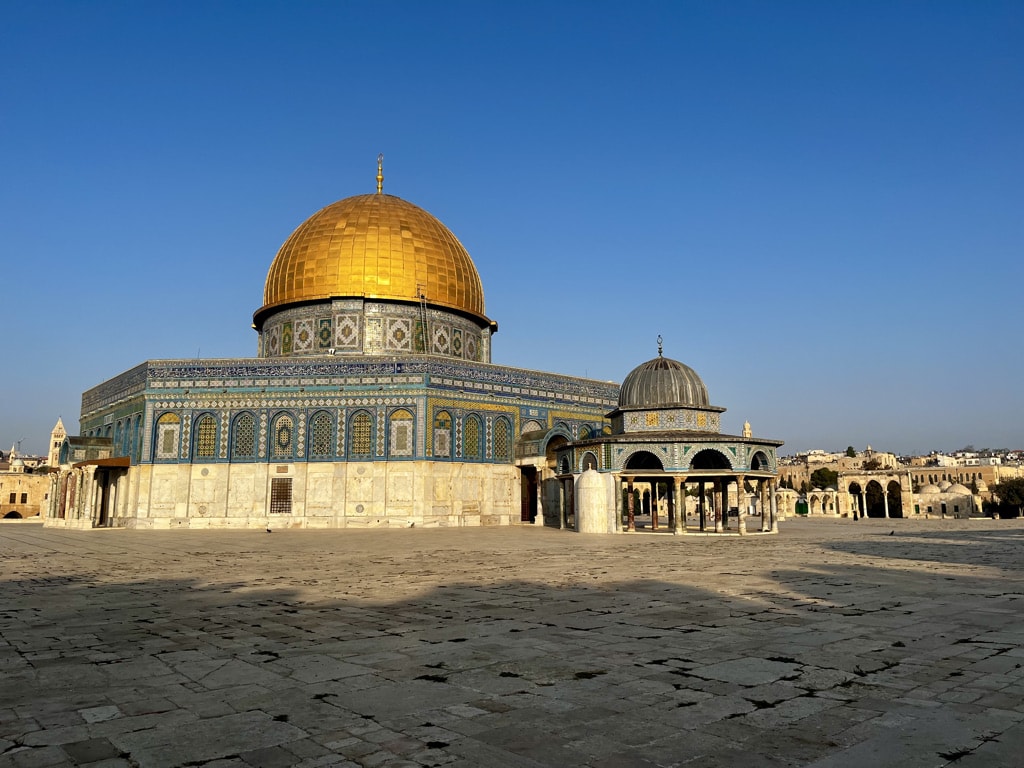
As the third holiest site for Muslims after Mecca and Medina, it’s a must-see place. Access is limited to certain days and hours. While we couldn’t make it on our first day, we woke up early on the second day for an amazing experience. Walking through the empty streets of Old Jerusalem around 7 am, we reached the Temple Mount as some of the first visitors. This allowed us to experience and absorb the unique vibe of this place.

The Armenian Quarter:

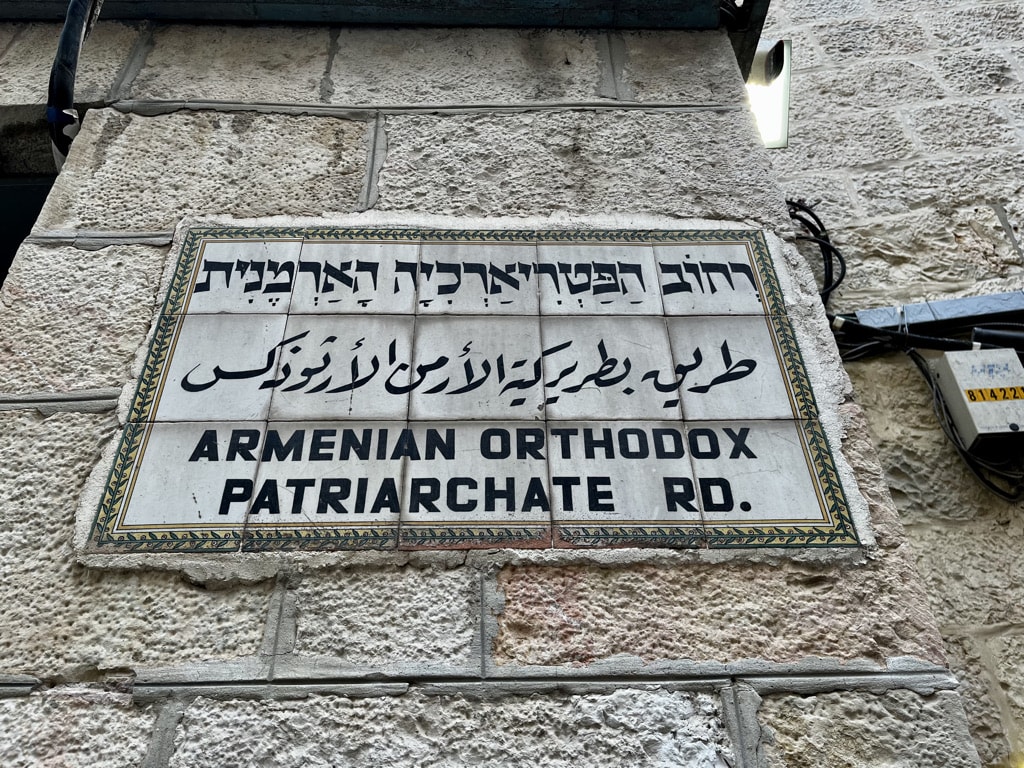
A town area in which Armenians formed a self-sustaining community. The enclave includes churches, schools, public and social institutions, residences, and historical monuments. Central to it is the St. James Armenian Convent and the Armenian Patriarchate.

Walls of Jerusalem

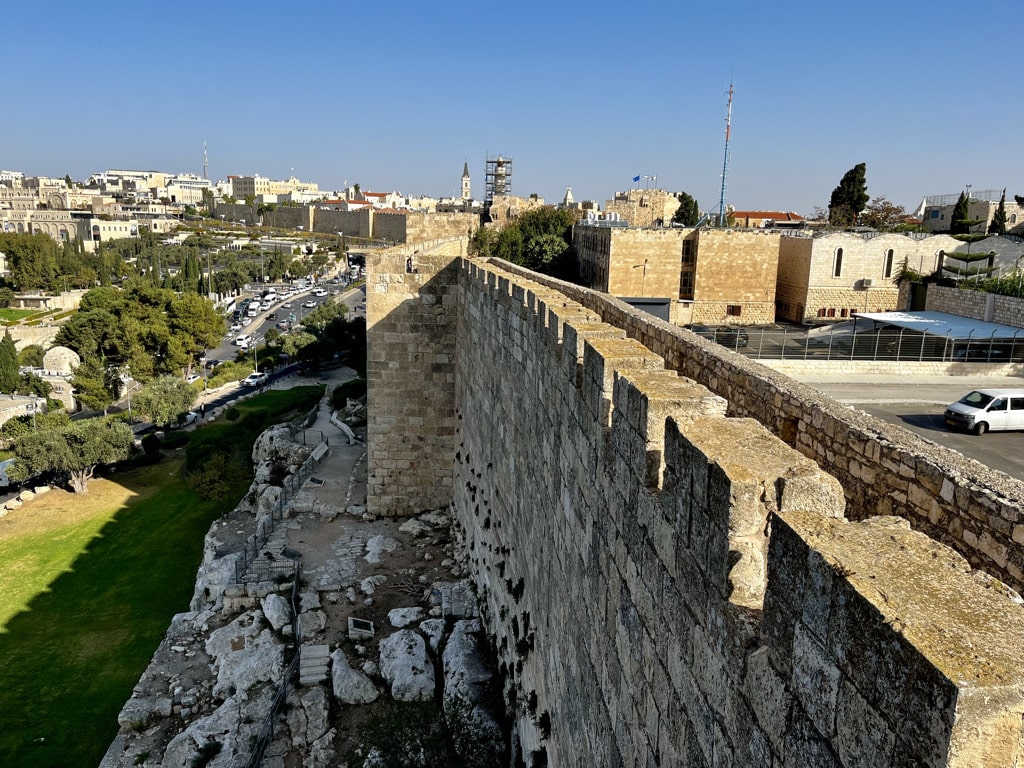
To see Jerusalem from a different perspective, we did a walk around the Walls of Jerusalem. There are 2 sections, so we did one, had a coffee break, and then did the other one. We really enjoyed it as it offered views of the entire city.

The Walls of Jerusalem, Israel

Day 7: Jerusalem – Masada Fortress – Dead Sea – Jerusalem

Masada

Jerusalem – Masada: 99km, 1,5hour

Visiting Masada and the Dead Sea makes for a perfect day trip from Jerusalem, and key recommendations are: arrive at Masada early in the morning, it does get hot there. Don’t forget to take water with you. And book entry tickets in advance.

We visited Israel just after the Covid crisis, I didn’t feel the need to book tickets. Luckily, as we were among the first visitors, we managed to buy tickets on the spot. But we were asked if we had an online reservation.

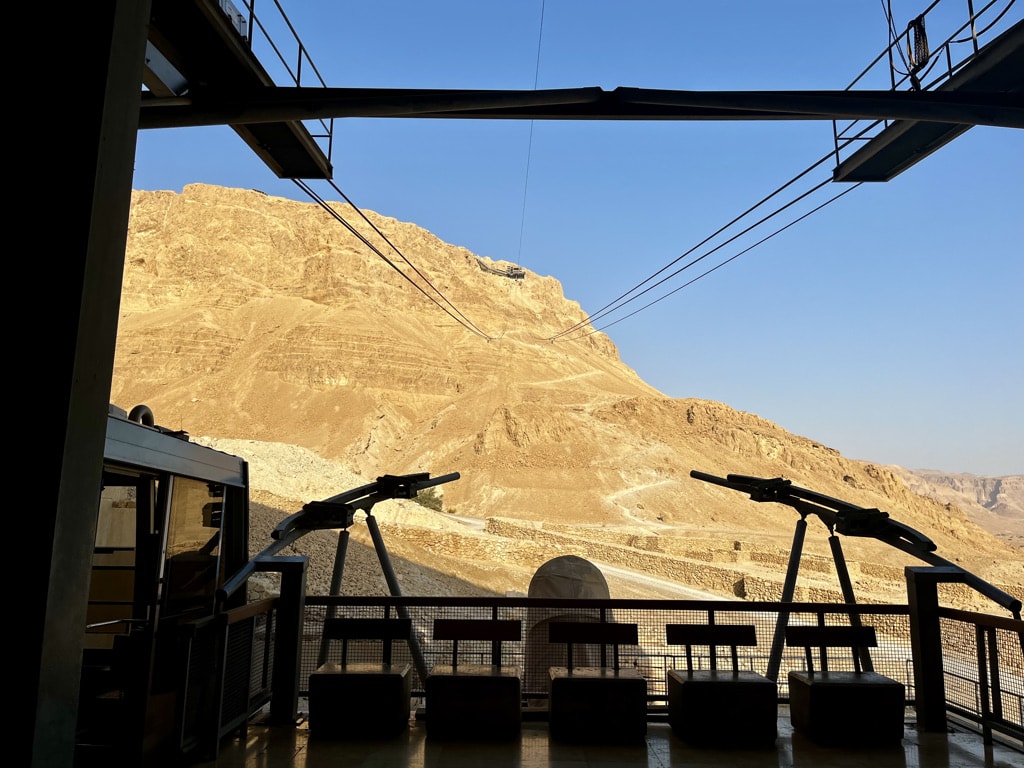
Parking at the lot below the main entrance hall, we chose the cable car ride to reach the Masada fortress over the voluntary walk that some tourists undertake.

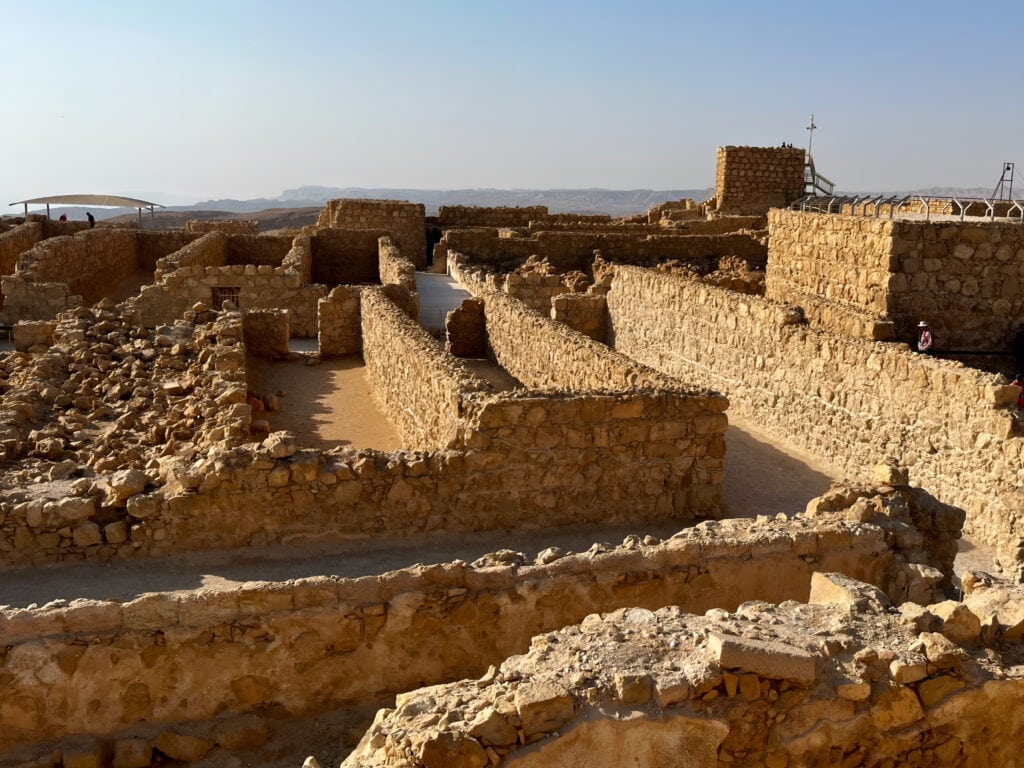
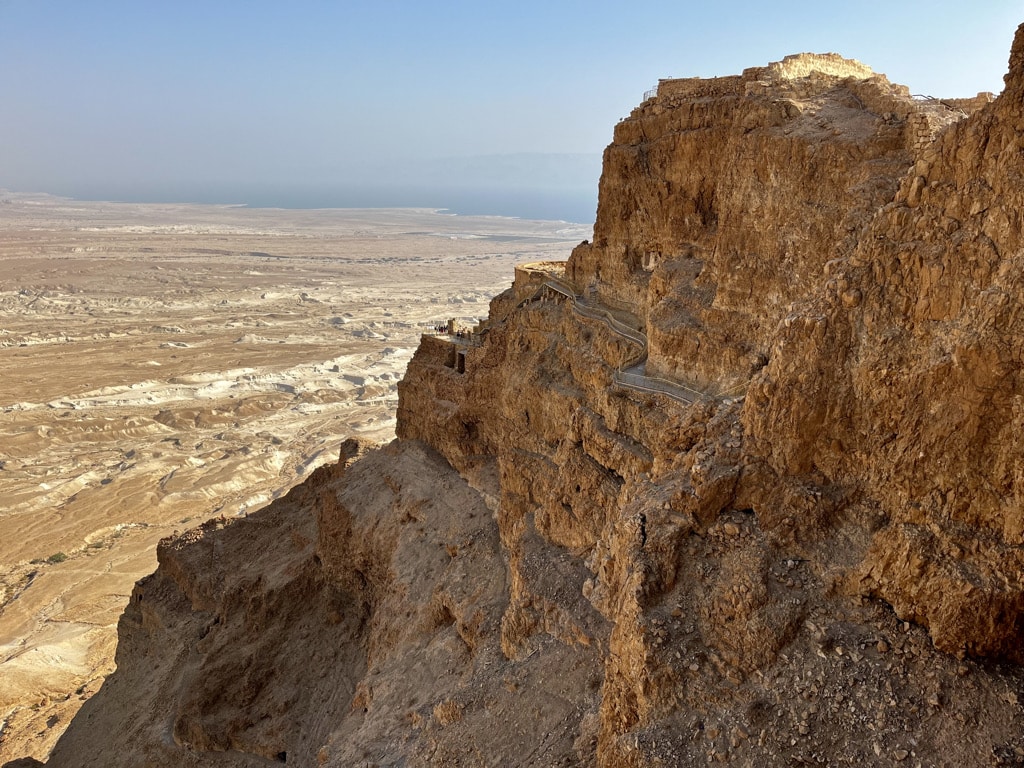
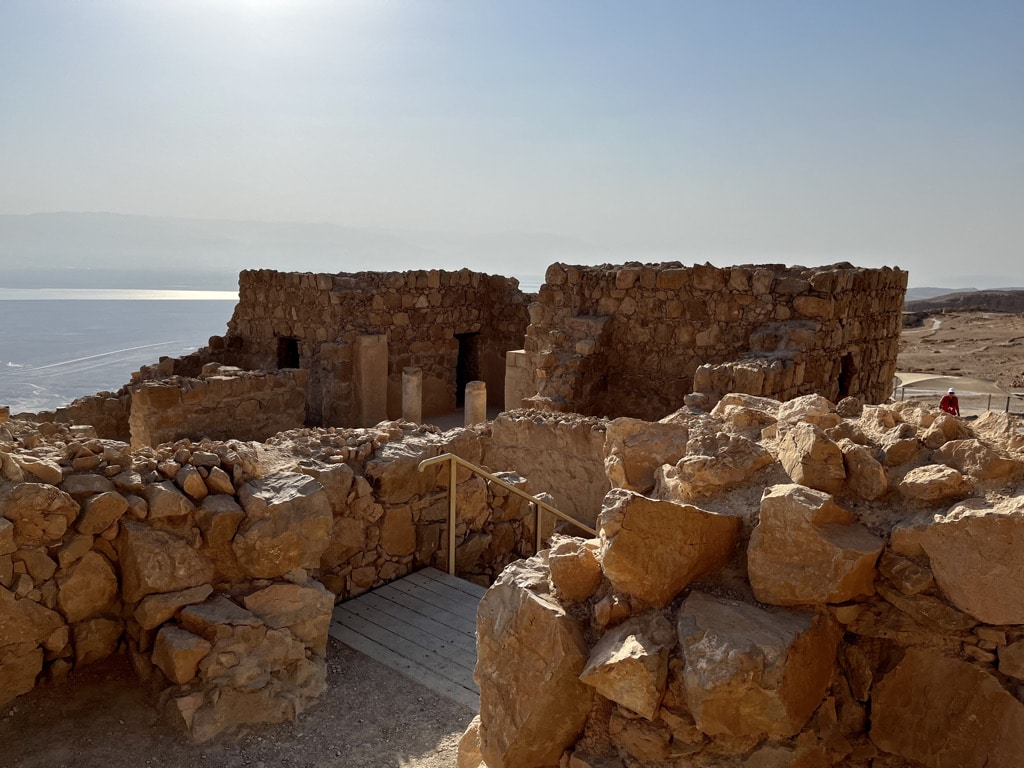
Masada is a fortress in the Judaean Desert, offering beautiful view of the Dead Sea. Originally built as a palace complex during the early Roman Empire by King Herod the Great, it stands as a symbol of the ancient kingdom of Israel. Masada recounts the story of its violent destruction and the heroic last stand of Jewish patriots against the Roman army in 73 A.D.

Ein Bokek, Dead Sea

Masada – Ein Bokek: 19km, 20min

We completed our exploration of Masada around 10:30 am, and the heat was already intense. We had a cool drink at the entrance coffee shop and then continued to the Dead Sea.

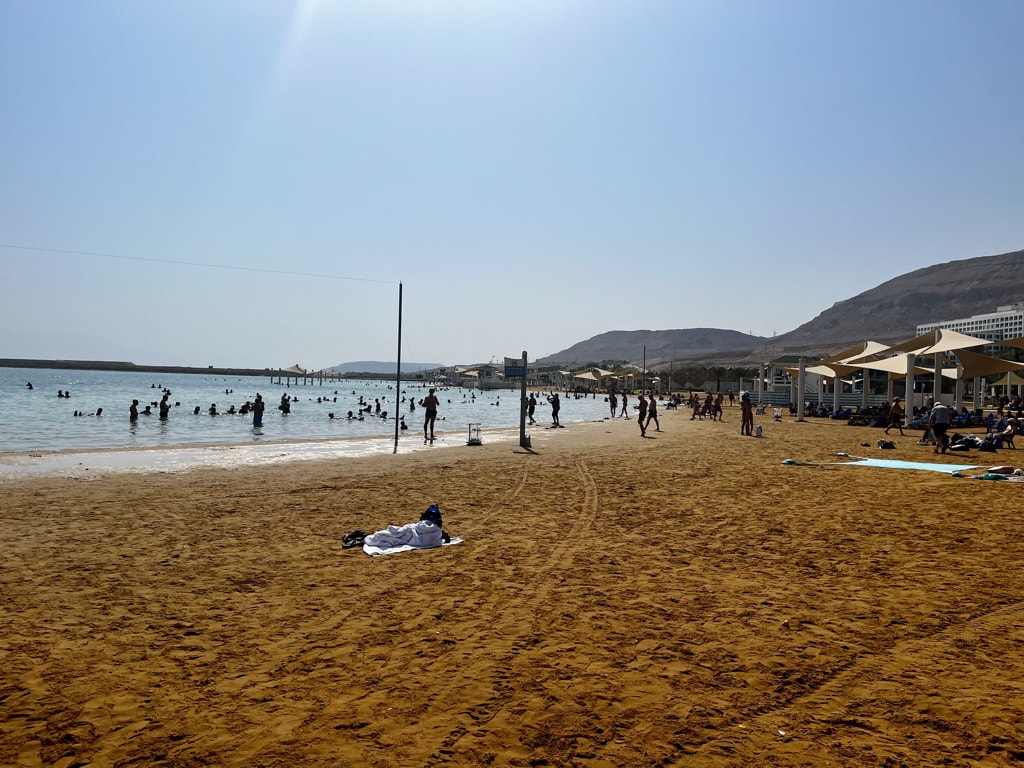
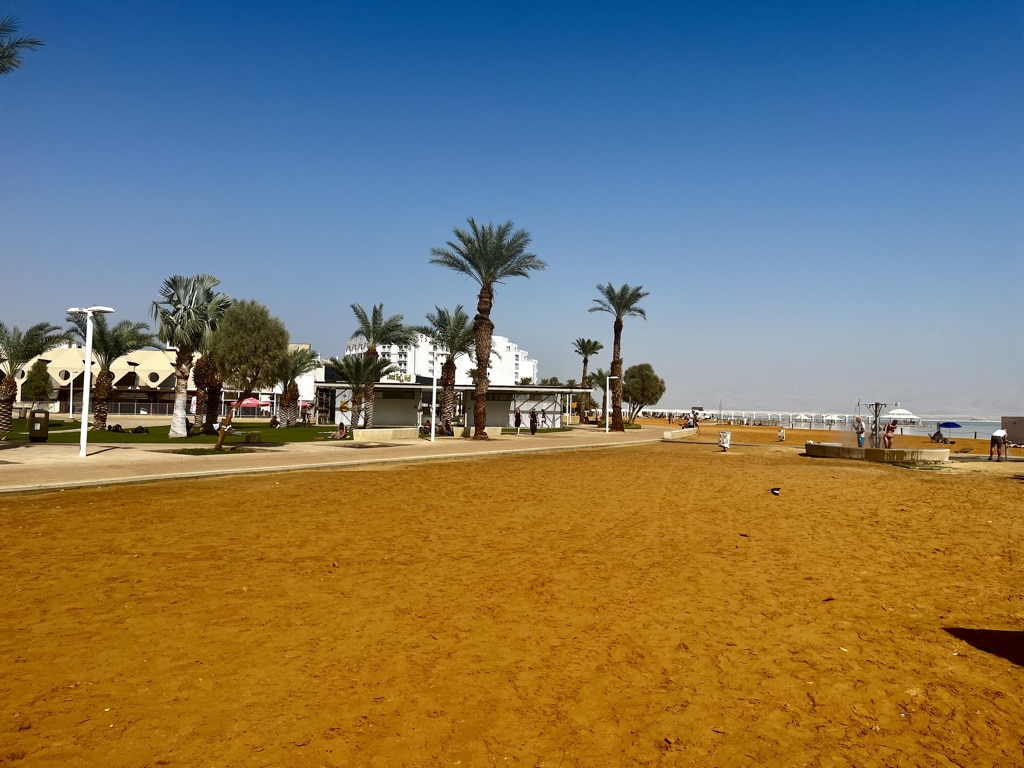
I studied the Dead Sea beaches a lot. It is not always easy to grasp where to go. Many resorts have private beaches but those are for their clients only. Anyway, the place for the half-day Dead Sea experience is Ein Bokek public beach. It is equipped with facilities like toilets, beach showers, chair rentals, and beach guards. The only drawback is that Dead Sea mud isn’t freely available; you can purchase it at a local shop near the beach.

We parked at the paid parking space opposite the Dead Sea Mall. Note that there are park meters, and cash was required during our visit—perhaps they’ve upgraded to card payment machines by now.

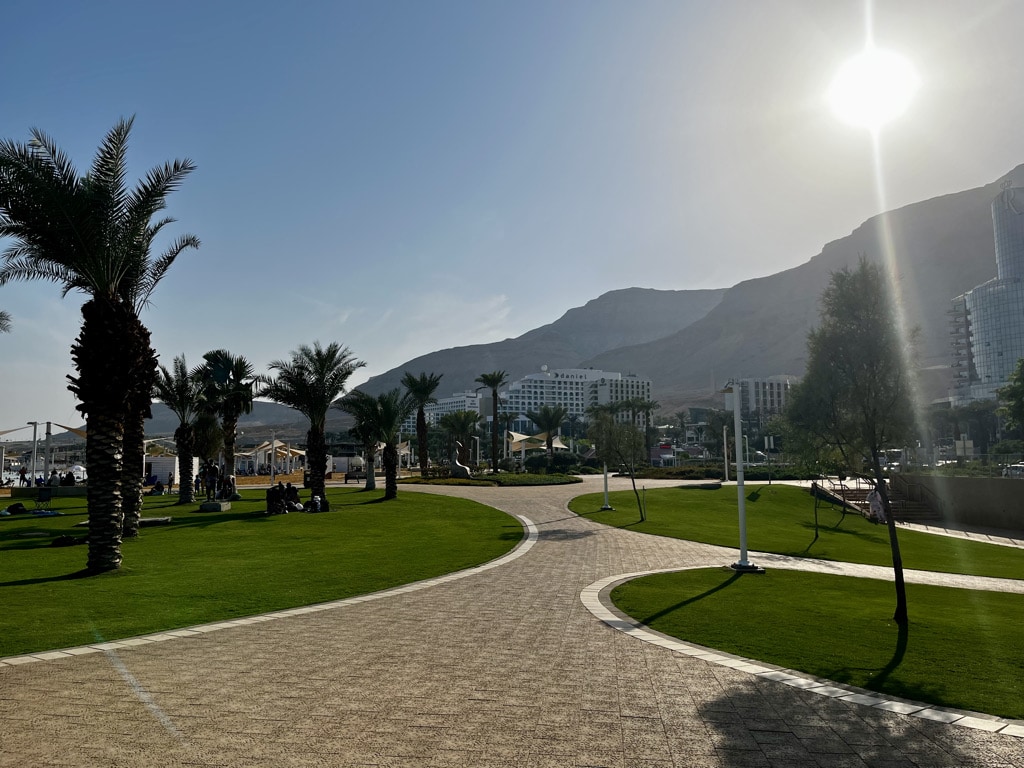
Floating in the Dead Sea is truly amazing, and we spent a delightful afternoon savoring the experience.

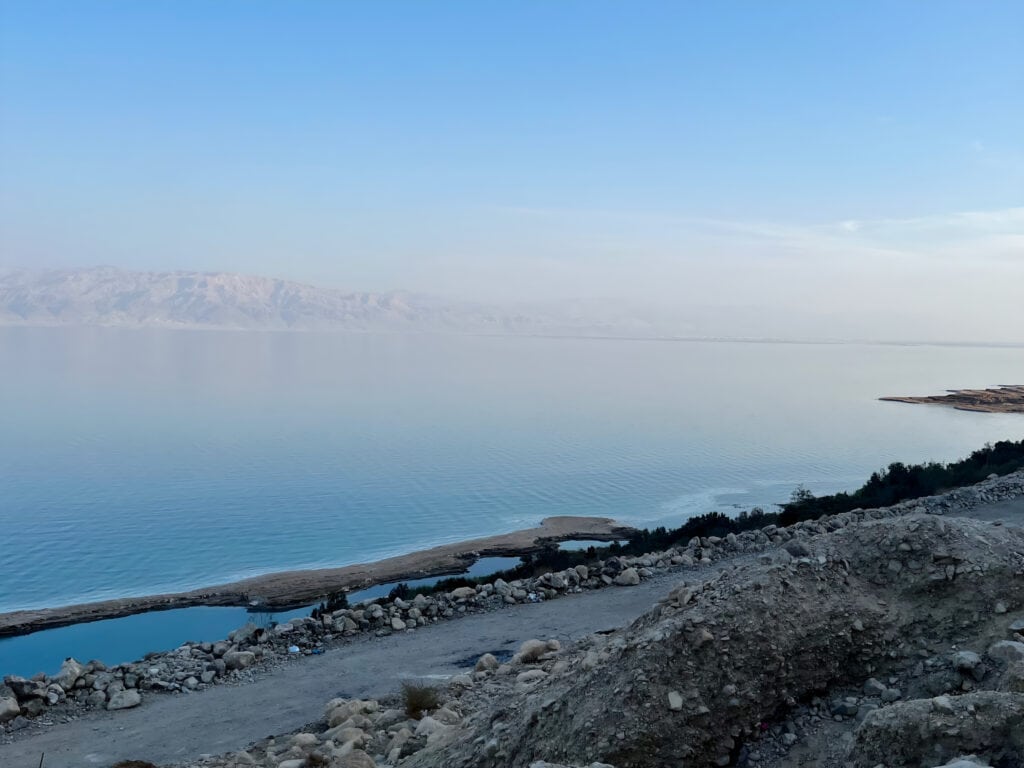
View of the Dead Sea in Israel
Dead Sea

Day 8: Jerusalem – Tel Aviv – return to Prague from our road trip to Israel

On the final day of our road trip, we packed up in Jerusalem to enjoy a half-day at the Tel Aviv beach before catching our flight back to Prague. Returning the car was convenient, thanks to the Hertz rental office right at the airport terminals.

The road trip to Israel was truly amazing, and I hope tourists will be back soon to this beautiful, culturally rich country.

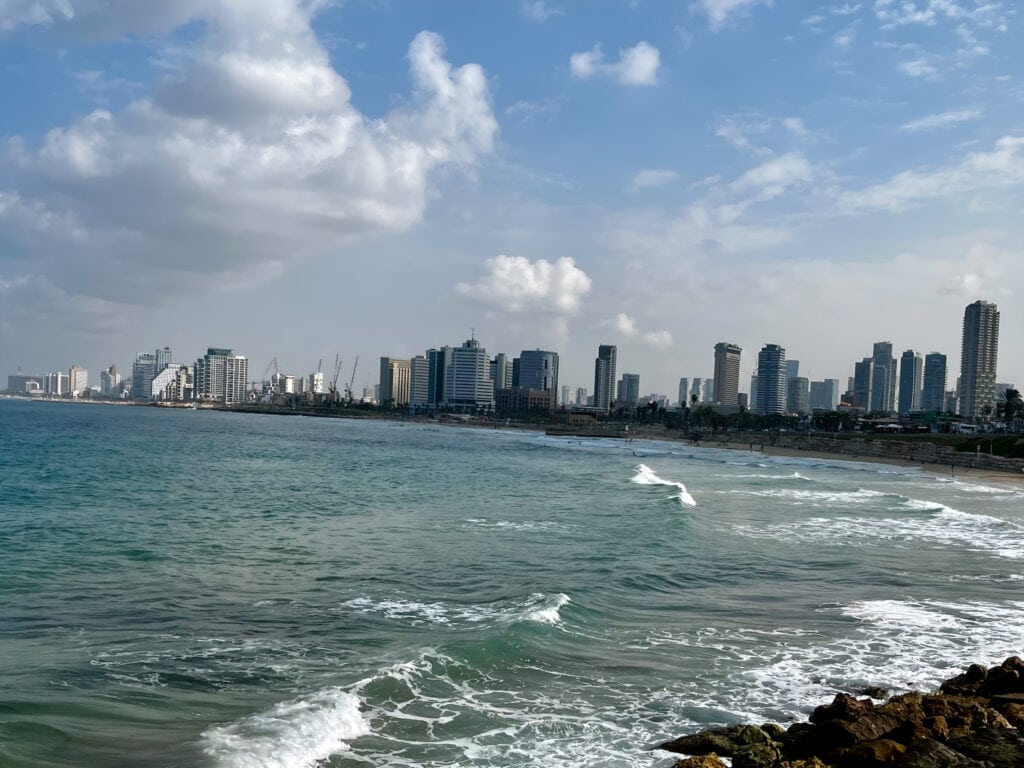
Tel Aviv Beachfront, Israel
Tel Aviv Beachfront


Enchanting 9-Day Road Trip to Jordan 🇯🇴, the home of Petra

As October comes to a close, Europe experiences a drop in temperature, prompting many to seek warmer destinations to extend the summer vibes. Following visits to Dubai and Israel during this period, the road trip to Jordan emerged as the ideal choice.


Practical insights for the road trip to Jordan

Jordan Visa and Travel Essentials:

Before booking our flight, I checked the Jordan visa requirements. This time, an e-visa was necessary, and I applied through the official page of the Jordan Ministry of Interior: Jordan E-Visa.

Jordan Pass:

Consider the Jordan Pass for seamless entry to tourist landmarks. It offers numerous advantages, saving time and eliminating the need for individual entry tickets. Our e-visa was complimentary by entering the Jordan Pass number in the visa application. For more information, visit Jordan Pass.

Mobile Data:

Discovering Airalo was a game-changer, especially for phones with e-SIM functionality. Download it to avoid the hassle of swapping physical SIM cards. Airalo allows easy purchase of e-SIM cards for almost every country, including regional options like Europe or Africa. I opted for the Jordan 30-day, 3GB data plan for USD18.

Local Currency:

The official currency is the Jordanian Dinar (JOD). Cash was essential, especially for accommodation payments, as many places required it. ATMs were available for cash withdrawals, and cards were accepted at shops, restaurants, and petrol stations.

Taxi:

In Amman, we relied on Uber for safe and efficient city travel.

Car Rental:

Choosing Monte Carlo Car Rental was a wise decision. They delivered the car to our hotel, and the process was seamless, with paperwork and payment done by card. Returning the car at their office near Amman airport was convenient, and the company provided excellent service, including full insurance and no surcharge for a second driver. Check out my Google review. 

Driving in Jordan:

Driving in Jordan was a straightforward experience. Departing from Amman on a Sunday likely contributed to an easier exit from the city, avoiding major urban rush hours. The main Jordan Desert Highway was smooth, while some other roads demanded heightened awareness due to the presence of potholes.

Dress code


Modest dress is advisable. I have definately avoided shorts and tank tops in the cities and historic areas. I wore t-shirts and skirts covering the knees and felt comfortable doing so. On the other hand I felt comfortable wearing t-shirts and little longer shorts around Dead Sea, in Wadi Rum desert or in Aquaba.


Day 1: Discovering Amman

We arrived in Amman during the early morning hours, taking a taxi to reach our hotel. Finding an accommodation with a 24-hour reception ensured a seamless check-in process. We stayed in Shams Alweibdeh Hotel Apartments. After few hours of sleep, we started our exploration of Amman. Given the city’s size, we decided to use Uber for our first destination – the Amman Citadel.

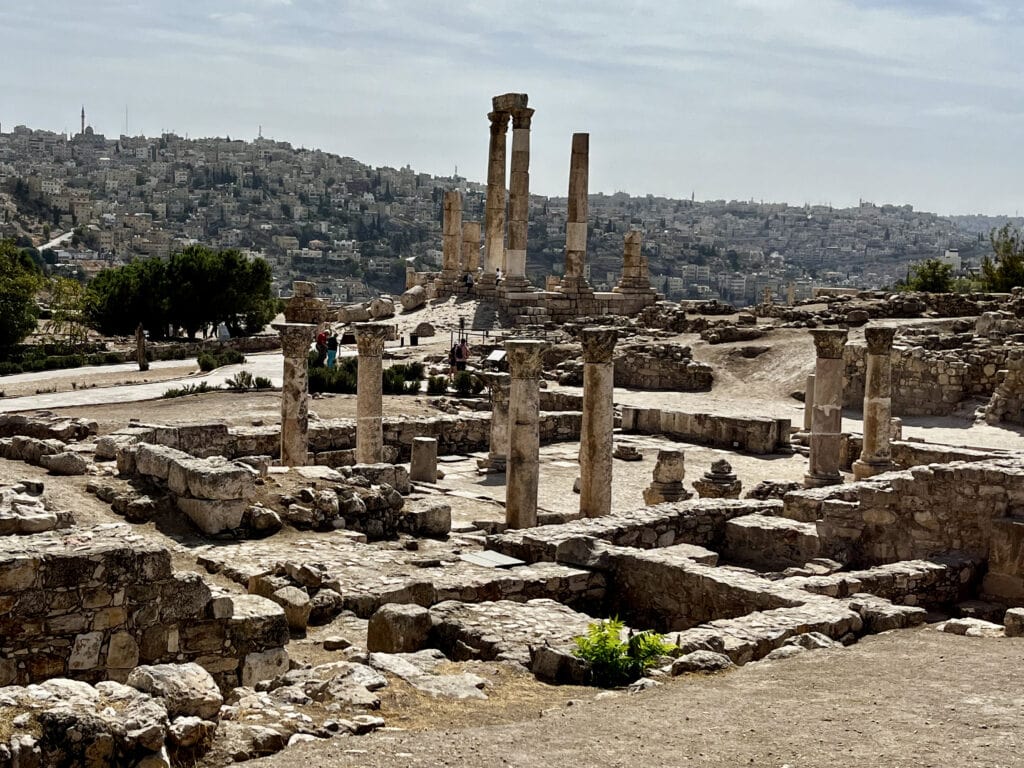
The Amman Citadel

Located on the highest hill in Amman, the Citadel is a place to see artifacts spanning the Bronze and Iron Ages, along with remnants from the Roman, Umayyad, and Byzantine periods. Presenting our Jordan Pass at the entrance, we proceed to explore the area.

Roman Theater:

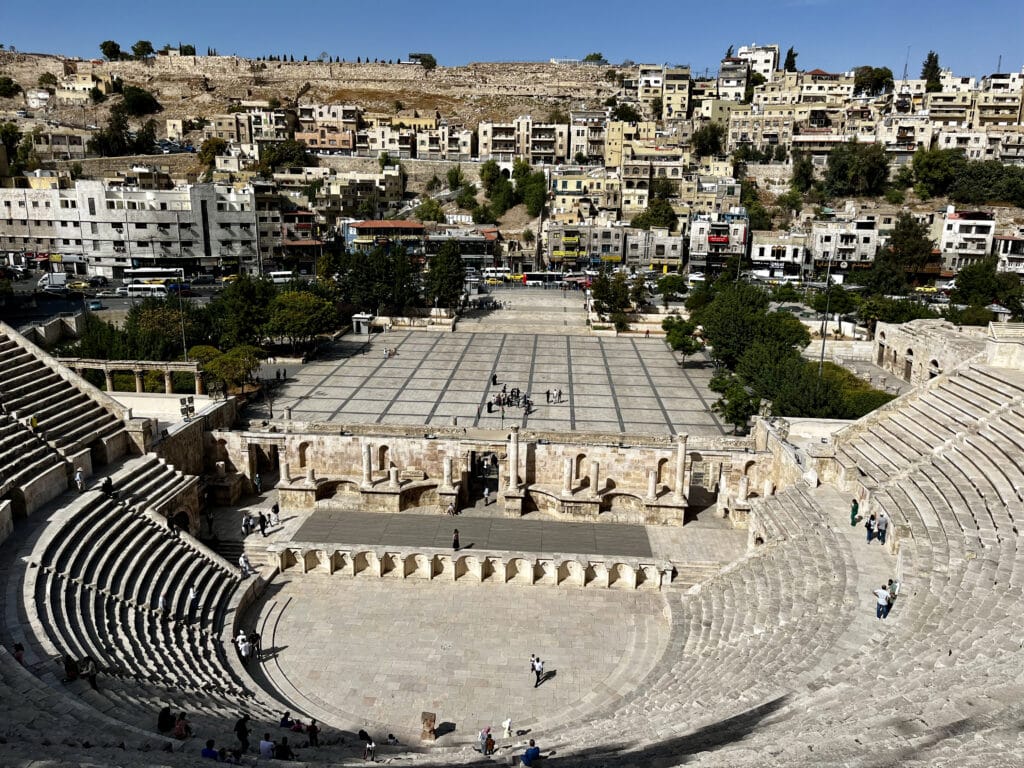
Our journey continued with a walk from the Amman Citadel to our next destination, the Roman Theater. The history of the place dates back to 2 AD. It seated up 6000 people.
Making use of our Jordan pass we entered the site. It is impressive. Climbing all the way up the stairs, sit there for a bit and observe the city was absolutely worth it.

Rainbow street

After visiting the Roman Theather, our journey led us to the Grand Husseini Mosque. Unfortunately, ongoing construction and renovations spoiled our view of the mosque. Up next was the Rainbow street. We had walk uphill to reach the street. Rainbow streets is a plesant place with coffeshops and shops. We set down in one of the restaurants to have some lunch.

The Amman Citadel, Jordan
The Amman Citadel
The Roman Theather, Jordan
The Roman Theather
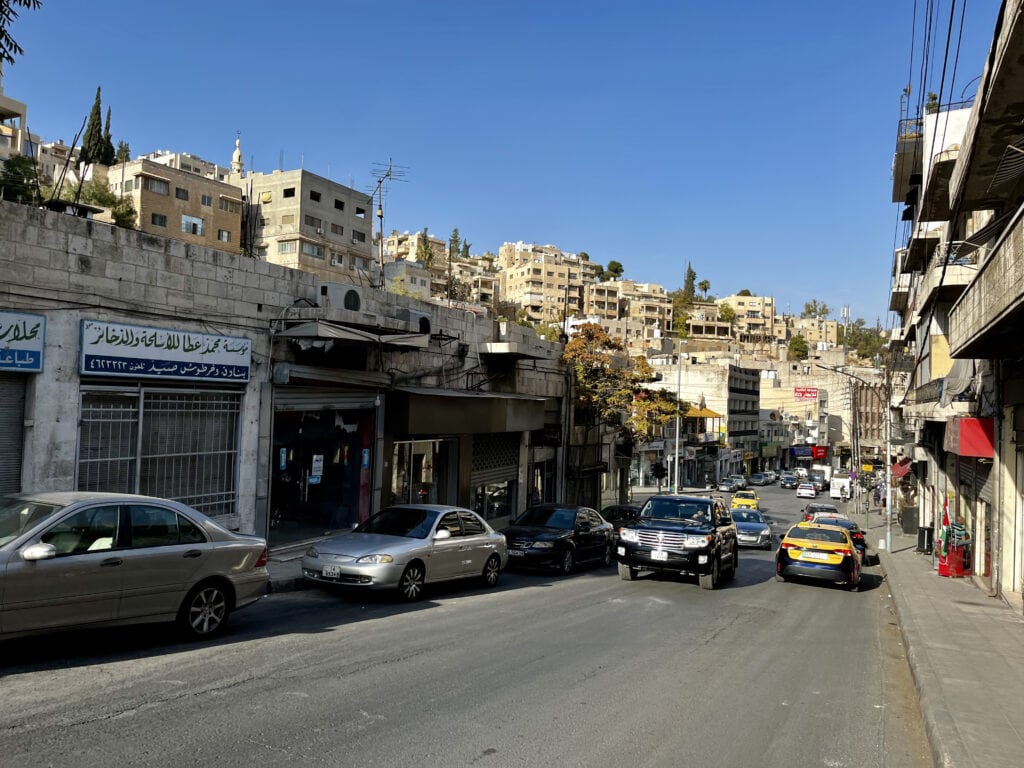
A street in Amman
A street in Amman

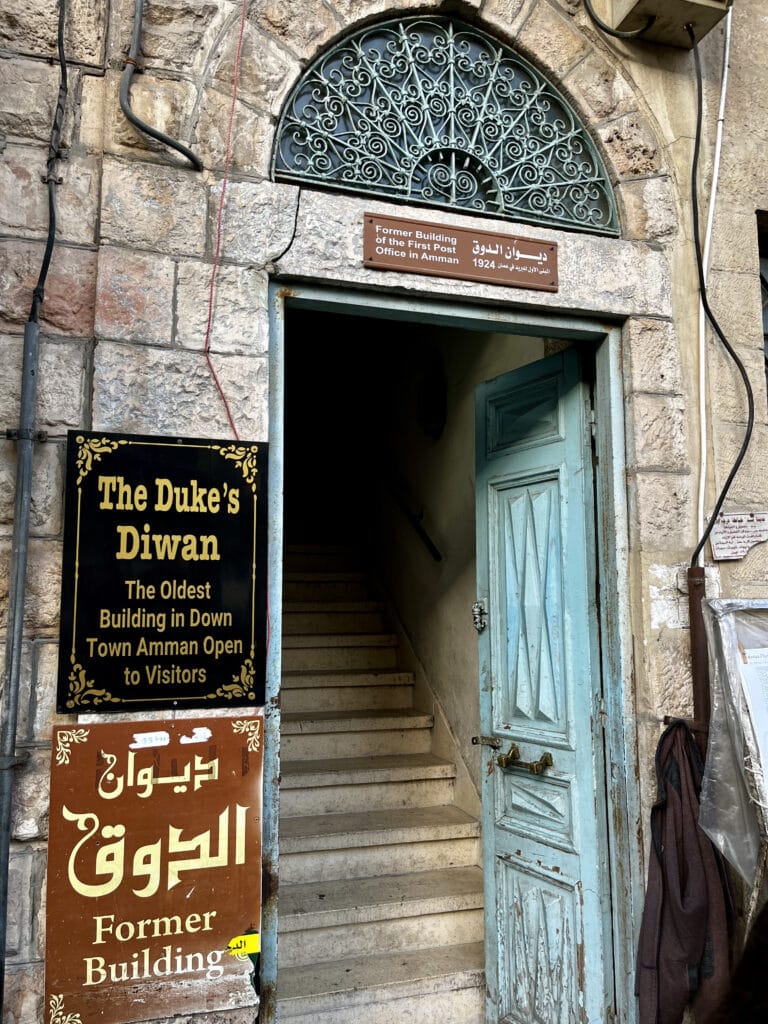
Our exploration of Amman continued through the busy Downtown streets as we wanted to see The Duke’s Diwan house, which served as the city’s first post office. I must admit that we nearly missed the house in the busy street. After taking a picture we concluded our afternoon program, catching Uber back to our hotel.

Duke Diwan House, Jordan

Day 2: Amman – Jerash – Dead Sea

Jerash

Our journey started with the convenient delivery of our rental car by Monte Carlo Car Rental to our hotel.
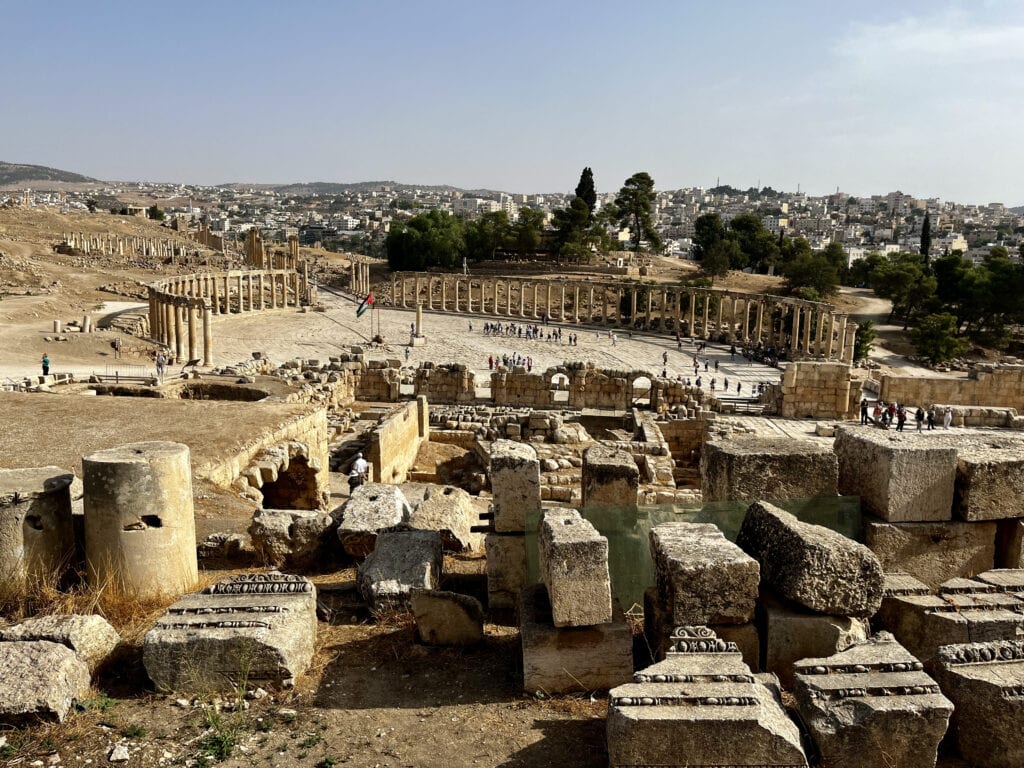
Our first destination was Jerash, situated approximately 52 kilometers away from Amman, a drive that took us around 55 minutes. Upon arrival, we parked at the Jerash Visitor Free parking area, right in front of the landmark entrance. Making use of our Jordan Pass, we entered the area to explore the ruins of the walled Greco-Roman settlement of Gerasa.

Walking around Jerash, we looked at:

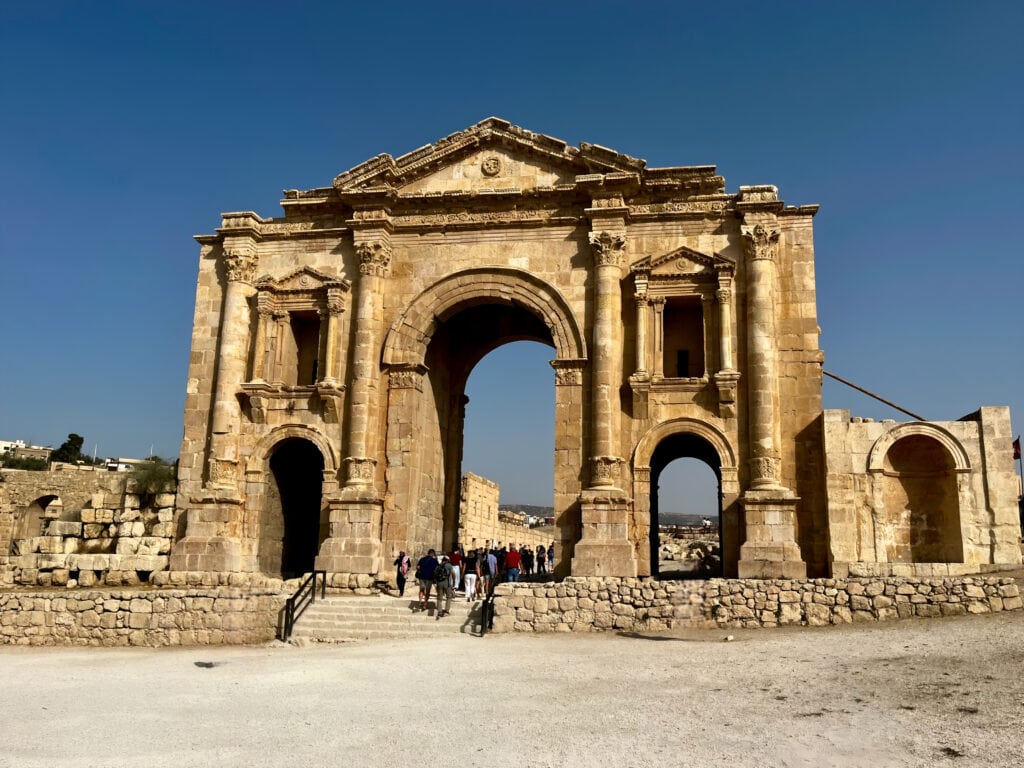
Hadrian’s Arch

It was built in 129 AD and was erected to honor and celebrate the visit of the Emperor Hadrian.

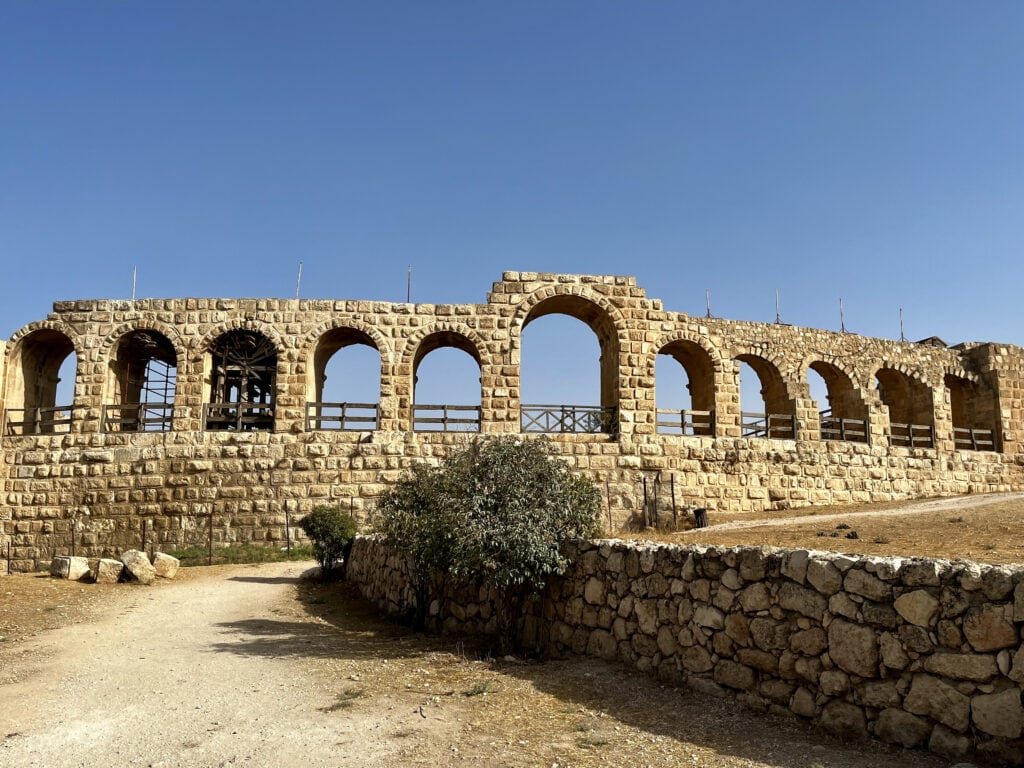
Hippodrome:

It dates back to the Roman period, reflecting the city’s historical significance during the Roman Empire. The hippodrome in ancient times was a large stadium or arena primarily used for chariot races and other public spectacles.

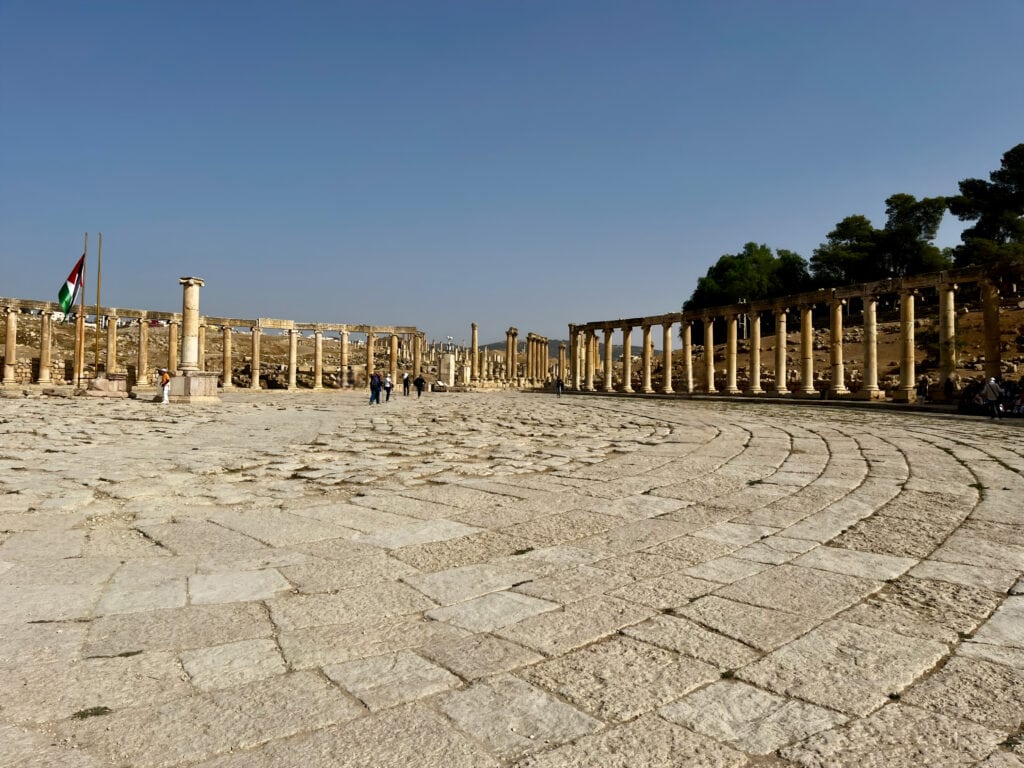
The Cardo Maximus

It was likely constructed in the 1st century AD and expanded during the 2nd century AD. The columns are topped with Corinthian capitals, adding to the grandeur of the street. The street itself is paved with large stones, and the remnants of a drainage system can still be seen.

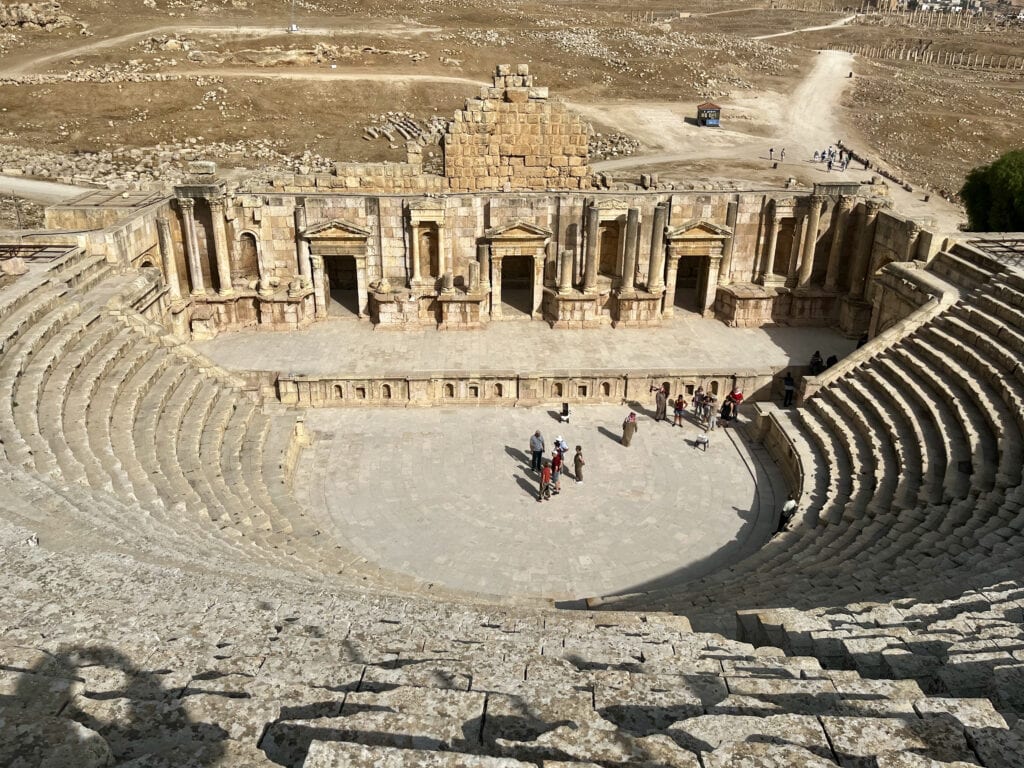
South Theather

A classic Roman-style theater with a semi-circular orchestra and a tiered seating area. It can accommodate a large number of spectators. The theater is known for its impressive acoustics, allowing performances to be heard by the entire audience.

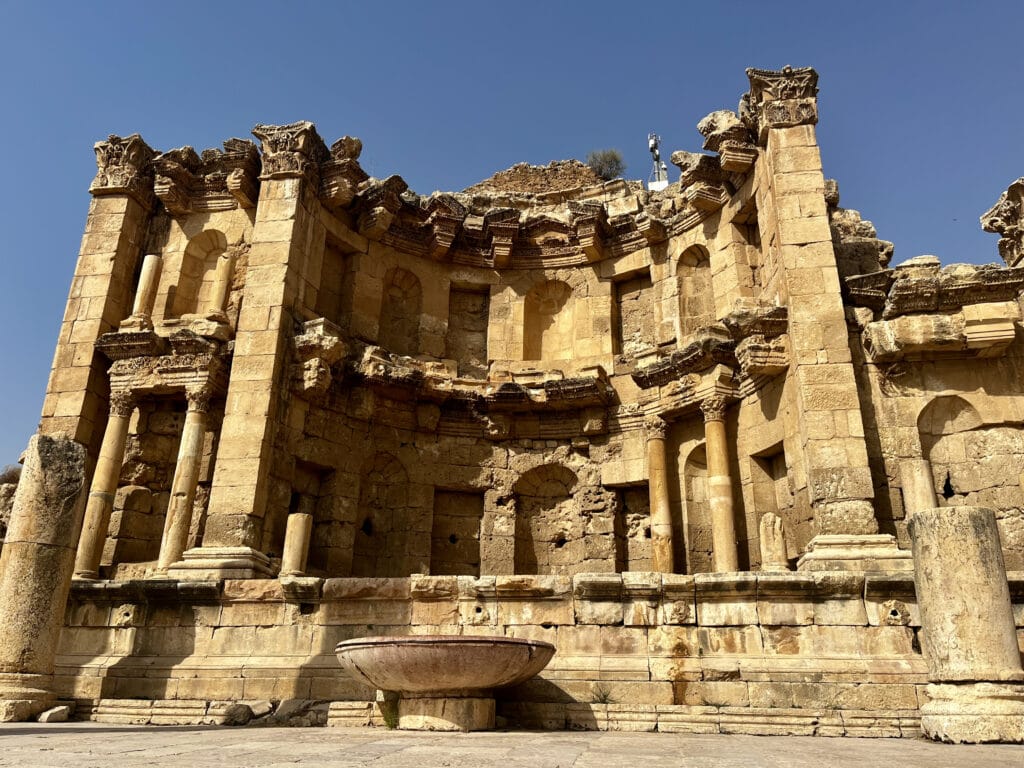
Nymphaeum

The Nymphaeum, finished in 191 AD, is a substantial fountain situated on the Cardo. Its primary function was to enhance the numerous small public fountains already present along the Cardo by serving as a central water source.

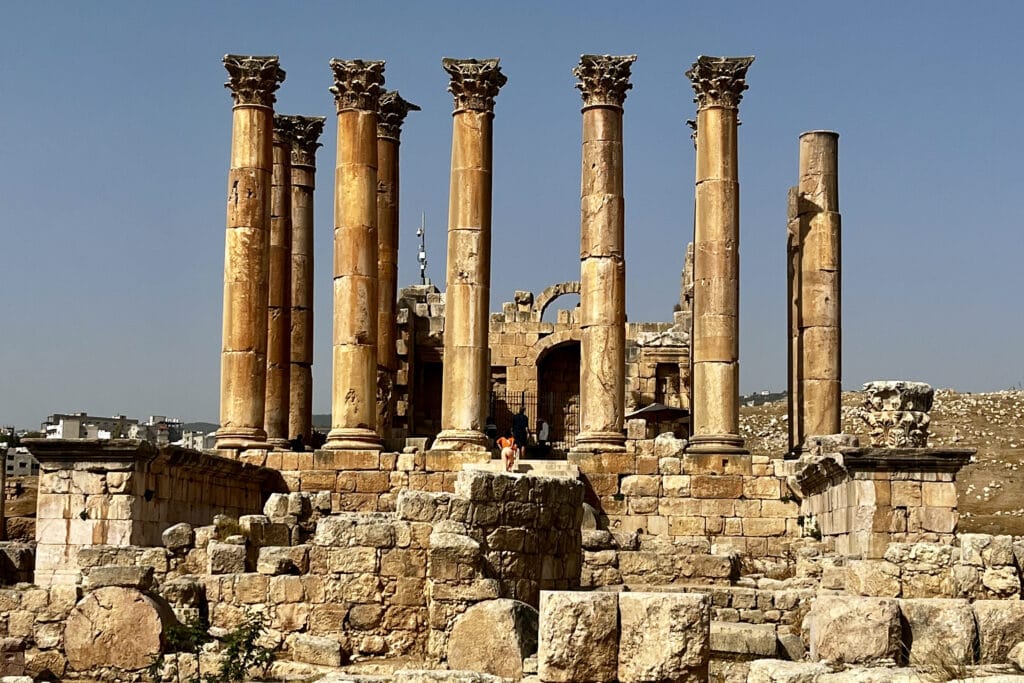
Artemis Temple

The temple is dedicated to Artemis, who was a significant deity in ancient Greek and Roman mythology. Artemis was often associated with the hunt, wilderness, and nature.

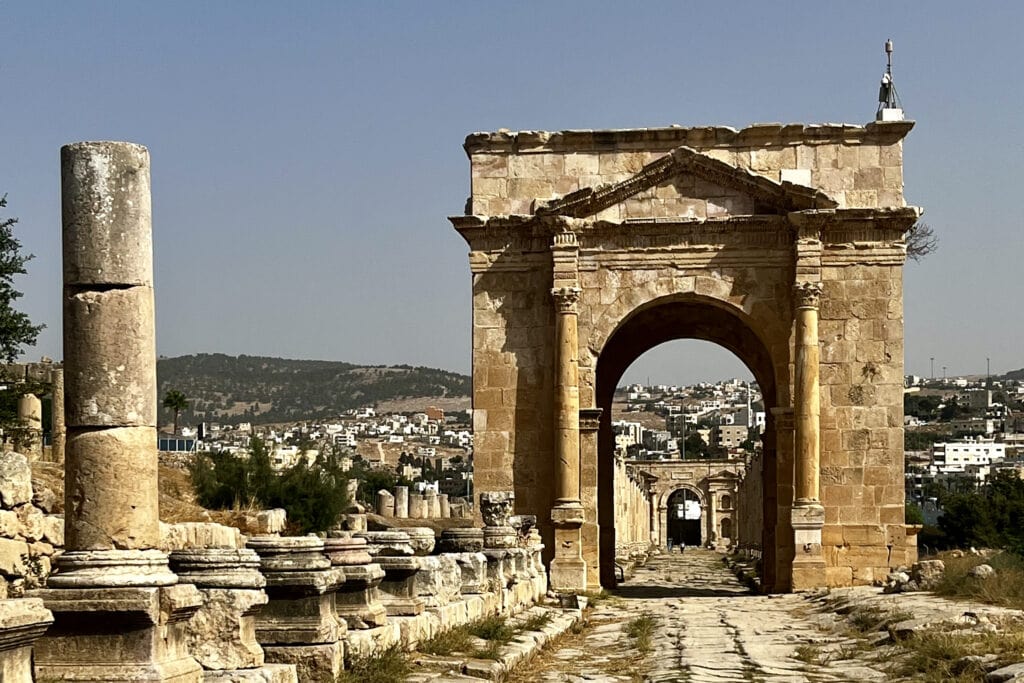
The North Gate is an impressive structure featuring a monumental entrance arch, columns, and other architectural elements characteristic of Roman city gates. Such gates served as both functional entrances and symbolic markers of the city.


Dead Sea

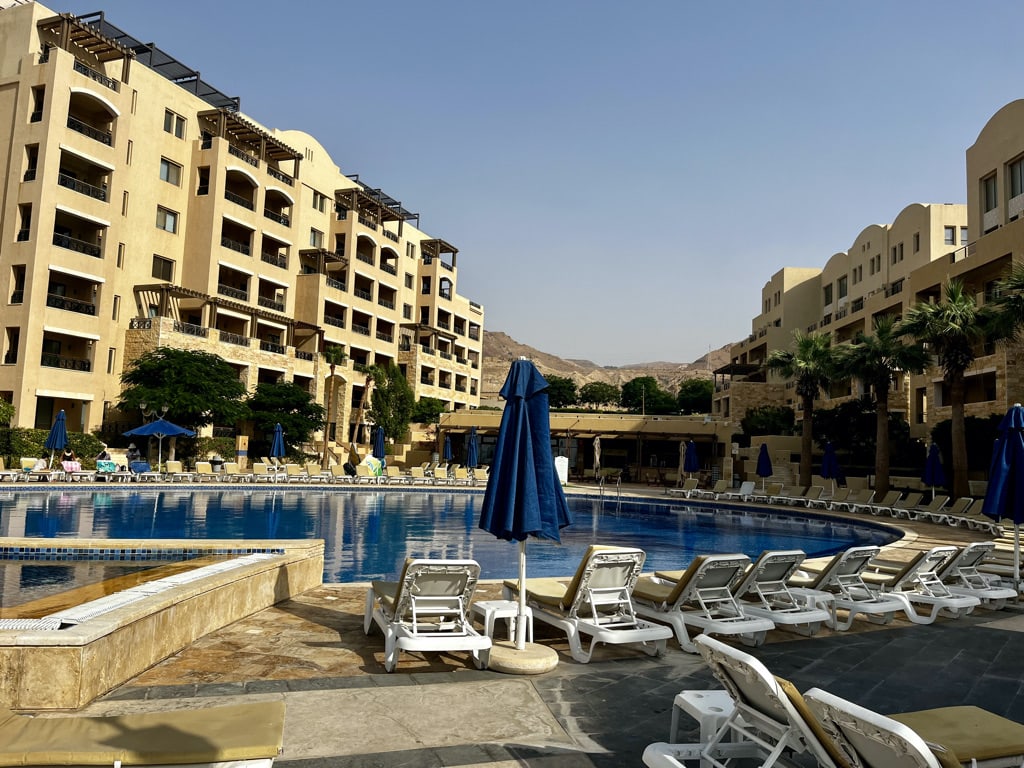
After touring the ruins of Jerash, we set off for our drive to the Dead Sea, covering approximately 95 kilometers in about 1.5 hours. Our accommodation was booked in one of the apartments at Samarah Dead Sea Resort. We proceeded through the resort’s front gate, where our host awaited us and guided us to the private parking lot.
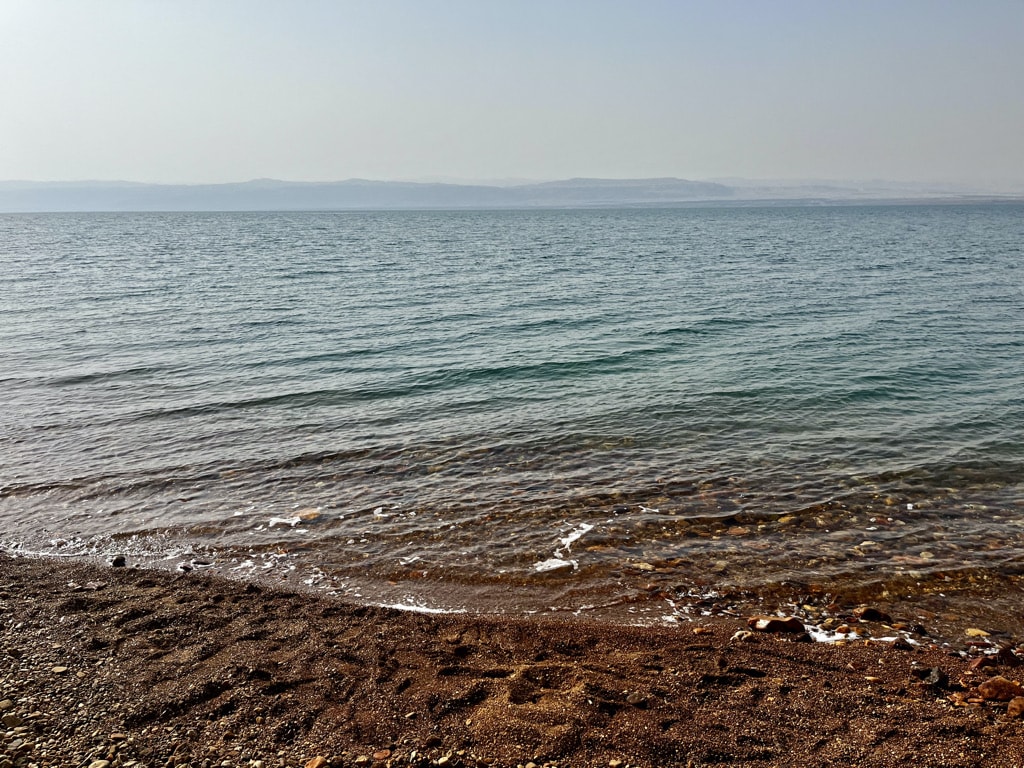
After stopping at Samarah Mall for lunch, we later checked into our accommodation. We spent the afternoon floating in the Dead Sea, applying to rejuvenate Dead Sea mud as well as enjoying the resort swimming pools.


Day 3: Dead Sea – Kerak Castle – Wadi Musa

The following day, we resumed our journey, sticking to the route along the Dead Sea and making our way to Wadi Mujib. We were eager to explore one of their adventure trails, but unfortunately, we discovered that the trails were restricted to adults aged 18 and above, and we had our teenage daughters with us. While this was fairly disappointing, I quickly came up with an alternative plan: a visit to Kerak Castle.

The drive from Samarah Dead Sea Resort to Kerak took approximately 1.5 hours. The journey was pretty interesting as the city sits at an elevation of about 1000 meters above sea level, while Samarah Dead Sea Resort is situated at -390 meters below sea level.

We parked our car in the Kerak Castle car park, which isn’t the official parking area you might expect at the castle entrance. It’s a private space where parking comes at a cost unless you opt to dine at the owner’s restaurant. Given the owner’s hospitality, we chose to visit the restaurant and enjoy the local meal after the castle visit.

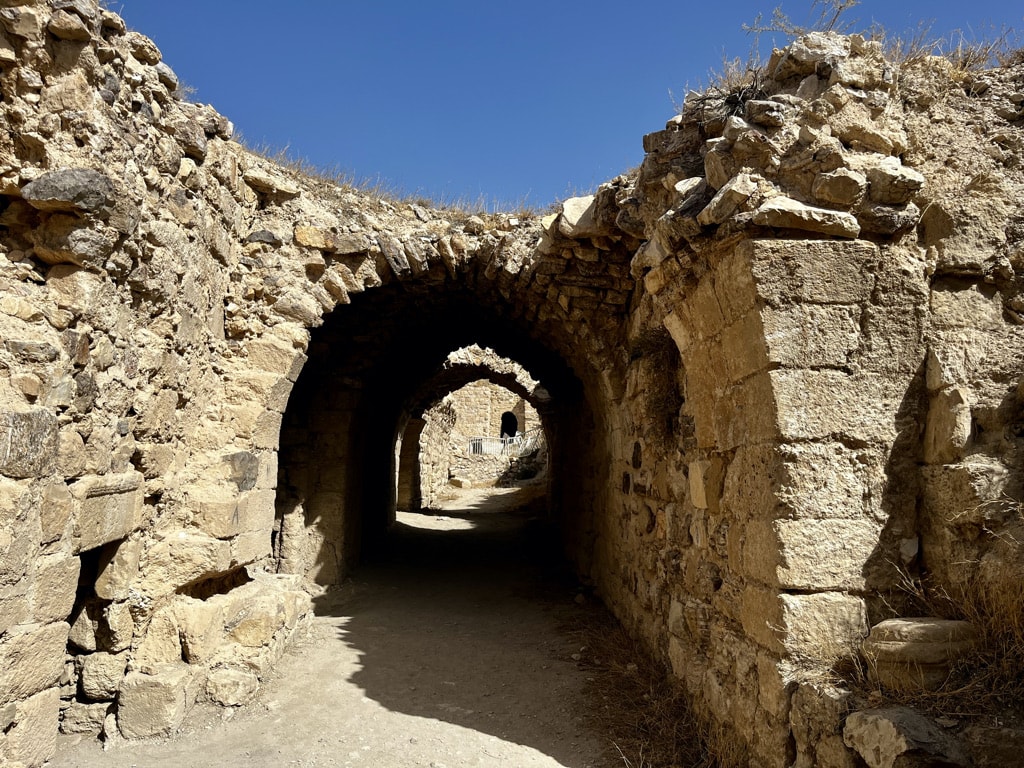
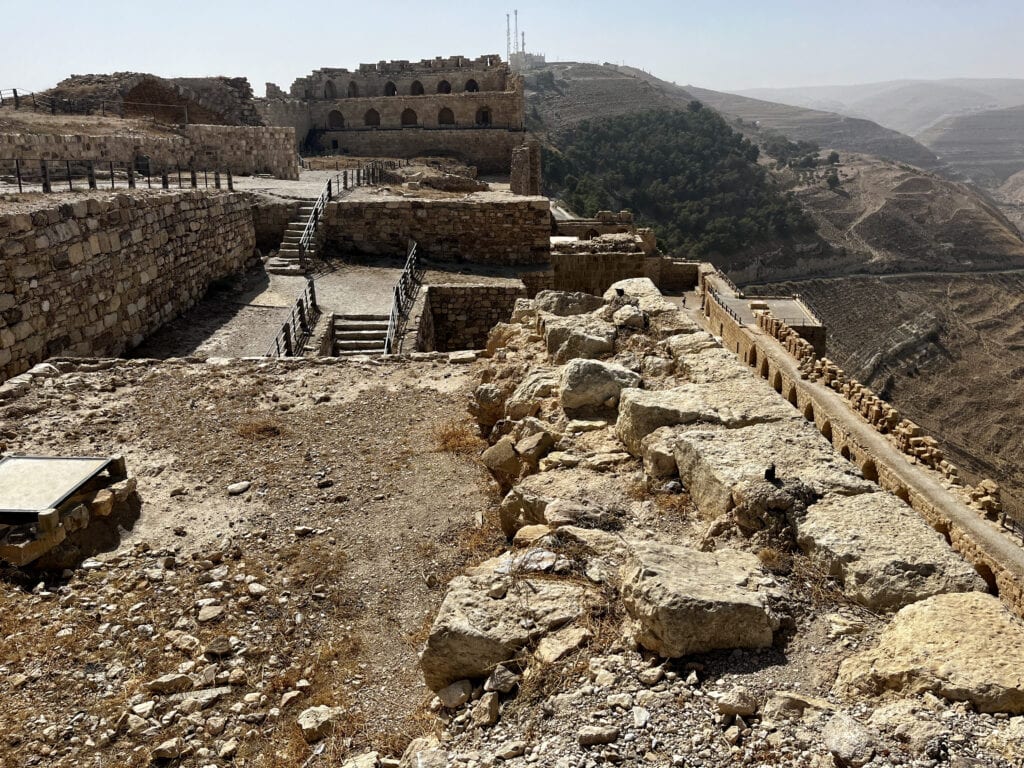
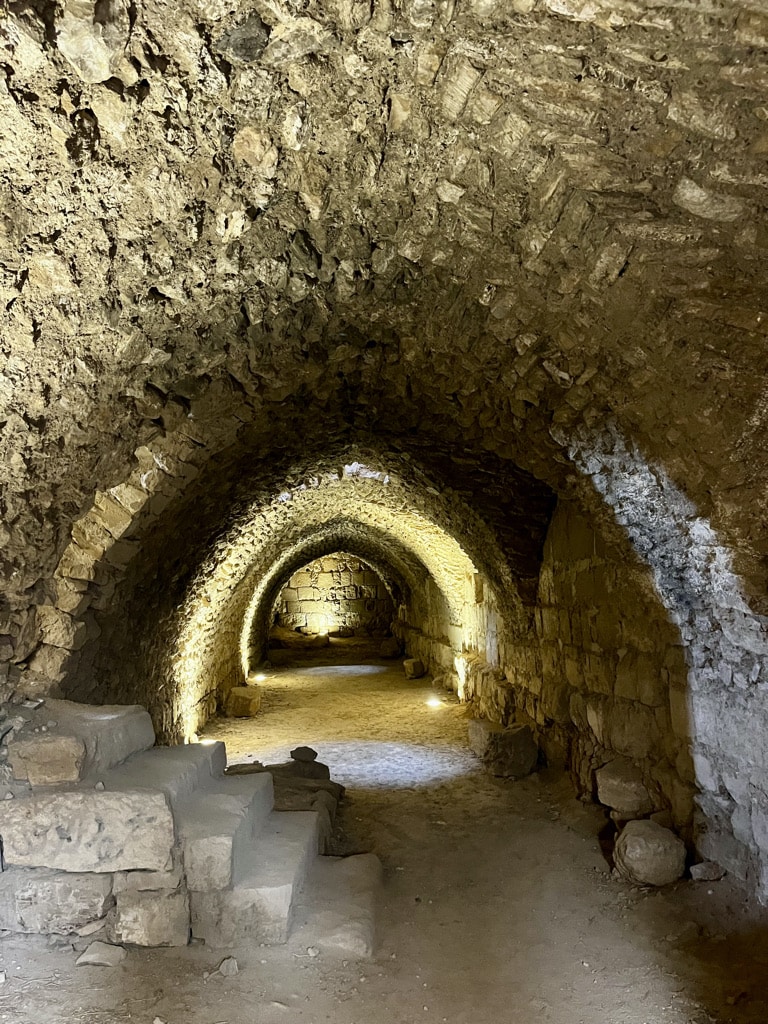
Kerak Castle

We accessed the castle by showing our Jordan Pass.

The castle sits on a hilltop, providing great views of the surrounding area.
Originating in the 12th century, the castle underwent continuous expansion and fortification by various rulers, such as the Crusaders and the Mamluks. Its strategic positioning along the historic trade routes connecting Egypt and Syria played a pivotal role in the medieval conflicts between Crusaders and Muslims in the region.


Wadi Musa

Following lunch, we started our drive to Wadi Musa, the town next to the ancient city of Petra. Our route from Kerak led us to the Desert Highway (Highway 15), the primary thoroughfare linking the north and south of Jordan. The drive covered approximately 180 kilometers and took around 2.5 hours.

There are many places to stay in Wadi Musa, from expensive hotels right next to the entrance of Petra to different private apartments scattered around the town. We booked our accomodation with Stay Classy Apartments. The parking was available right in front of the house and the Petra visitors parking was about 5min drive.


Day 4: Ancient City of Petra

Petra is the ancient Nabataean caravan city, situated between the Red Sea and the Dead Sea. It was an important crossroads between Arabia, Egypt, and Syria-Phoenicia. It is a UNESCO World Heritage Site since 1985. Petra is sometimes called the ‘Lost City’, as it was completely lost to the Western world until the Swiss traveler, Johann Ludwig Burckhardt rediscovered it in 1812.
To avoid crowds and the heat, it’s good to arrive in Petra early in the morning.

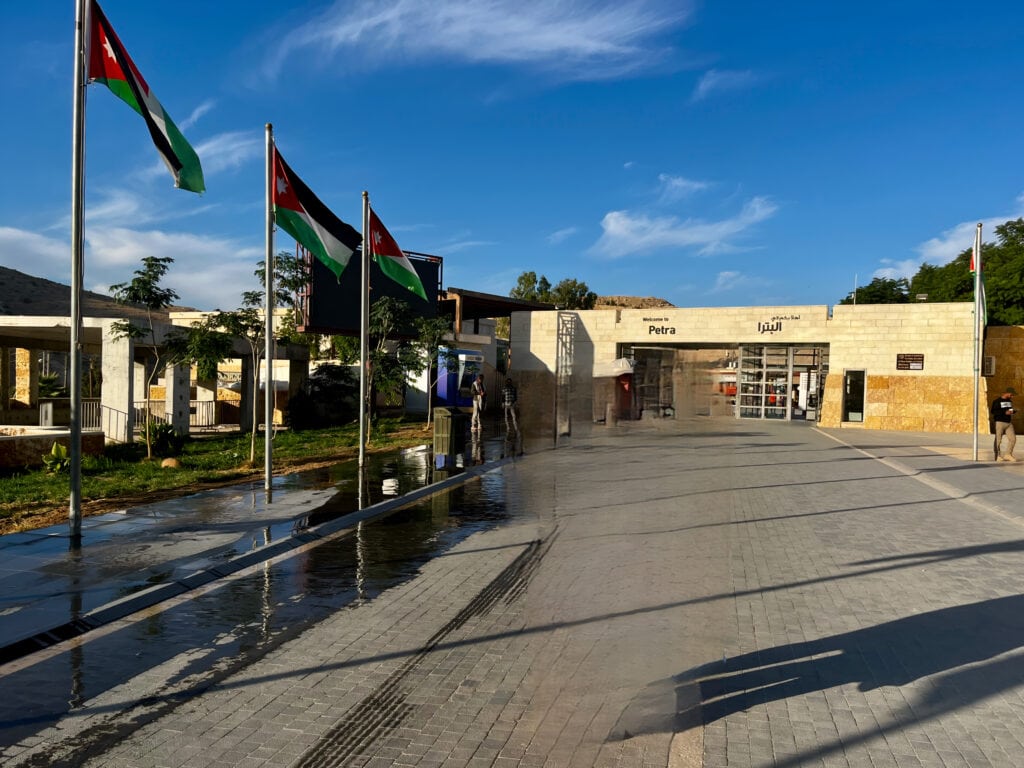
We parked our car at the free parking area located in front of the visitor center.

As you enter the area, you’ll see the ticket office. Even if you have your Jordan Pass, it’s necessary to proceed there. Upon presenting the pass, they will issue tickets for entry into Petra town. Since we were unaware of this process, we had to backtrack from the entry point.

What did we explore in Petra:

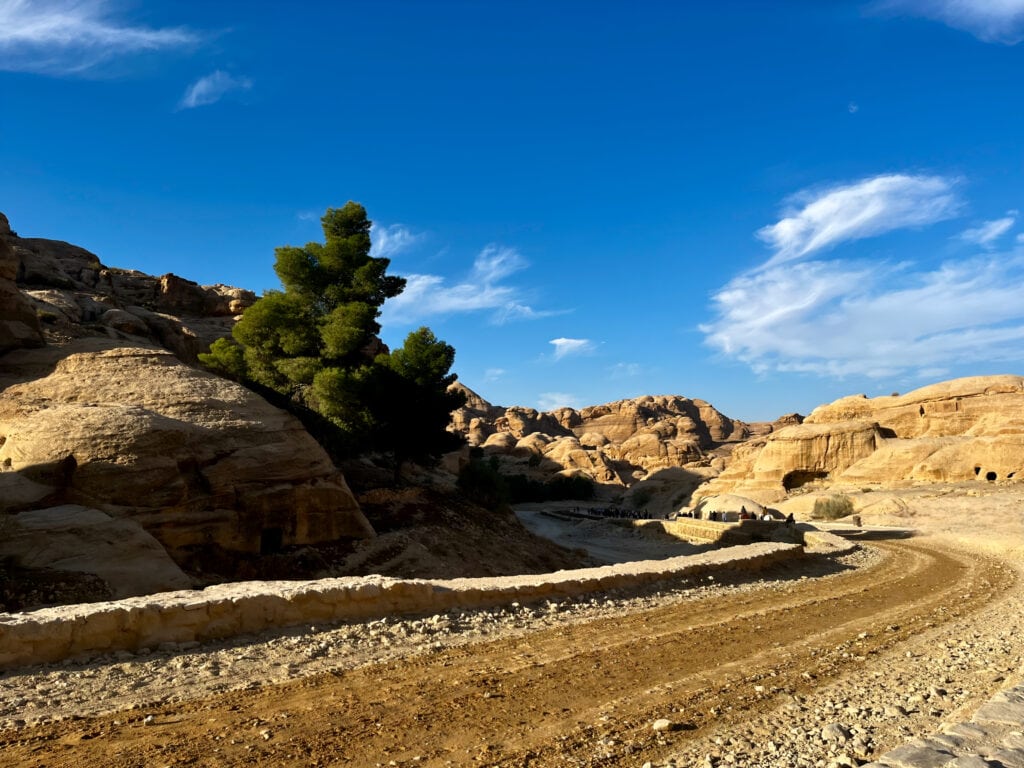
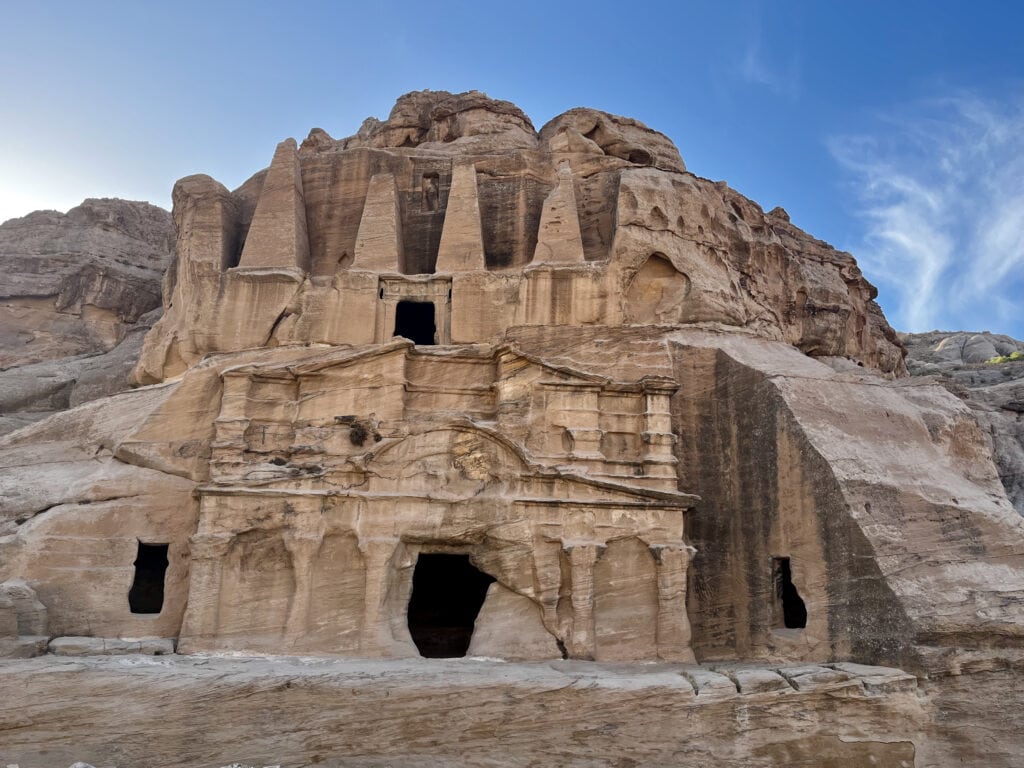
After entering Petra, we walked on a dirt road toward the main city. On the way, we passed by the first of many beautiful sights, The Obelisk Tomb, the burial place the Nabateans built around 40-70AD, and Bab as-Siq Triclinium. The triclinium is a dining room with three benches on which the guests reclined while feasting.

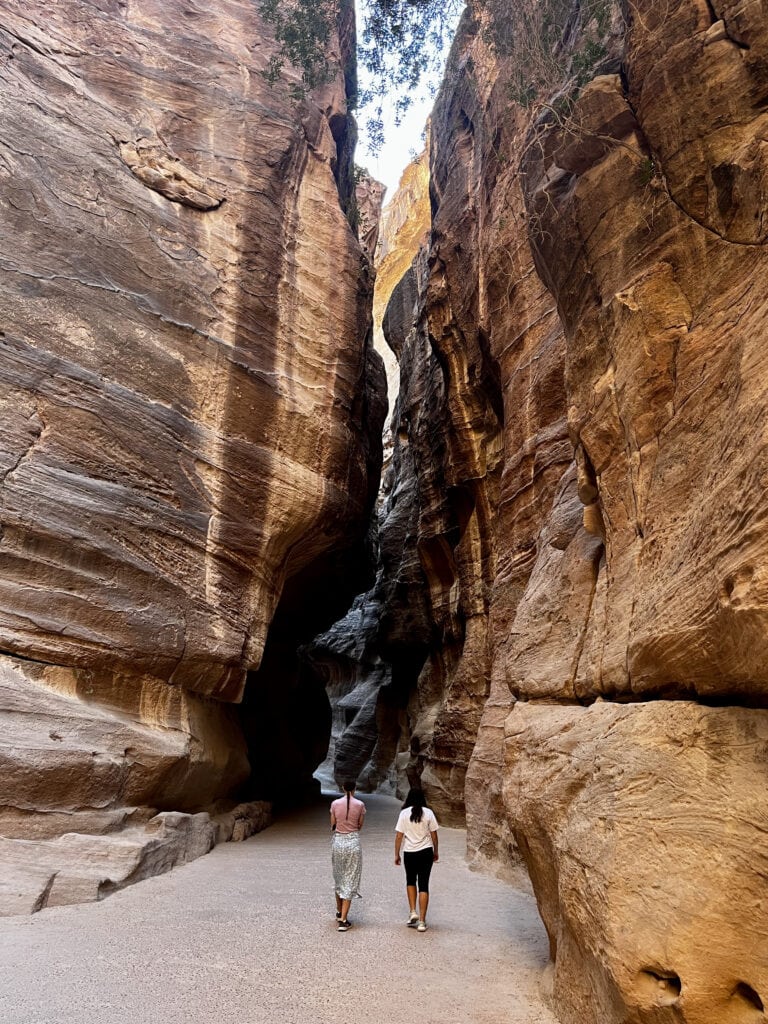
The Siq

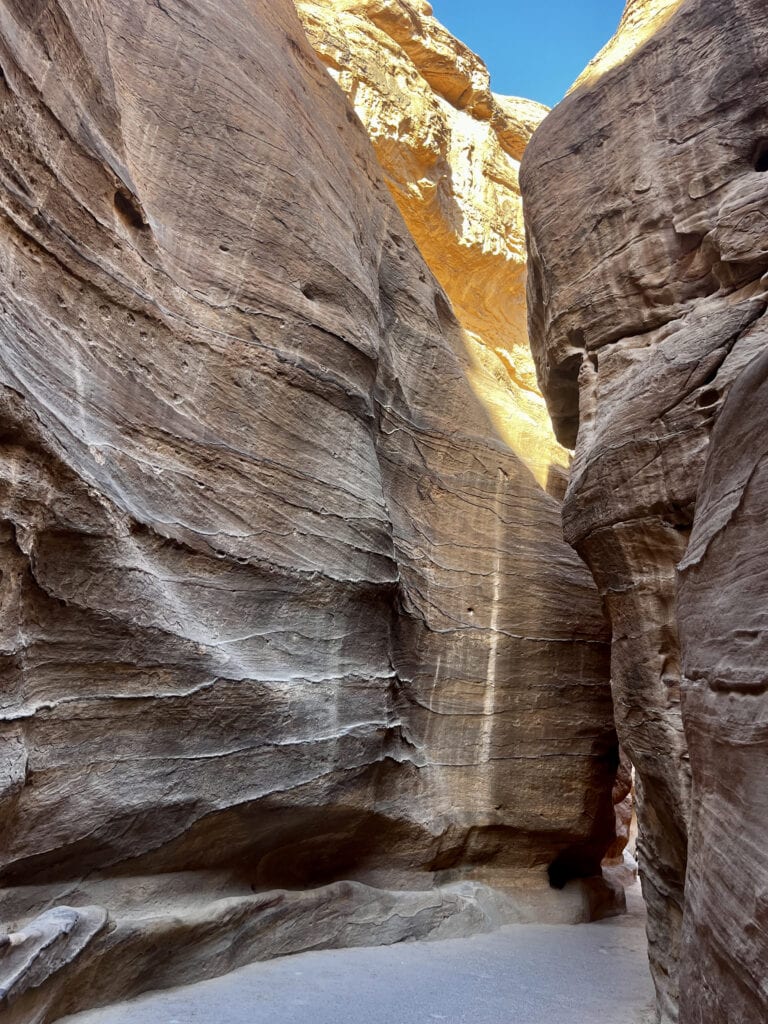
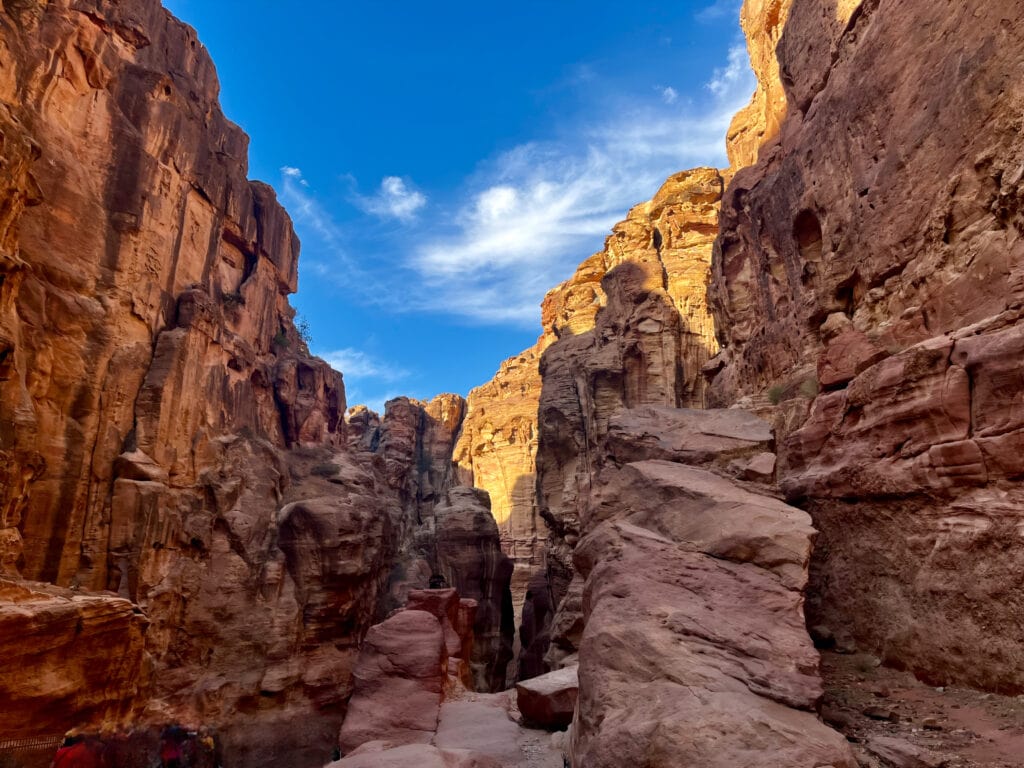
After a short walk, we arrived at the Siq, a breathtaking gorge marking the main entrance to Petra. Local vendors near the entrance provided services such as horse rides, but we opted not to take advantage of these offers and continued into the gorge. I must admit, the experience was truly breathtaking. The towering walls of the Siq shielded us from the sun, providing a cool environment not just in the morning but also as we exited in the early afternoon when concluding our visit to Petra.
The Treasury

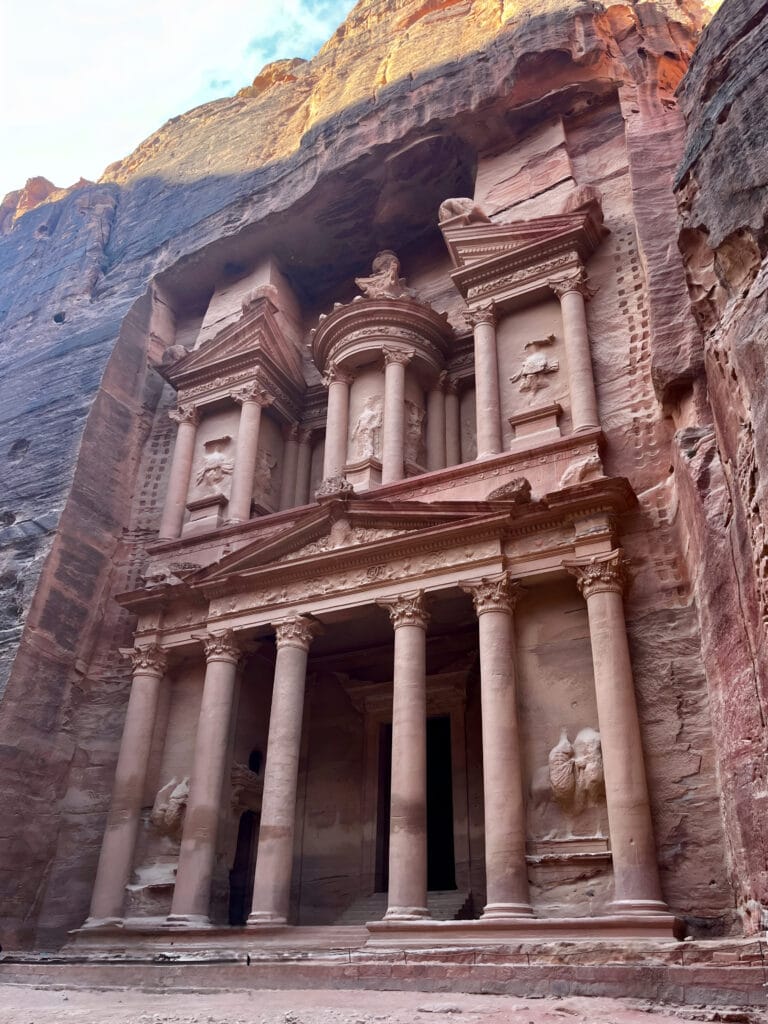
At the end of The Siq Gorge is the iconic place that comes to mind when you mention Petra: The Treasury. The images of this site are widely recognized, and for good reason—it’s truly amazing.

The Treasury, known as Al-Khazneh in Arabic, is a rock-cut tomb constructed as a mausoleum and crypt at the start of the 1st century AD. According to local legend, there is a suggestion that “ancient pharaonic treasures” were concealed in the urn positioned right at the top of the tomb.

The Treasury, Petra
The Treasury

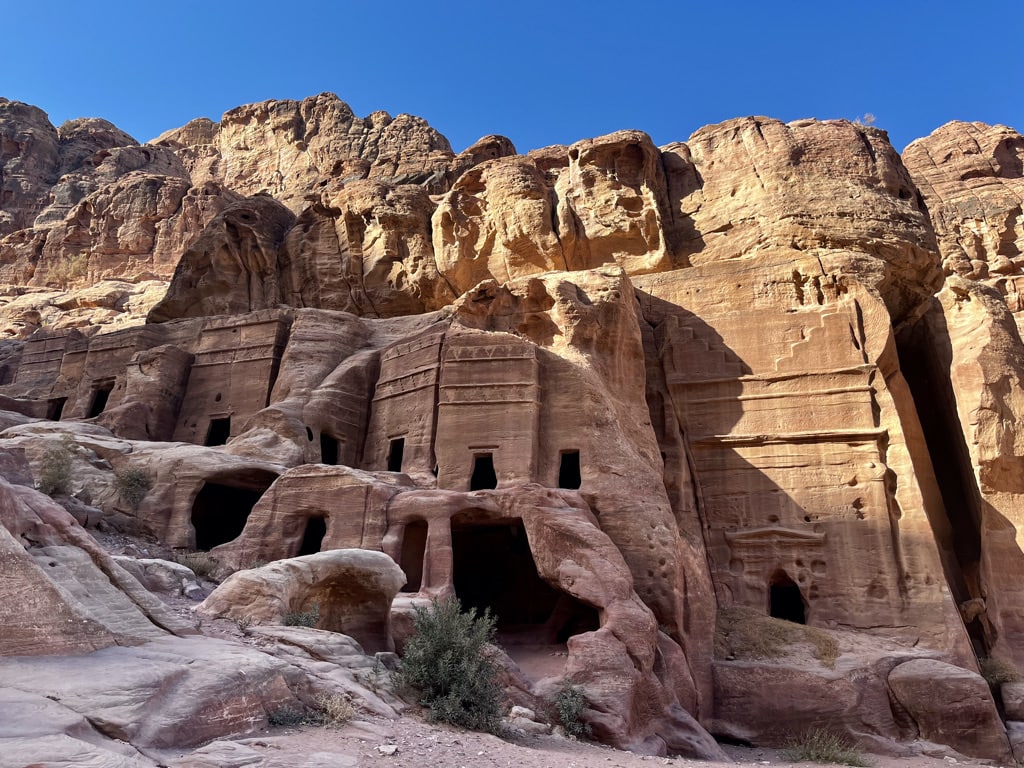
The Streets of Facades

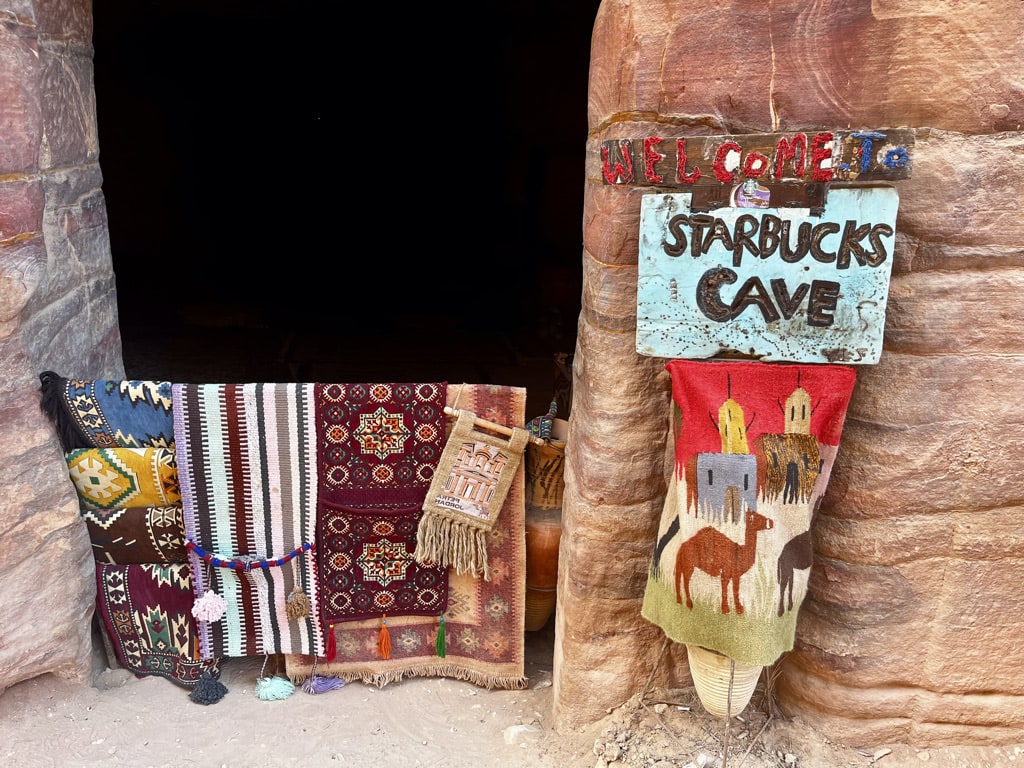
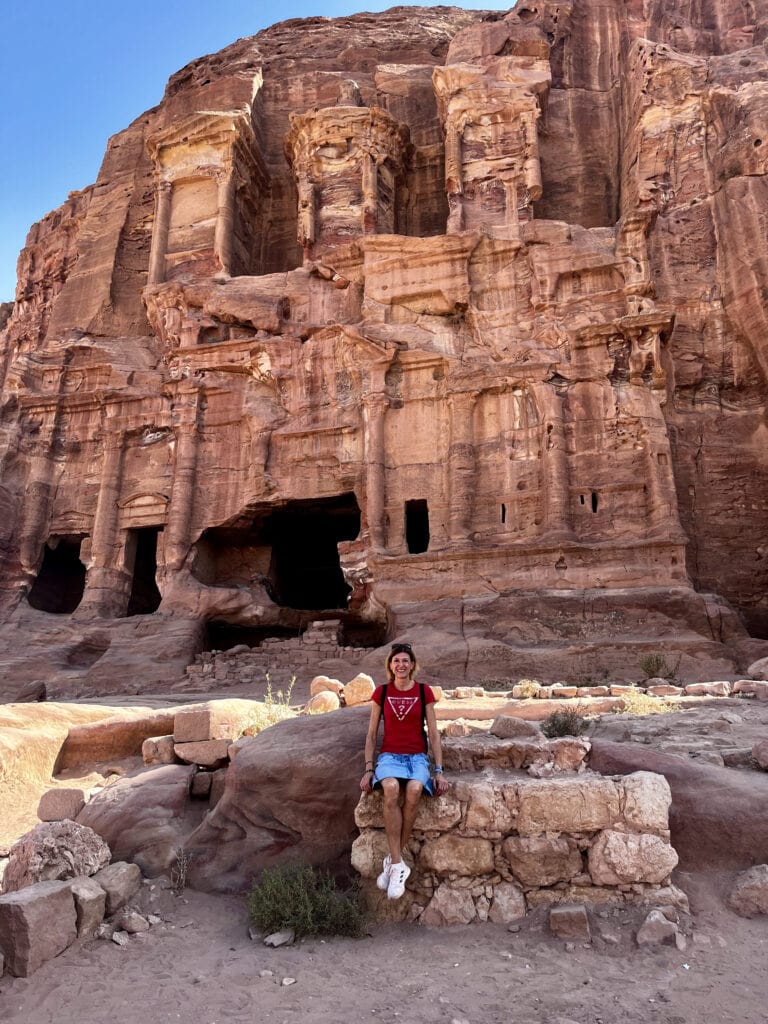
It serve as the primary thoroughfare extending from the Treasury into the ancient city. Along this route, numerous tombs and remnants of ancient Nabatean houses can be found. We were amused by the entrepreneurial spirit of the local Bedouins with one particular highlight – the Starbucks cave,
To manage expectations—don’t anticipate a traditional Starbucks cappuccino experience here. They only offers coffee from the Starbucks coffee pods 😀.


The Theater

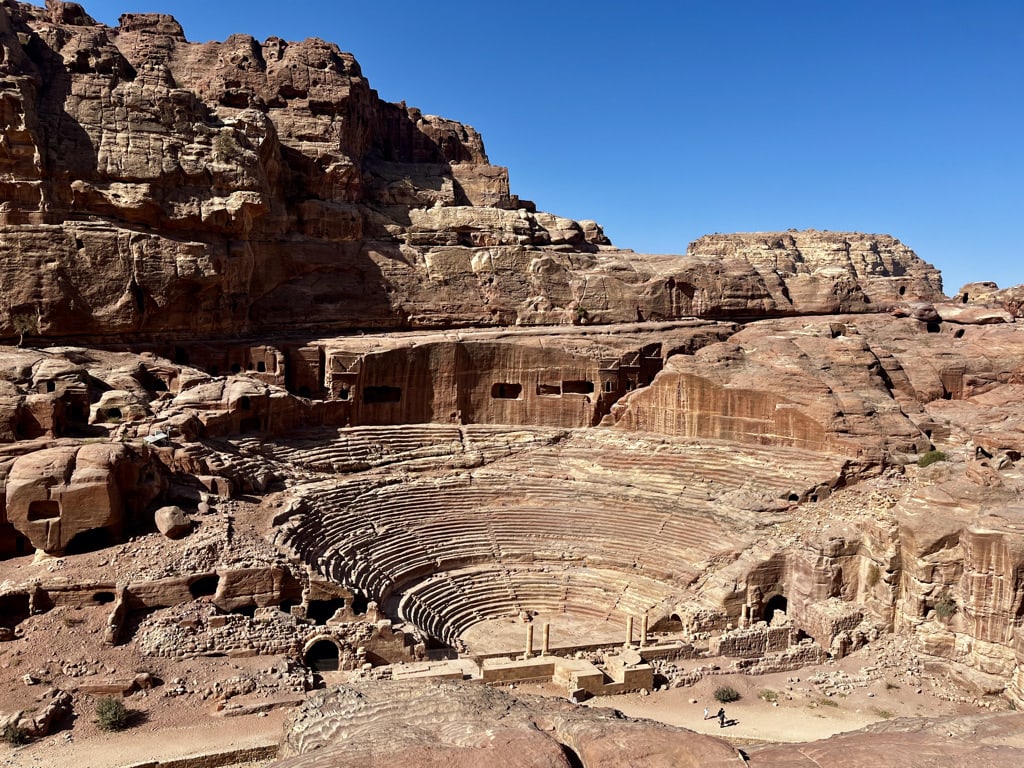
It was constructed in the first century AD. A big part of the theater was carved out of solid rock. The theater’s auditorium consists of three horizontal sections of seats separated by passageways and seven stairways to ascend. The theater could accommodate approximately 8500 people

The Theater in Petra, Jordan
The Theater

The Royal Tombs
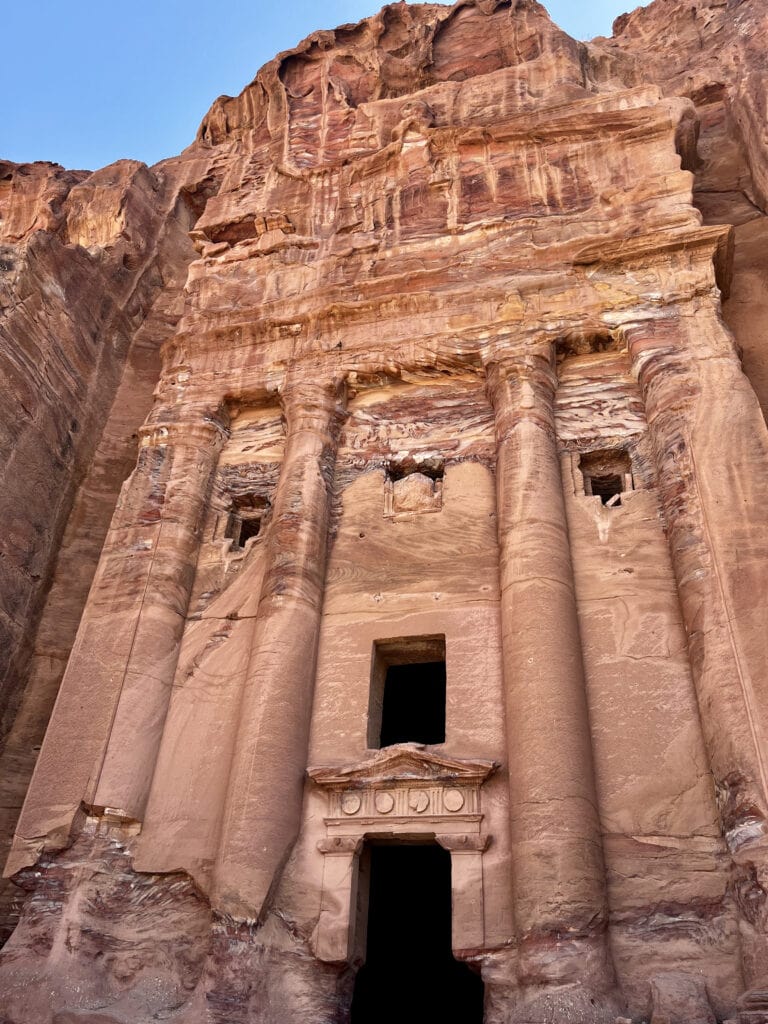
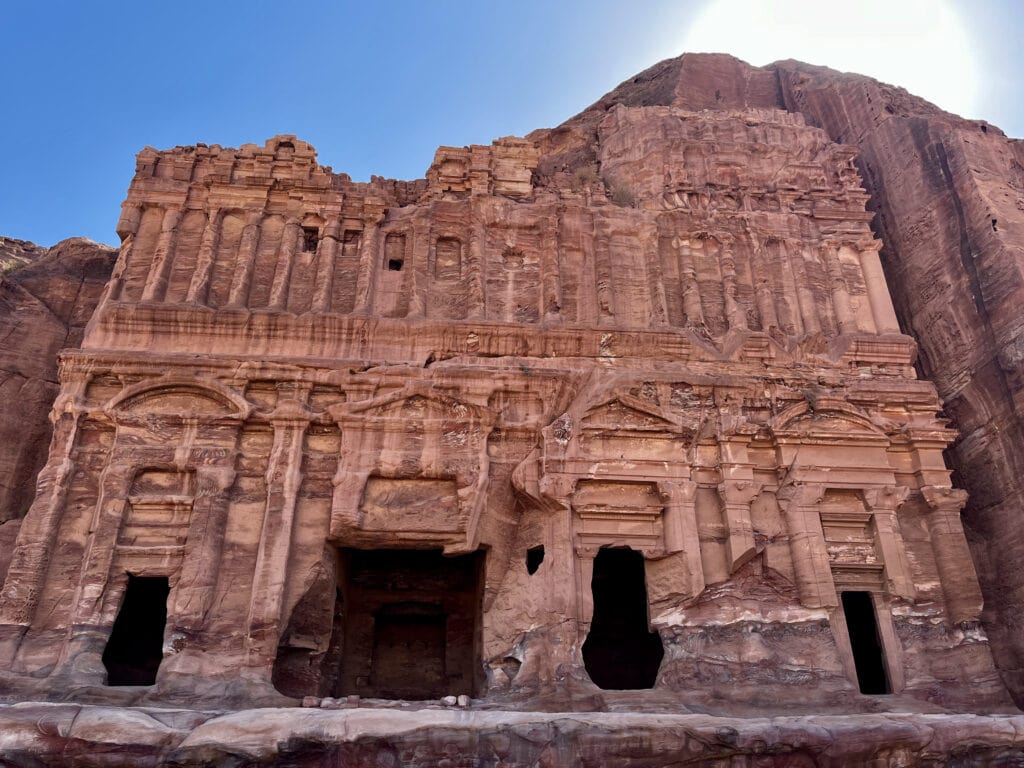
Opposite the Theather is the cliff where the Royal Toms were carved into. Reaching the Royal Toms takes a bit of climbing but it is definitely worth it. The tombs served as the final resting places for Nabataean kings over 2,300 years ago.
Exploring the interiors of these tombs offers a unique experience, allowing one to feel the vibe of those places.

While there’s plenty more to explore in Petra, I must confess that after approximately six hours under the sun in this stunning ancient city, we gave it a rain check and started returning back to the parking place while cooling down in the Siq gorge on the way.


Day 5: Wadi Rum

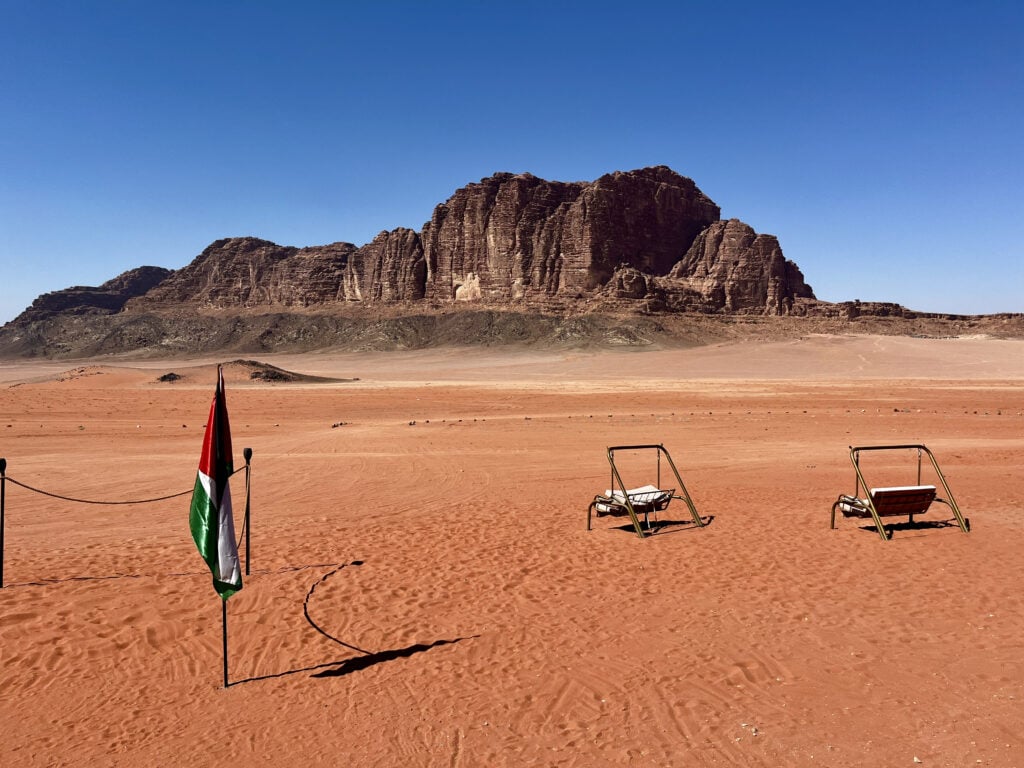
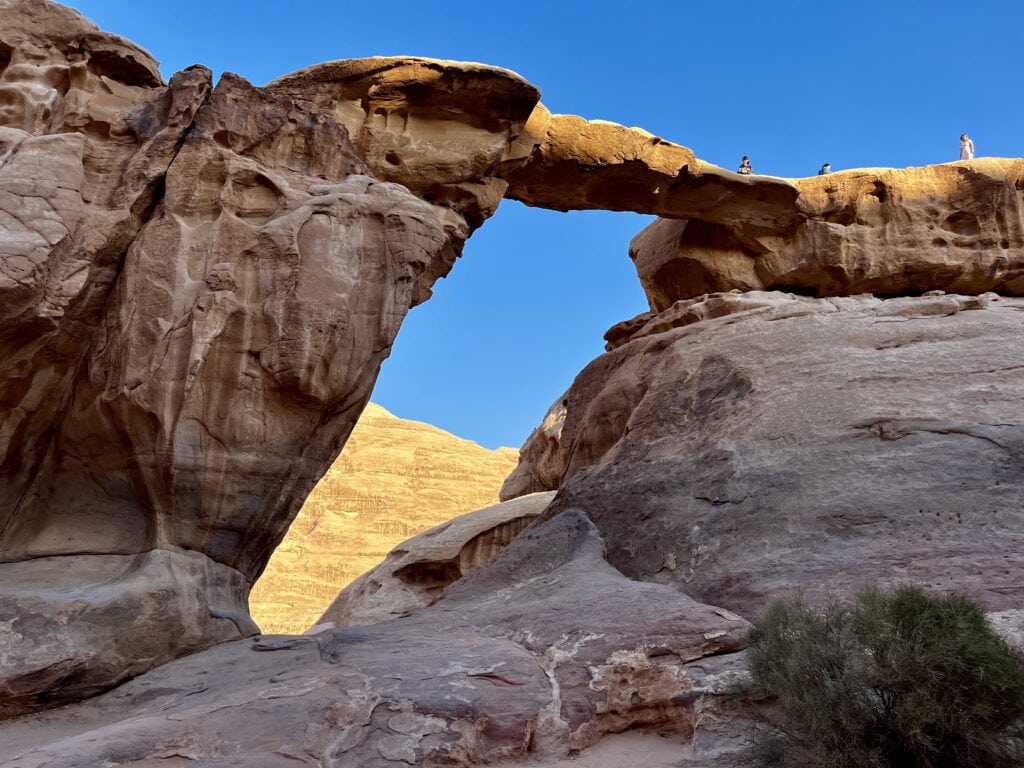
The drive from Wadi Musa to Wadi Rum, the famous desert in Jordan, takes about 2 hours. While planning our itinerary, I contemplated spending two nights in the desert. Eventually, I decided to reduce it to just one night, a choice I believe was correct.

Based on our experience, I would recommend the ideal way to visit Wadi Rum is to arrive after lunch and take the afternoon 4-hour drive. Our drive commenced at 3 pm, and judging by the presence of people and cars from other camps, it seems that they all start around that time. We arrived a bit early to Wadi Rum, settled in the camp, but, honestly, there isn’t much to do except wait for the drive.
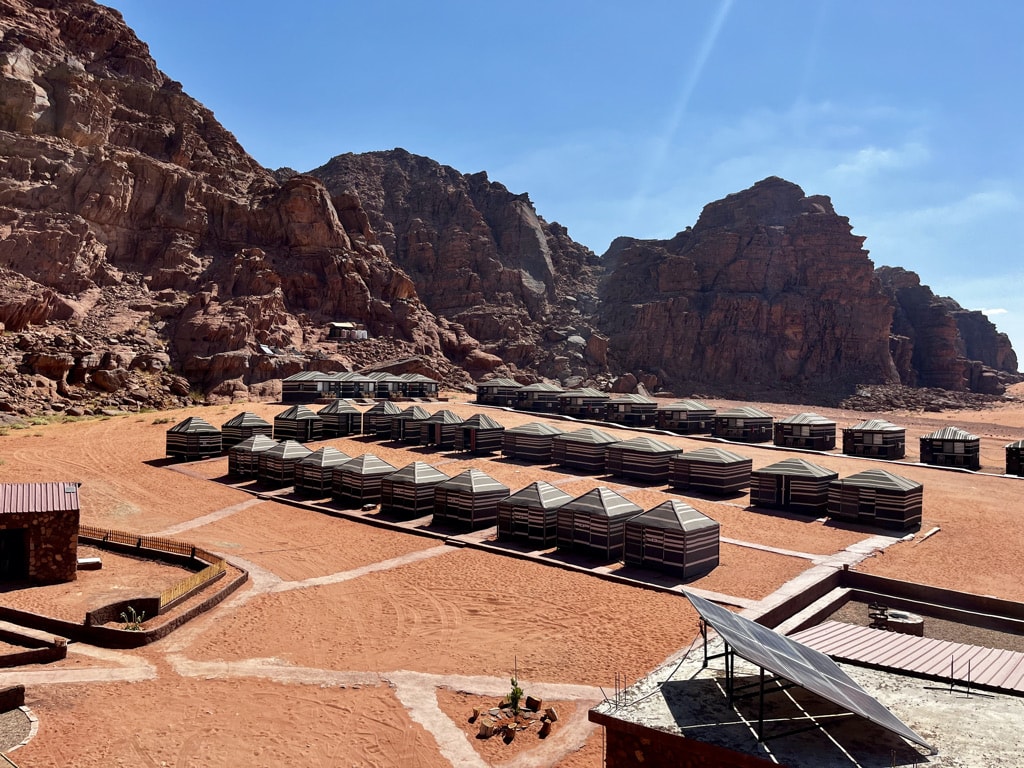
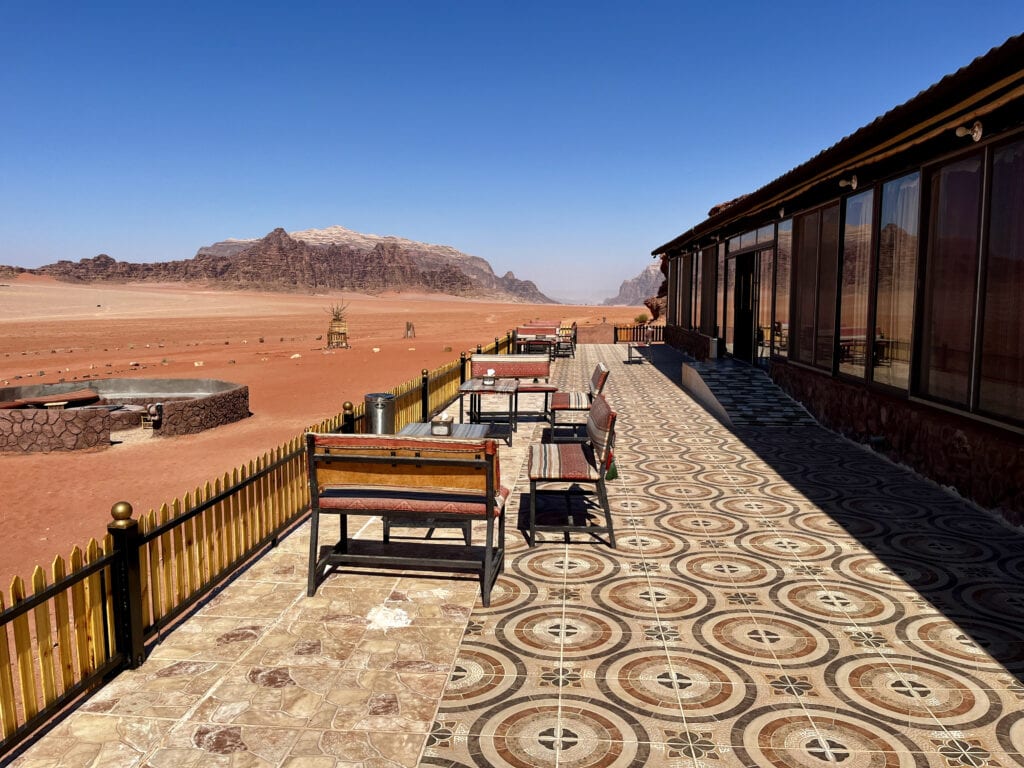
We stayed at Wadi Rum Bedouin Camp. However, with numerous camps scattered throughout the desert, there’s a wide variety to cater to individual preferences.

It is not permitted to drive in the Wadi Rum desert independently. The individual from the Wadi Rum Bedouin camp coordinated to meet us in the village. Before reaching the village, we had to go through the Wadi Rum visitor center, situated near the village on the main road. At the gate, we were halted and directed to their visitor office to showcase our Jordan passes.
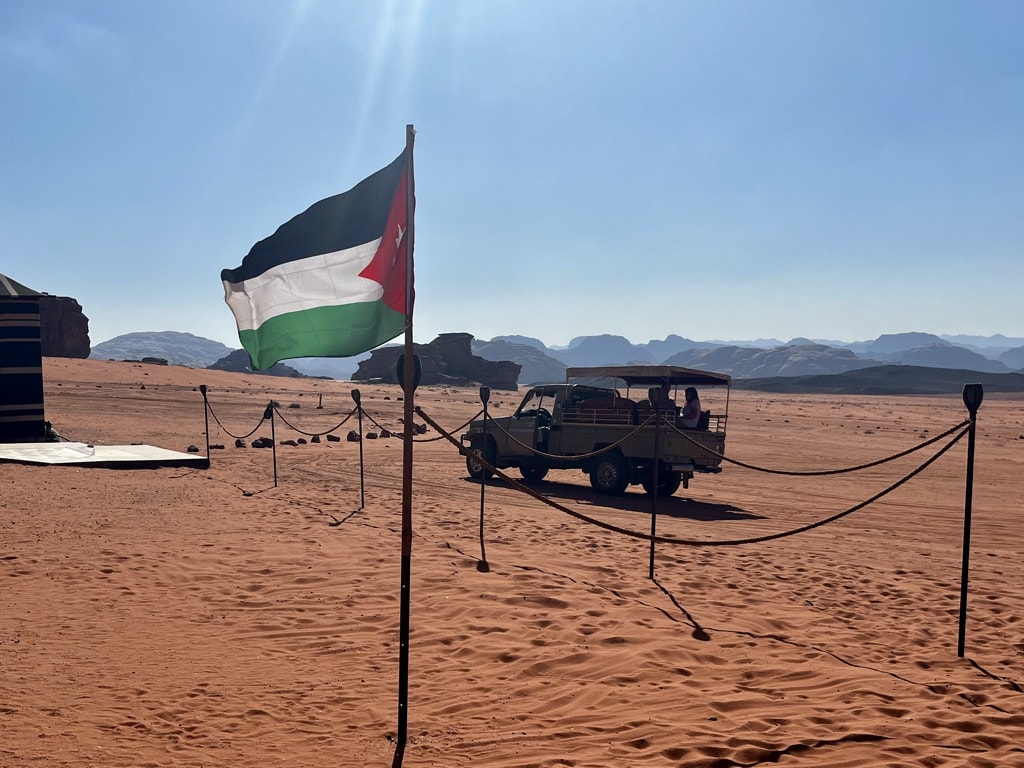
Upon meeting our local guide in Wadi Rum, he drove us in a 4×4 truck to the camp, leaving our car securely parked on their premises.

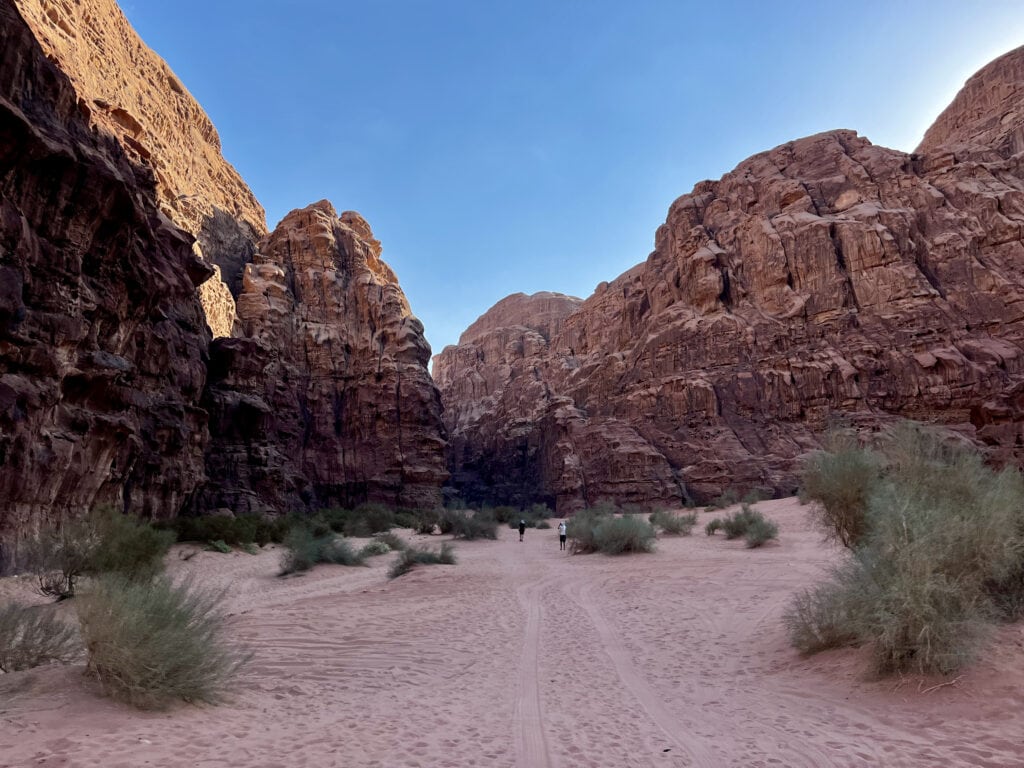
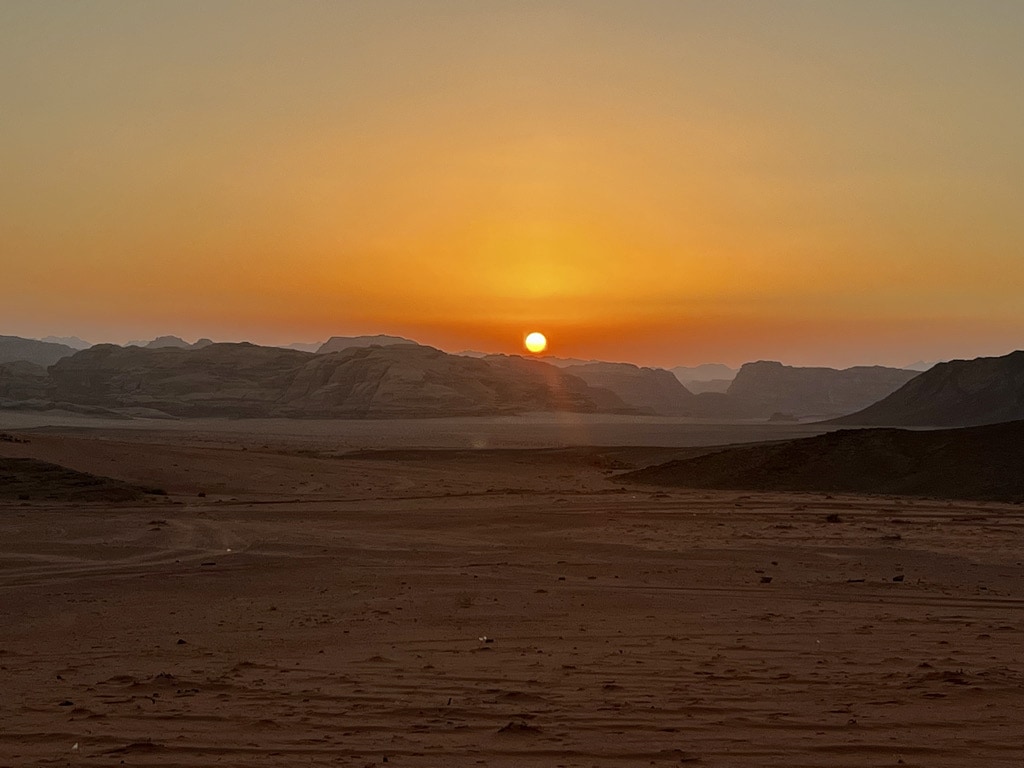
Our afternoon drive through the desert was incredible. It blended the thrill of driving with on-foot exploration, finished by watching sunset while drinking a cup of Bedouin tea.


Day 6: Aqaba – Tala Bay Aqaba

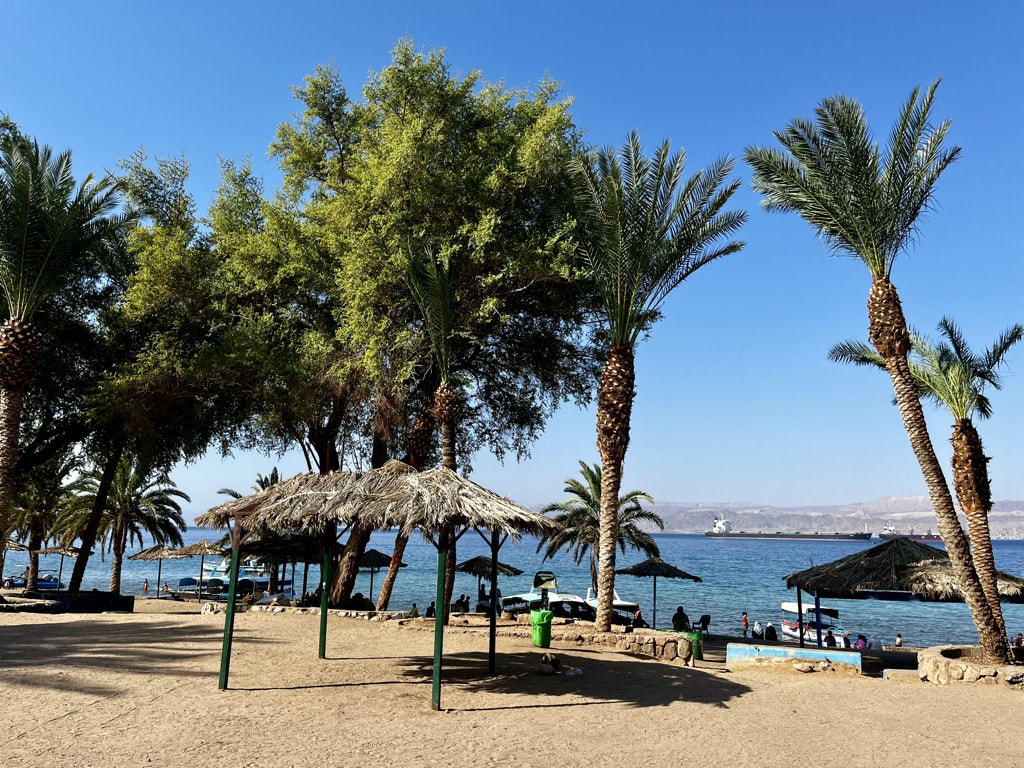
We explored numerous cultural and natural landmarks during the earlier days of our journey, so on day 6, it was time to head to Aqaba for some beach relaxation.

Departing from Wadi Rum in the morning after enjoying breakfast at the camp, the drive to Aqaba via the Desert Highway took approximately 1 hour.
Upon arrival in Aqaba, we left the car at the Free City Center parking near the beachfront. We wanted to explore Aqaba before heading to our final destination, Tala Bay Resort.

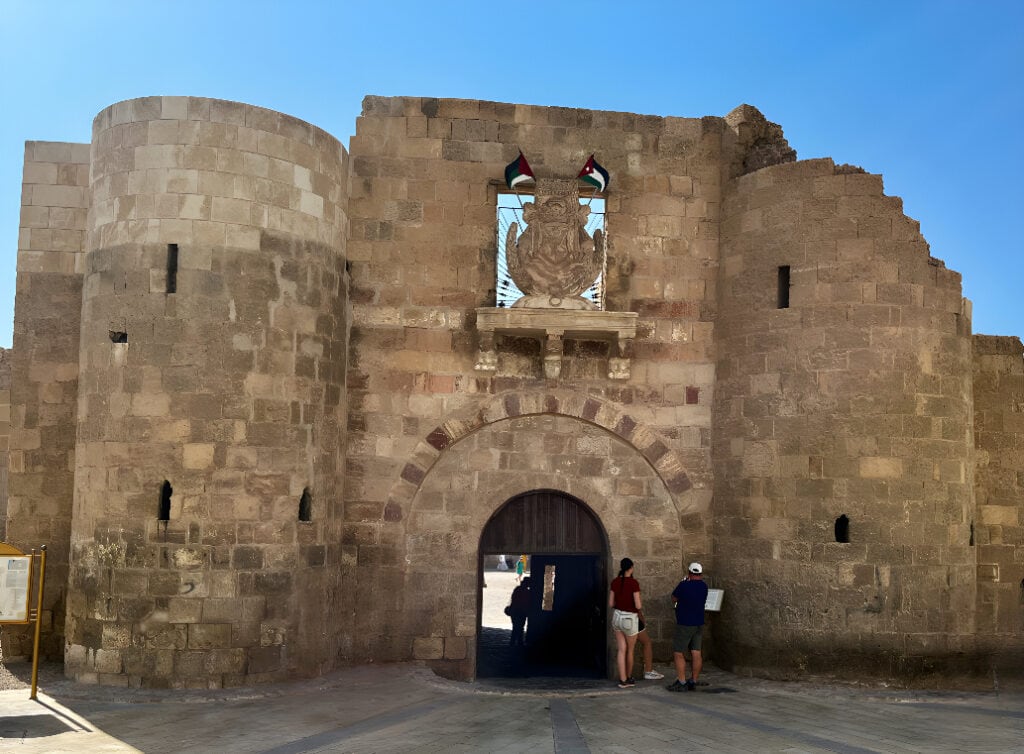
Walking along the Al-Ghandour Beach promenade, we made our way to Aqaba Castle. This Mamluk and Ottoman fortified caravanserai, situated on the pilgrimage route to Mecca and Medina, has preserved its current form primarily from the 16th century.

After exploring Aqaba, we drove to Tala Bay Resort, our final destination on this road trip to Jordan.


Days 7-8: Tala Bay Resort

Why did I choose the Tala Bay Resort over the stay in Aqaba?

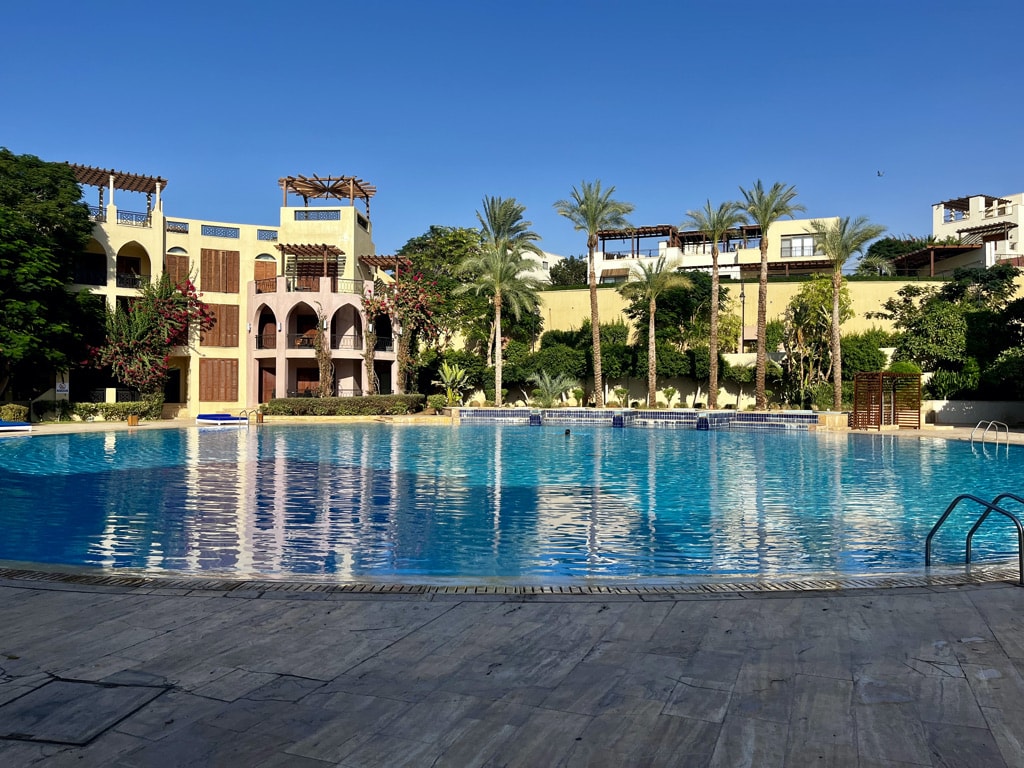
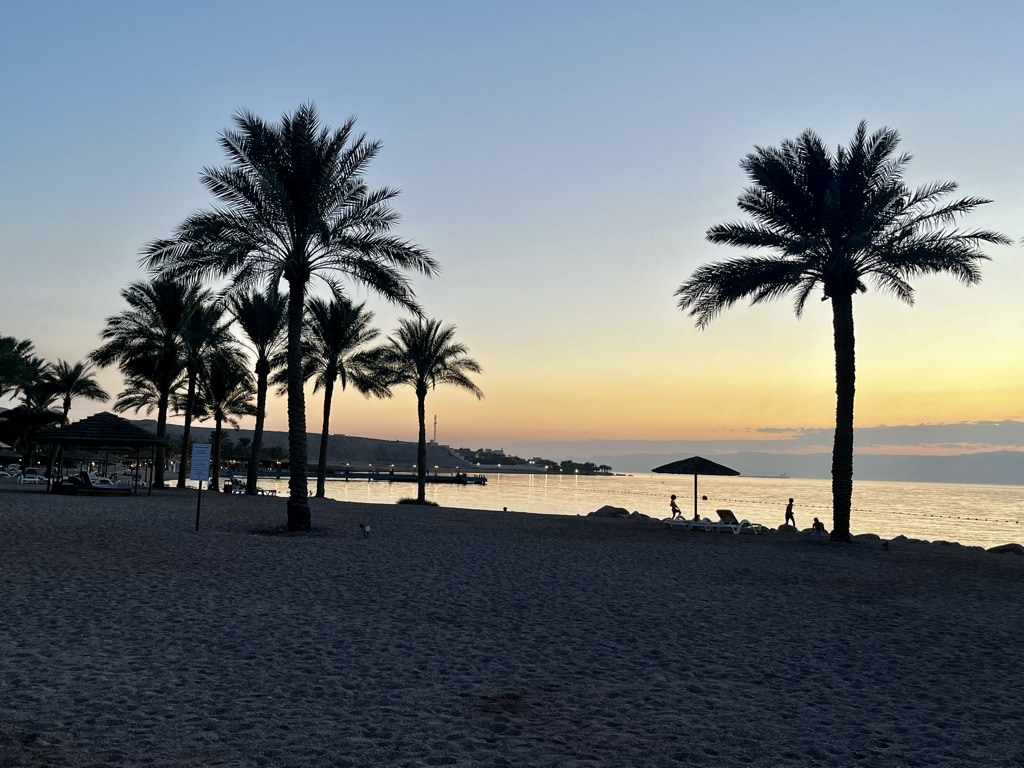
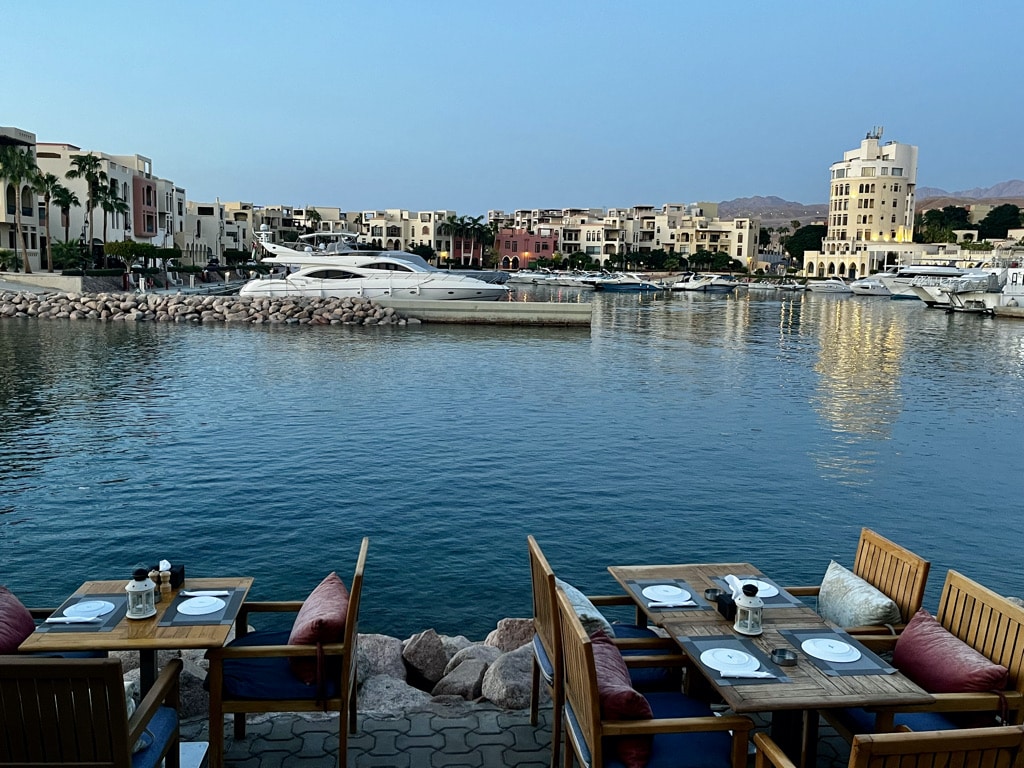
Tala Bay, located about 20km from Aqaba, offers a comprehensive resort experience with beaches, restaurants, swimming pools, and shops. After we explored Aqaba, I was pleased with our decision to stay at Tala Bay. Unlike Aqaba, where public beaches are used by locals and might not be suitable for standard beach activities, Tala Bay provides a more resort-like atmosphere.
During our accommodation research in Aqaba, we noticed that many hotels offer transfers to the Berenice Beach Club, a paid private club located approximately 10km from Aqaba in the direction of Tala Bay.

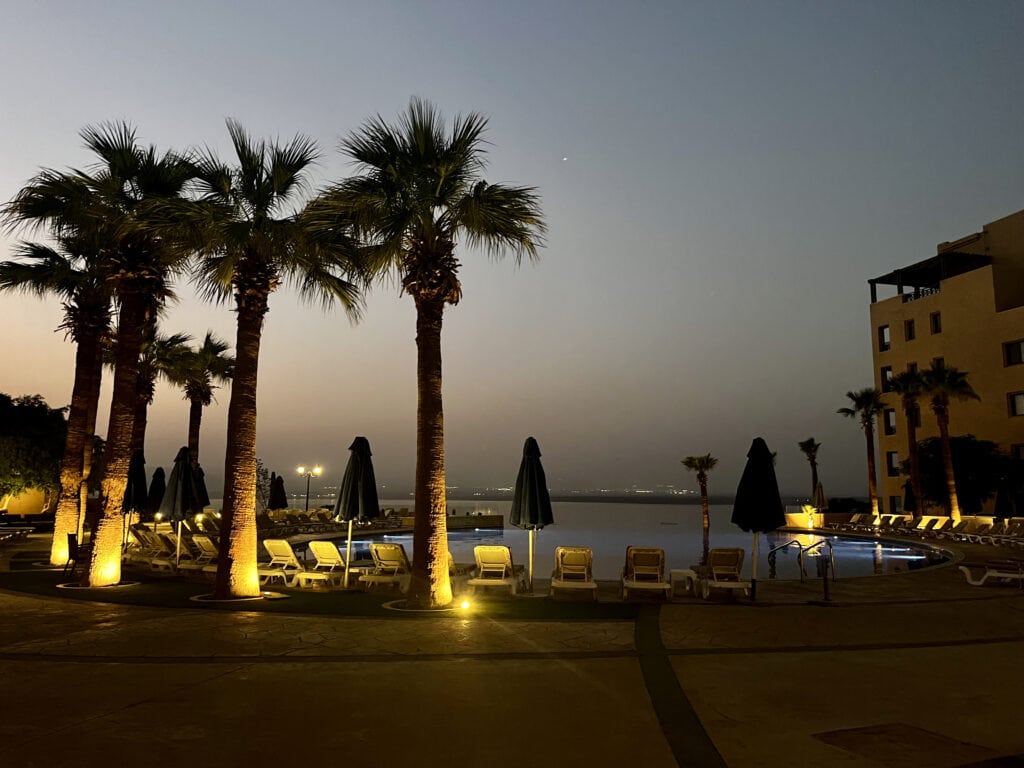
We rented an apartment with one of the many swimming pools just steps away, while the beach was conveniently down the road. It was a delight to soak in the sun before returning to the onset of the European winter.


Day 9: Amman – traveling home from our road trip to Jordan

Our final day was a travel day. Covering approximately 320 km on the Desert Highway, the journey back to Amman took around 4 hours. We returned our rental car to the Monte Carlo Car Rental office, conveniently situated just a 5-minute drive from the Airport Departure terminal. After completing the paperwork, we were transported to the airport (no need to wait for a shuttle bus).

Another fantastic trip. And I have already planned a trip to our next destination.


error: Content is protected !!