Unexplored Eastern Cape: Adventure Road Trip in South Africa 🇿🇦

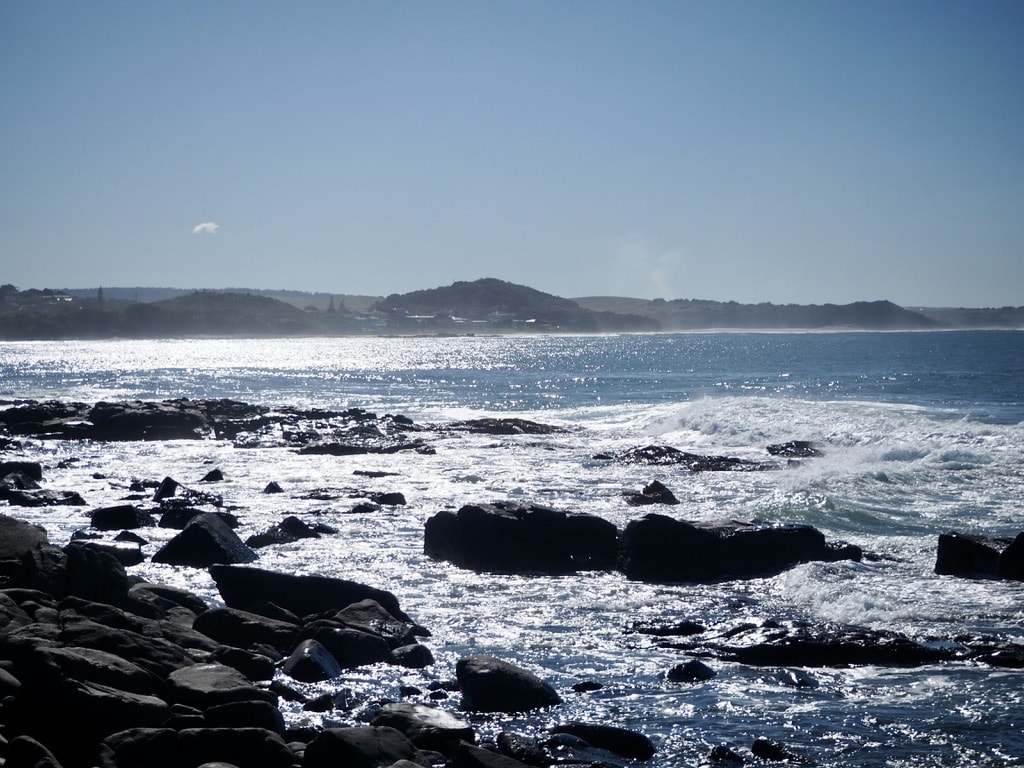
In 1999, I landed in South Africa for the first time, unaware that it would eventually become my second home. Over the years, I’ve spent a significant amount of time in the country, and whenever I discuss it with others, Cape Town often takes center stage. When it gets to South Africa, many tourists follow the well-known path to Kruger Park or drive down the Garden Route from Port Elizabeth (now named Gqeberha) to Cape Town.
How about exploring something different? Let me introduce you to some of the most amazing places in the Eastern Cape and provide you with ideas for adventure road trip.

South Africa is a vast and multicultural country, covering approximately 1.2 million square kilometers. To put it into perspective, it’s about a third of the size of Europe excluding Russia. With a population of around 60 million, South Africa has 11 official languages, with Zulu (23%), Xhosa (16%), Afrikaans (14%), and English (10%) being the most spoken. English is the official institutional language. Notably, South Africa is the only country with three capital cities: Pretoria (administrative and executive), Cape Town (legislative), and Bloemfontein (judicial).


Practical Insights:

South Africa is a welcoming country with friendly people. Landing in Johannesburg or Cape Town feels like entering a different world, where even a restroom attendant greets you warmly.

Getting there: It is easy, with major airlines operating flights to international airports in Johannesburg and Cape Town.

One important note: Always collect your luggage upon arrival in Johannesburg or Cape Town, even if you have a connecting flight. In most cases, airlines will tag your bags to the final destination within the country. This can be confusing, so do not make the mistake of leaving the International terminal without your luggage. After collecting your bags, proceed to the Domestic terminal to check them in again if you have a connecting domestic flight.

The best way to explore the Eastern Cape is to fly to Gqeberha (Port Elizabeth). Domestic flights from Johannesburg and Cape Town are frequently operated by local airlines such as FlySafair or FlyAirlink.

Mobile data: For mobile data, I recommend using the Airalo app, which allows you to download a data e-SIM card for countries worldwide. It’s easy and hassle-free. I activate the data e-SIM in my phone settings upon arrival and I have instant access to the internet. 

Currency: The official currency is the South African Rand (1 USD = 18,5 Rand), and
ATMs are widely available. While cards are accepted everywhere, having a few Rands in cash can be beneficial.

Driving and Petrol stations: In South Africa, they drive on the left-hand side of the road, similar to the UK. The main roads between cities are generally in good condition, although it’s advisable to watch for potholes. Once you get off the main road, expect to drive on dirt or gravel roads.

Petrol stations can be found in all cities, but it is advisable to check the distances between cities due to the country’s vast size. Gas station attendants are available and offer services such as filling up your tank, cleaning your windows, and checking oil and windshield wiper fluid. You do not need to step out of your car for these services.

Load shedding (power outages): It is a common occurrence in the country due to a lack of power generation capacity, with nationwide rotational outages at various stages persisting for many years. The Eskom Load Shedding app is downloadable from the Apple App Store or Google Play. It provides information on when electricity will be switched off during the day in the city or area you are in. The stages of load shedding can vary and change rapidly, so it is advisable to keep app notifications on while in South Africa.

Despite load shedding, the majority of hotels, restaurants, shops, etc., continue to operate by using their own power generators or, more recently, solar panels. The solar business has experienced significant growth in South Africa.

Crime: Is a reality in South Africa, and it’s essential to be aware of it. Having spent the last 25 years in the country without encountering any issues, I can offer some important advice. Generally, try to blend in and look like a local rather than a tourist. Avoid wearing visibly expensive jewelry, and handbags, or carrying expensive cameras.

Refrain from engaging with strangers who may approach you asking for money. Never leave your belongings visible in the car, and always lock your doors when driving.

When driving through the countryside, resist the urge to stop and give sweets to children who may wave at you near the roads. It’s crucial not to wander outside after dark; a romantic walk on the beach in the moonlight is not advisable. Taking these precautions will contribute to a safer and more enjoyable experience in South Africa.


Map of places to explore

Places I have selected to explore are pointed on the map. Many of them are accessible only via a dirt road or require off-road travel with a 4×4 vehicle (e.g.Toyota Landcruiser). I am making a note with each place.


Tsitsikamma National Park

Gqeberha (Port Elizabeth) – Tsitsikamma National Park: 116km, 1hour 15min on N2 highway. Accesible without 4×4 vehicle

Situated on the border between Eastern and Western Cape, it is a haven for outdoor enthusiasts. It offers a range of activities, including hiking, kayaking, snorkeling, and bird watching, amidst indigenous forests teeming with ancient Yellowwood trees and diverse birdlife.

For the best experience, staying at the accommodation inside the park, managed by SAN Parks, is ideal. However, due to its popularity, booking well in advance, sometimes a year ahead, is necessary. Alternatively, accommodations in close proximity to the park allow for daily access to its activities.
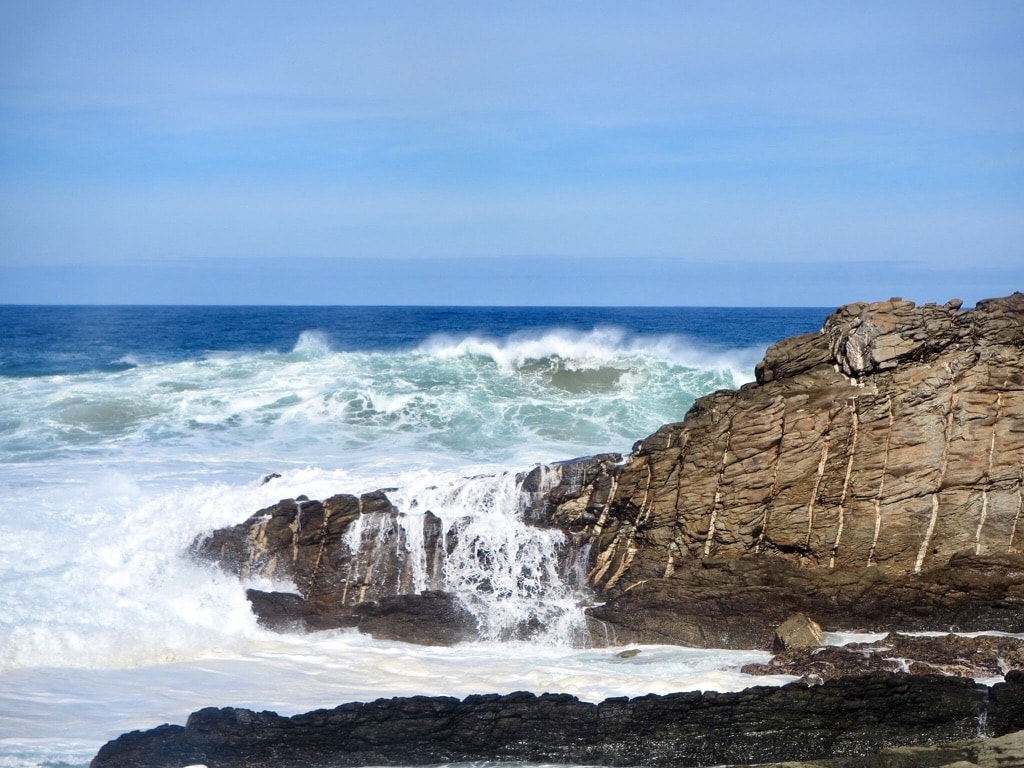
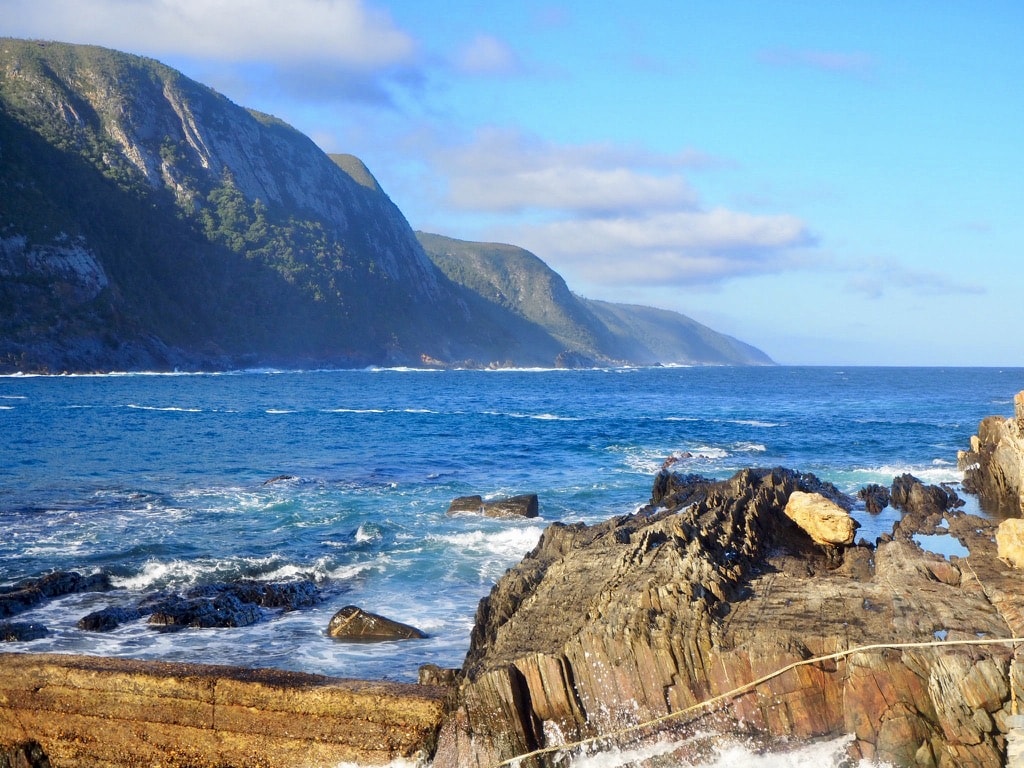
Among the highlights at Tsitsikamma:

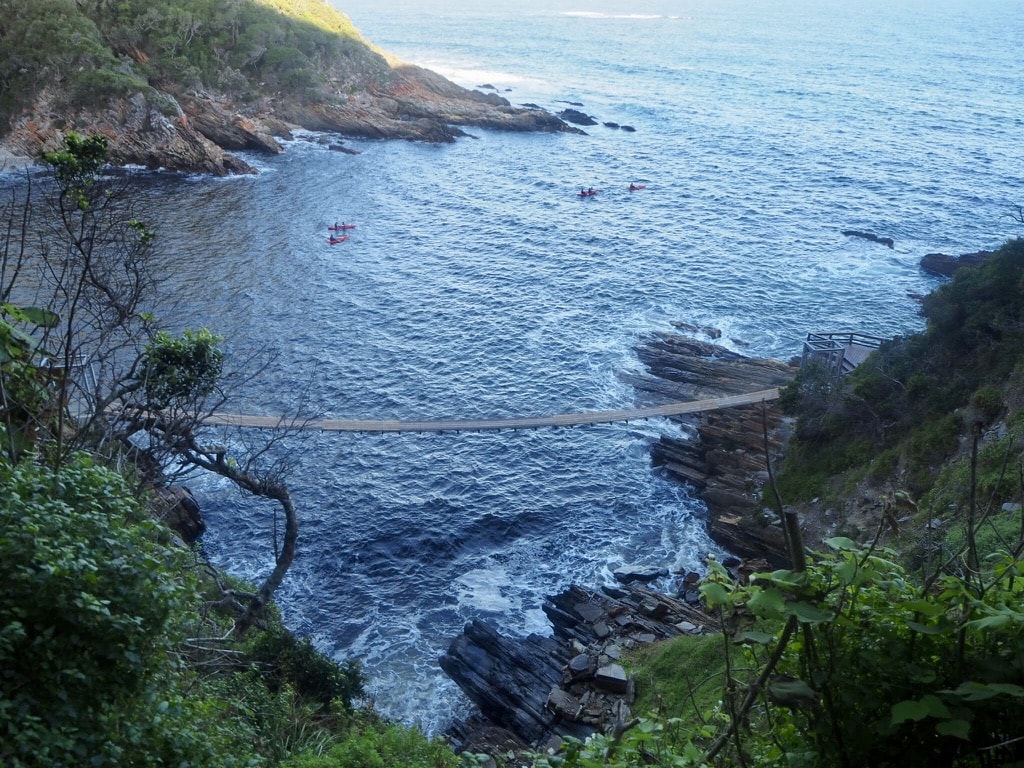
Walk on the Suspension Bridge: Offering breathtaking views of the coastal landscape and the Storms River, the suspension bridge spans the dramatic Storms River Mouth.

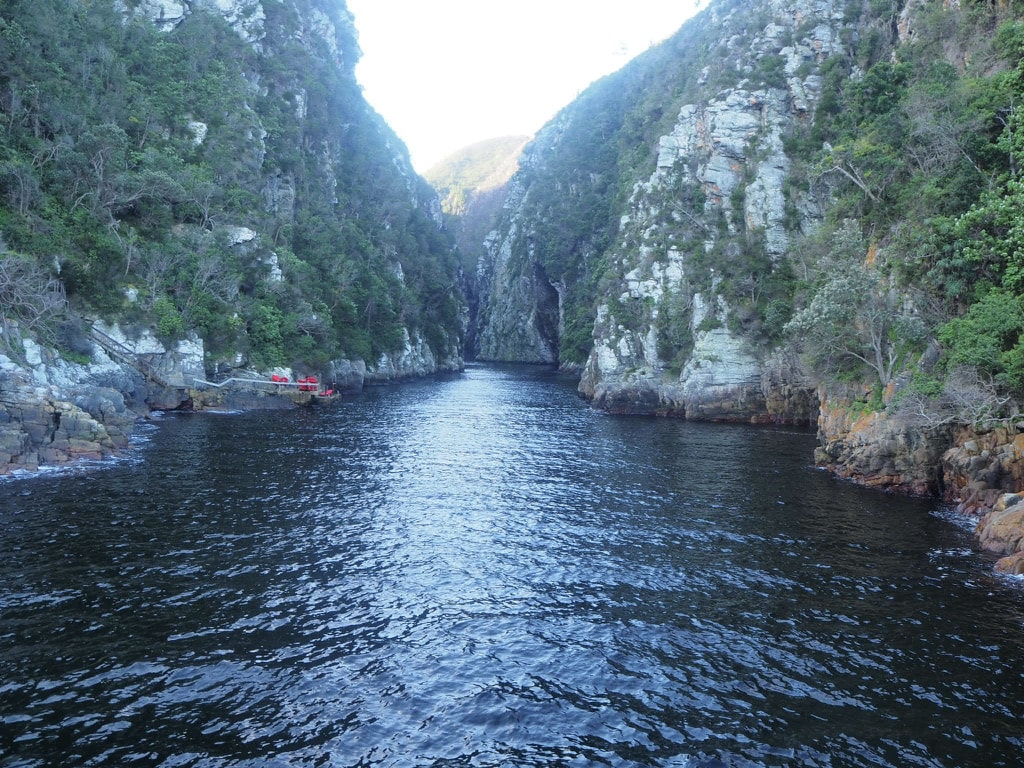
Kayaking up the Storms River: A guided kayaking tour through the captivating gorge is a must-do activity, marked as a definite highlight of my visit.

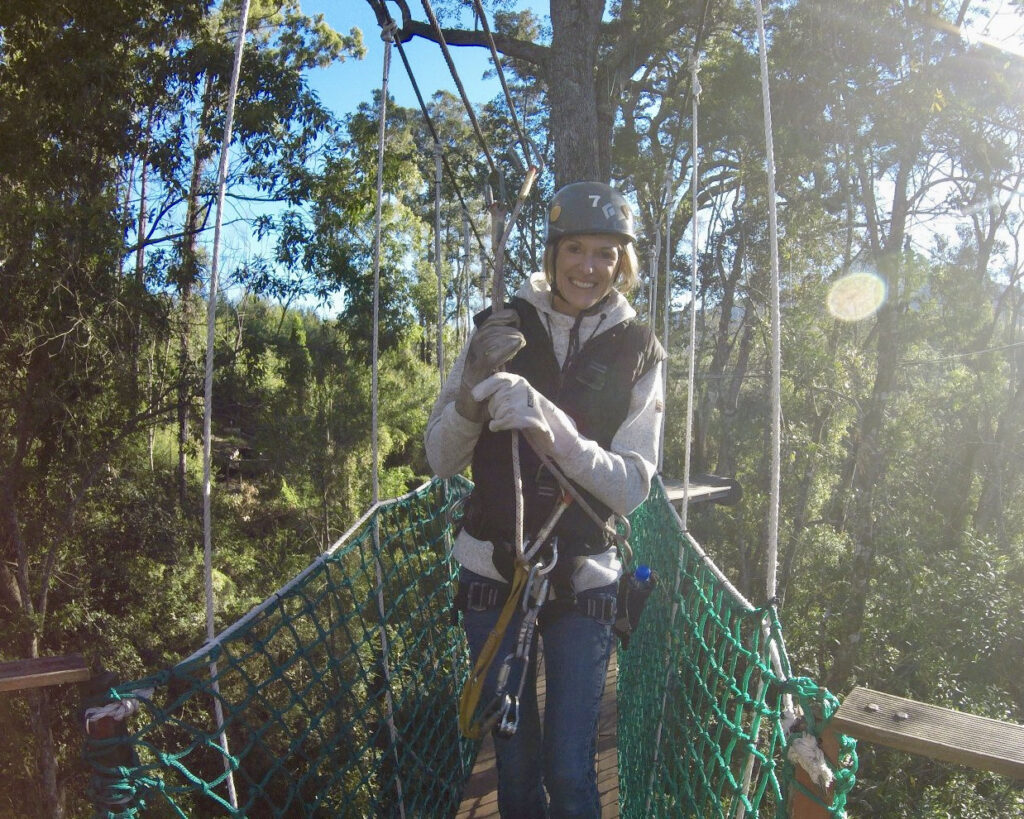
Zip Line: A fun activity suitable for everyone over 6 years old.
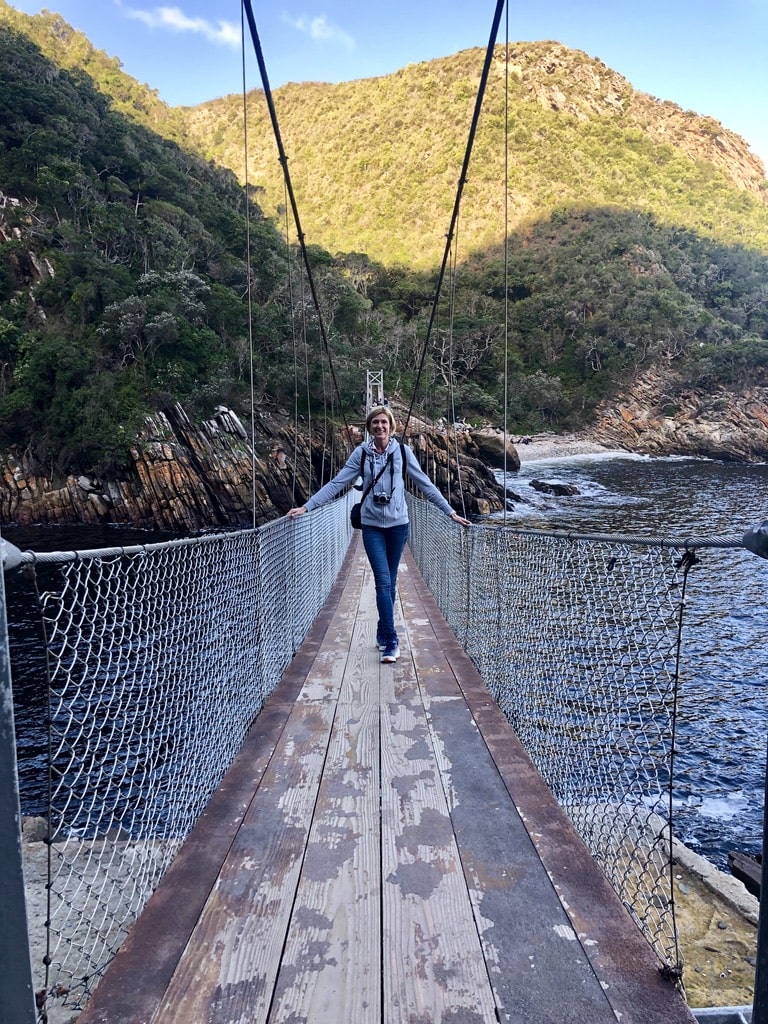
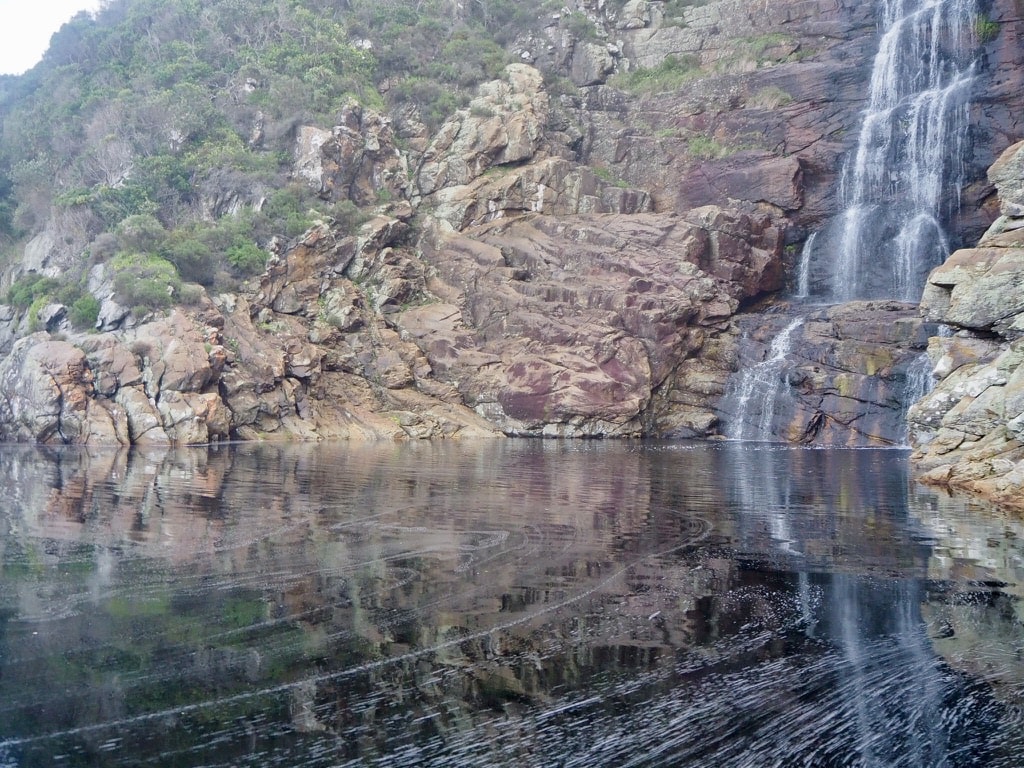
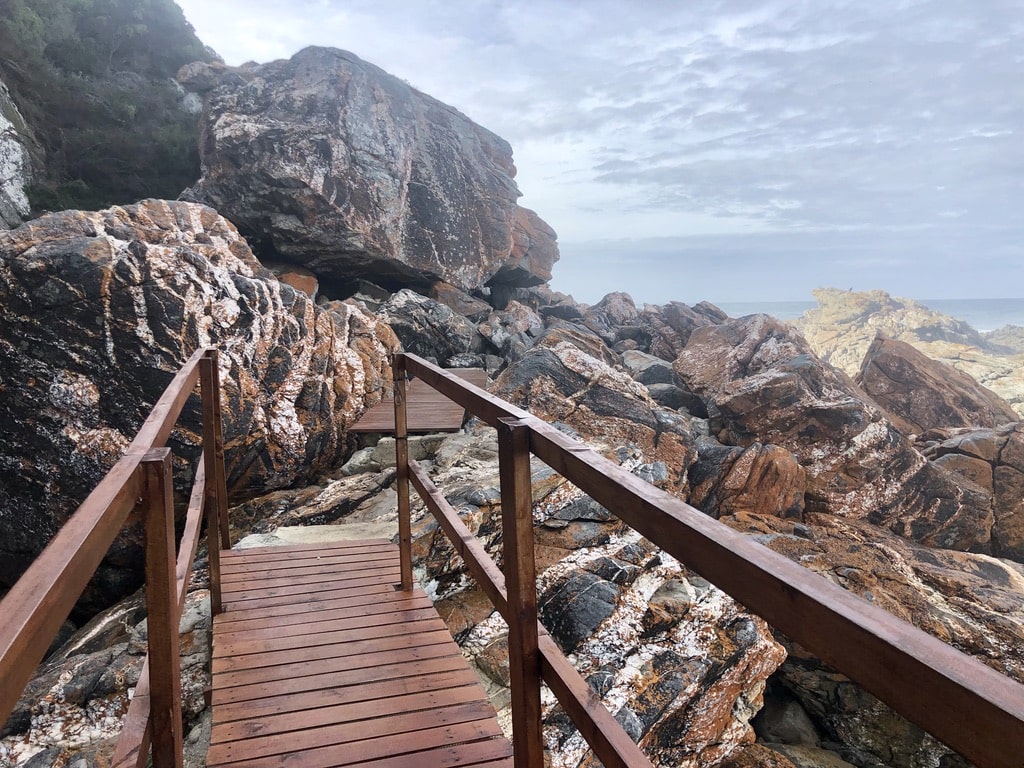
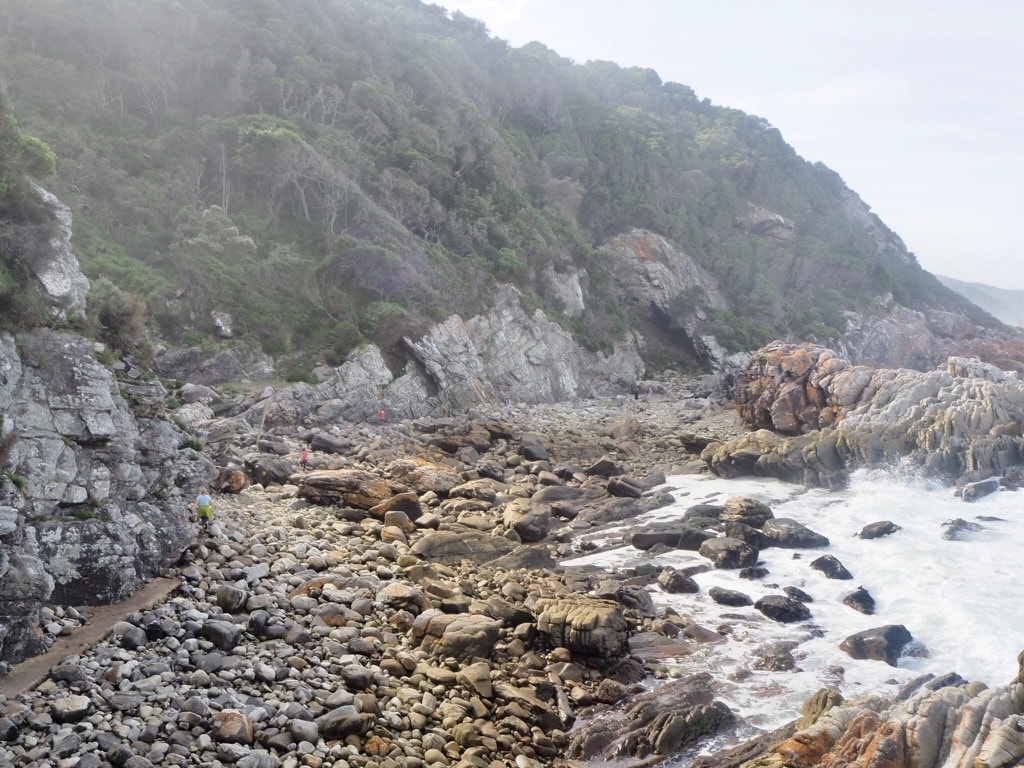
Adventure Trail to the Waterfall: Although approximately 6km, the trail takes 3-4 hours to complete due to its adventurous nature. Conquering big rocks, it requires a certain level of fitness and is not recommended for those with health conditions.
Bungee Jumping: While I haven’t personally experienced this activity, the Bloukrans Bridge Bungy is one of the world’s highest commercial bungee jumping sites at 216 meters above the Bloukrans River, located on the N2 Highway in the Tsitsikamma area.


Jeffreys Bay

Tsitsikamma National Park – J-Bay: 48km, 32min on N2 highway. Accesible without 4×4 vehicle

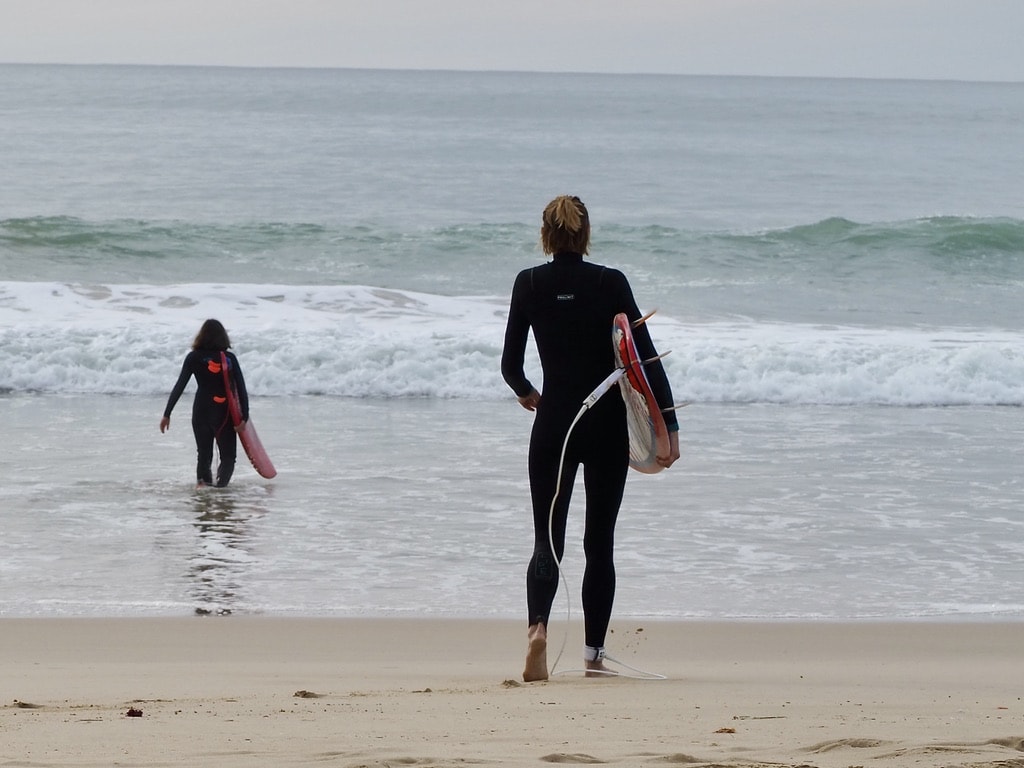
Commonly referred to as “J-Bay,” it attracts surfers from around the globe to its famous Supertubes, known for hosting international surfing competitions.
It is one of my favorite places to hang around for a day or two, enjoying the beach, and watching the dolphins and whales. Of course, I admired the top surfers riding big waves, trying to do some surfing myself. And more, I love shopping in the big Surfer brand outlet stores.

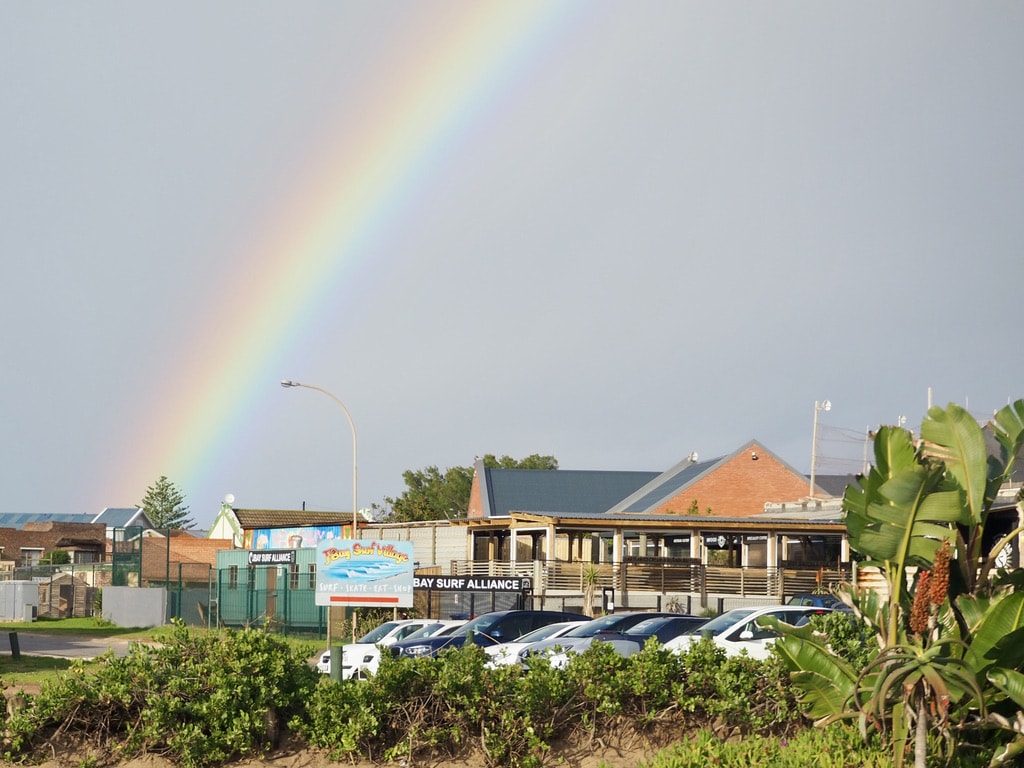
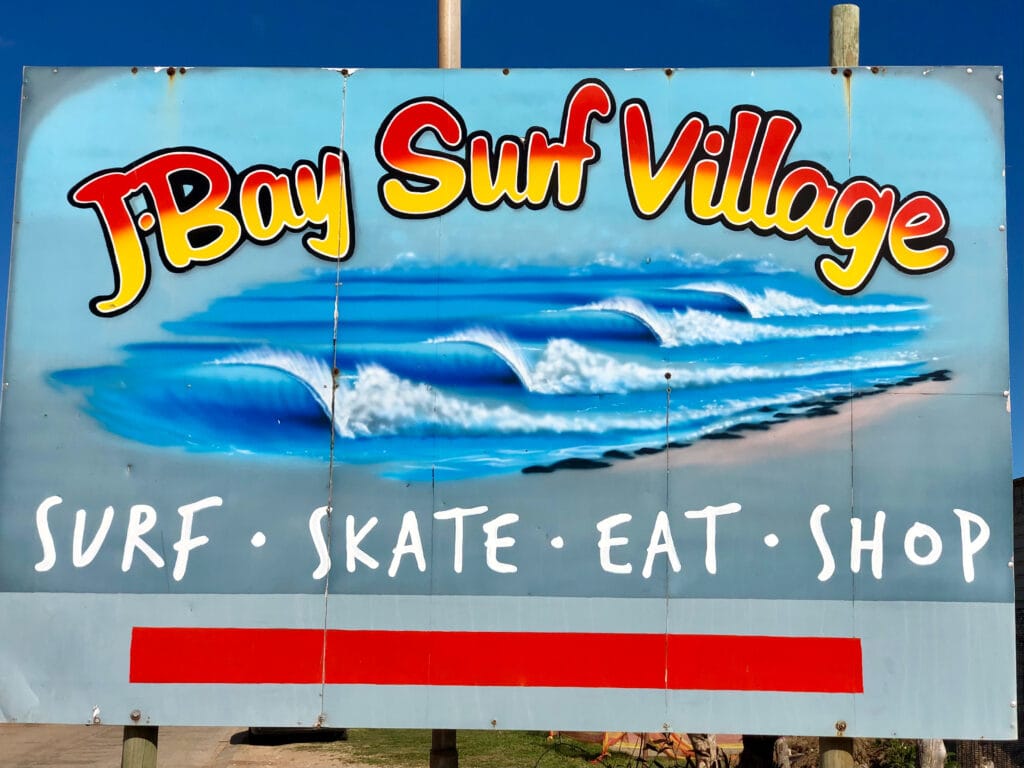
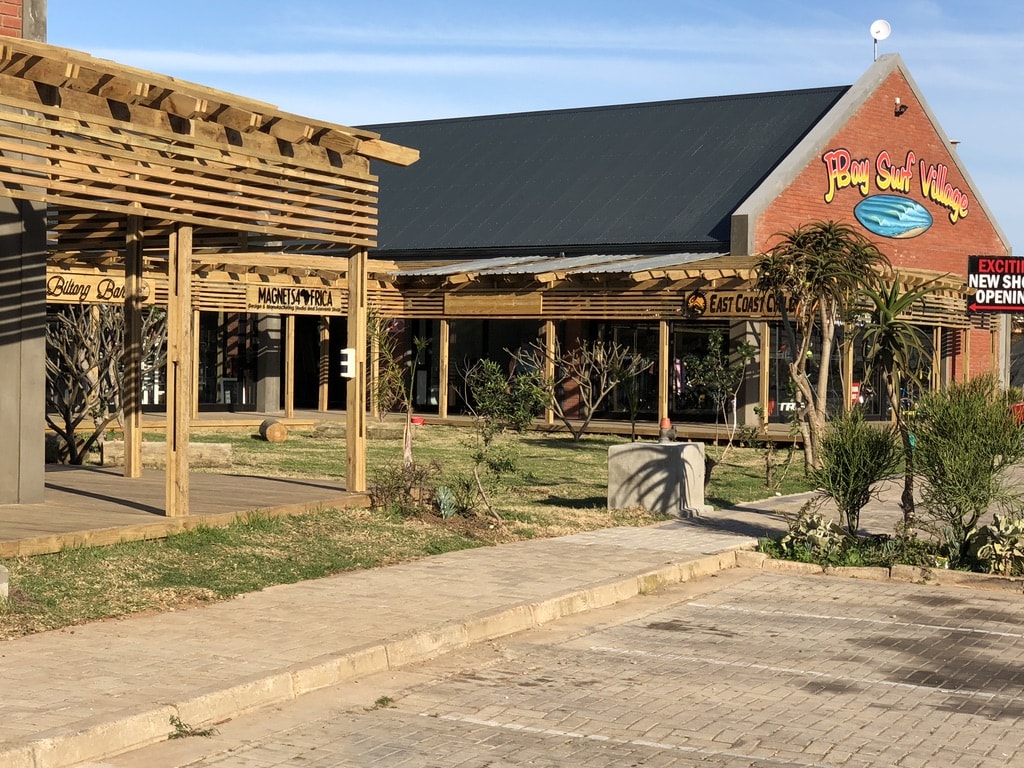
When I am in J-Bay, I always park at the J-Bay village in front of the Billabong Outlet store. That is the original place where one can enjoy the surf culture at its best. There are shops, coffee shops, and surf schools. You can easily reach the beachfront and walk on the beautiful beach for miles.
Addo Elephant National Park

Jeffreys Bay – Addo Elephant National Park: 115km, 1hour 15min. Accesible without 4×4 vehicle
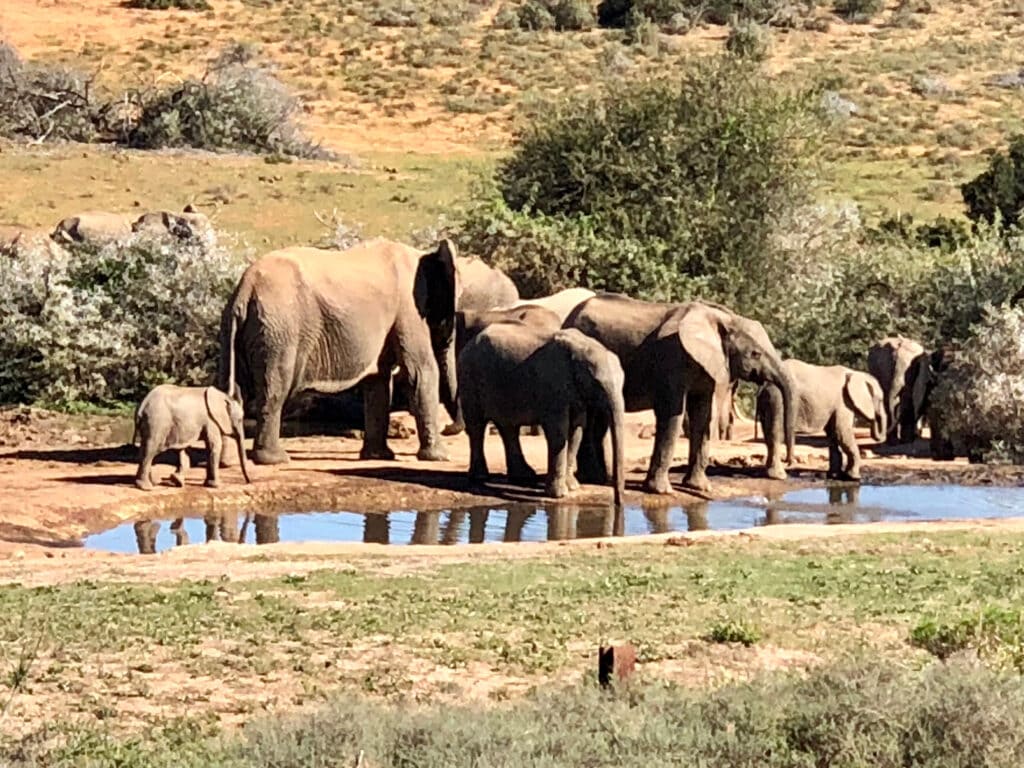
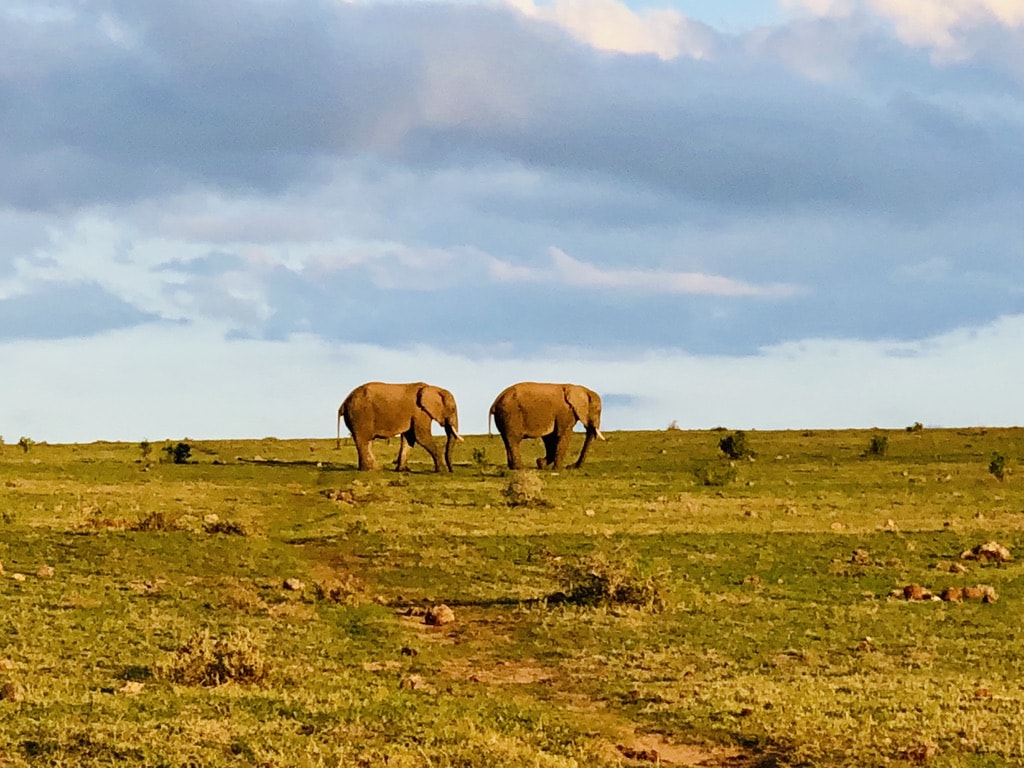
Herd of elephants

I can’t even remember how many times I’ve visited Addo Elephant National Park. Whether as a day trip, staying inside the park for a few nights, or choosing accommodations just outside, each visit has been unique.

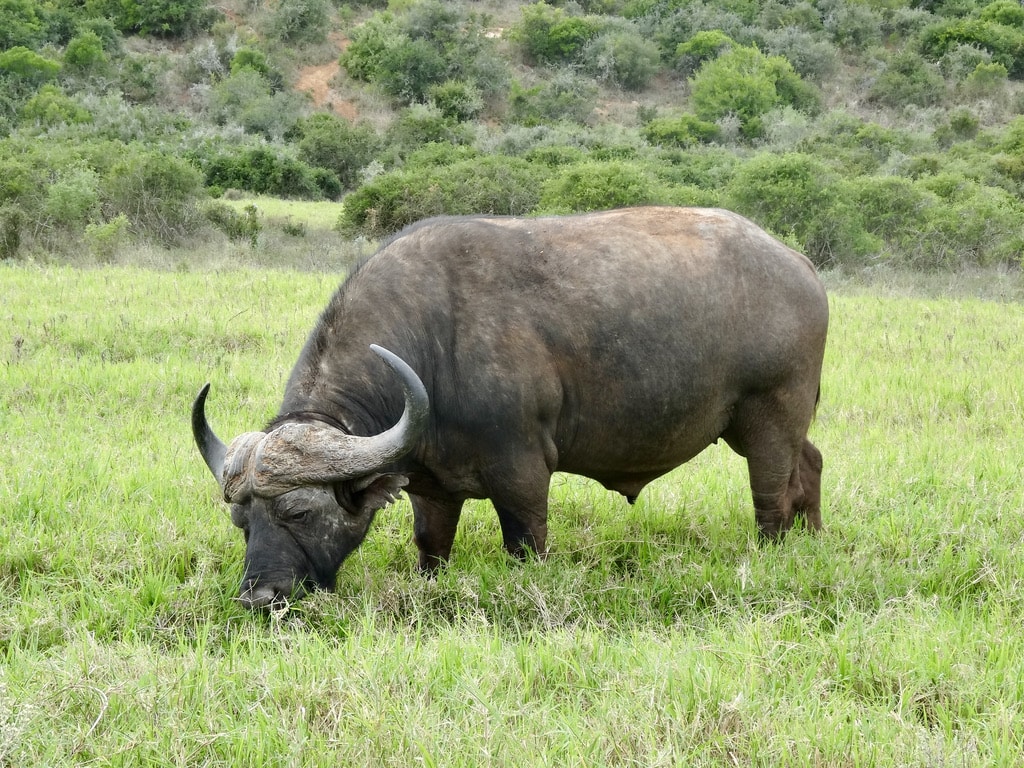
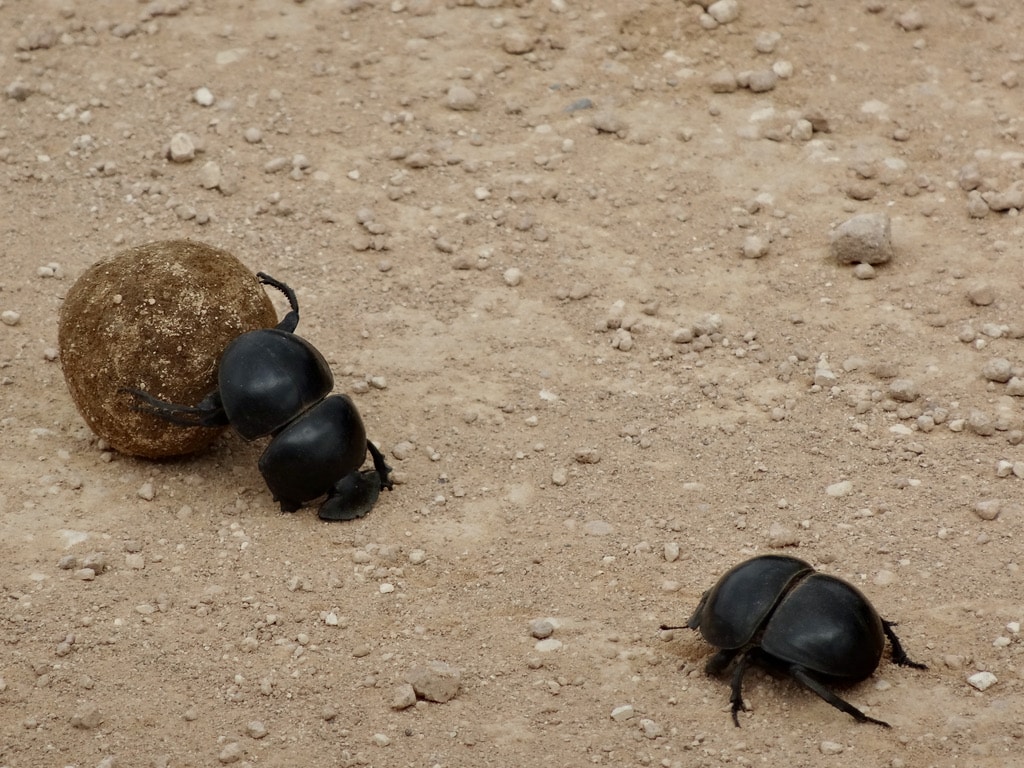
Initially established to protect the last remaining Addo elephants, the park has evolved into a diverse conservation area, home to a variety of plant and animal species. It’s particularly renowned for its large elephant herds, lions, buffalo, rhinoceros, various antelope species, and even dung beetles.

The park has two main entrances, and after registration and fee payments, we receive a map, making it easy to drive around while adhering to park rules.
Accommodation

Staying inside the park in the self-catering cottages run by SAN Parks is the ideal way to explore. While basic, the cottages provide everything needed for a comfortable stay. Due to its popularity, reservations need to be made months in advance.
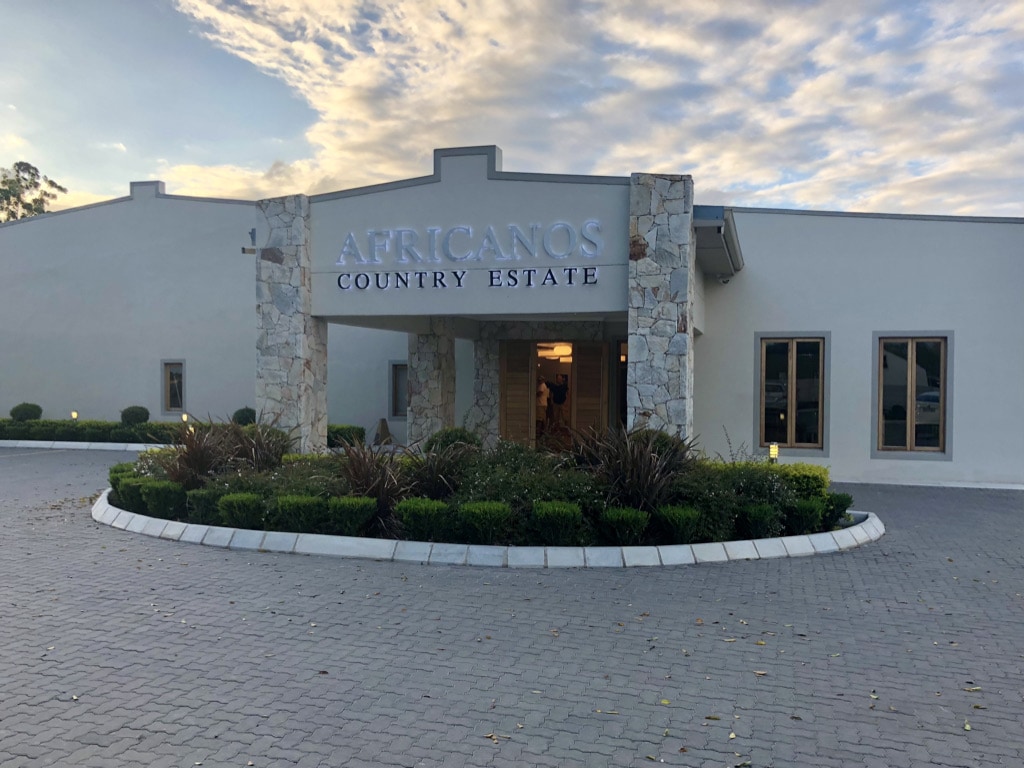
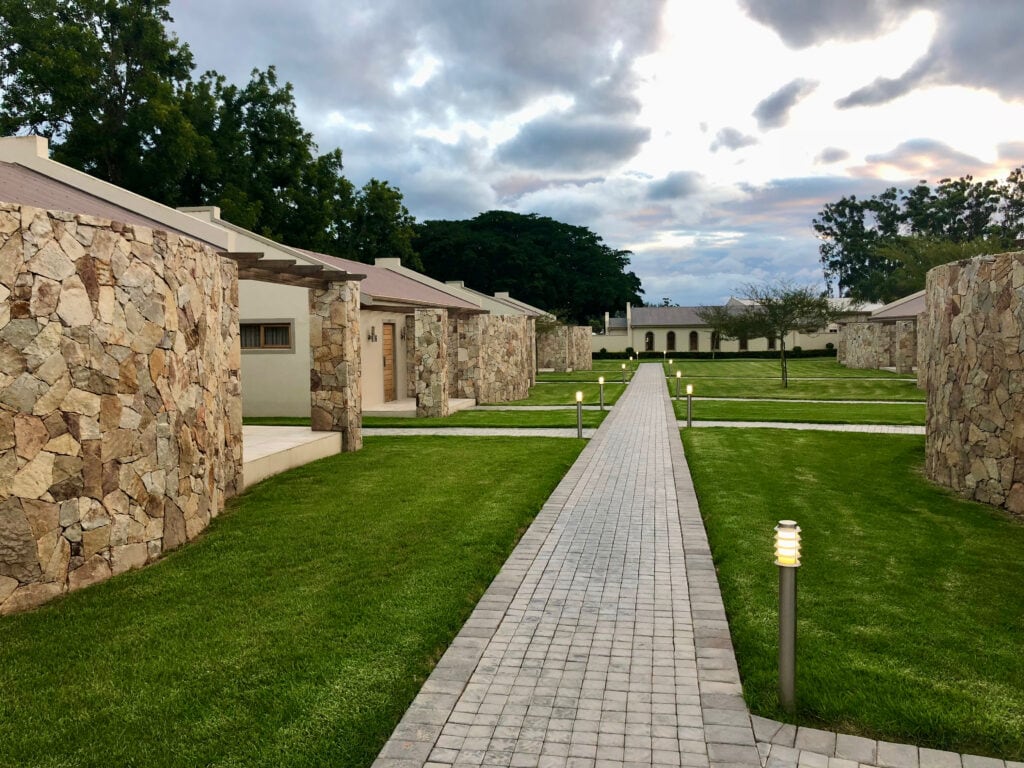
Alternatively, accommodations outside the park are available. We stayed in the upmarket Africanos Country Estate and it was lovely.
Game drives

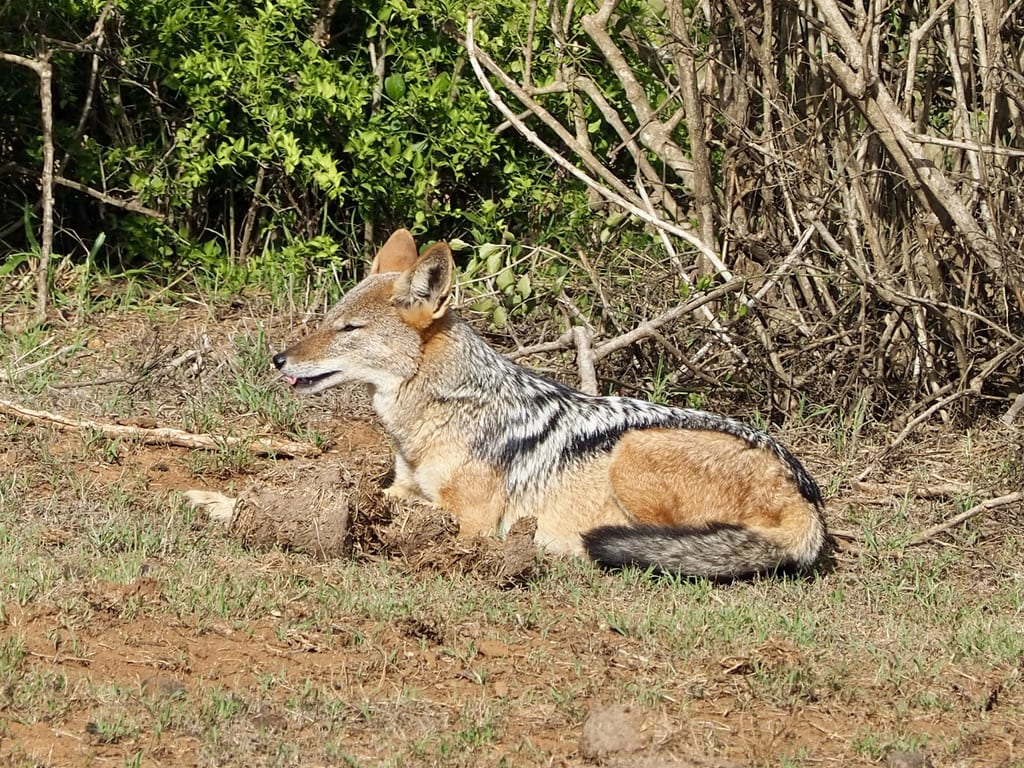
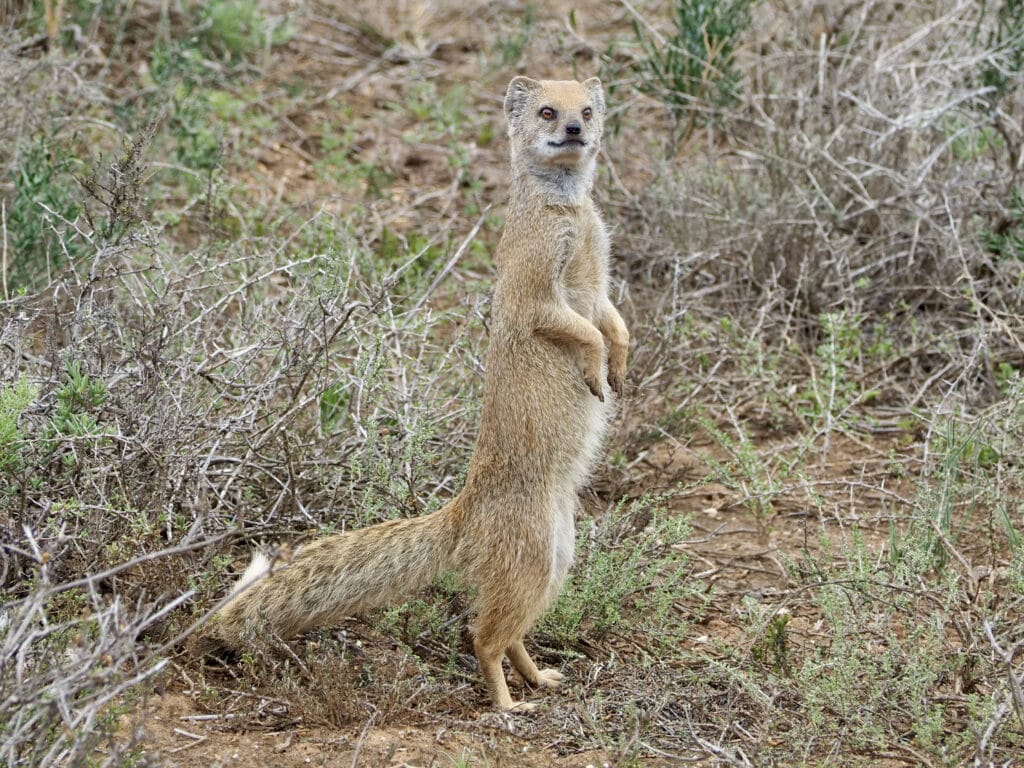
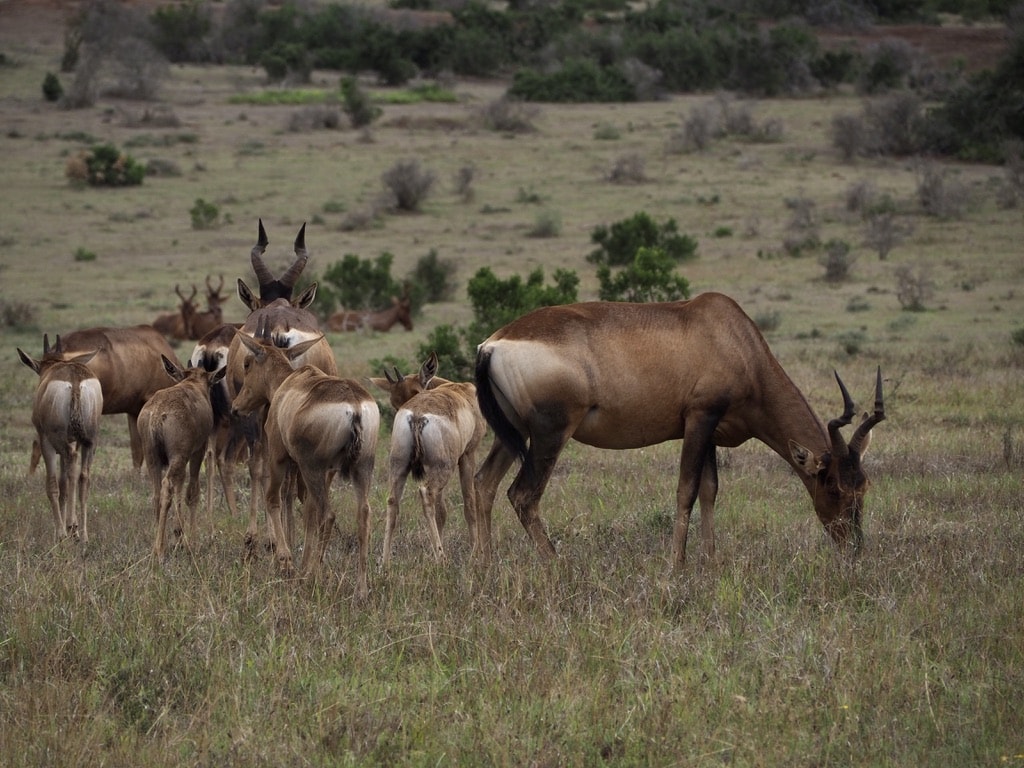
Driving in Addo Park is an adventure of its own. Spotting wildlife is unpredictable, and you never know what animals will appear. While elephants, warthogs, various antelopes, zebras, and dung beetles are almost guaranteed, there’s a good chance to spot jackals or buffalo. Spotting lions can be tricky, with some visits we were lucky and others not.

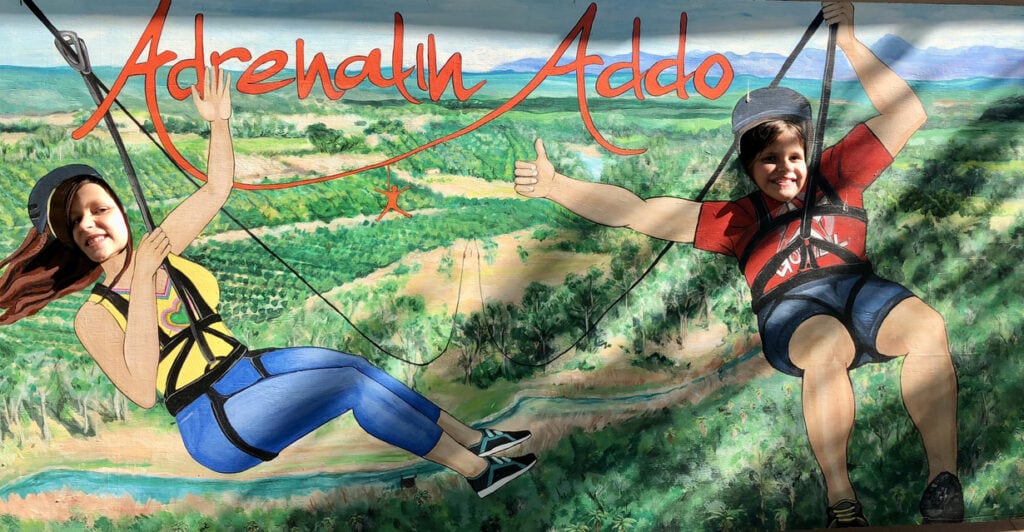
Adrenaline Addo

Adrenaline Addo sign, South Africa
Adrenalin Addo

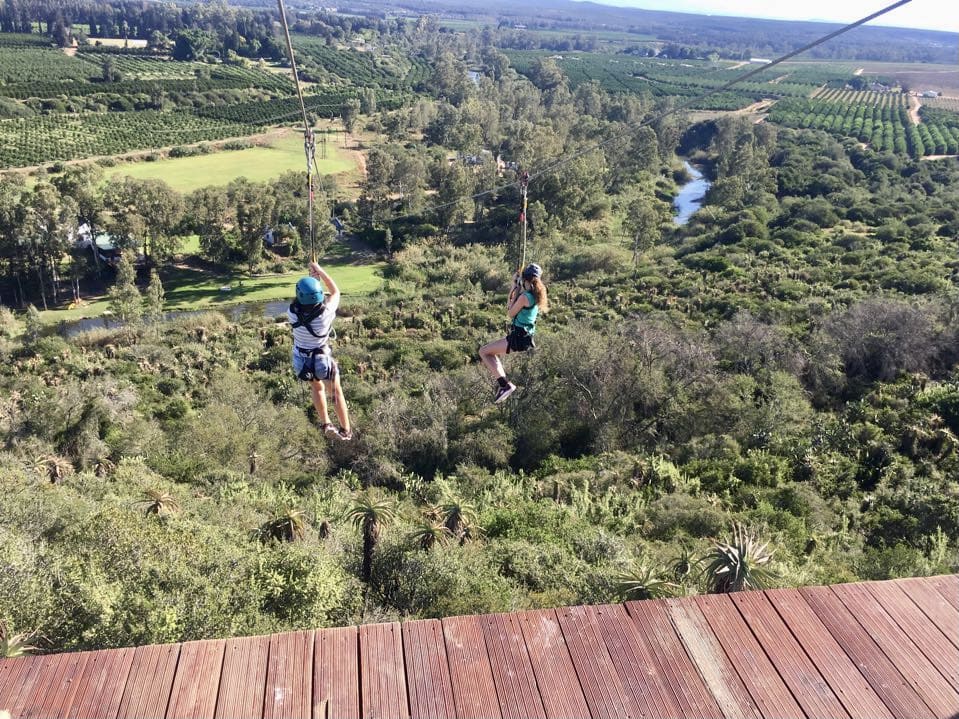
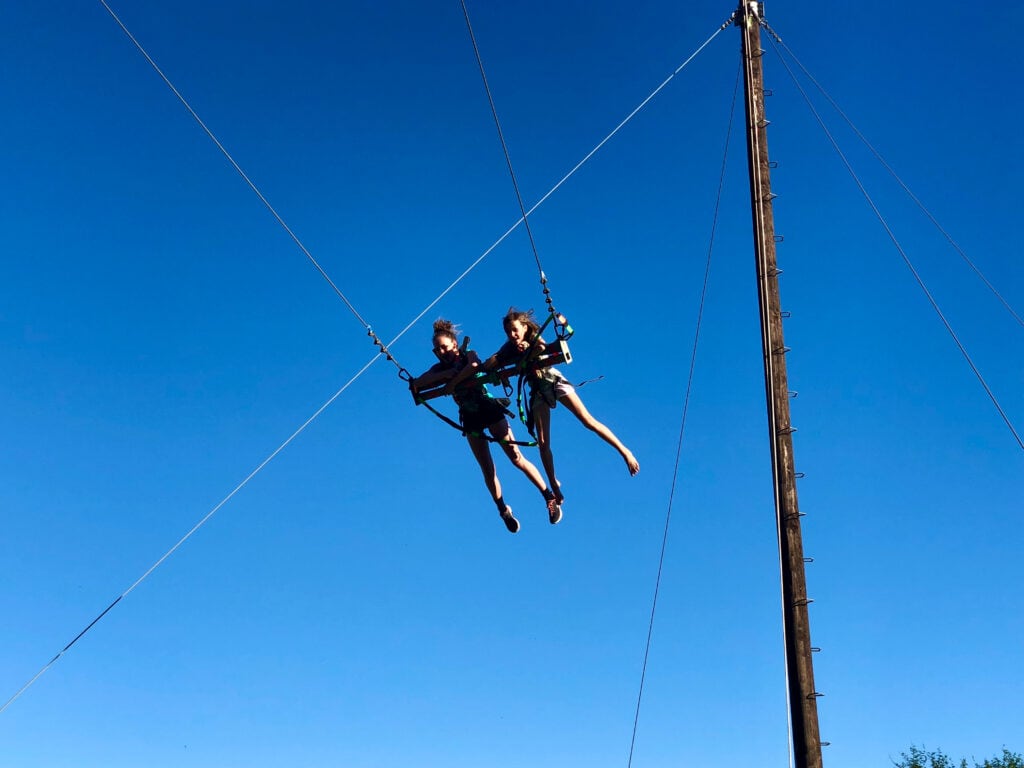
It is a fantastic destination for adventure lovers, offering a ride on the highest, longest, and fastest double zip line in South Africa. You can also try the giant swing or canoeing on the Sundays River. We tried all the activivities and spend an enjoyble time doing that.
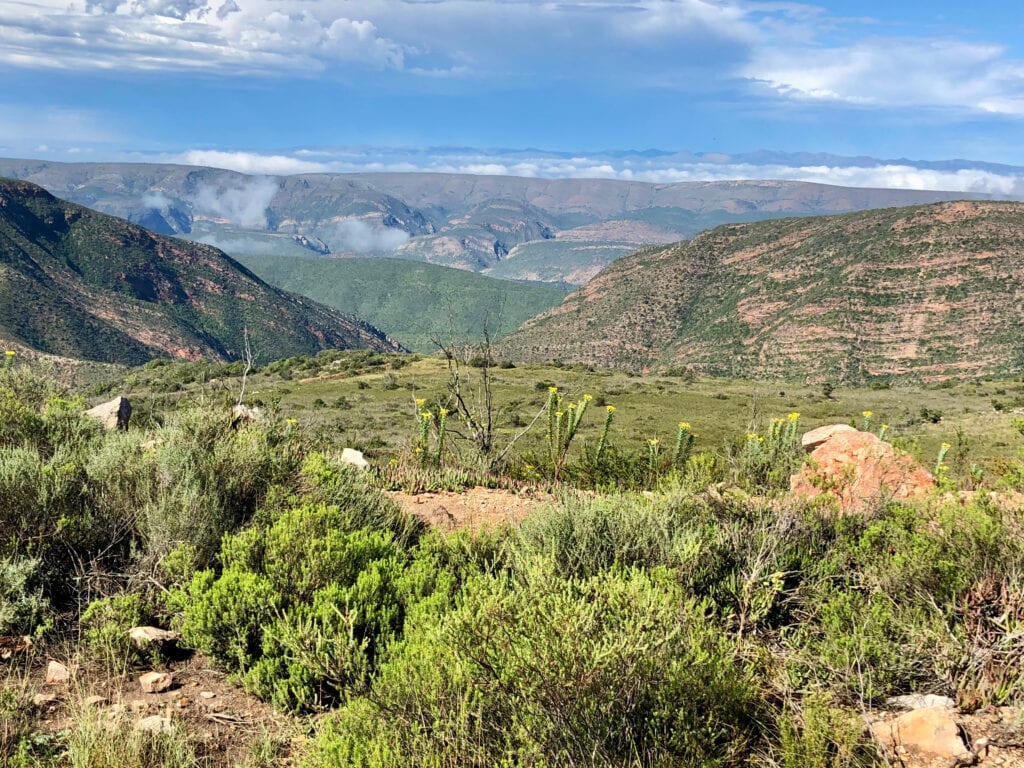
The Bedrogfontein 4×4 Trail.
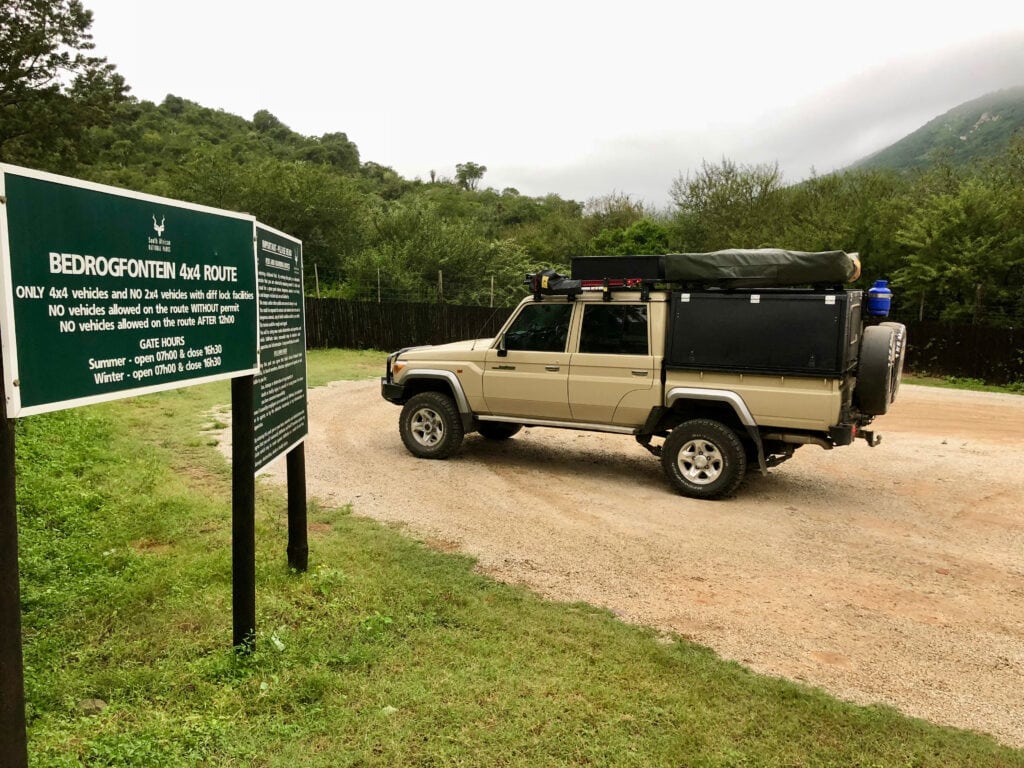
The Bedrogfontein 4x4 Trail entrance, South Africa

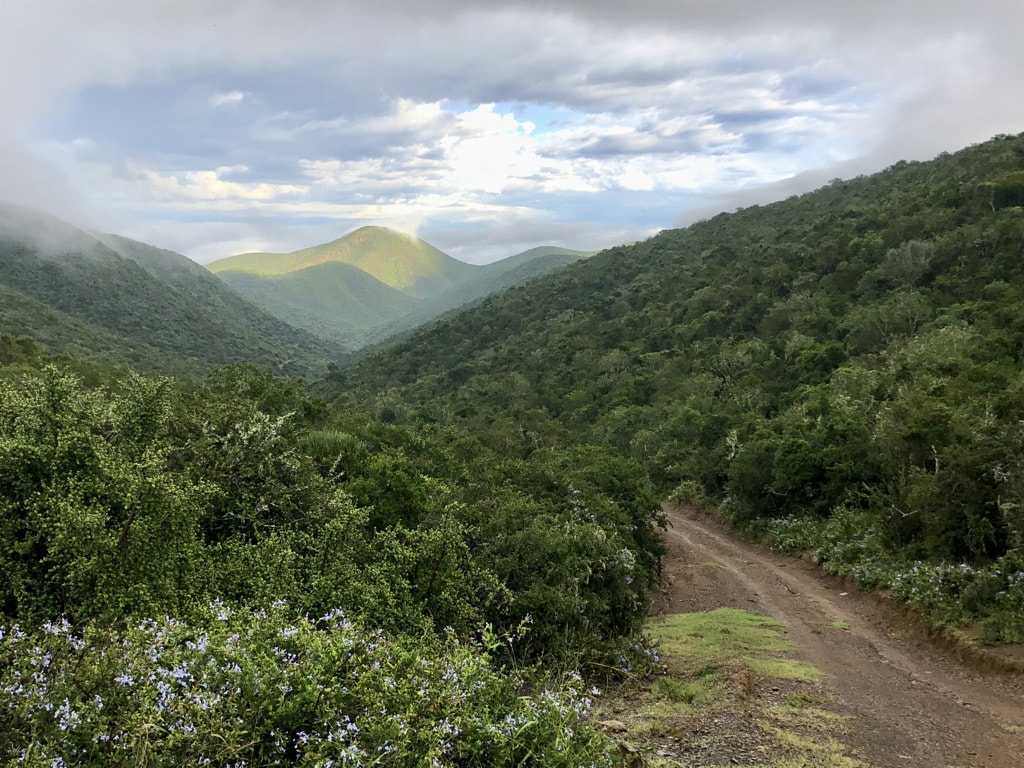
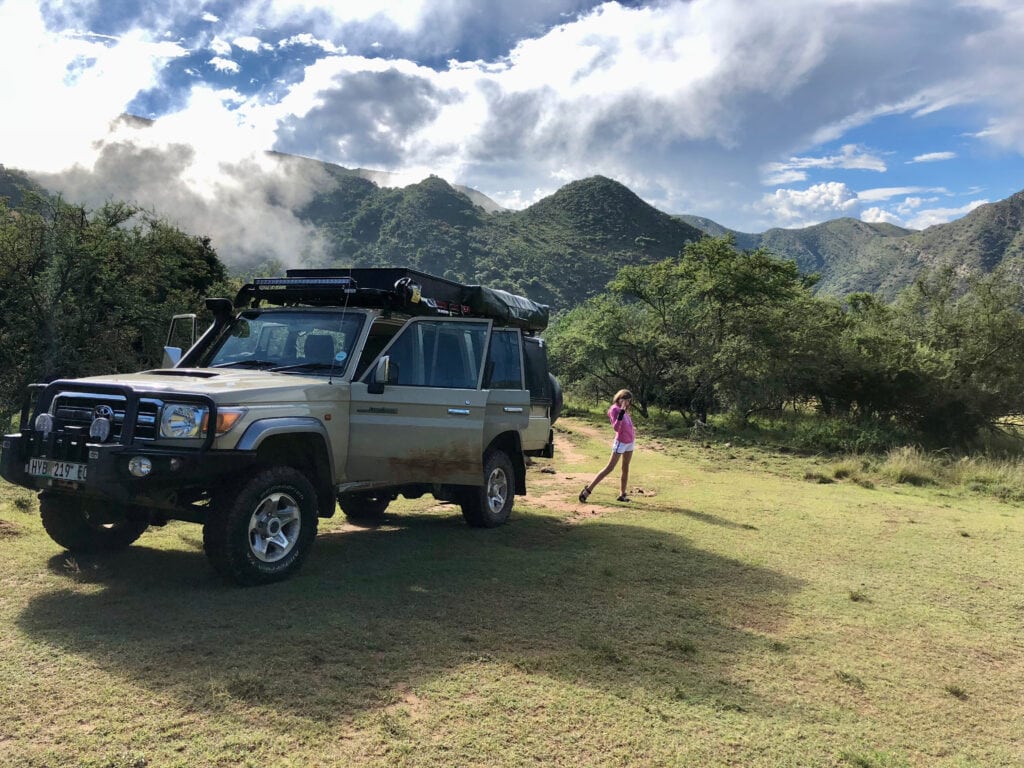
It is situated approximately 1 hour and 15 minutes from Addo Elephant National Park in the Baviaanskloof Nature Reserve. This 45km off-road adventure is a genuine 4×4 challenge, navigating through rugged terrain, river crossings, and steep ascents. The trail offers breathtaking views of the surrounding wilderness in a remote setting. It’s worth noting that once you get on the trail, you’re on your own, as there is minimal to no mobile phone coverage for the majority of the journey.

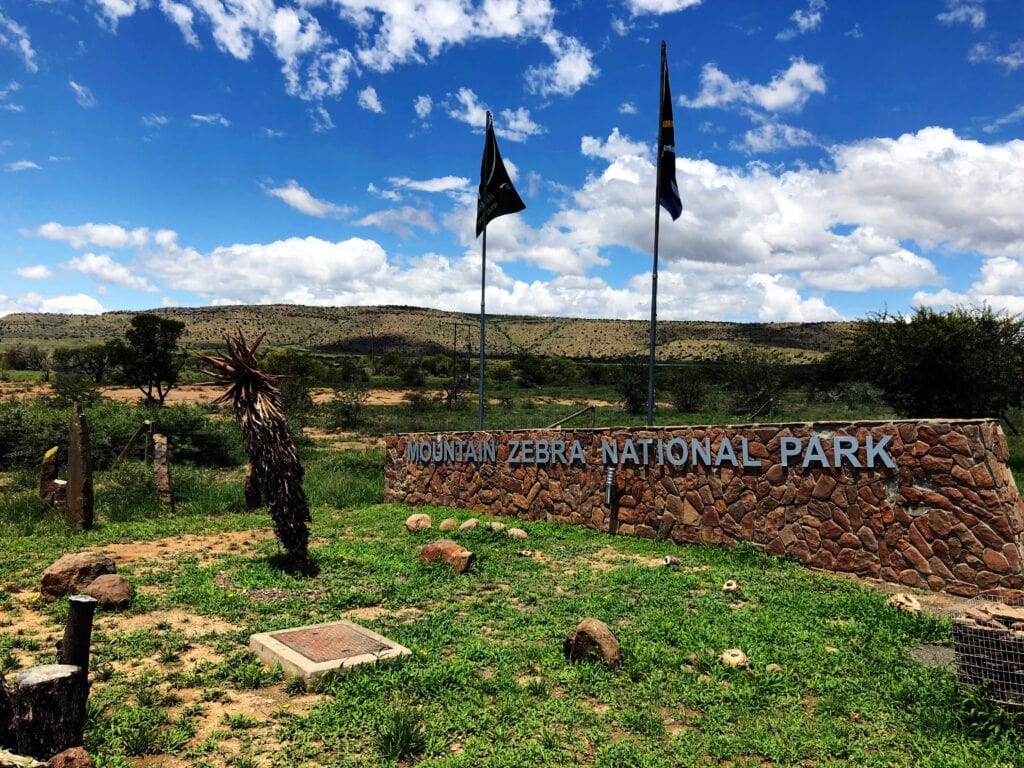
Mountain Zebra National Park

Addo Elephant National Park – Mountain Zebra National park: 210km, 2hours 45min via N10. Accesible without 4×4 vehicle.
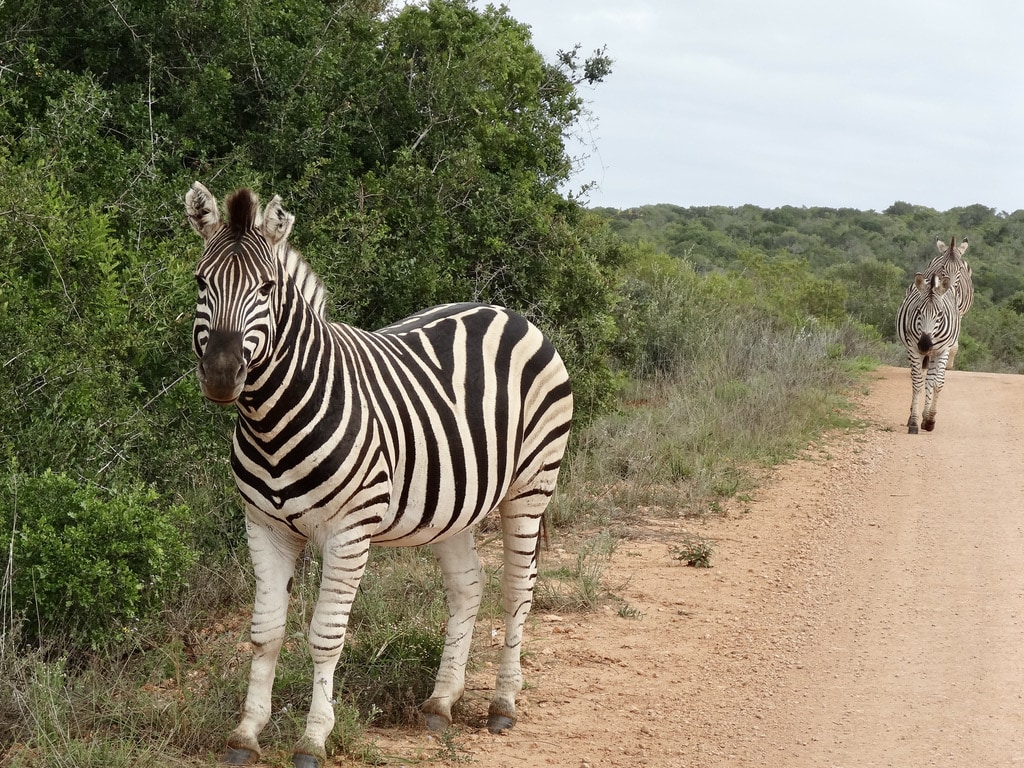
Mountain Zebra
Mountain Zebra

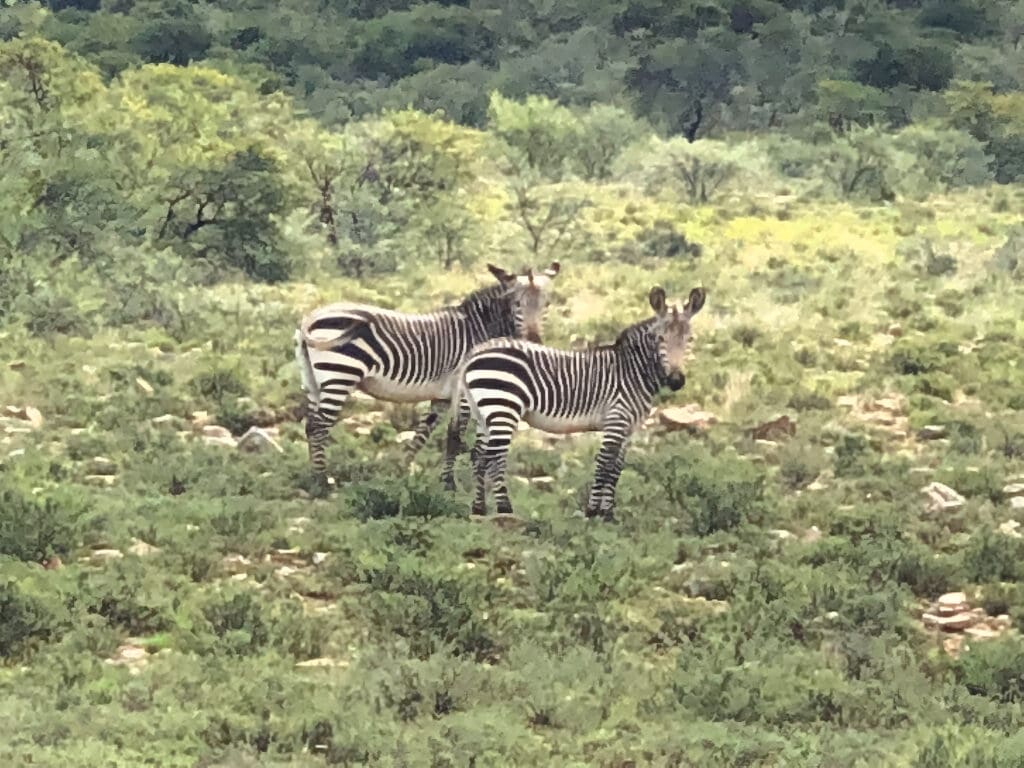
It is a conservation area dedicated to the preservation of the Cape mountain zebra. The park offers a unique opportunity to observe these endangered zebras in their natural habitat. Beyond zebras, the park is home to a variety of wildlife, including buffalo, cheetahs, and various antelope species.
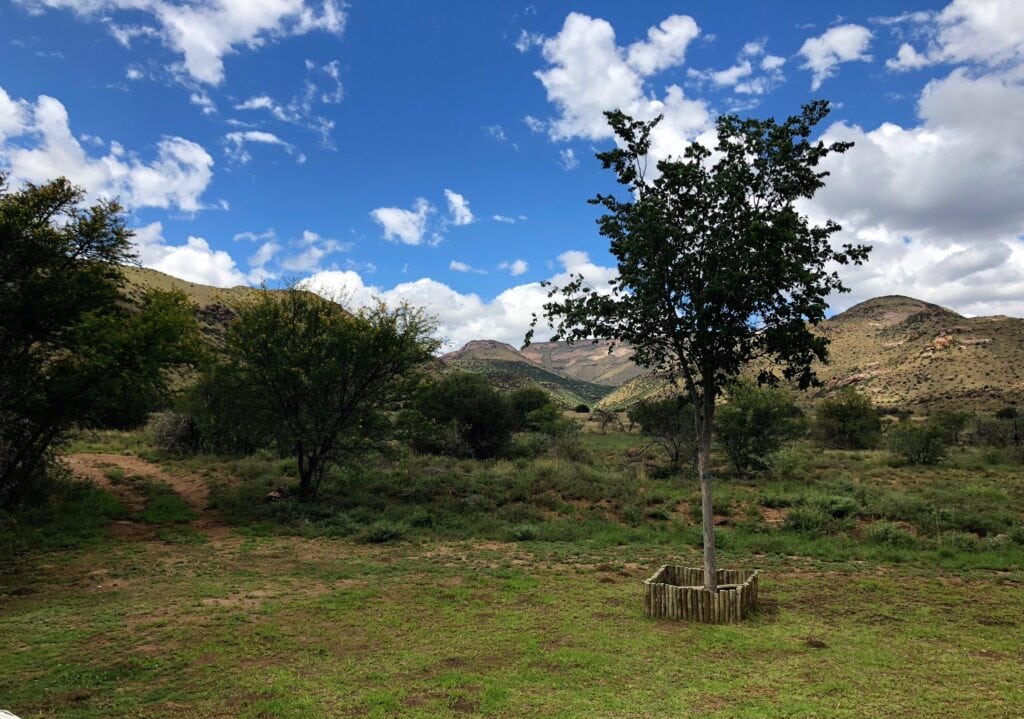
Accommodation

The accommodation inside the park is managed by SANParks, offering various types of lodging. We stayed in the family cottages and the remote Mountain Cottage.
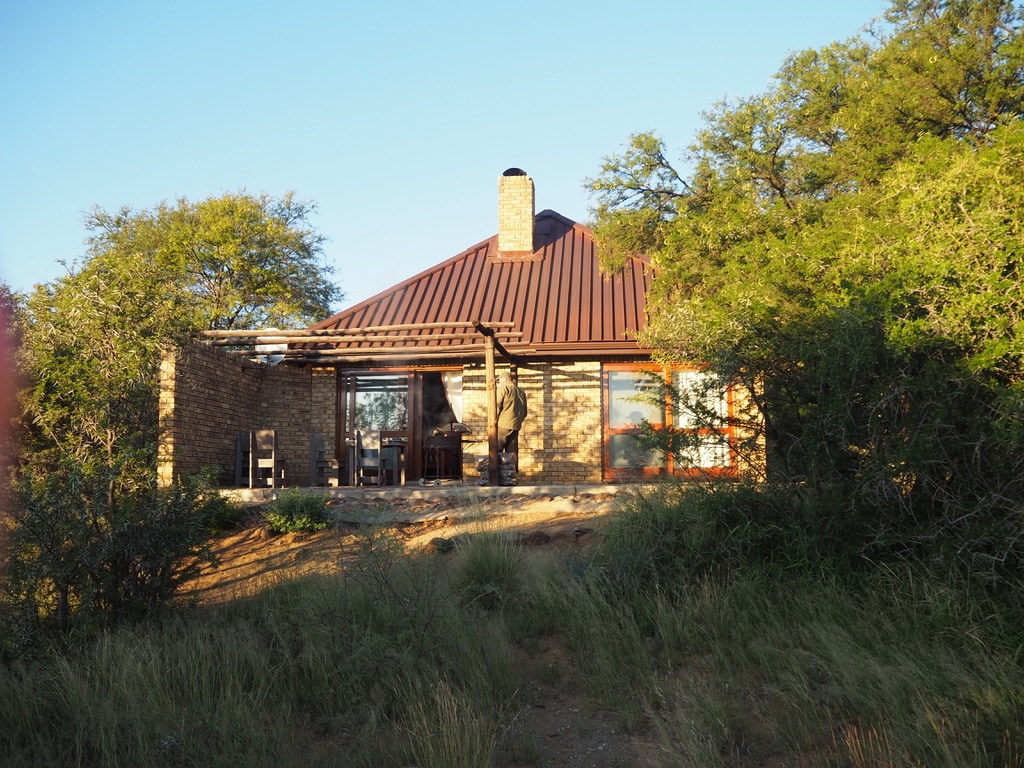
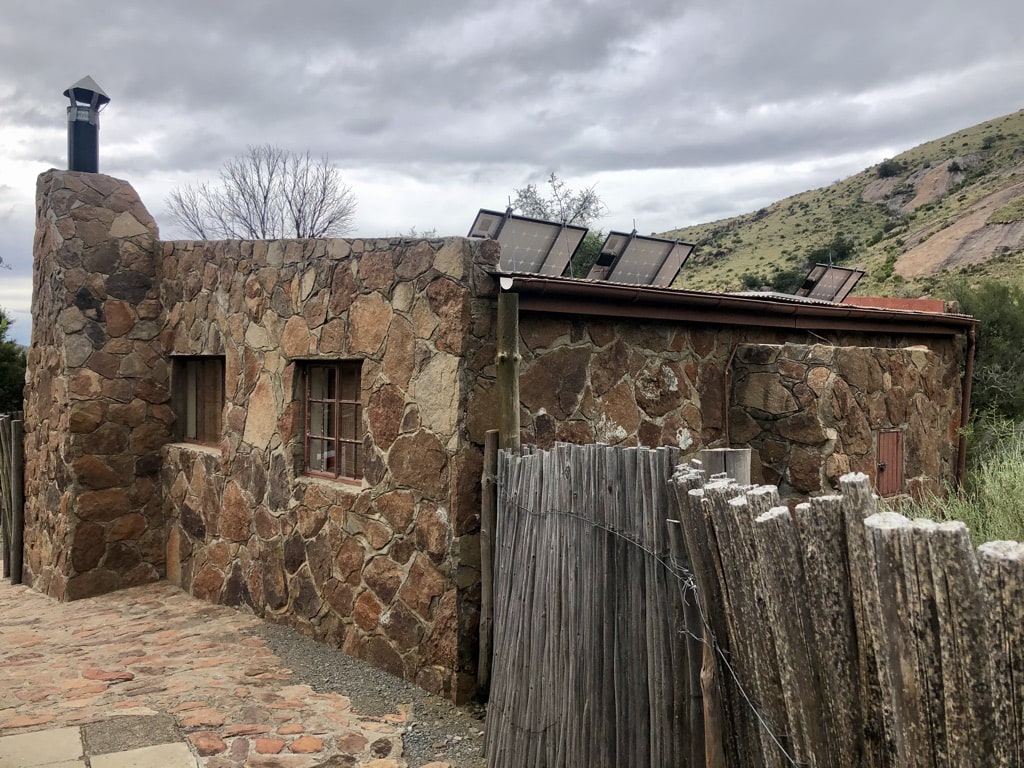
Cheetah tracking

It is a popular activity offered by experienced guides. We did it a couple of times and always enjoyed the thrill of tracking the cheetah. The excitement built as we were getting closer to these stunning animals.
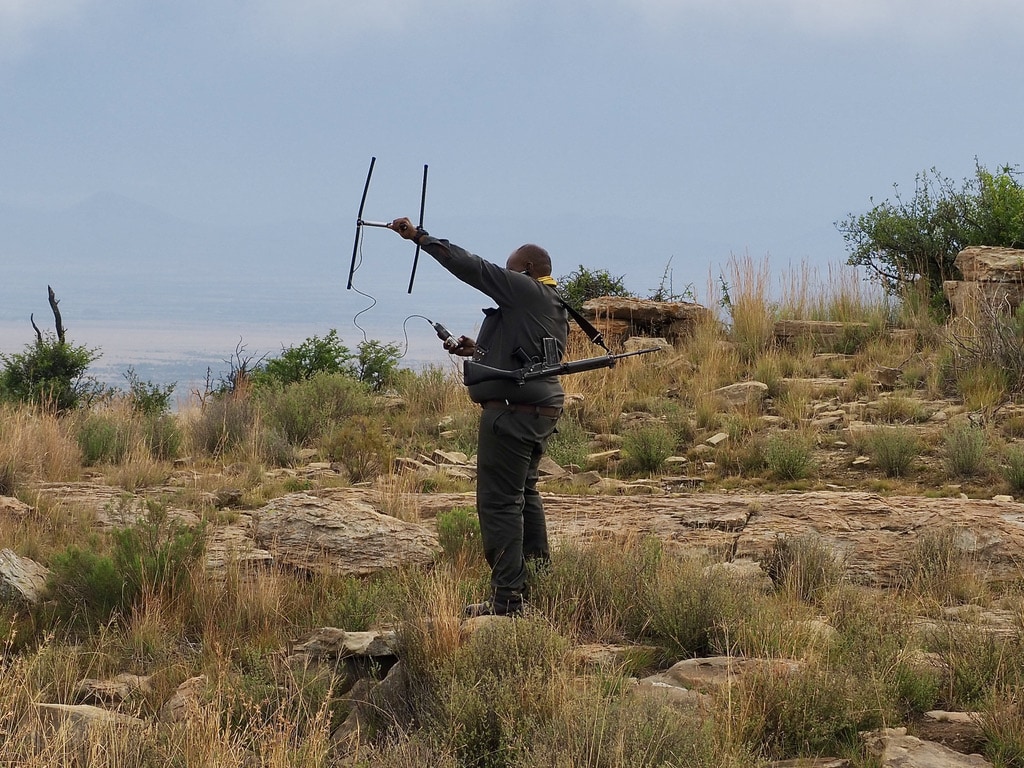
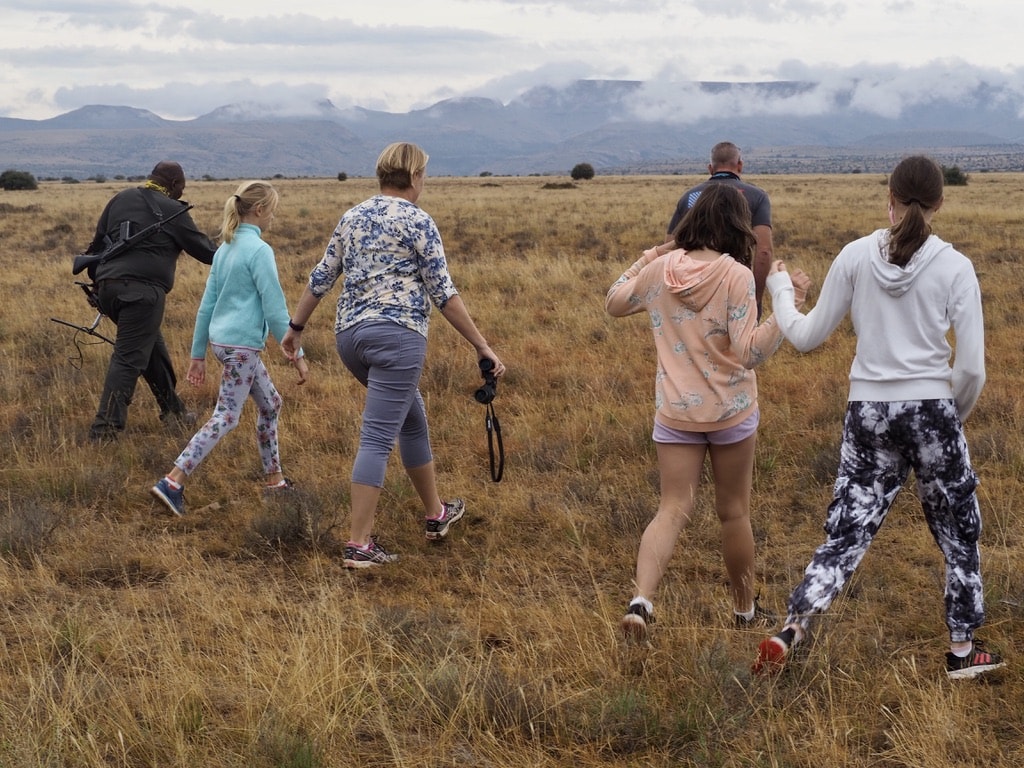
4×4 tracks

Mountain Zebra National Park offers three tracks within its boundaries for exploration. This off-road drive is an adventurous experience, allowing you to explore areas beyond the main roads of the park. This activity requires a 4×4 off-road vehicle to navigate the diverse and challenging terrain.

Exploring 4×4 track

Game drives:

The park’s main roads are easy to drive on and allow one to explore the park while spotting different types of animals.
There are also game drives with a professional guide organized by the park.
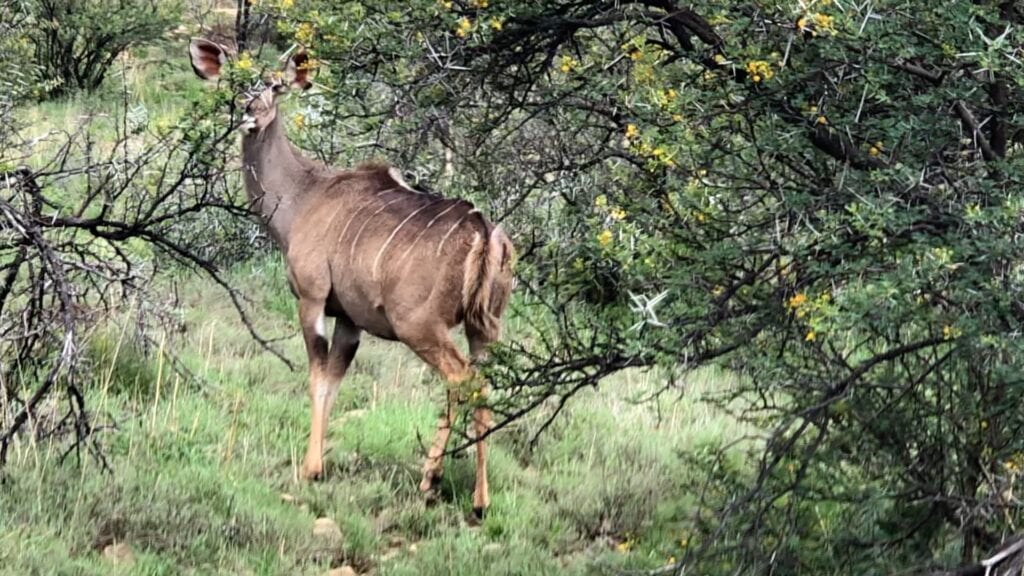
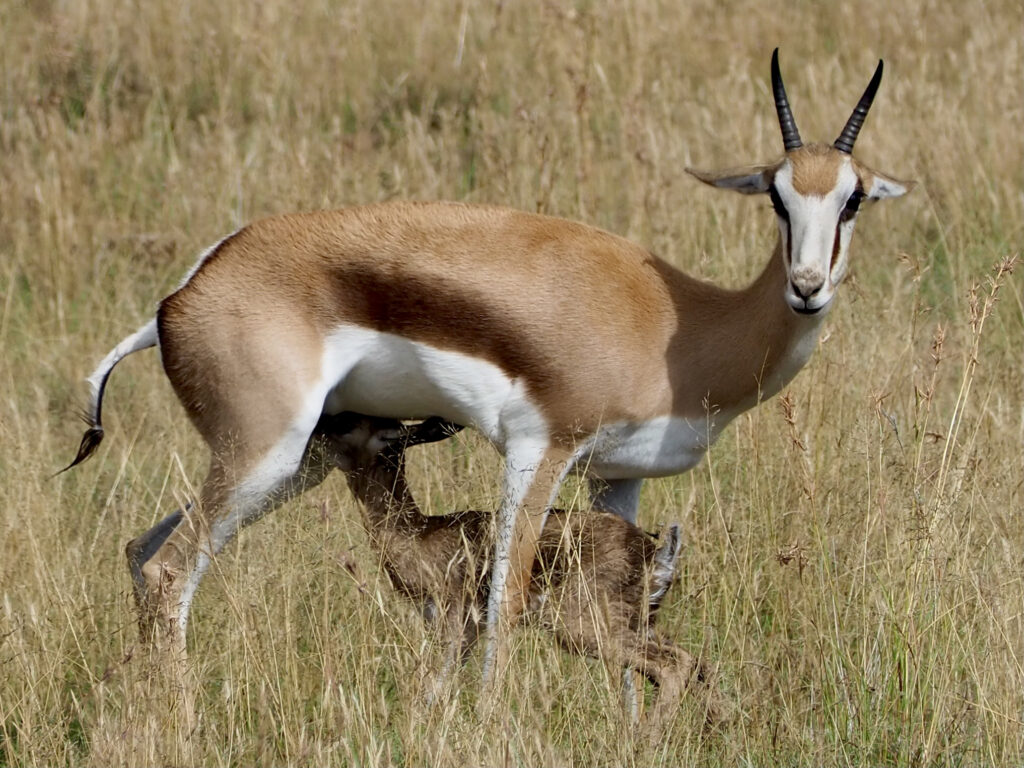
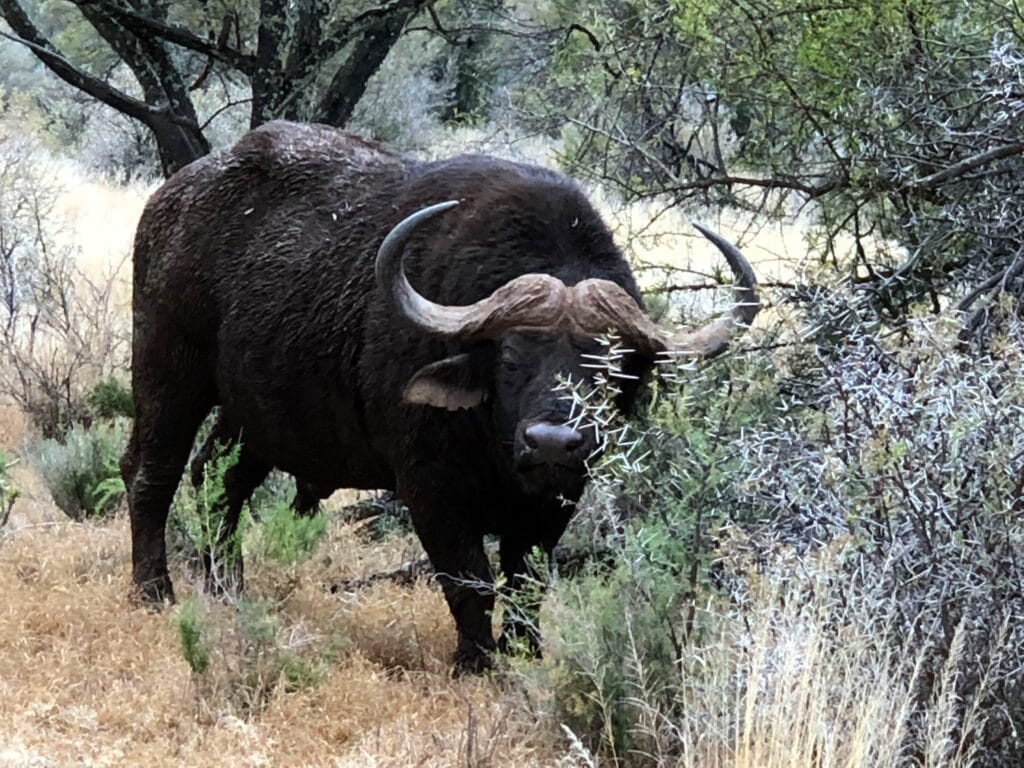
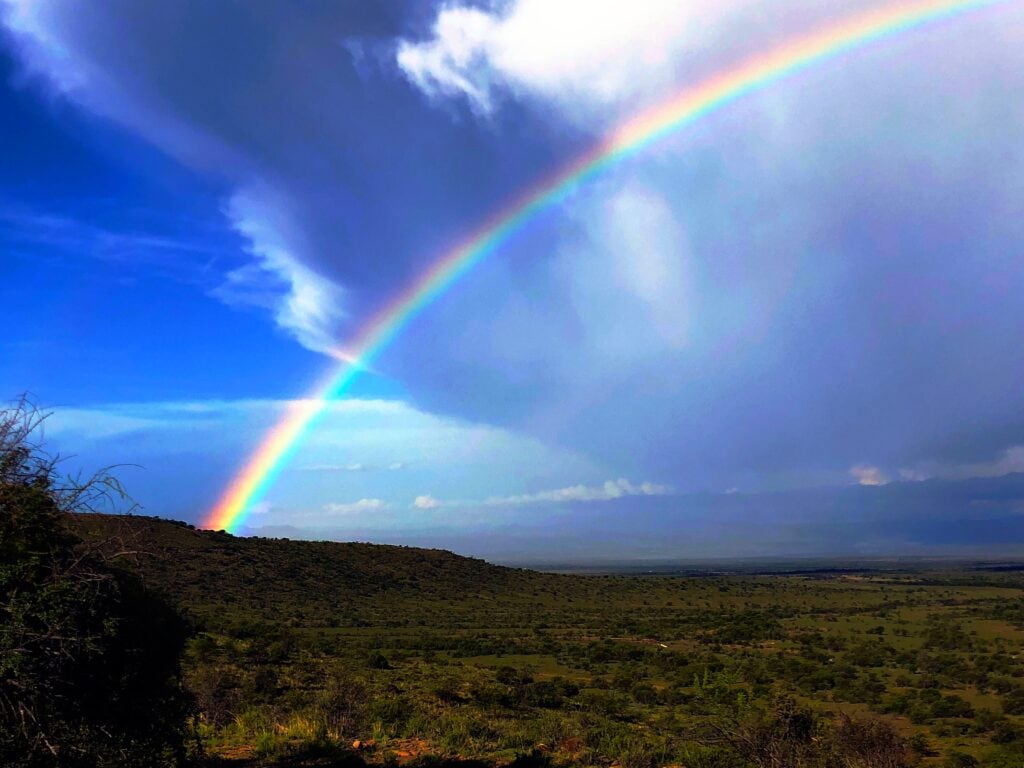
Hogsback

Mountain Zebra National Park – Hogsback: 210km, 3hours. Accesible without 4×4 vehicle.

Hogsback is an enchanting mountain village known for its forests, waterfalls, and beautiful landscapes.
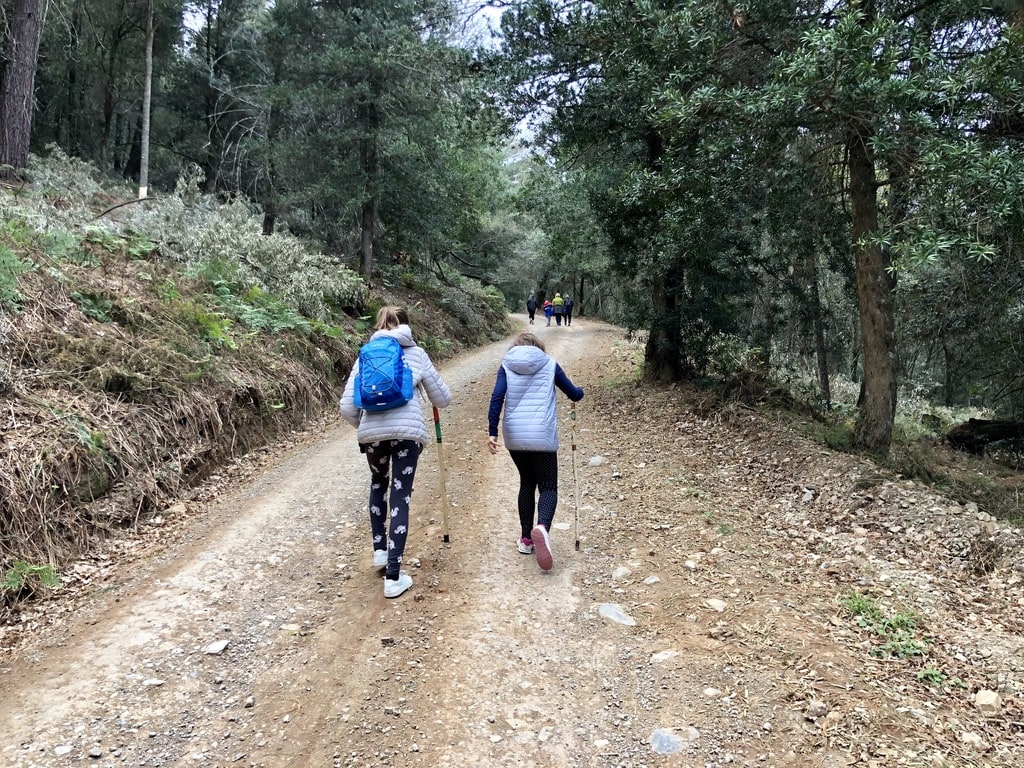
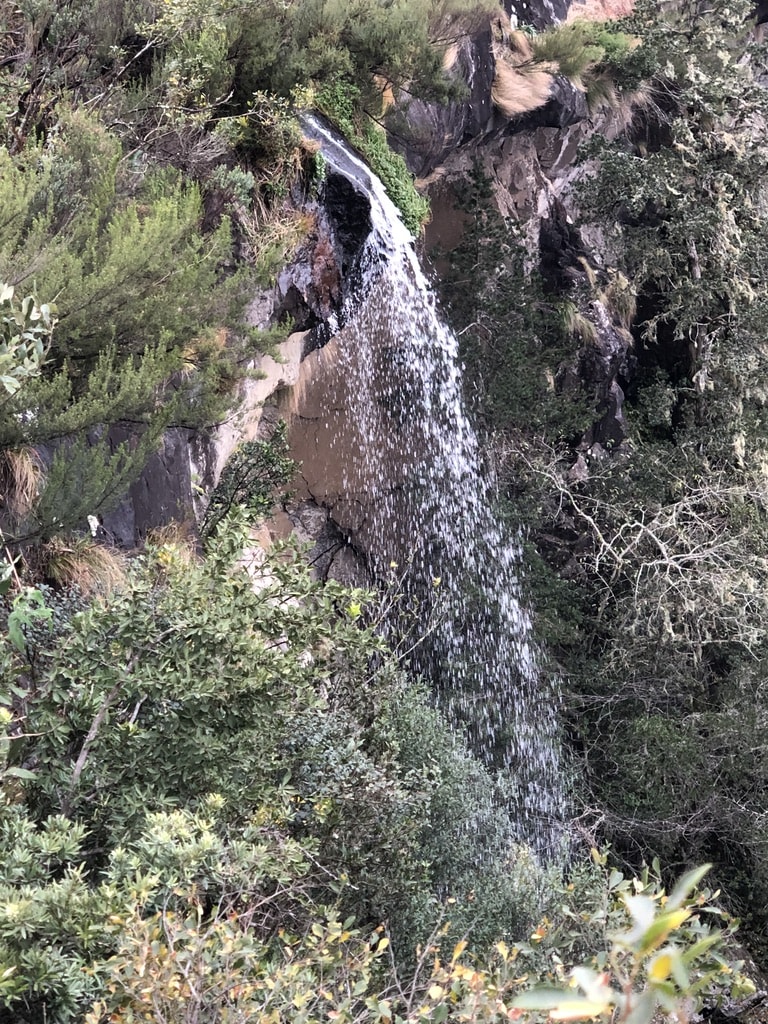
Hogsback is often referred to as a place of magical beauty. The village offers hiking trails leading to places such as the Madonna and Child waterfall. One can explore the indigenous forests and enjoy small the hospitality of the artistic community.

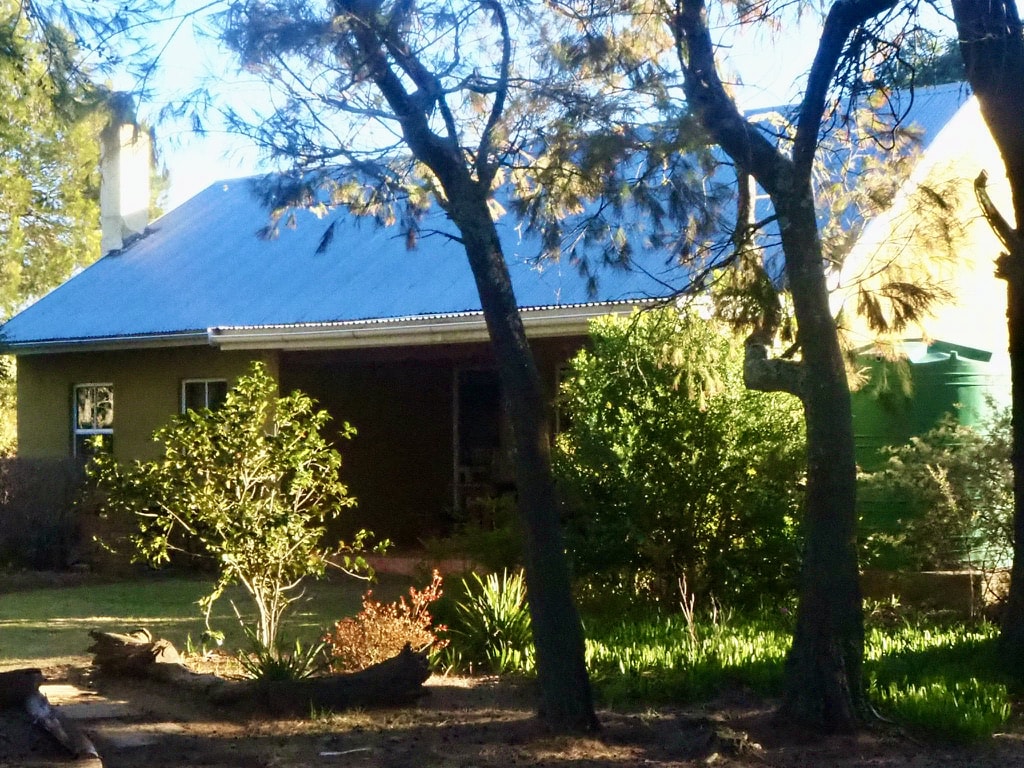
There are plenty of B&Bs to stay in. We really like staying at Hogsback Inn, established in 1880. They offer hotel rooms as well as separate cottages, and the hotel has a real charm.

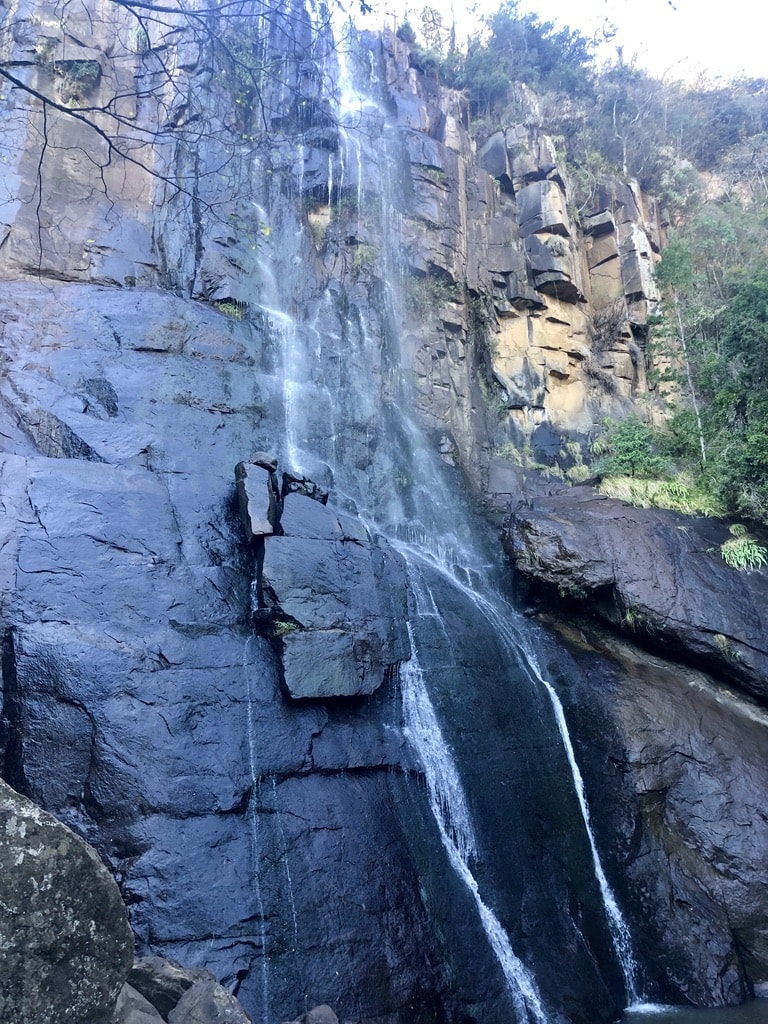
Madonna and Child Waterfal
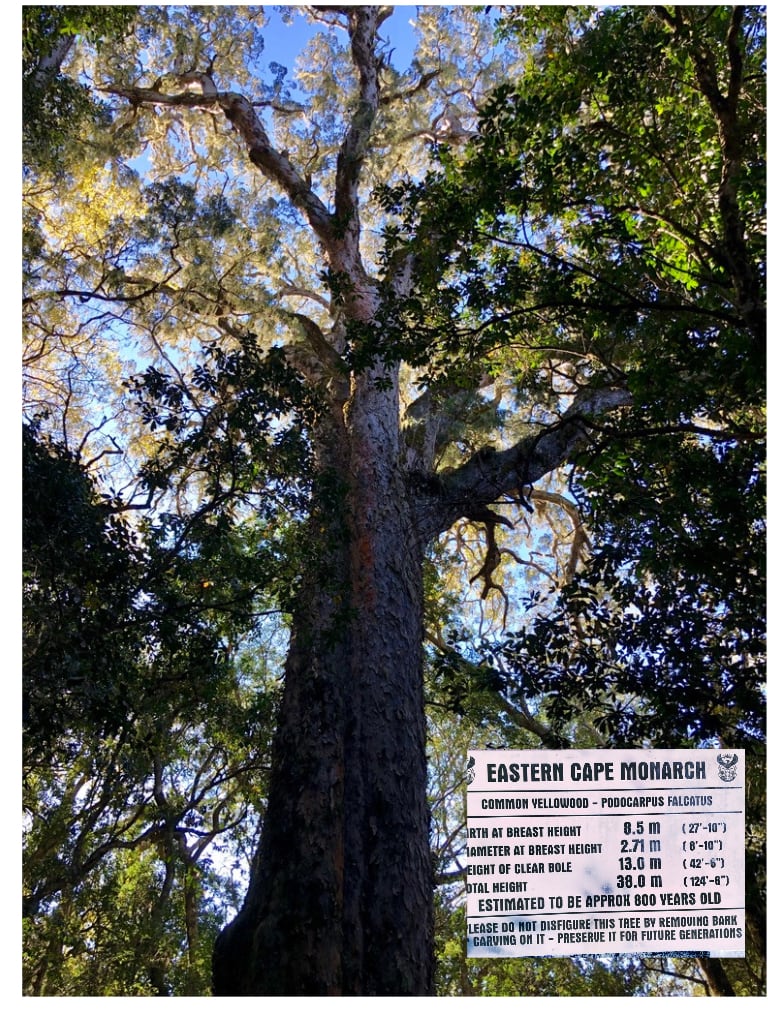
The hike leads through the indigenous forest. The first part involves a steep descent, leading to the waterfall hidden in the middle of the forest. The walk continues through the forest, allowing admiration of some very old Yellowwood trees. It concludes in the bottom part of Hogsback Village.
The Kettlespout Hiking Trail
The trail is of a moderate level of difficulty with no extra steep ascends or descents. The journey begins at the Hogsback Arboretum and continues way through the indigenous forests filled with ancient Yellowwood trees. At the end of the trail is the Kettlespout Waterfall.
Rhodes, Drakensberg Mountains

Hogsback – Rhodes: 320km, 5 hours. 4×4 off road car is needed.

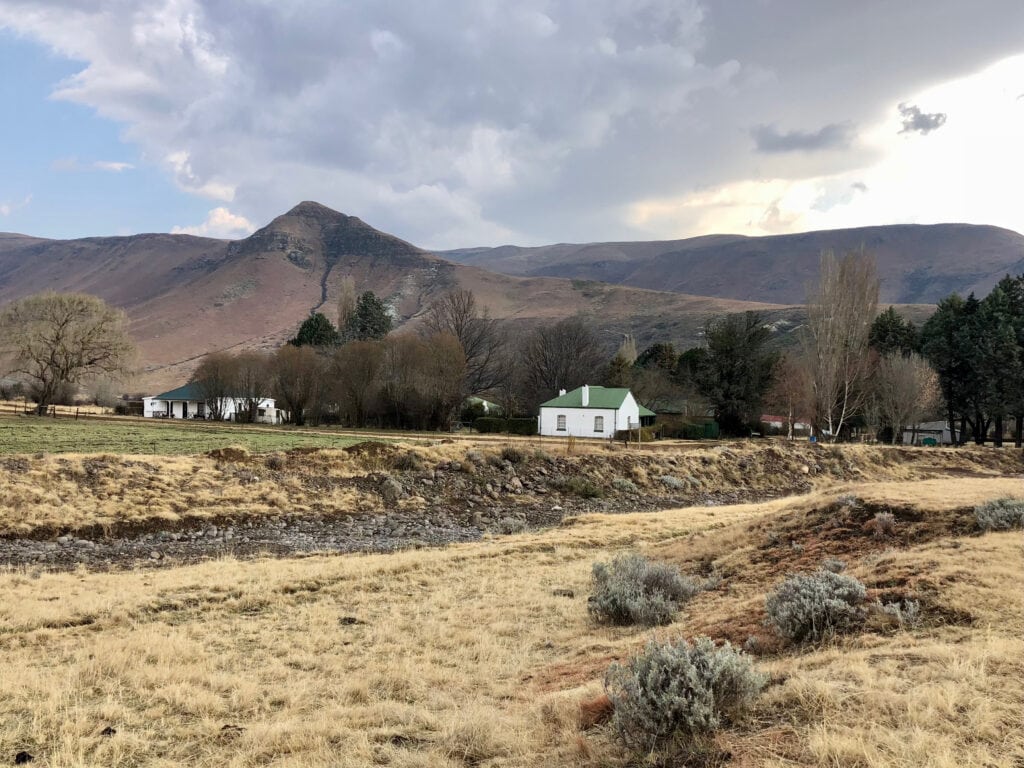
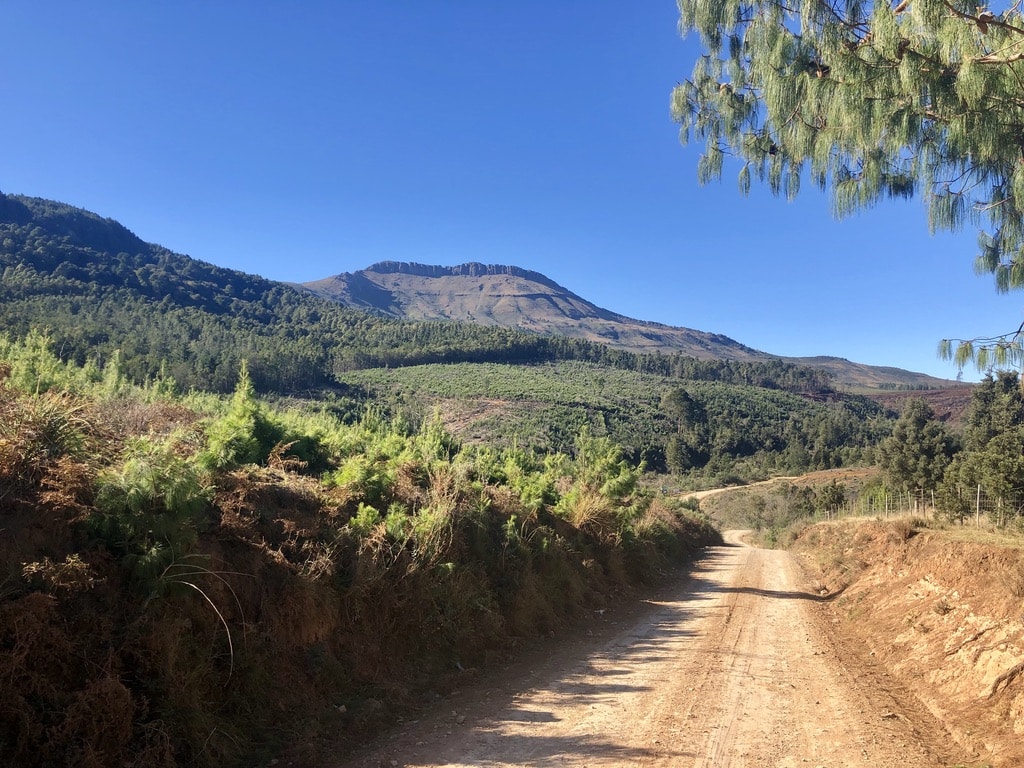
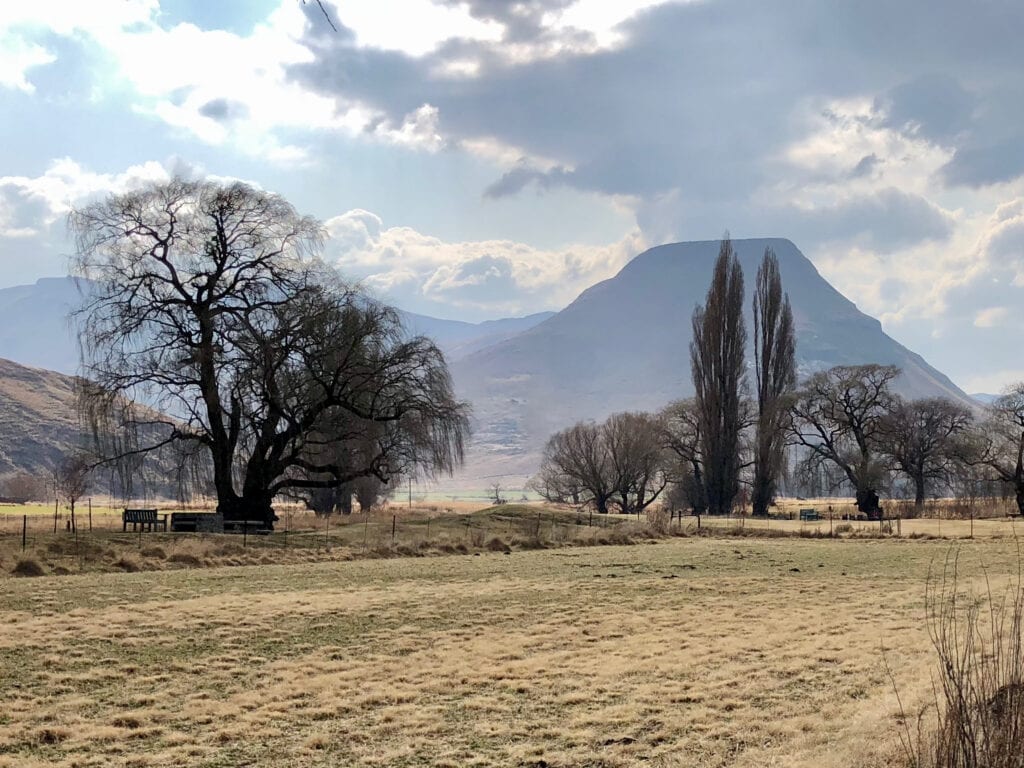
Rhodes is a small village located in the Drakensberg Mountains, a good 2 hours away from the nearest town and accessible through a dirt road. Named after the British imperialist Cecil John Rhodes, it offers a true escape from urban life. The village houses are built in well-preserved Victorian architecture. In the evening, there are no lights in the village and no shops, so it is crucial to bring everything needed. There is only a small pub where locals gather in the evening.

During our time in Rhodes, we enjoyed two awesome excursions – a drive to Tenahead and skiing in Tiffandel.
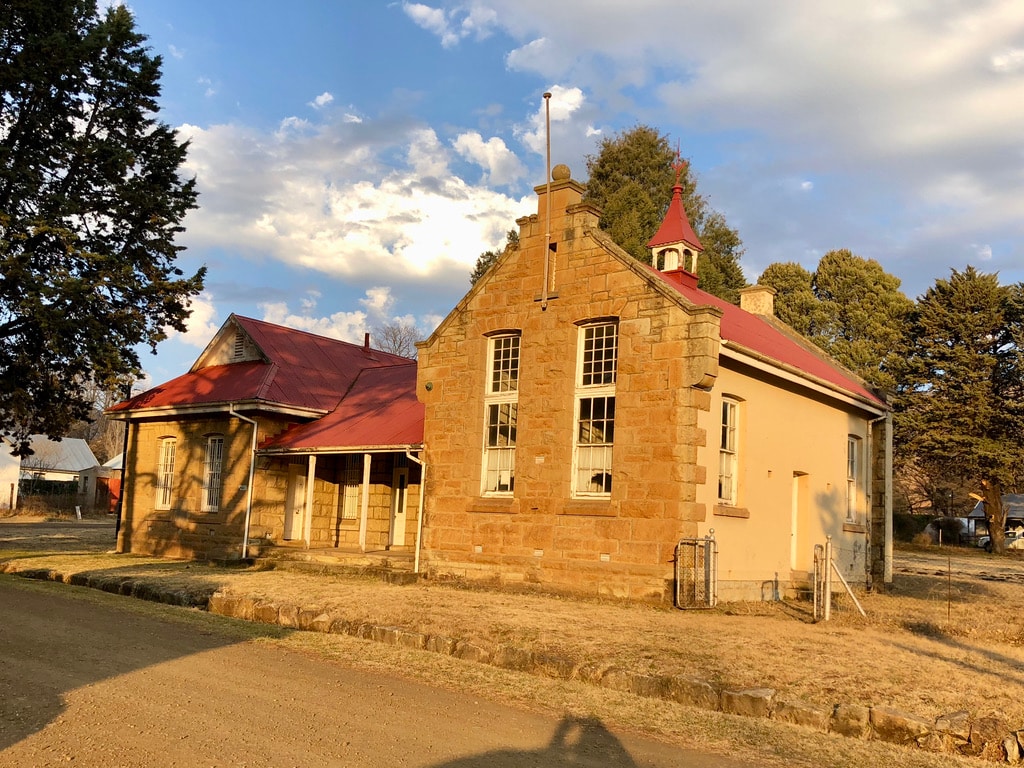
Tenahead Lodge

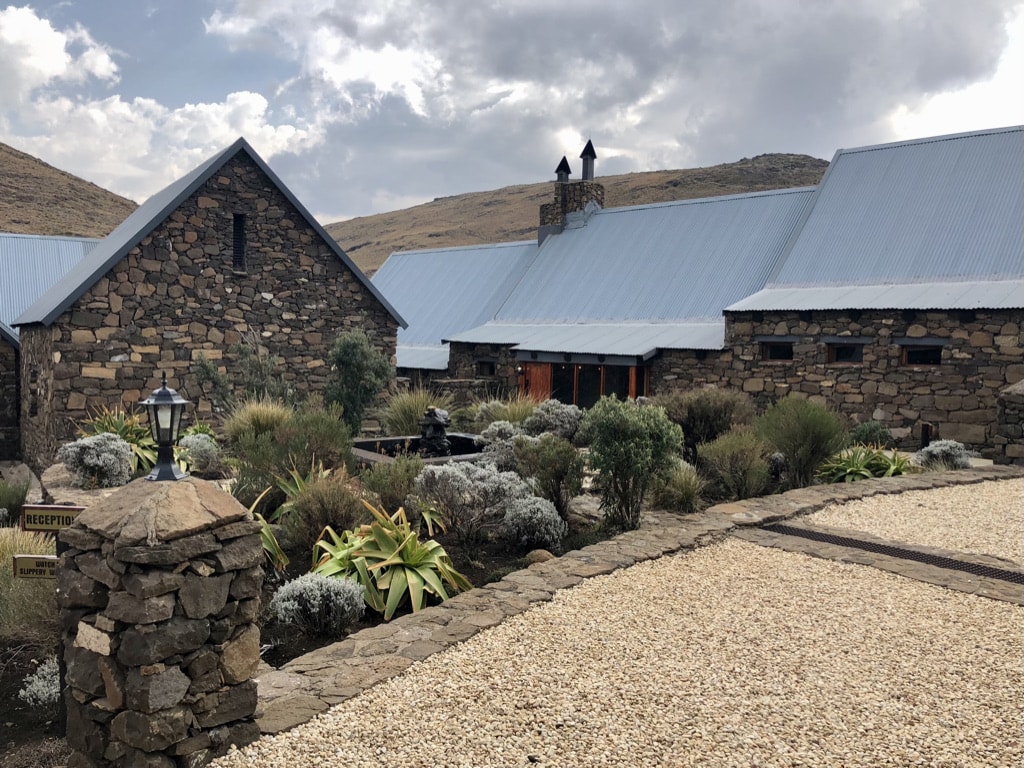
It is a luxury retreat situated 30km from Rhodes. The journey to Tenahead is an adventure in itself, with a narrow dirt road winding through the mountain ranges, taking at least an hour to reach the destination. The scenery along the way is breathtaking, and upon arrival, the lodge offers fantastic hospitality. We had a great lunch at the lodge’s restaurant while taking in the stunning views.
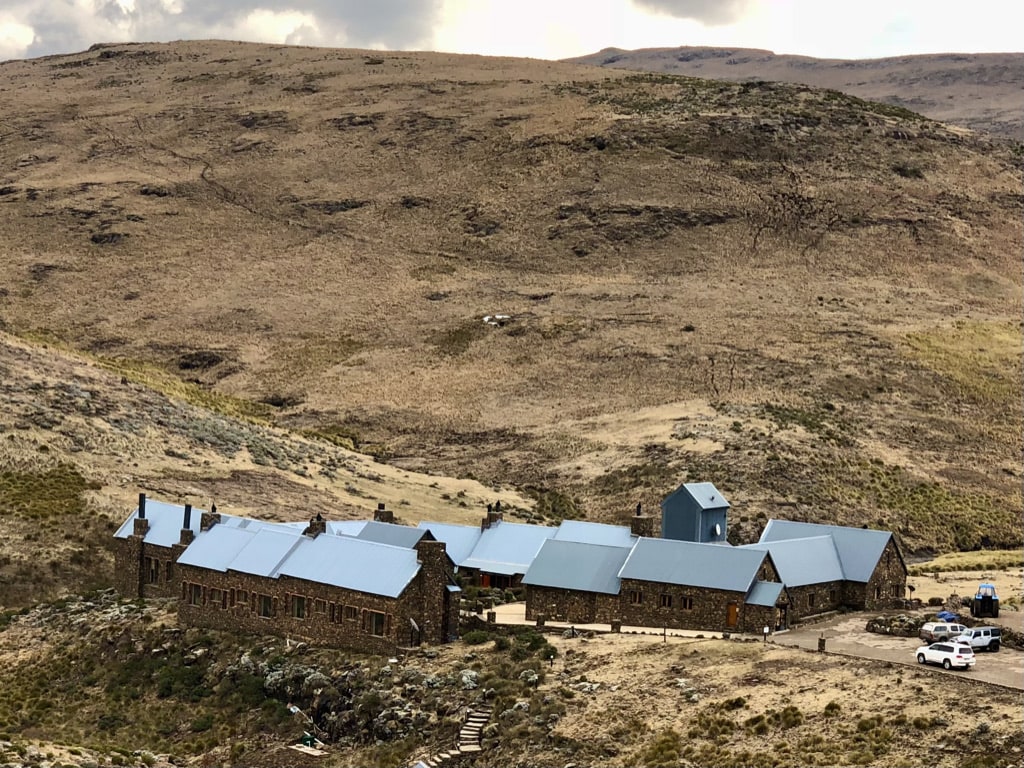
Tiffindell Ski Resort

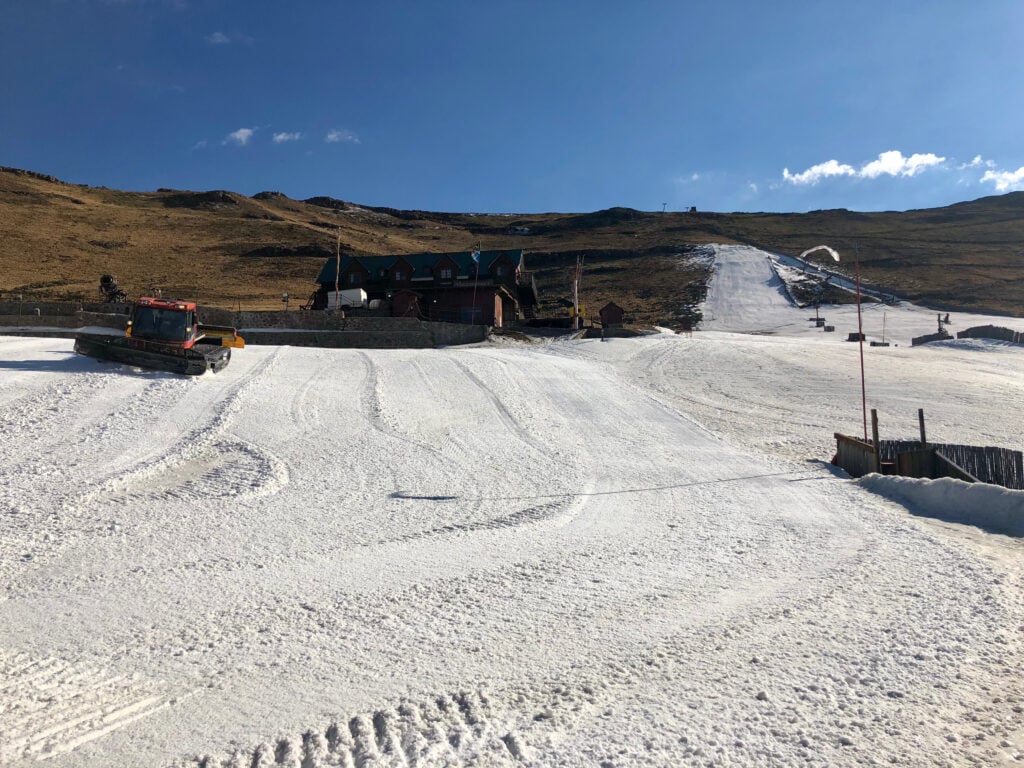
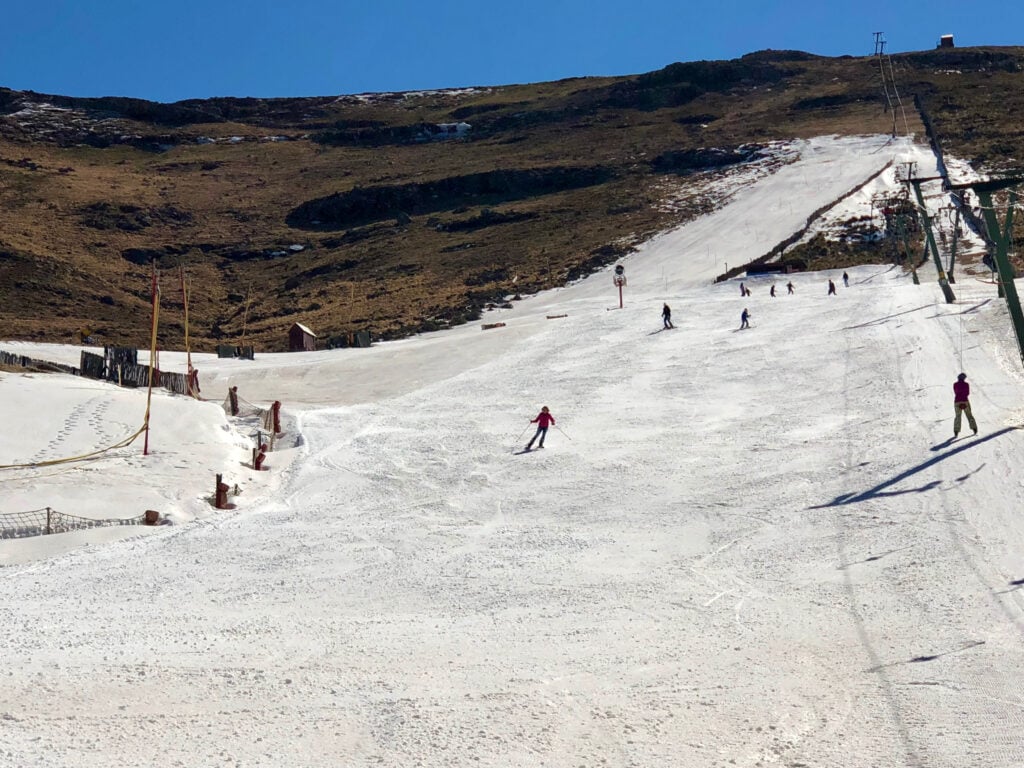
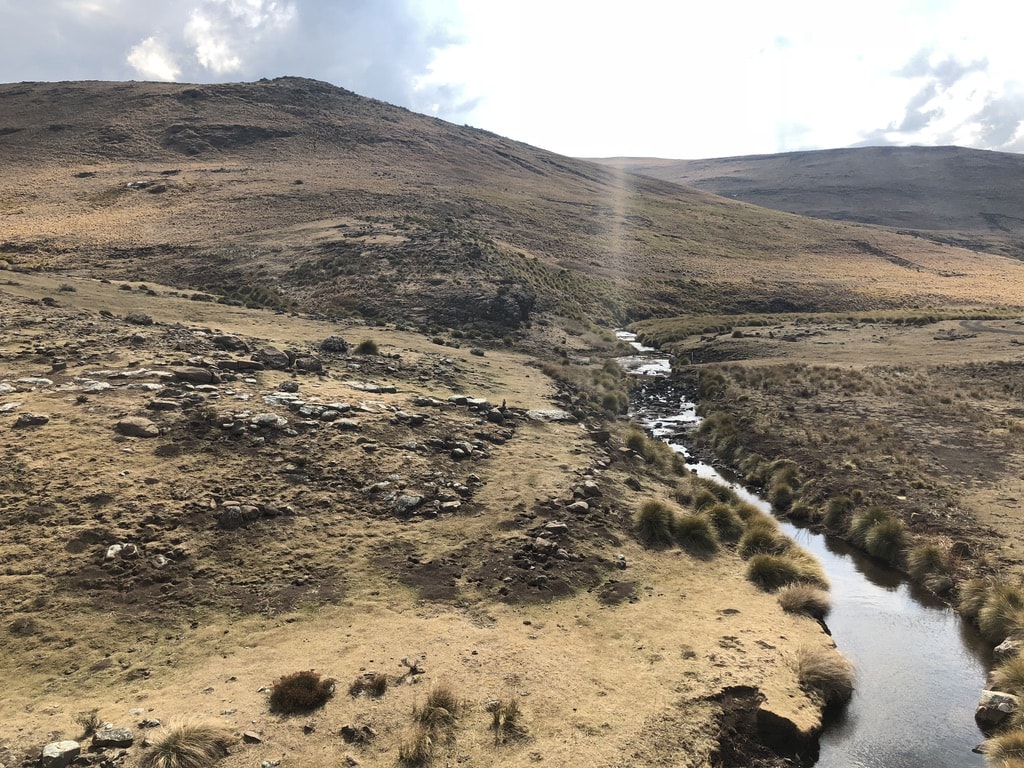
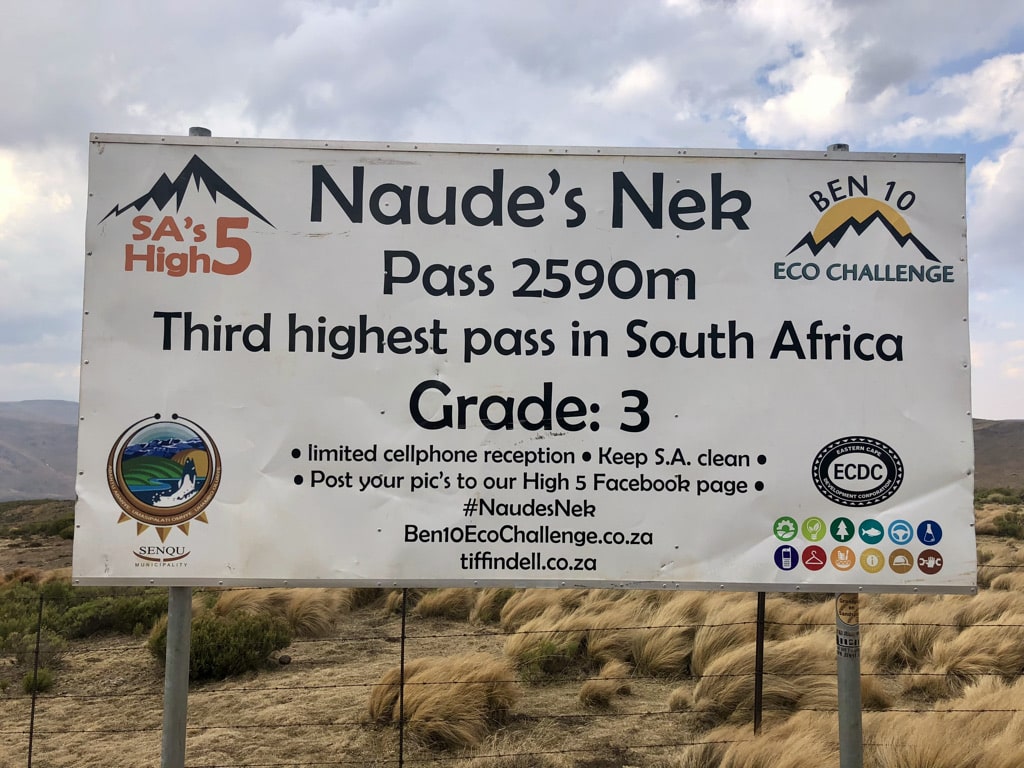
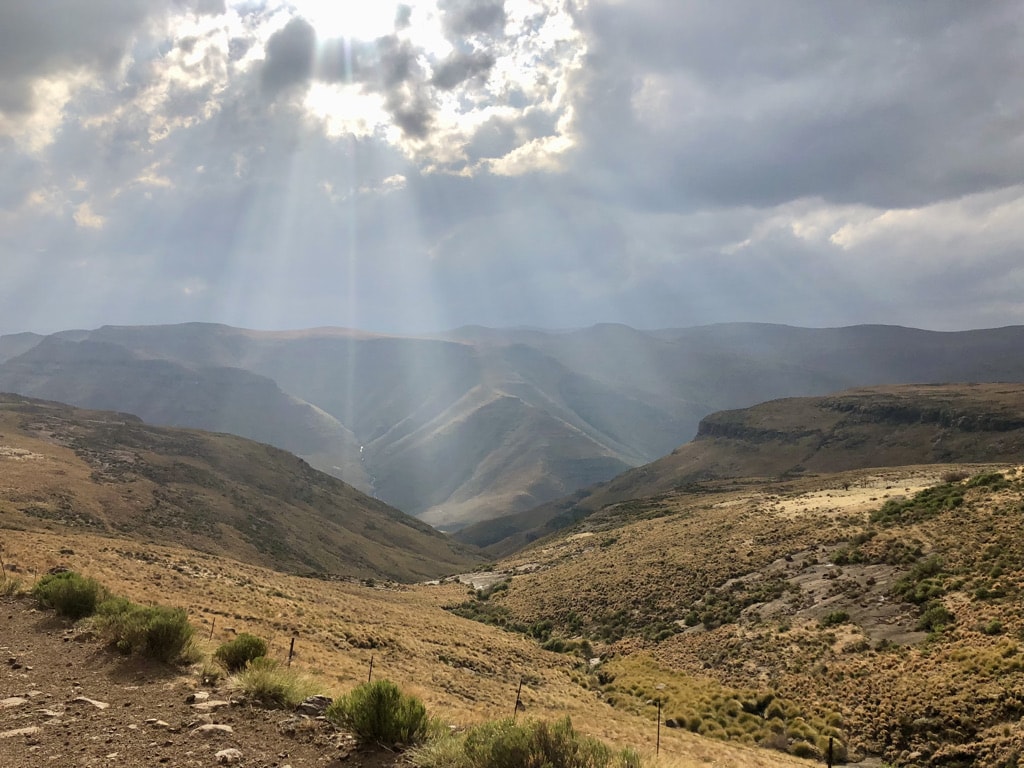
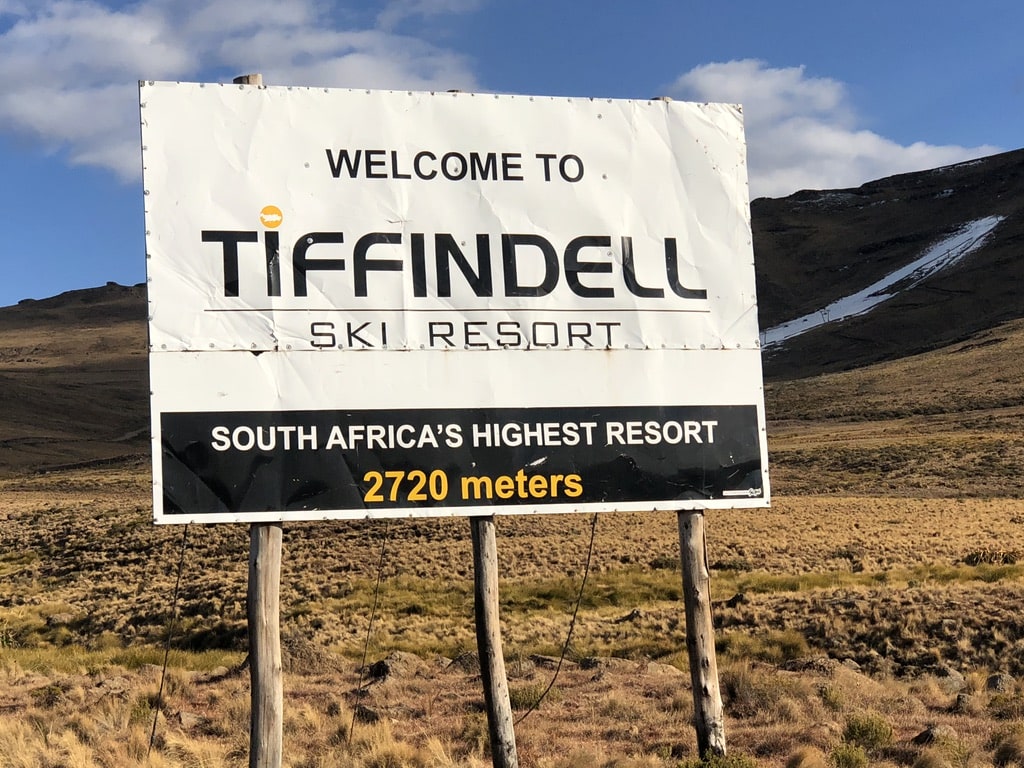
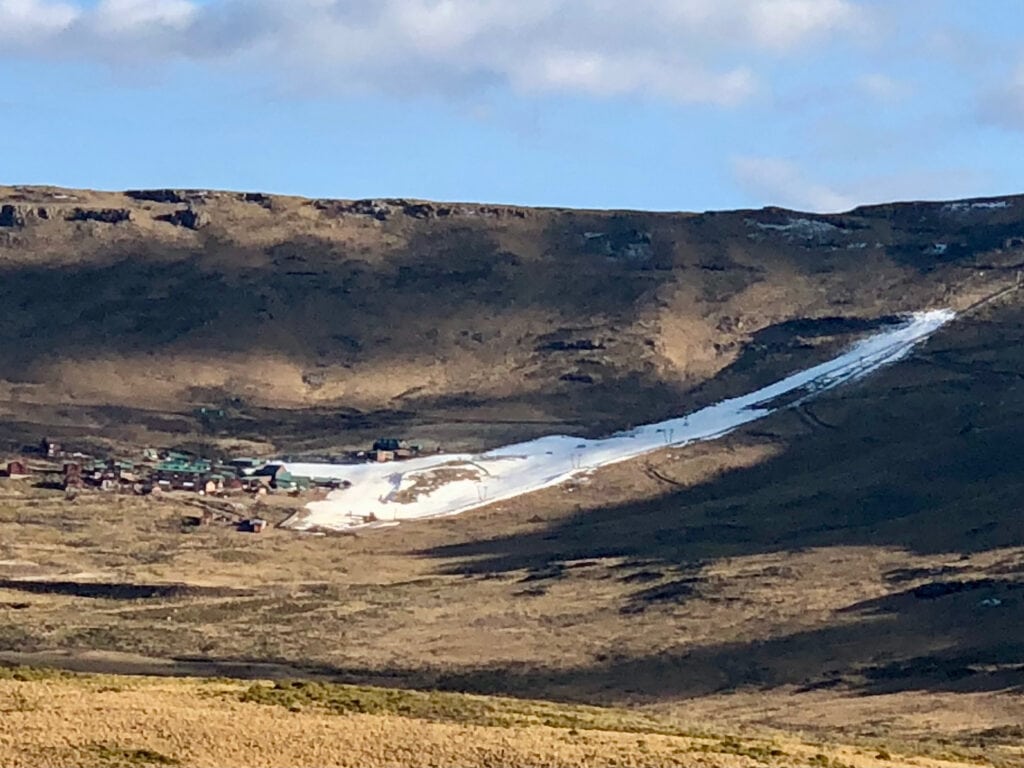
Yes, indeed, there is (or was) a skiing resort in South Africa! Located about 25km from Rhodes, getting there is an adventure in itself. The journey involves a dirt road through the mountain ranges, passing by Naude’s Neck Pass, the third-highest pass in South Africa. As you approach, a small strip of white snow becomes visible, drawing closer with each turn.
For us, excellent skiers was the slope “fun” but the overall experience of skiing in Africa was truly unforgettable.

Very sadly, the skiing resort didn’t open this year, and according to the website, it is currently for sale.
Kob Inn in Transkei

Rhodes – Kob Inn: 277km, 5,5hours. 4×4 off road car is needed

About Transkei

It is a distinctive region in the Eastern Cape of South Africa, bears historical importance as a Bantustan—a partially self-governing area established during the apartheid era. Founded in 1963, it was designated as a separate homeland for the Xhosa-speaking Thembu people. Despite gaining nominal independence in 1976, this status was not internationally recognized. In 1994, following the end of apartheid, Transkei was reintegrated into South Africa. Nonetheless, life in Transkei still echoes its original lifestyle.

There are several hotel lodges scattered along the Transkei coastline. One of them is Kob Inn.
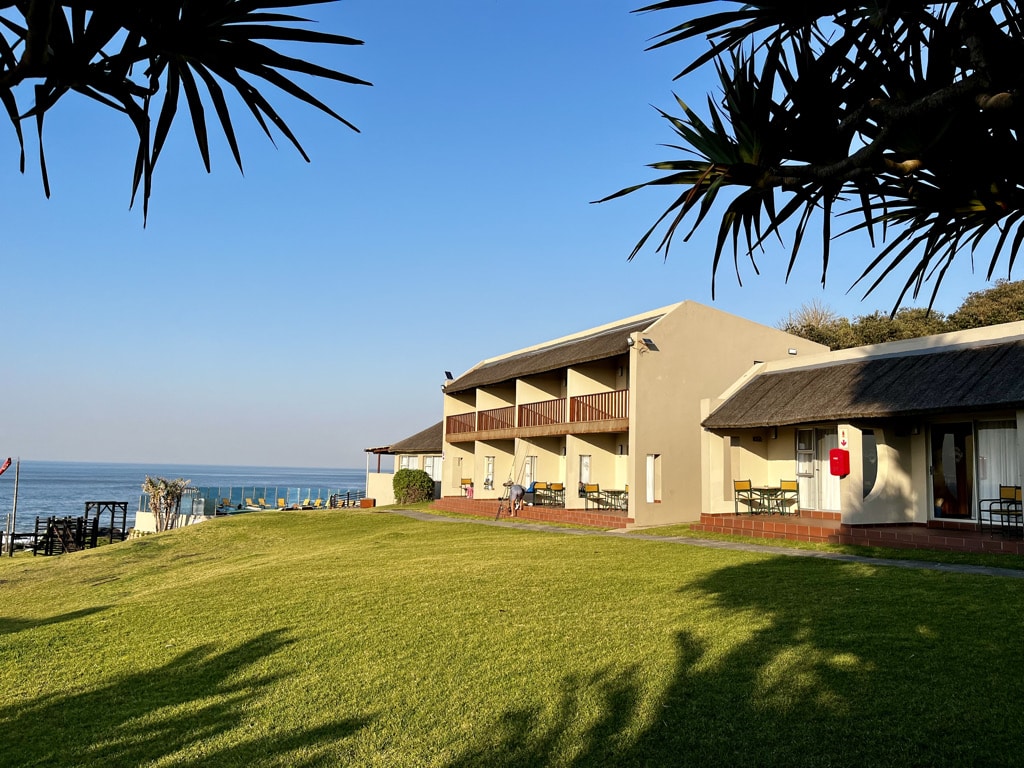
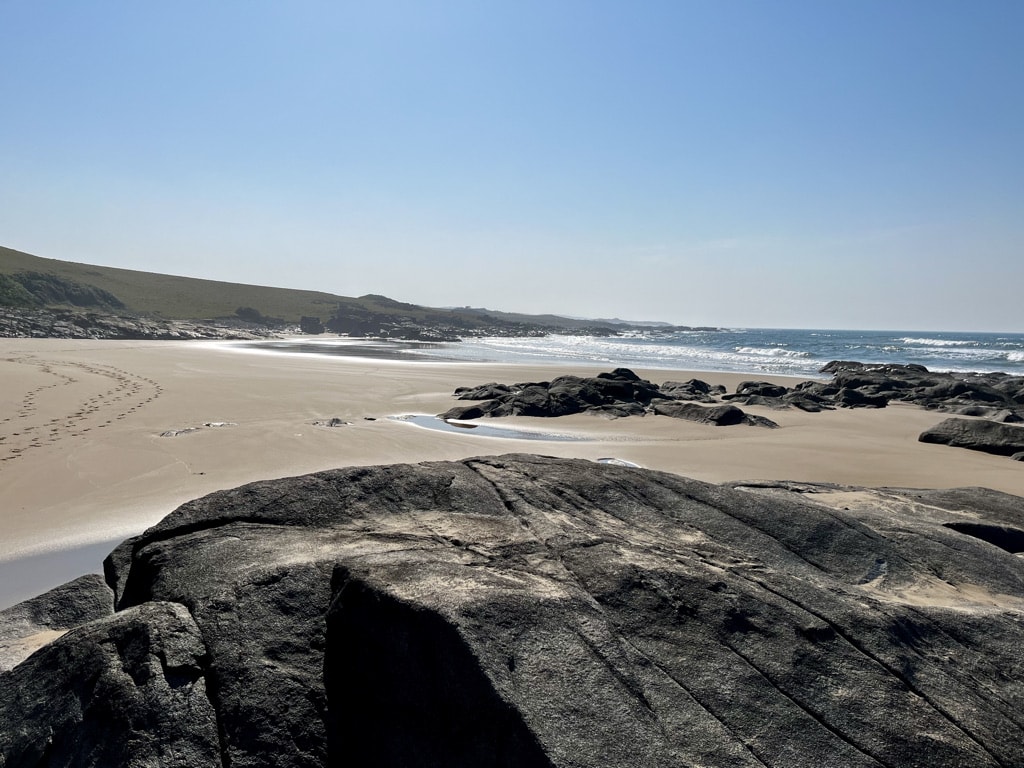
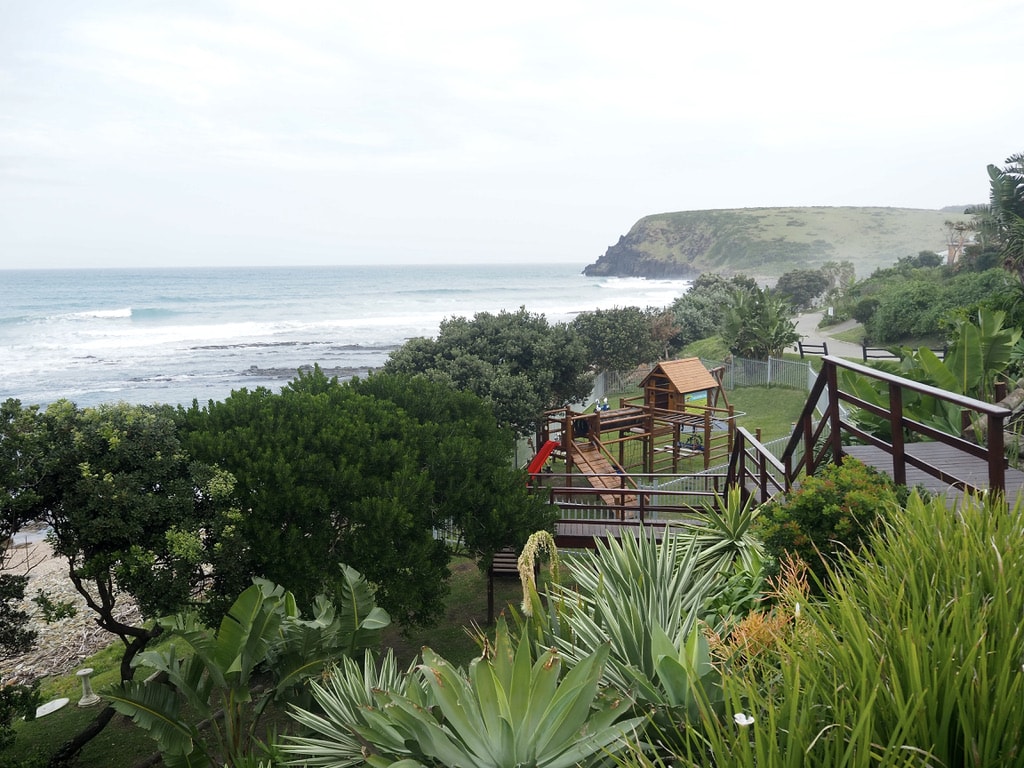
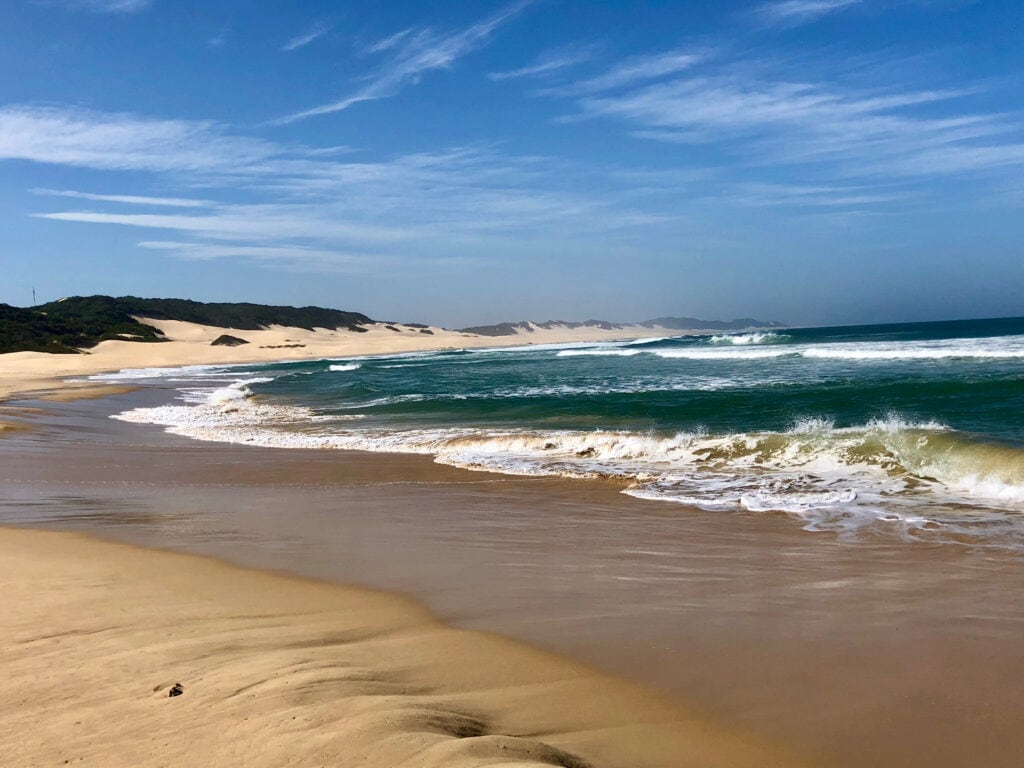
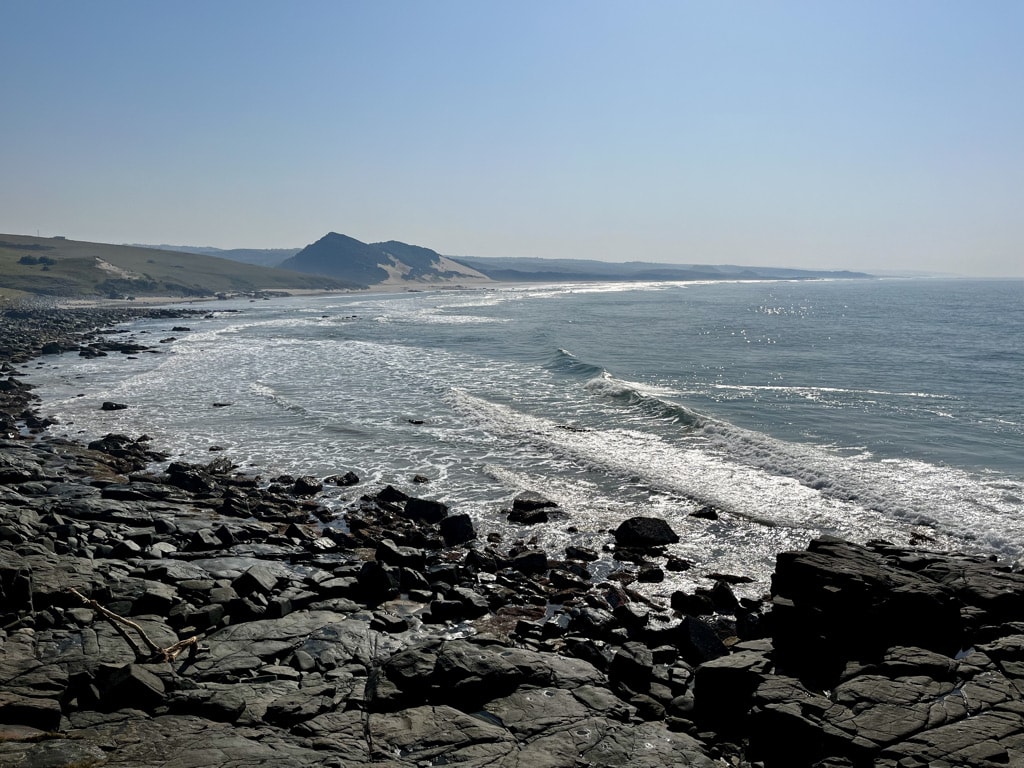
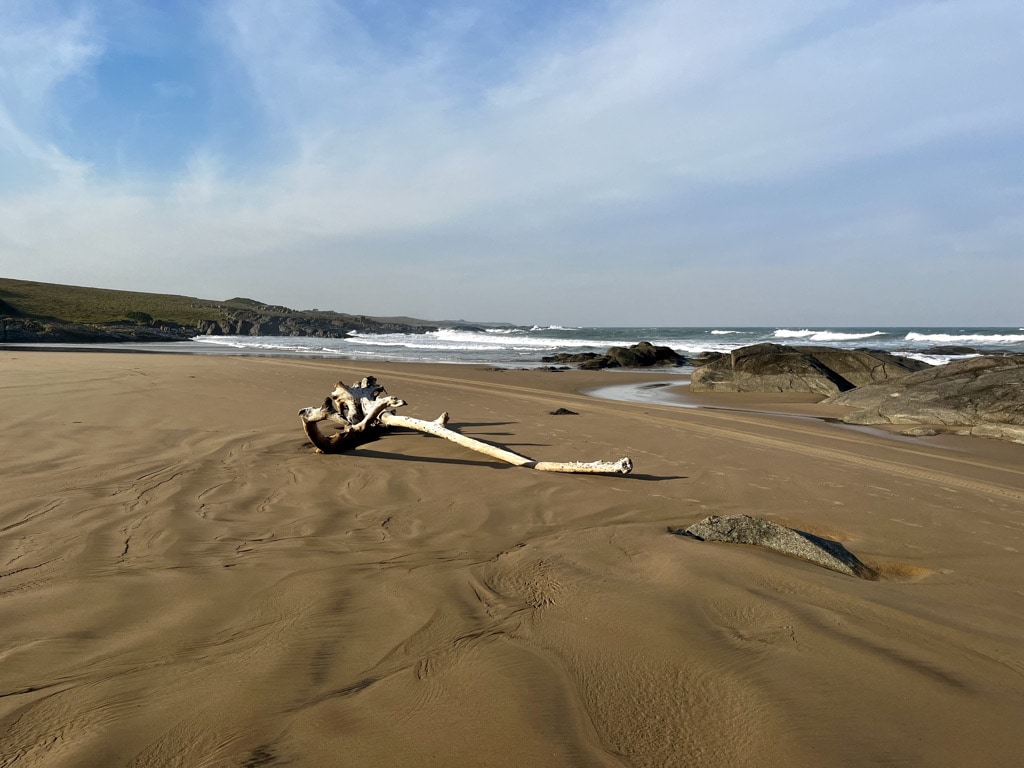
Situated about 1.5 hours away from the closest city Willowvale, the journey to reach Kob Inn involves navigating a less-than-ideal dirt road. However, the destination itself is a paradise. With long, wide sandy beaches and a beautiful coastline, Kob Inn invites outdoor activities such as fishing, hiking, or canoeing.
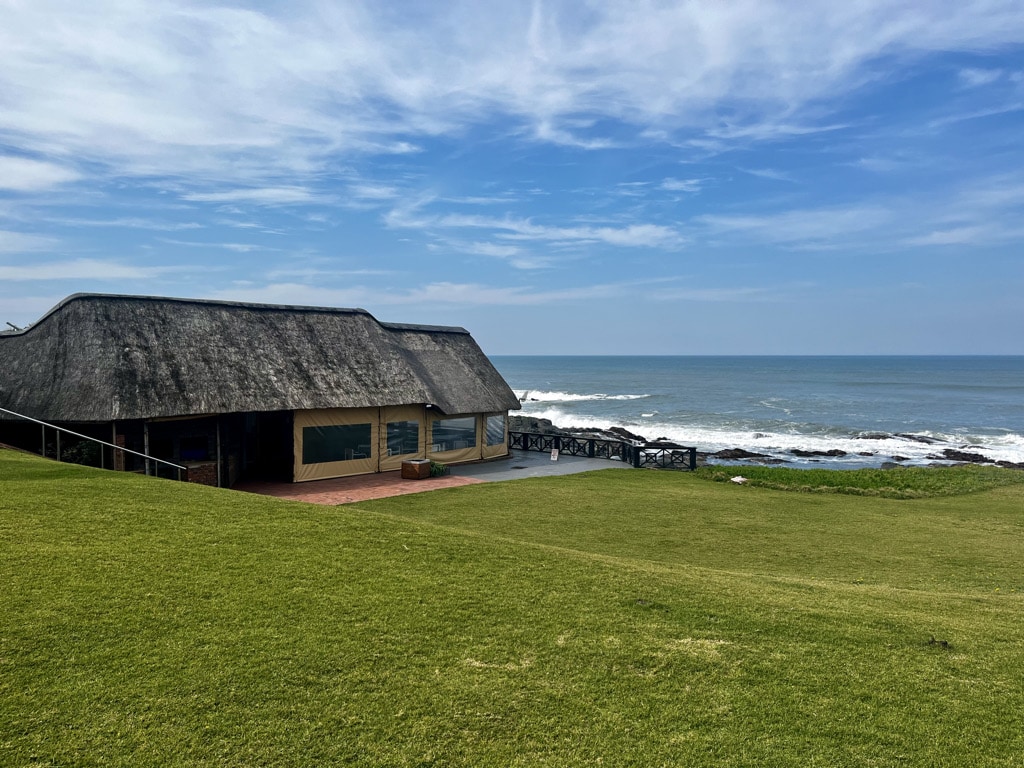
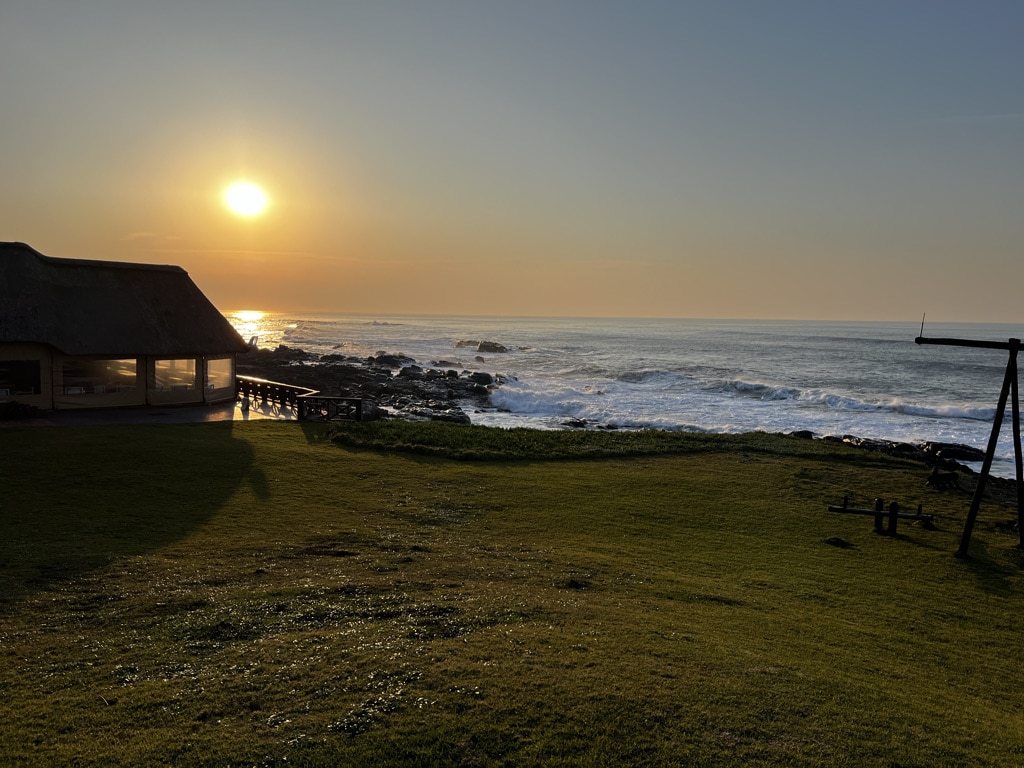
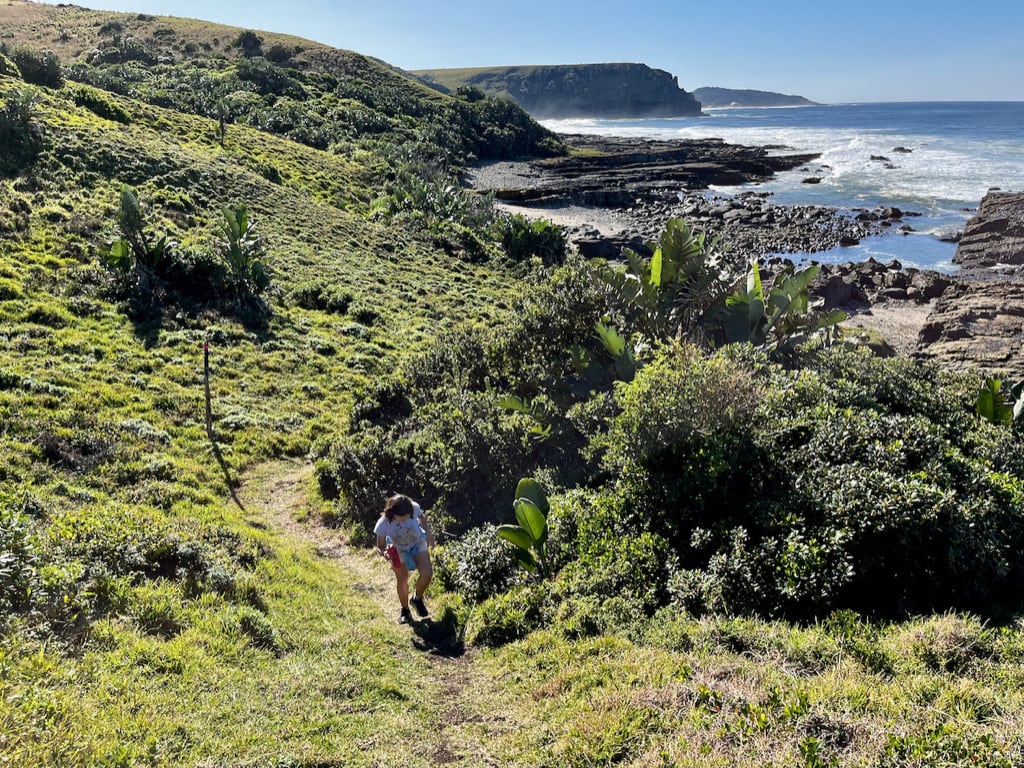
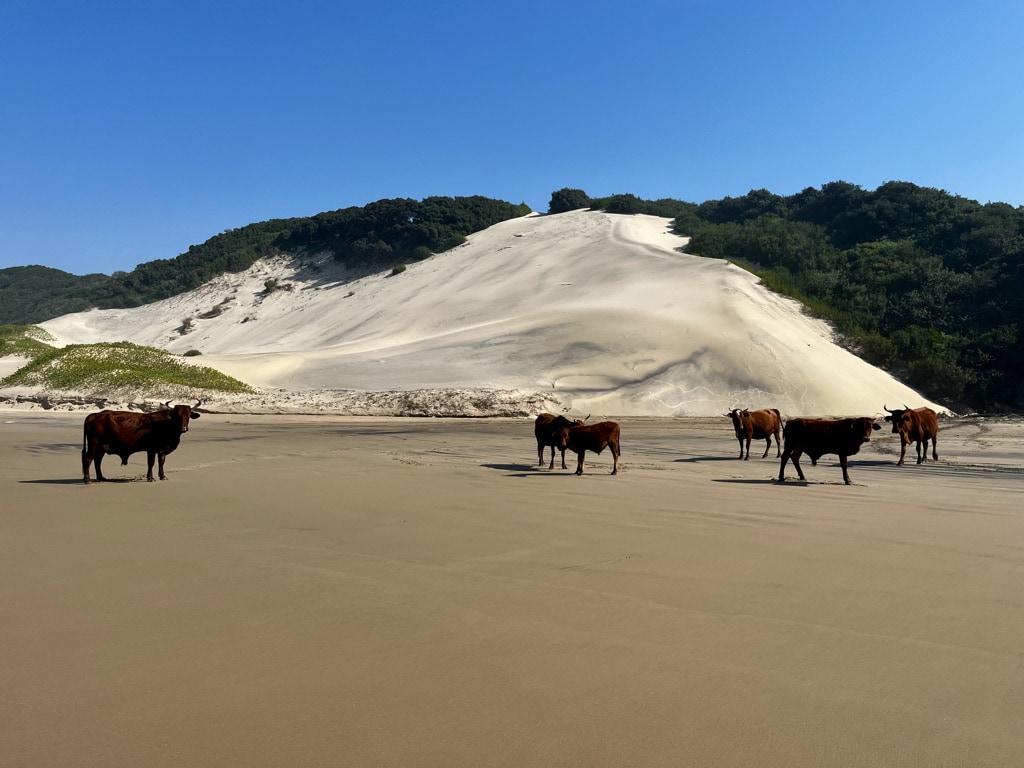
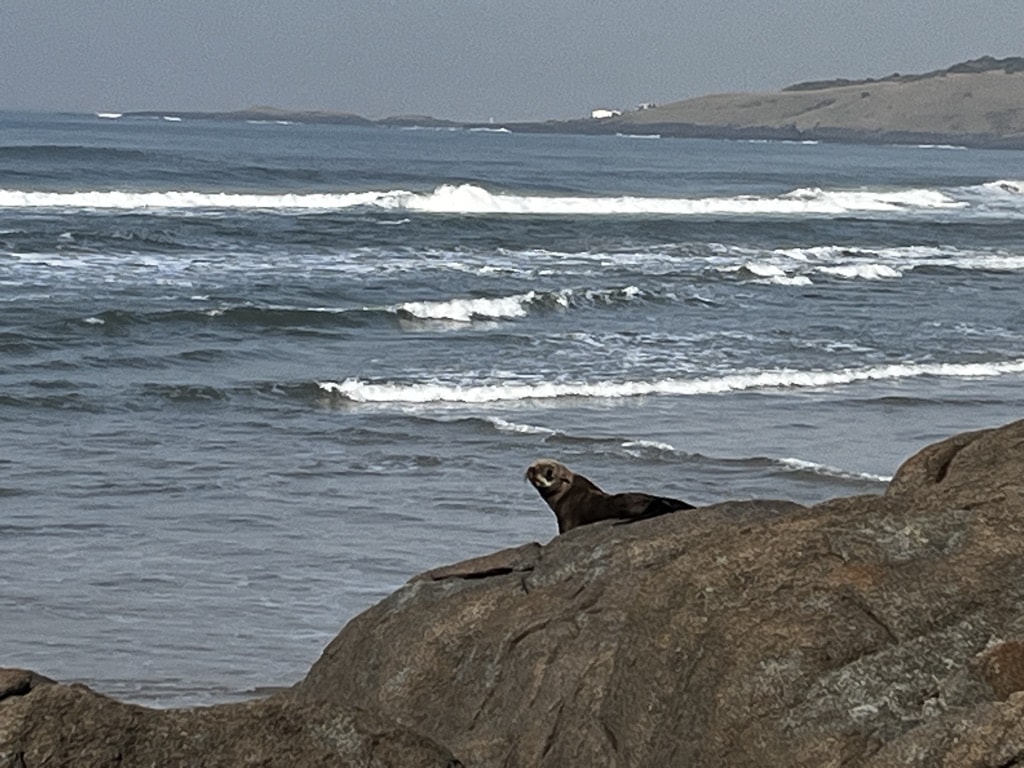
During our stay at Kob Inn, we did a hike to another Transkei lodge, Mazzepa Bay. This half-day activity was nothing short of fantastic, featuring walks on empty beaches with cows basking in the sun, ascending cliffs for panoramic views, observing a seal resting on a large stone, and witnessing dolphins and whales in the ocean.
Morgan Bay

Kob Inn – Morgan Bay: 103km, 3hours. 4×4 off road car is needed

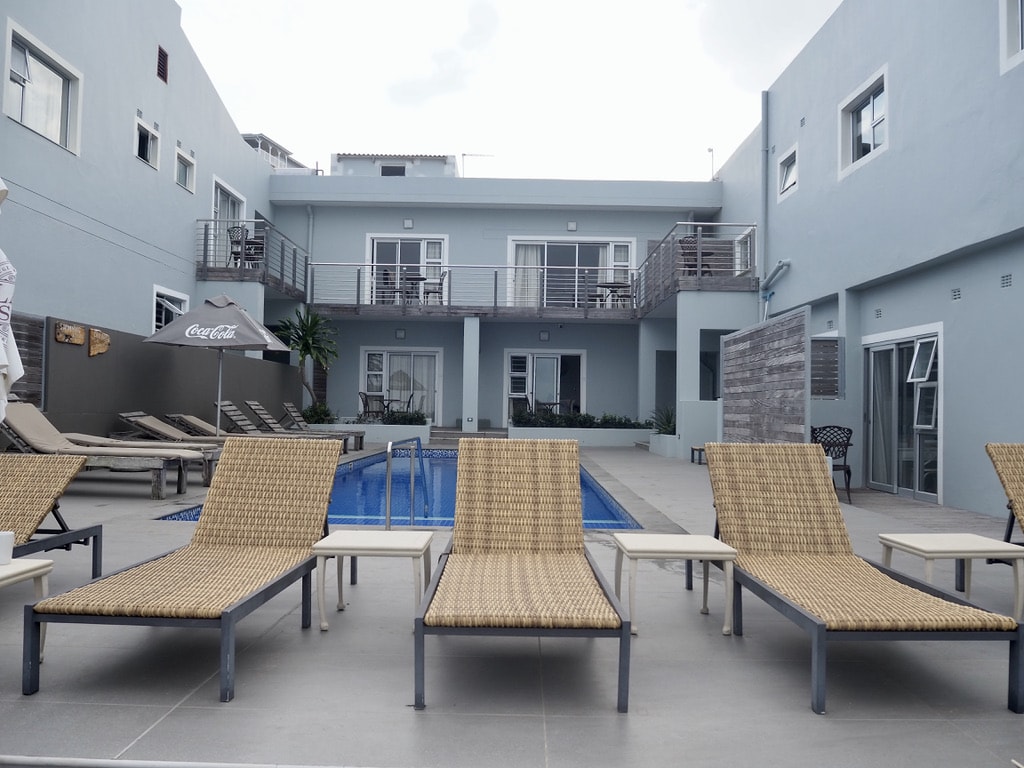
Morgan Bay is another stunning location bordering Transkei on the South African wildcost. There is a small village and the absolutely fantastic Morgan Bay Hotel. While the hotel may be pricier compared to other places, the quality of service is exceptional, making a stay there a true treat.
We spent two days in the winter months, so our activities revolved around hiking.
Walk on the Cliffs:

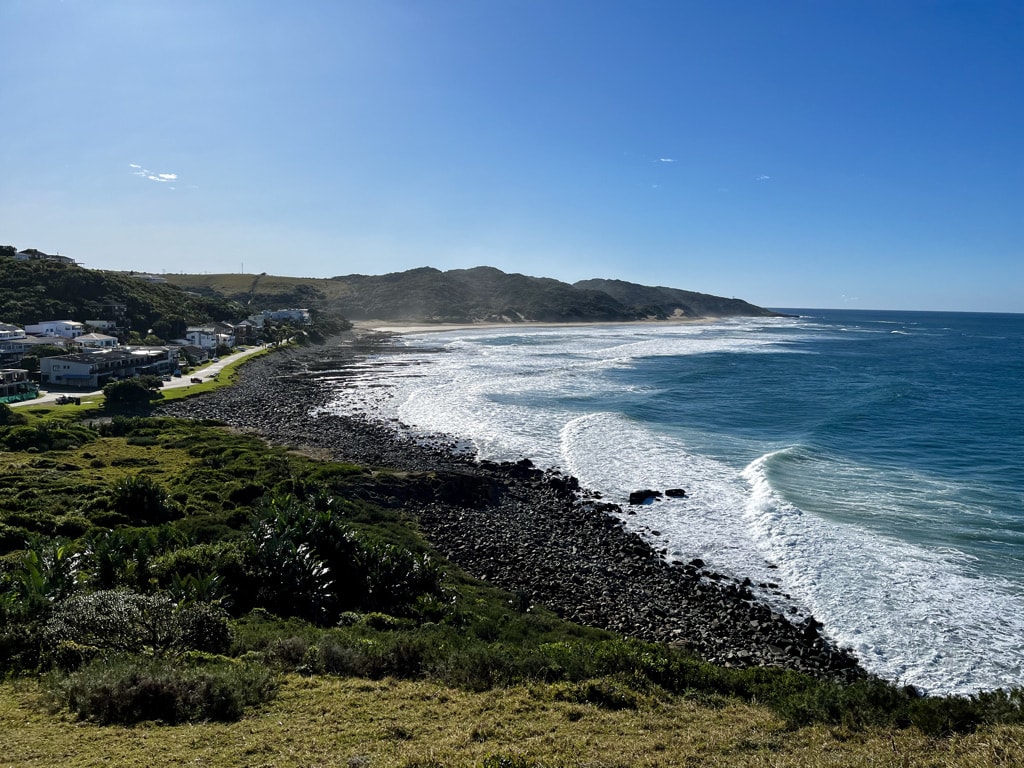
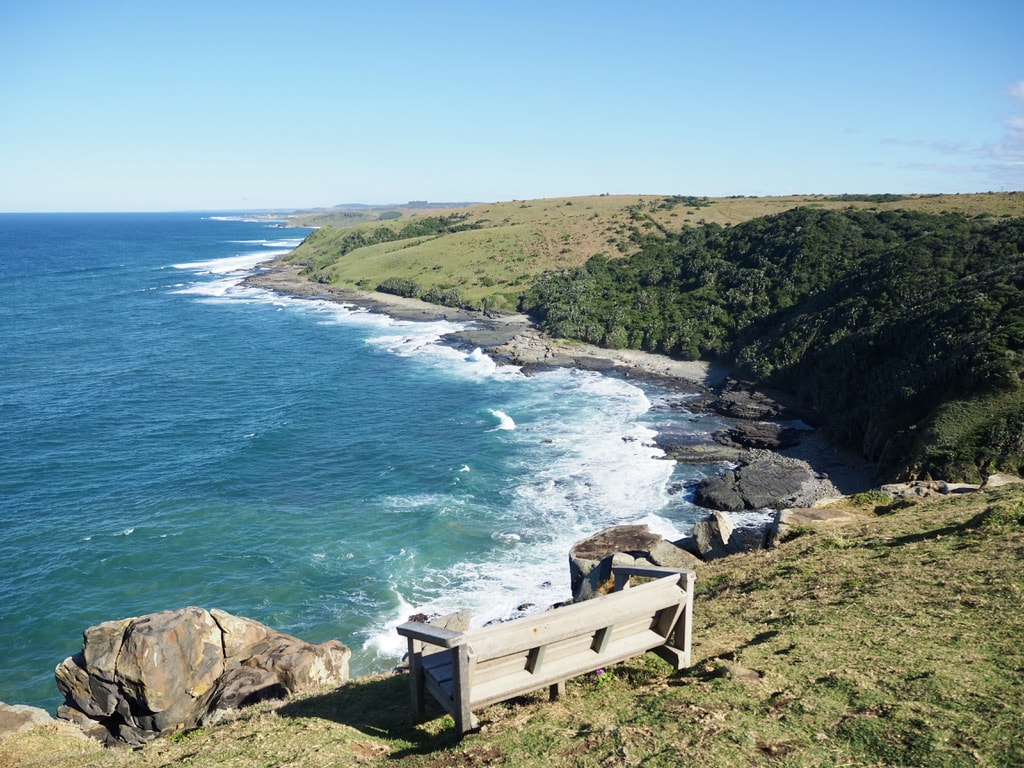
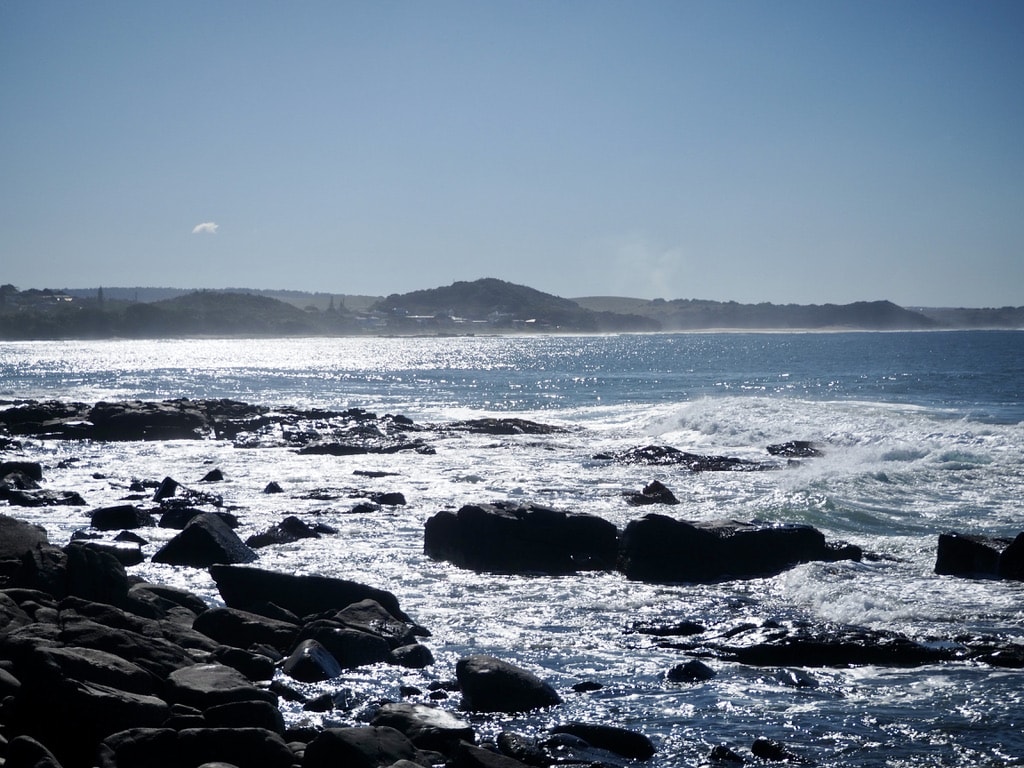
The views of the ocean from the cliffs above Morgan Bay are breathtaking. Spending hours there, walking, enjoying the scenery, and observing dolphins and whales in close proximity made it truly memorable.
Hike to Kei River Mouth:

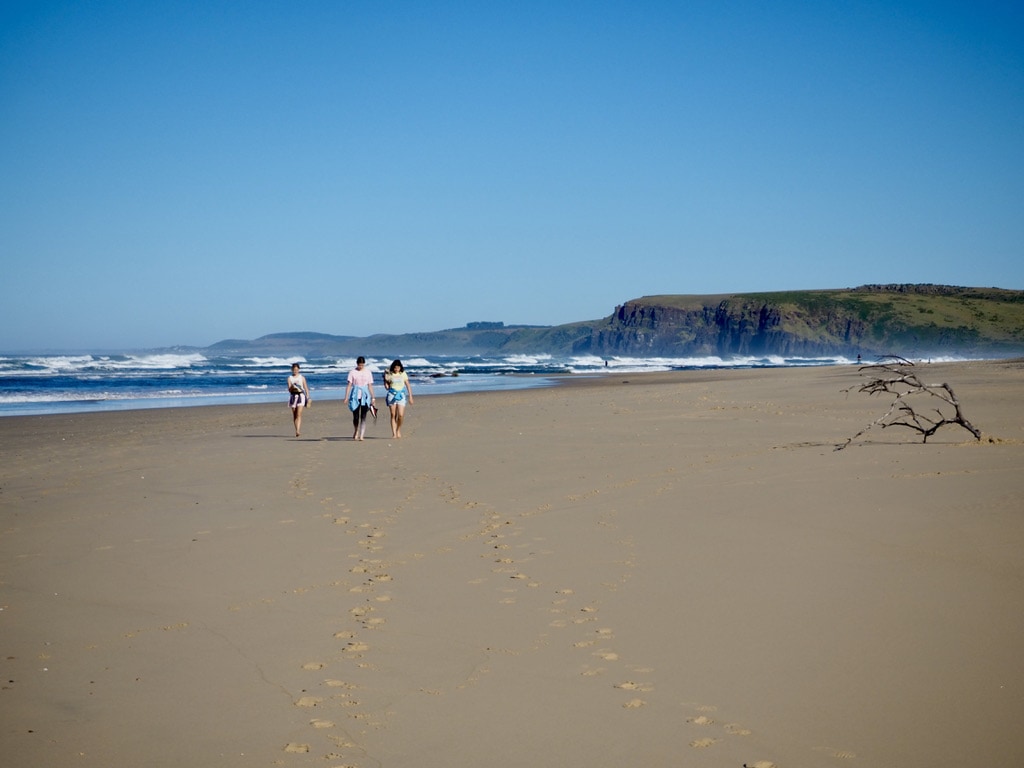
This half-day activity began with a beach walk leading to higher, bushy grounds, passing by the lighthouse along the way. Although the lighthouse is closed to public, we were fortunate; on that day, maintenance was underway, and we were allowed to climb all the way up. The walk continued down to the ocean, where we climbed over many rocks to eventually reach Kei River Mouth. Completing a loop, we walked on the back road, enjoyed a snack at the local golf course restaurant, and returned to our hotel. This unspoiled route has no shops, so carrying water and snacks is essential for this hike.
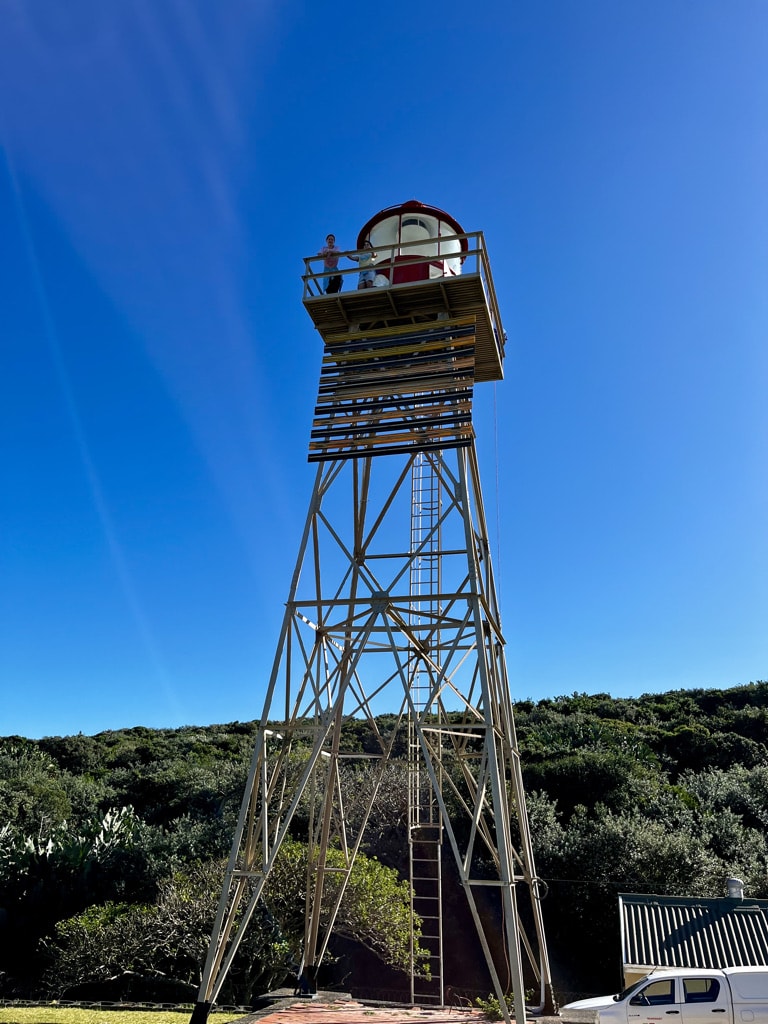
Lighthouse, Morgan Bay
Lighthouse


Port Alfred

Morgan Bay – Port Alfred: 220km, 2hours 40min. Accesible without 4×4 vehicle.

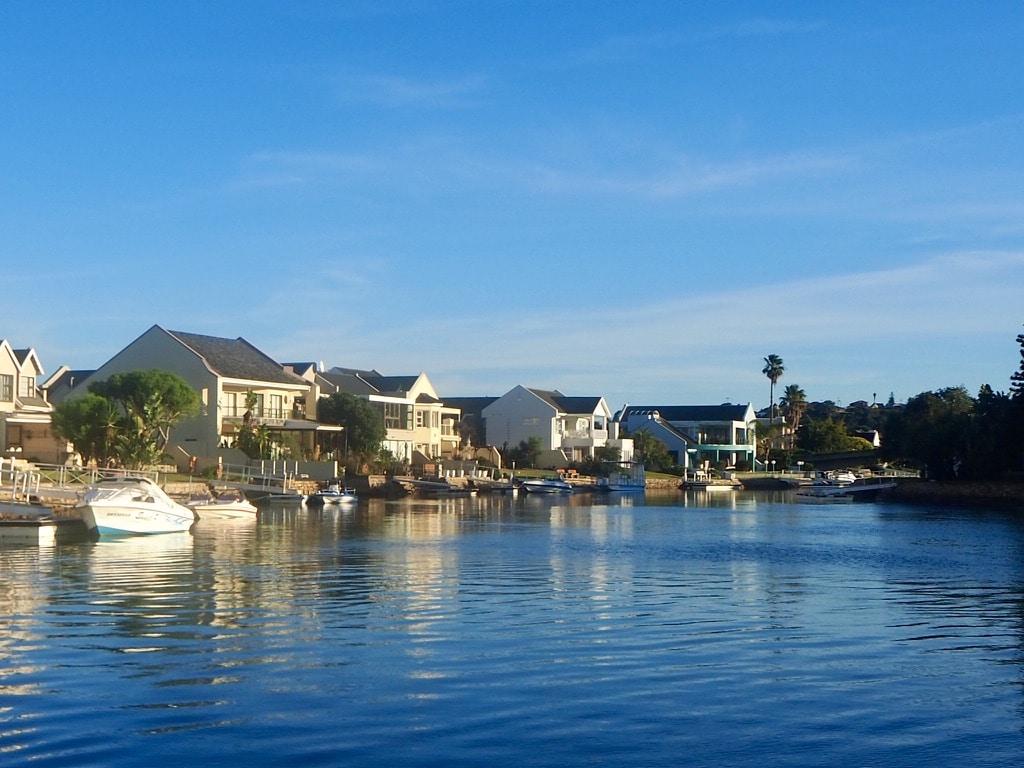
Situated on the Sunshine Coast it is a charming coastal town with the Kowie River winding through it and opening into the Indian Ocean. The town’s beautiful beaches make it a popular destination for beach lovers and surfers. Port Alfred also has a rich history, reflected in its historic architecture and landmarks. The Royal Alfred Marina adds a unique touch to the town, with its network of canals and waterfront properties. 
Beaches

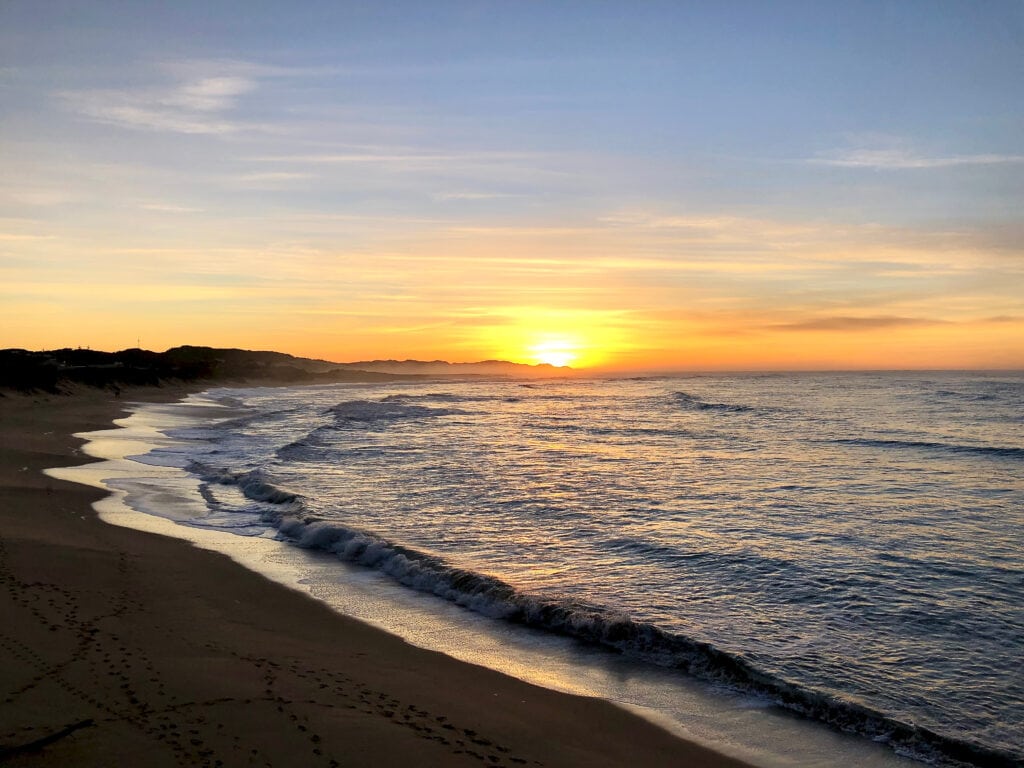
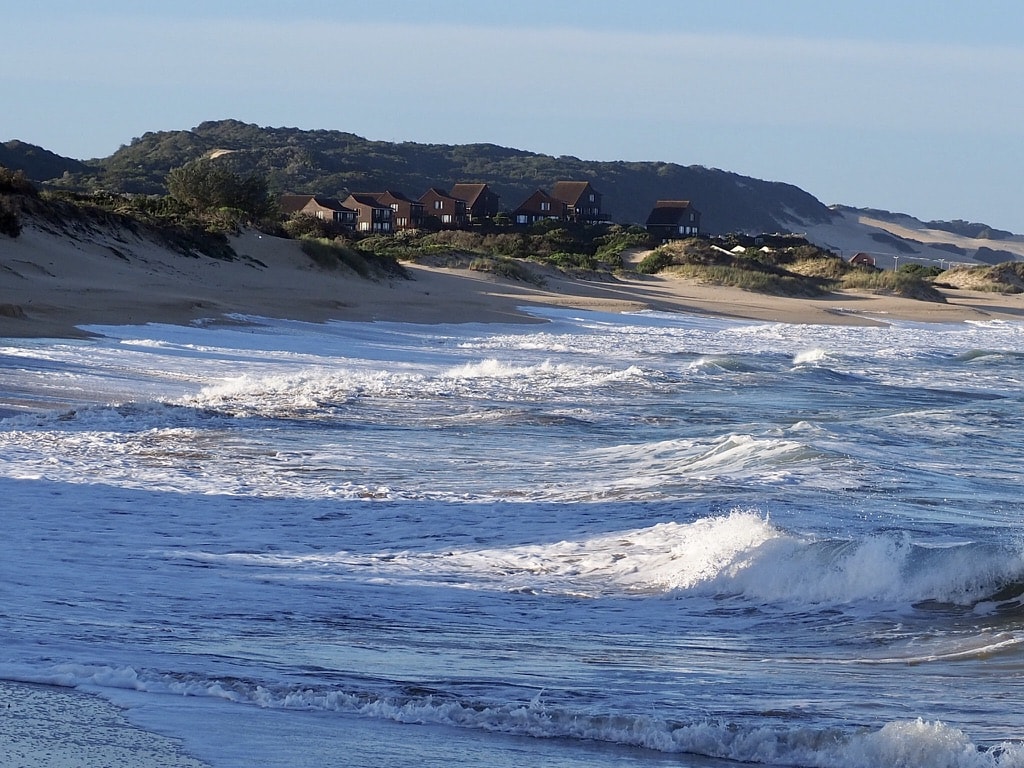
The pristine wide long beaches invite you to take a long walk while enjoying the sound of the ocean. 

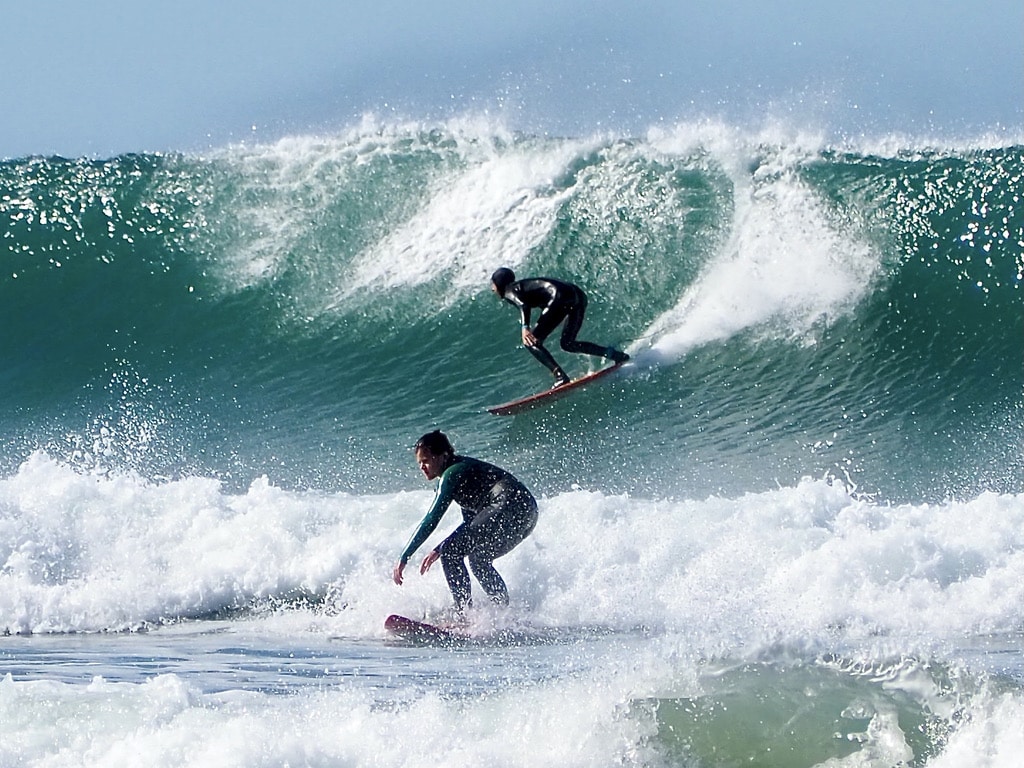
East Beach is liked by local surfers as the East Pier break is one of the most powerful in South Africa. There is a parking right at the entrance to the beach.
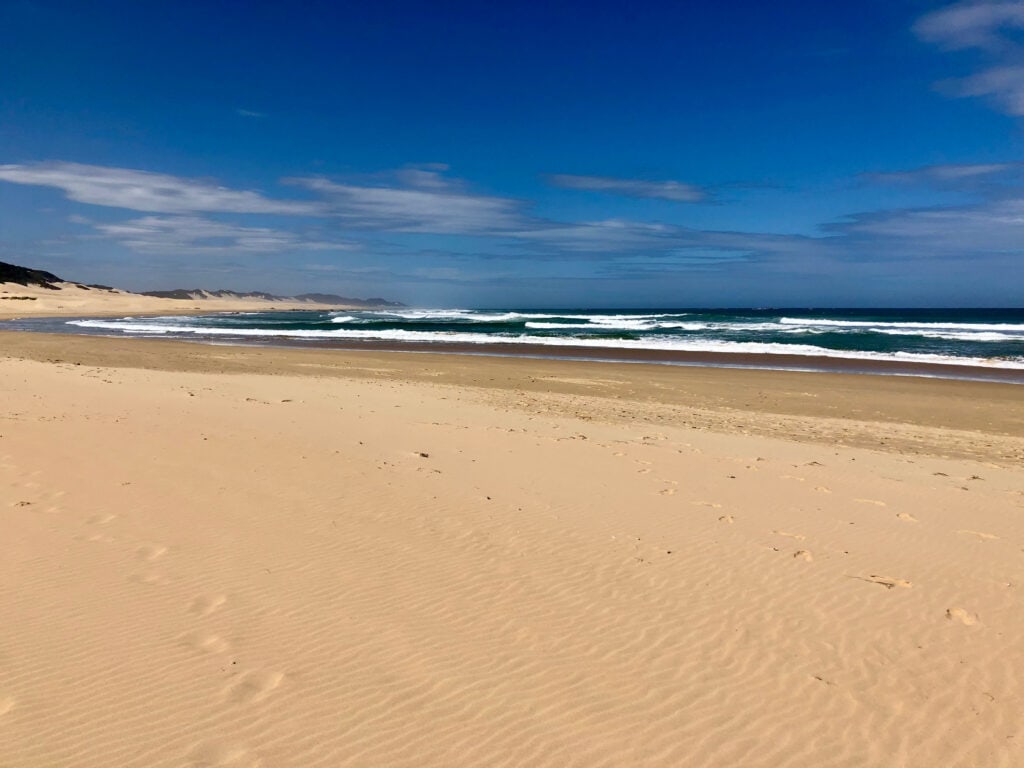
Kellys, the Blue Flag beach, is a place for beginner/intermediate surfers to enjoy the less powerful waves as well as for bodyboarders or swimmers to enjoy the ocean. Parking is right above the beach.
Surf School

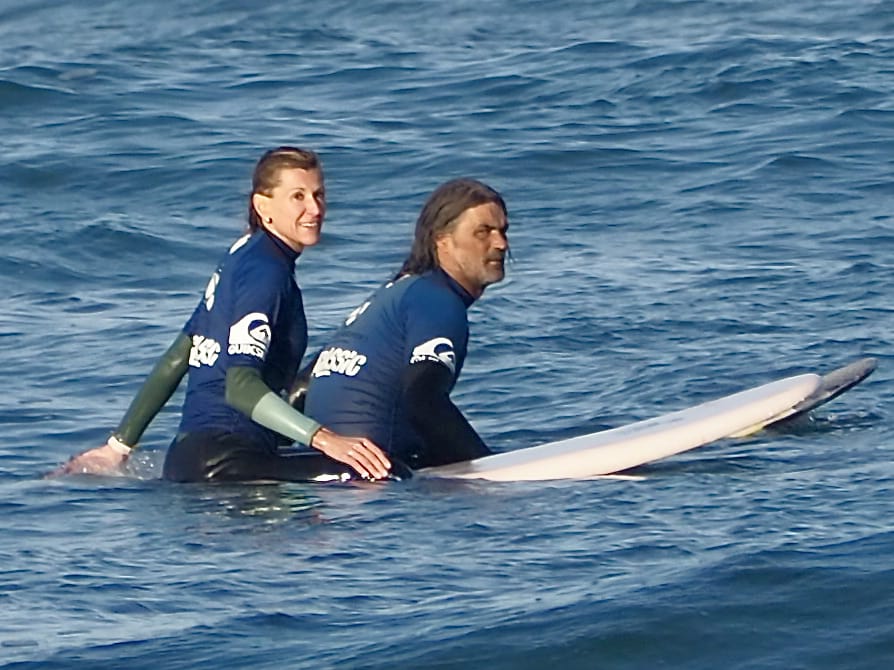
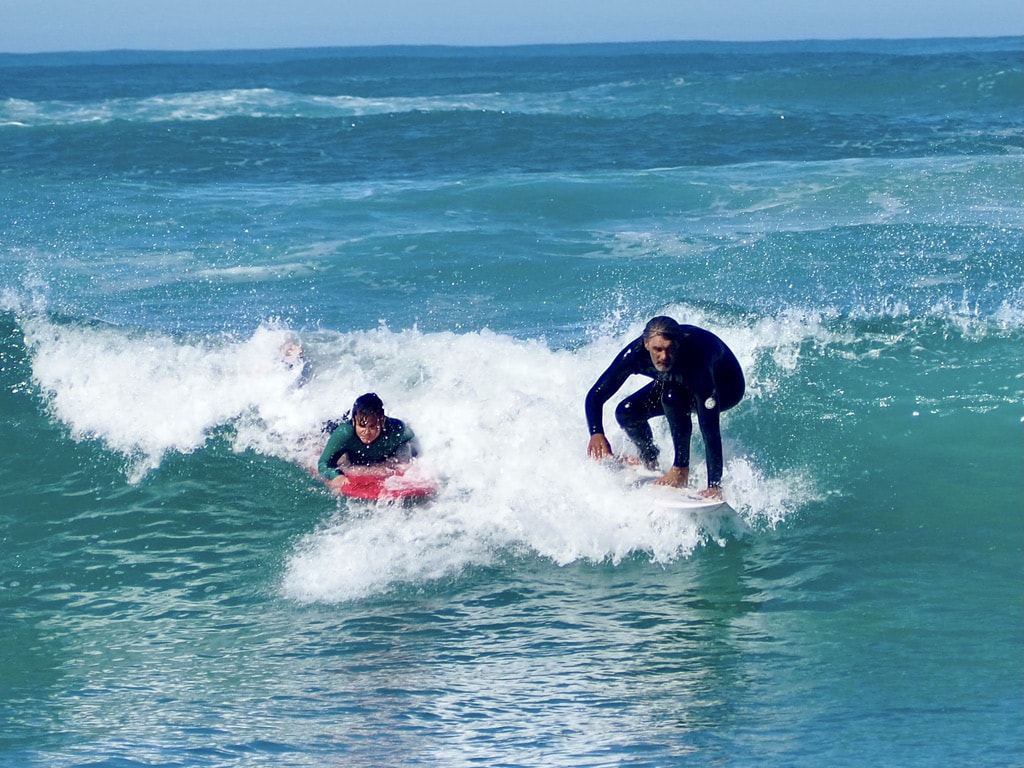
The local Shaka Surf School is being run by David MacGregor, the multiple South African longboard champion surfer. I became a surfer myself thanks to David.
River activities

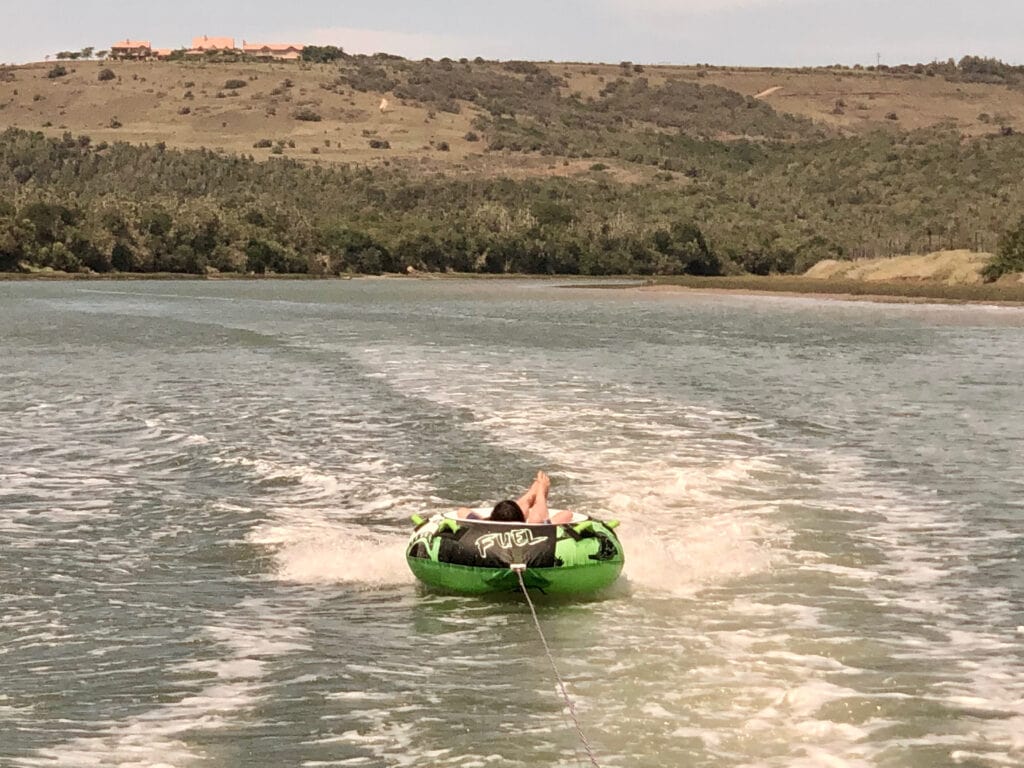
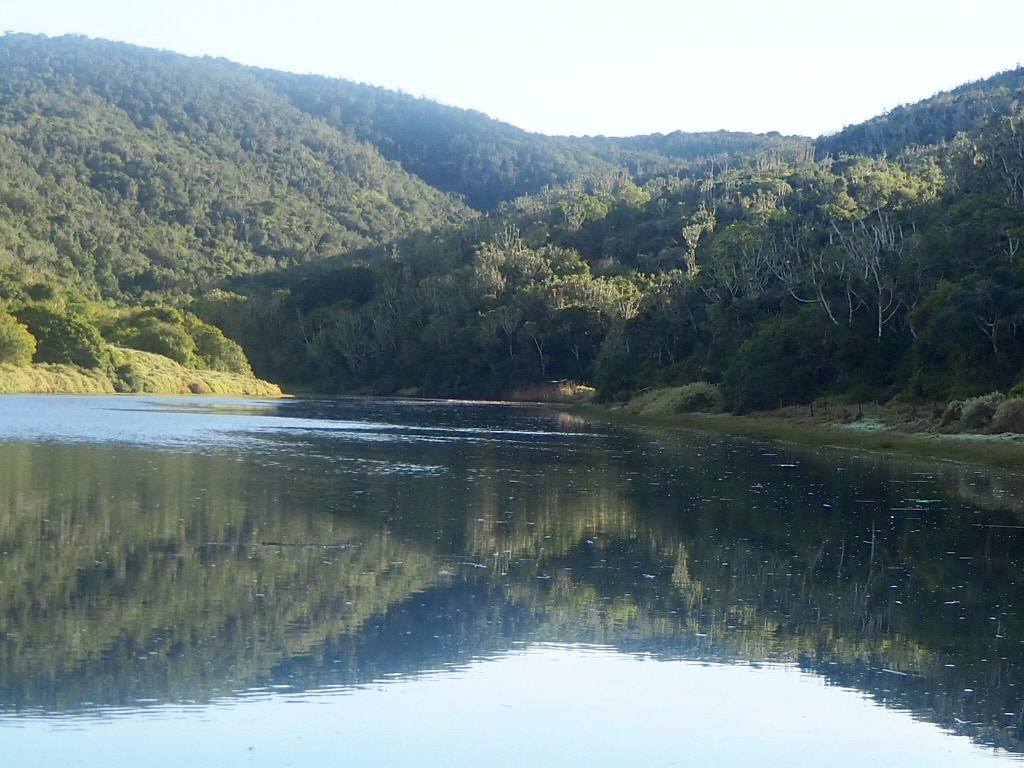
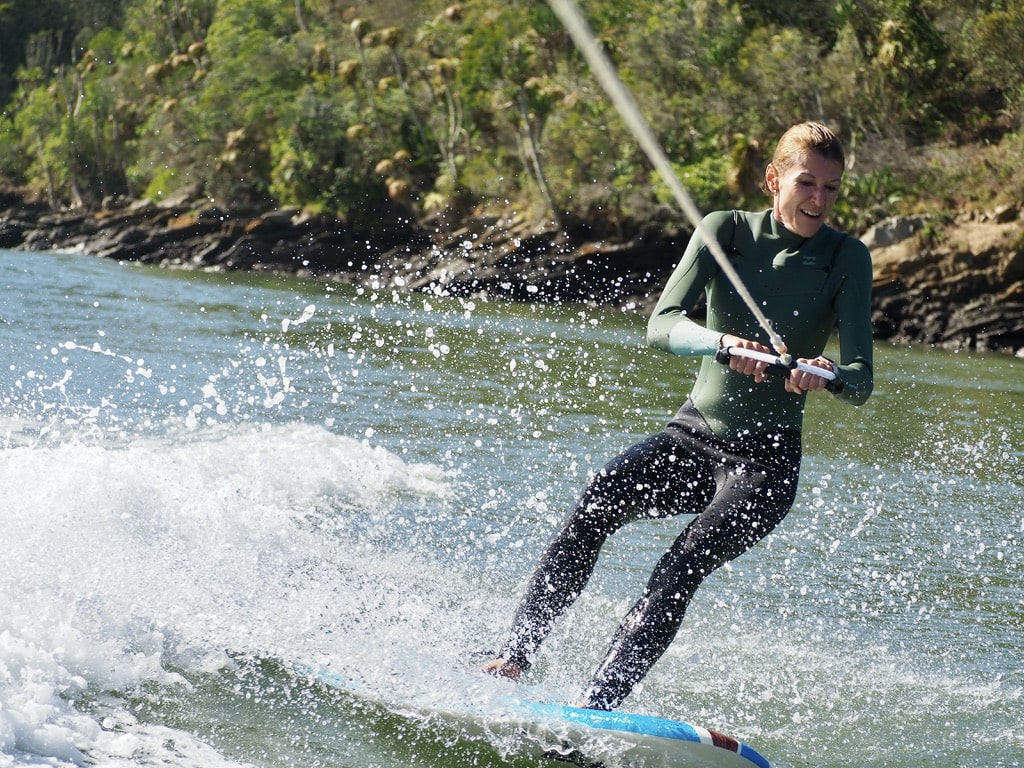
The Kowie river flows through the town, providing a fantastic place for activities like boating, canoeing, SUP paddle boarding, waterskiing, skurfing or fishing.

I can highly recommend a local business Outdoor Focus. Carey Webster and her team will get you sorted with any outdoor activity in Port Alfred.
Golf

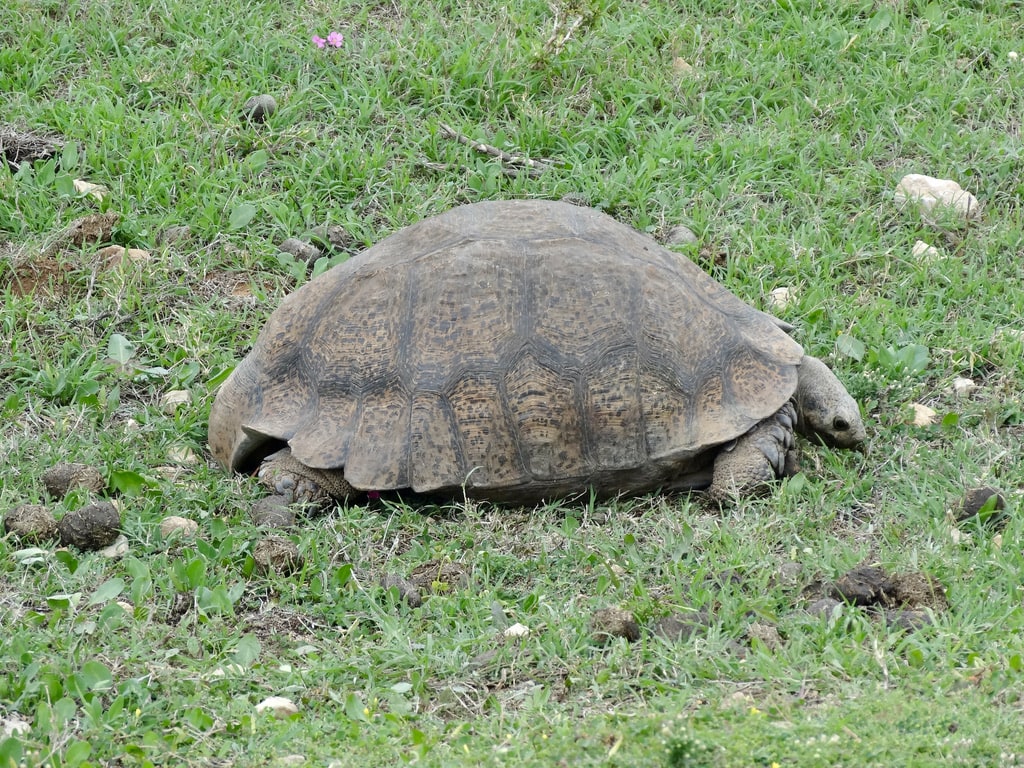
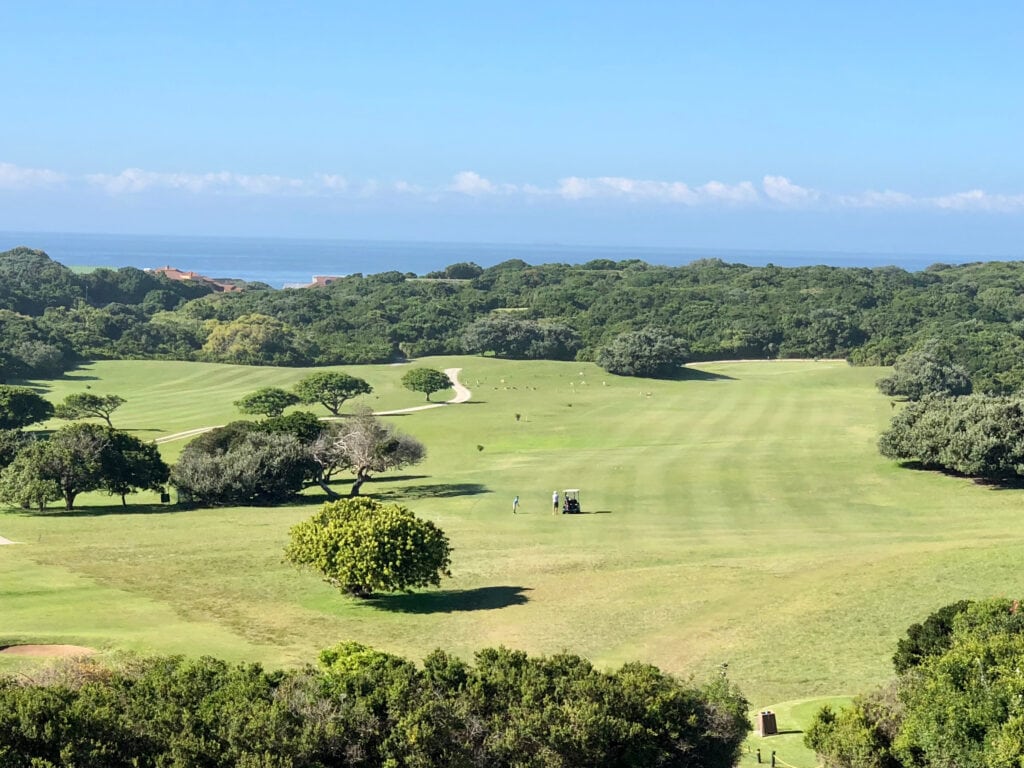
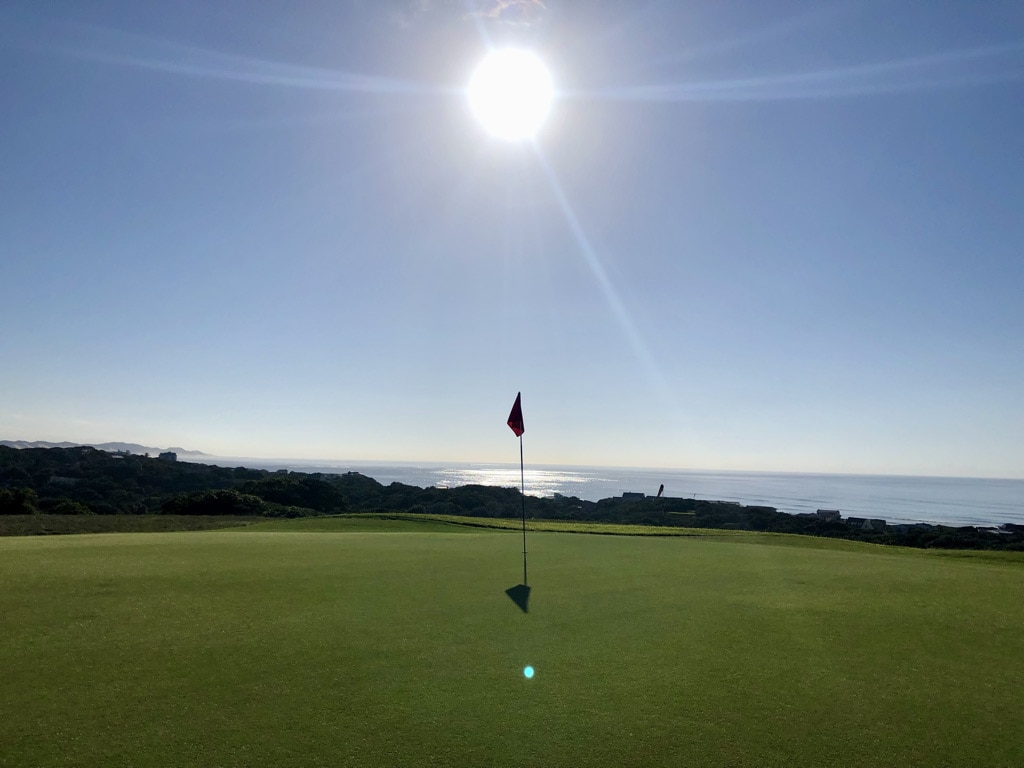
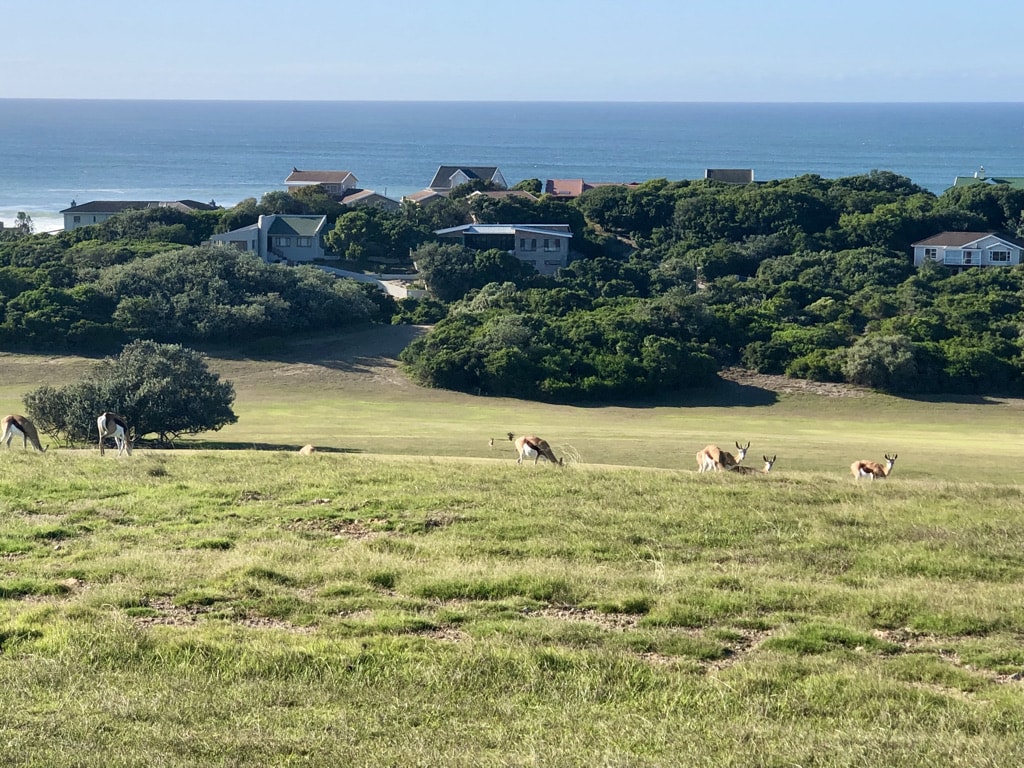
The Royal Port Alfred Golf Club is one of four golf clubs in South Africa that have been granted the right to use the “Royal” prefix. The club features well-maintained fairways and greens, complemented by coastal views. What I find unique about the golf course is the real nature touch – any time we play golf, we see antelopes scattered around munching on the grass or a tortoise crawling slowly around. 
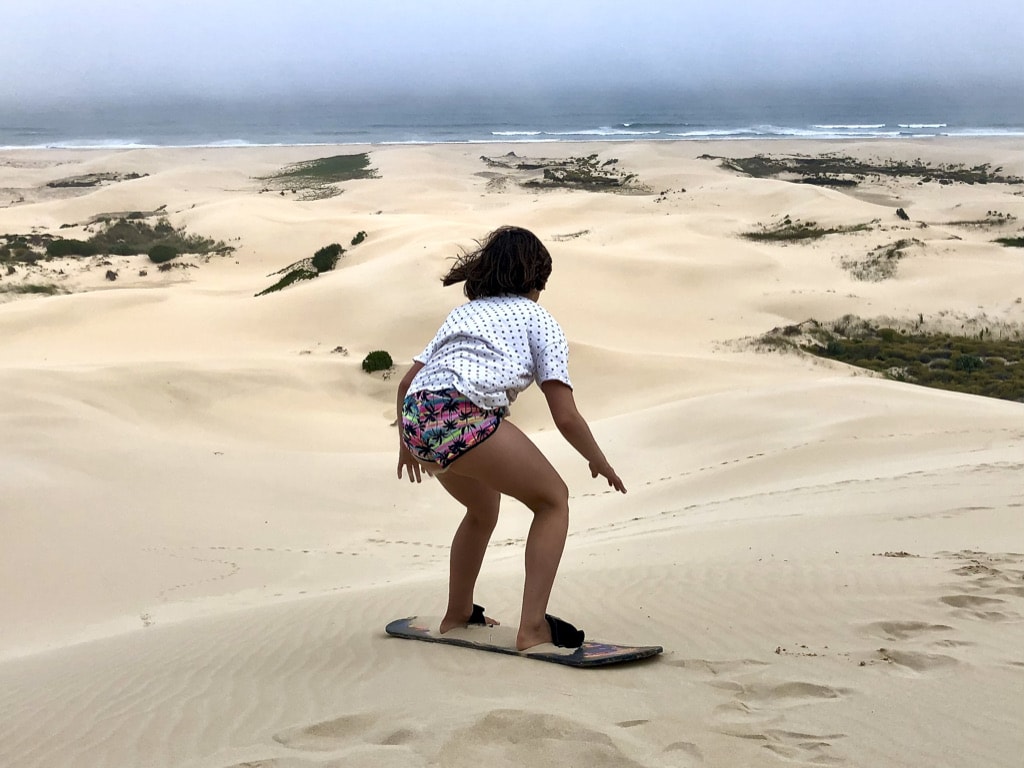
Sandboarding

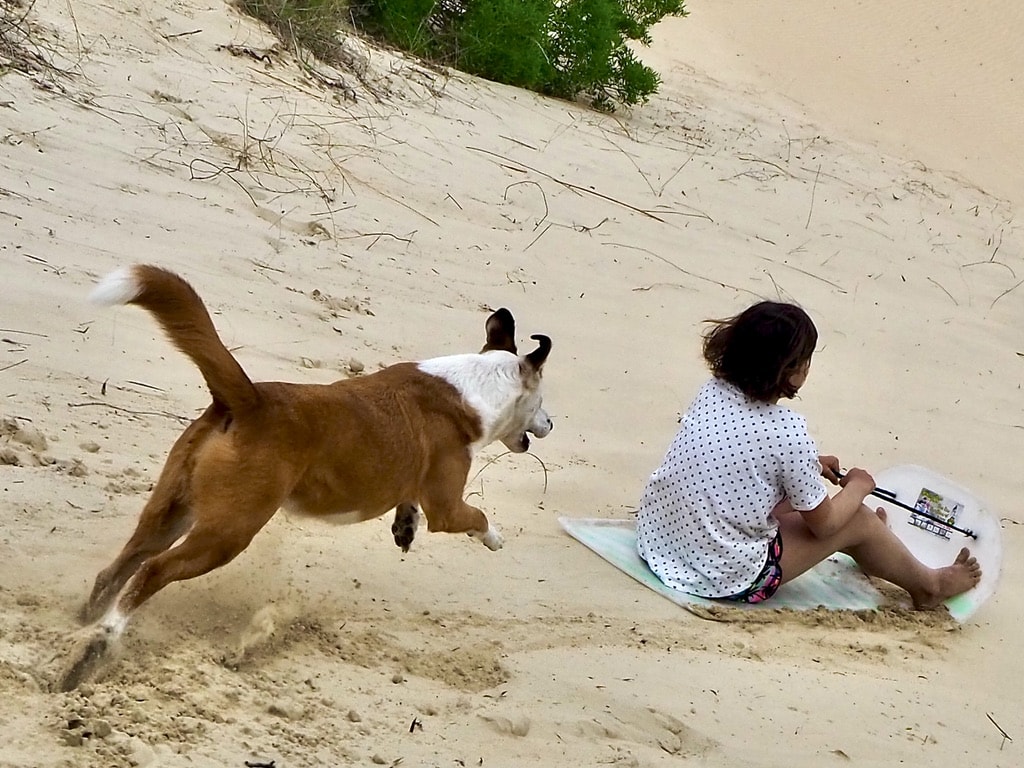
The East Beach dunes are ideal for sandboarding activities, and a lot of fun for everyone.

Adventure Road trip in South Africa – last stretch

The drive from Port Alfred to the airport in Gqeberha (Port Elizabeth) will take approximately 1 hour and 45 minutes.

Wishing you a wonderful adventure road trip in South Africa! 🇿🇦


Escape Winter in Andalusia: 8-Day Road Trip to Spain 🇪🇸

February is the time when I would normally plan a skiing trip. However, this year, we decided to try something different and escape the winter in Prague. Our choice was doing a road trip to Spain, Andalusia. I booked tickets to Malaga and began preparing the itinerary. We had two options: either move from one place to another, which always involves continuous check-ins and check-outs, or stay in Malaga and do day trips. I chose to stay in Malaga and move only towards the end of our stay for one night to Seville.

Practical insights:

Arrival to Spain:

It’s very straightforward for us, Europeans, as Spain is part of the Schengen zone. Non-EU citizens need to check the requirements related to their particular passports (for Spain but also for UK, if planning a trip to Gibraltar).

We travel around the EU with IDs only. Nevertheless, I was lucky to talk to a friend before our trip. I mentioned that we would drive to Gibraltar, and he said, ‘Well, don’t fall into the same trap as I did. You need to have passports because the UK is not part of the EU anymore.’ It was pretty fortunate, as I might have left our passports back at home.

Currency:

The currency is Euro, and ATMs are easily accessible. Paying with a card is common everywhere.

Driving:

Driving in Spain is easy, similar to any other EU country. The only exception that confused me a bit was the many lanes in roundabouts in big cities. For that, I always tried to stay in the outermost lane and be cautious about other cars and drivers. Petrol stations are in close proximity to each other.

Parking:

Can be difficult, especially in big cities. The underground paid garages are very narrow, so renting a small car is a wise choice.

Mobile Data:

EU citizens enjoy “roam-like-at-home,” so I didn’t have to worry about purchasing additional data packages. For everyone outside the EU, I recommend using the Airalo app, which allows you to download a data e-SIM card for countries worldwide. It’s easy and hassle-free.”


Day 1-2: Malaga

We arrived in Malaga in the evening and checked into our Malaga Sun apartment. I made sure that we would have private parking available. The garage was modern and easy to park in.

Malaga is a very pleasant coastal city, ideal for just walking around.

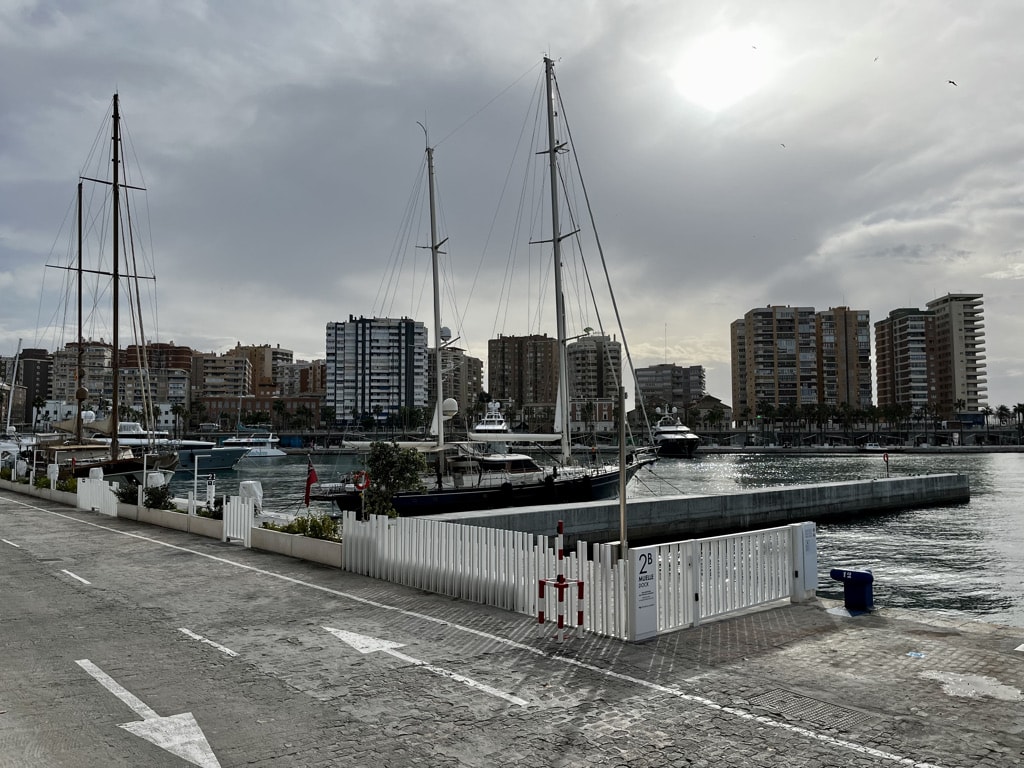
The Beachfront Promenade: It stretches from the city center all the way to Malaga beach. People are walking or jogging around. Muelle Uno, the open-air shopping mall, is located in Malaga Port. The place is lively during the day and in the evenings, but don’t expect to have coffee there in the morning. The only place we found open around 9 am was a Dunkin’ Donuts stand.

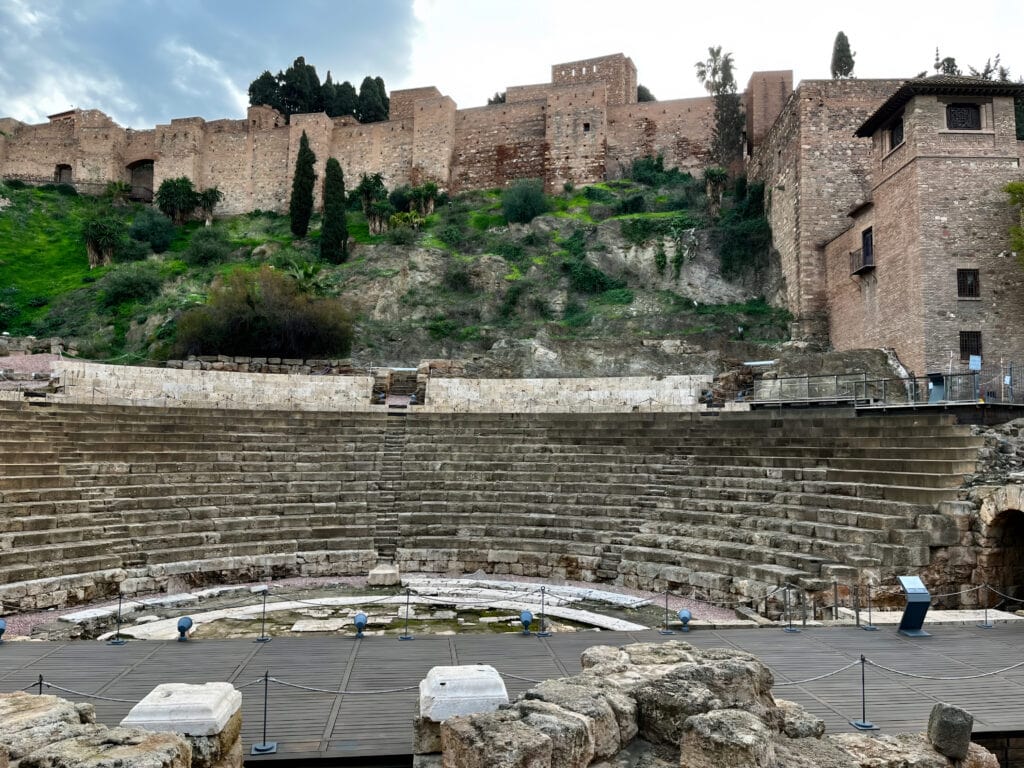
Roman Theater: Considered the oldest monument in Malaga, it was built in the 1st century BC under the rule of Emperor Augustus. It is situated underneath the Alcazaba fortress and was discovered in 1951, after being buried for several centuries.

Alcazaba: Positioned atop the hill, the fortress is assumed to be one of the best-preserved in Spain. Its origin dates back to the 11th century. There is quite a bit of a walk to reach the entrance, but it is worth it. After purchasing our tickets, we freely walked around, exploring the different parts and enjoying the views of the city.

Walking on the Beach Promenade, we reached the City Center.

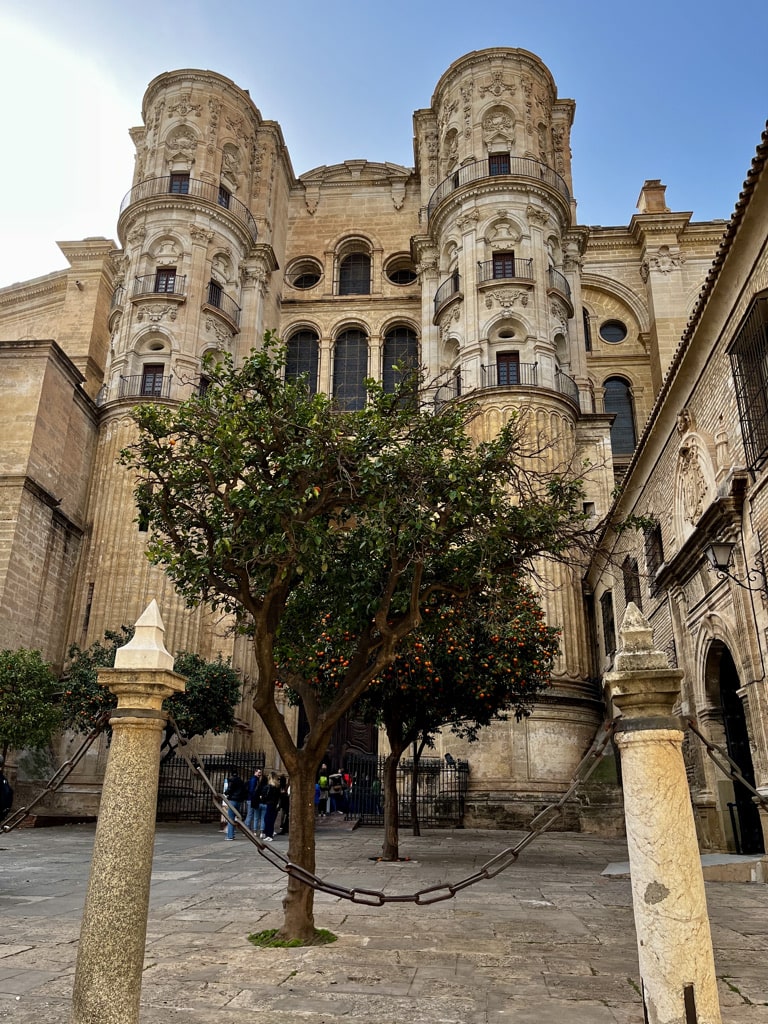
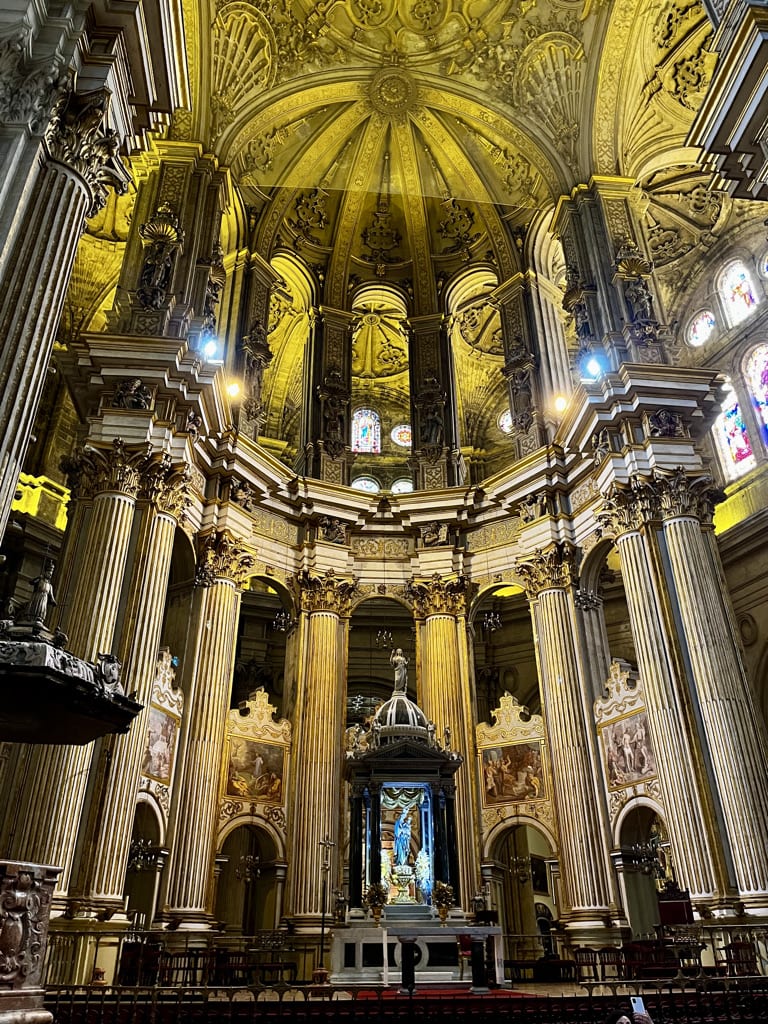
The main landmark to visit is the Malaga Cathedral. It was built between 1528 and 1782, and the interior is in Renaissance style. The cathedral’s north tower is highly visible, standing at 84m high, while the south tower remains unfinished.

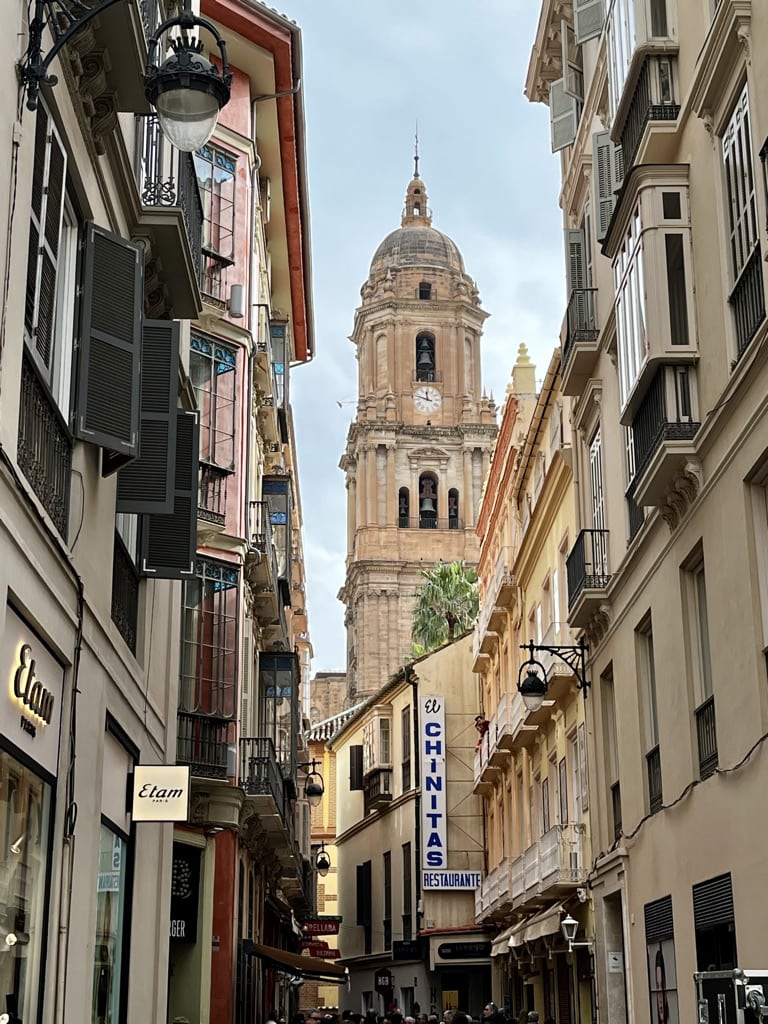
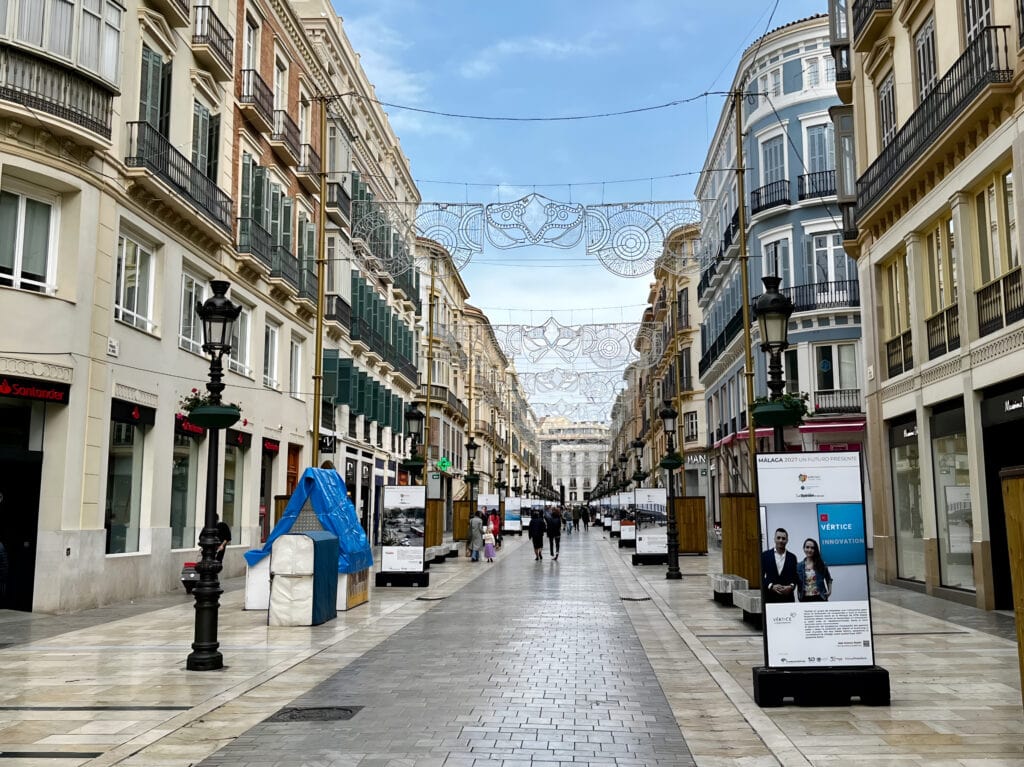
Calle Larios is the main pedestrian shopping street and the true heart of Malaga.

Nevertheless, for shopping enthusiasts, there’s another tip. There is a huge shopping complex, including McArthurGlen Designer Outlet just outside Malaga, next to the airport. We drove there from our apartment and had a half day of shopping.

In connection to Malaga, I also need to mention that it is the city where the famous Pablo Picasso was born. There is a Picasso Museum in the city that fans of this artist might want to visit.

Calle Larios
Calle Larios

Day 3: Gibraltar

Malaga – Gibraltar: 140km, 1h 45min

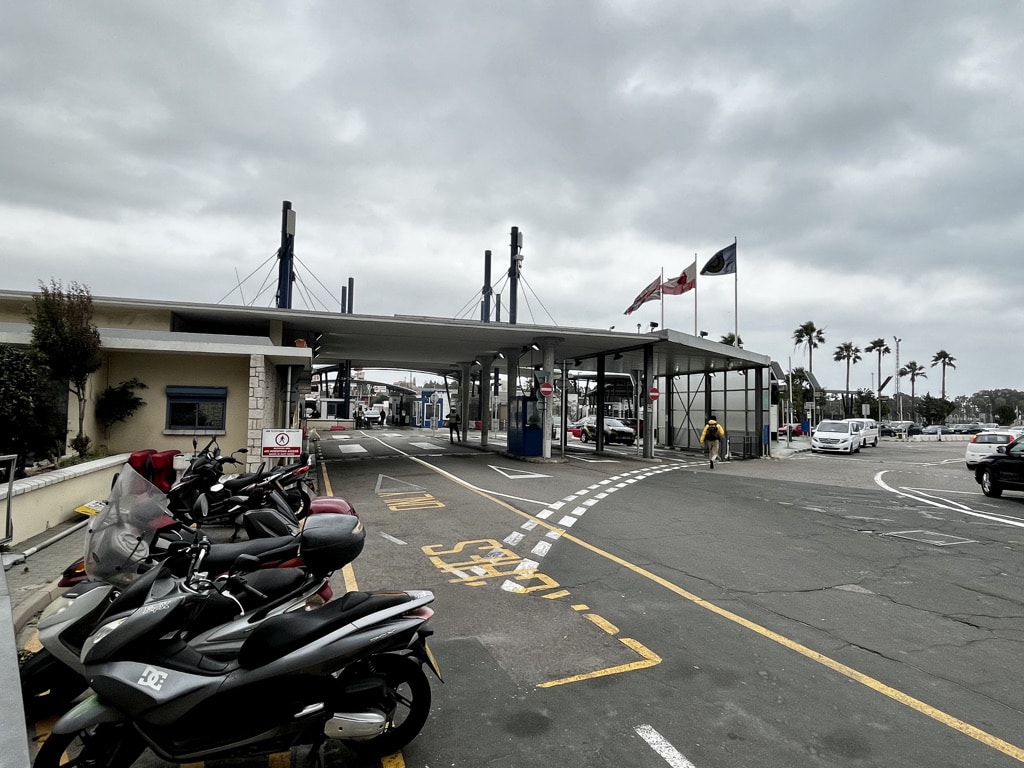
The trip from Malaga to Gibraltar was easy, driving on the highway. We parked the car at Sta Bárbara Car Park at the border between Gibraltar and Spain on the Spanish side. The reasons for that are straightforward – it is cheaper and more comfortable than navigating the narrow streets of Gibraltar. We didn’t have to book the parking spot since we visited outside the main tourist season.

We walked to the border post from the car park. Right after crossing the border, there was a bus stop. We decided to buy a day travel pass to make use of the bus during the day. The bus took us to a very close proximity to the Gibraltar cable car station.

Gibraltar has a history full of different people and events. The place has been home to various groups, like the Phoenicians and Romans, a long time ago. It became part of the Moorish Empire, then went back and forth between Muslim and Christian rule. In 1713, it became British through the Treaty of Utrecht. Throughout its history, Gibraltar’s culture has been influenced by the British, Spanish, Genoese, and Jewish communities.

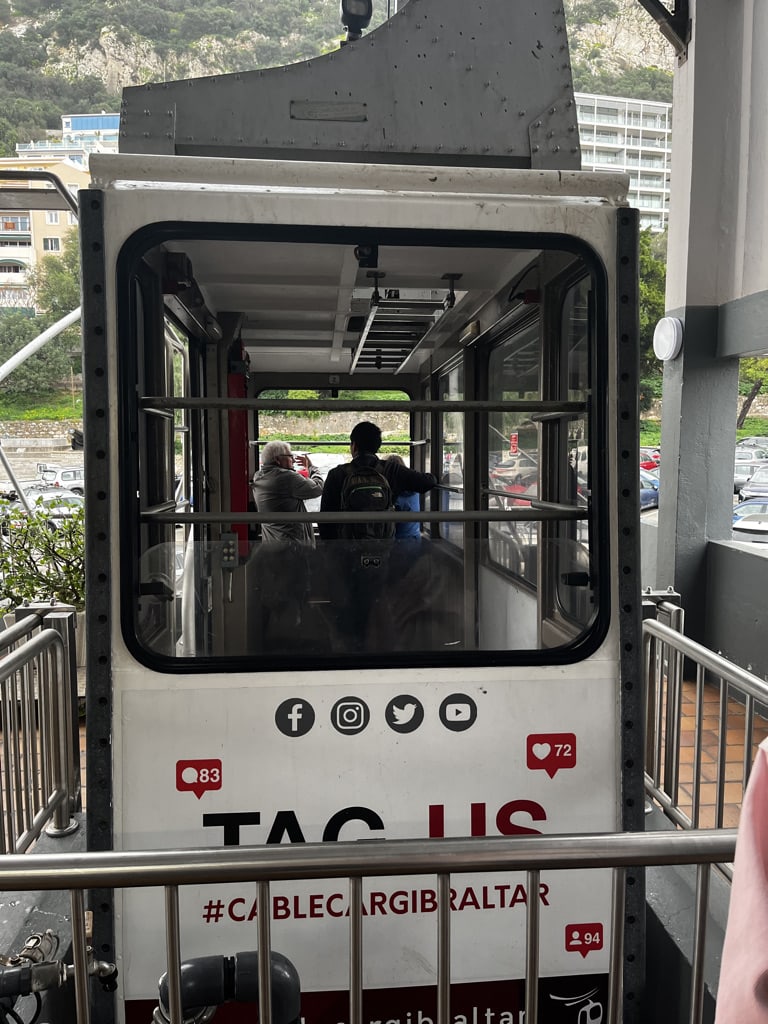
The cable car up the Gibraltar Rock

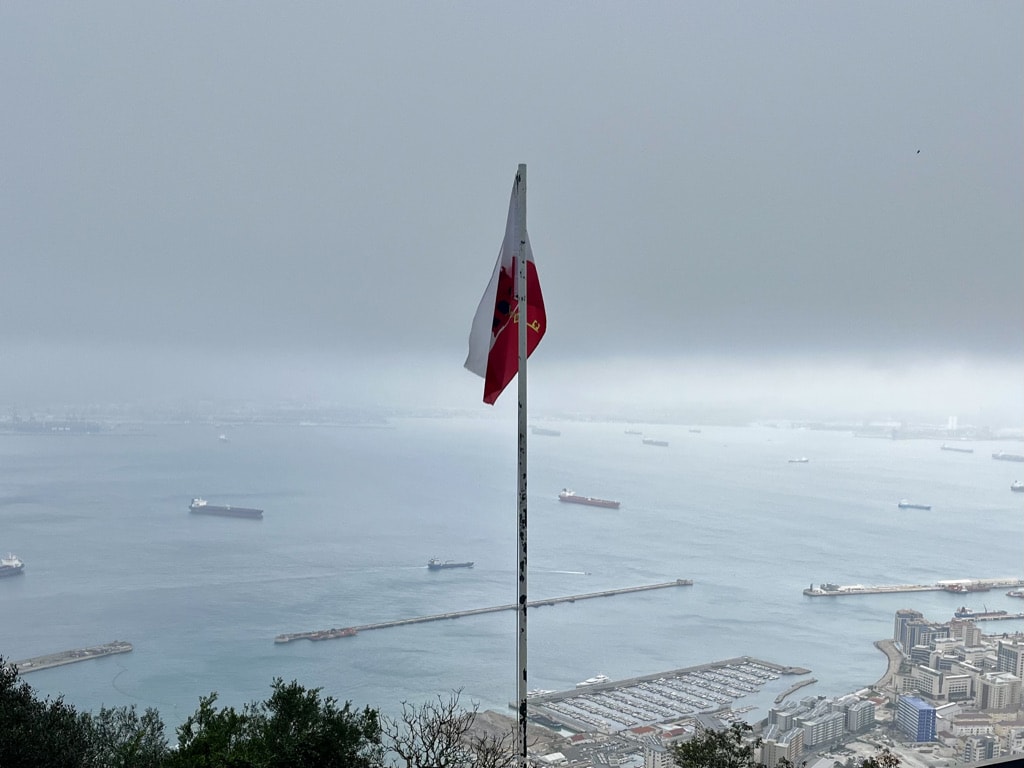
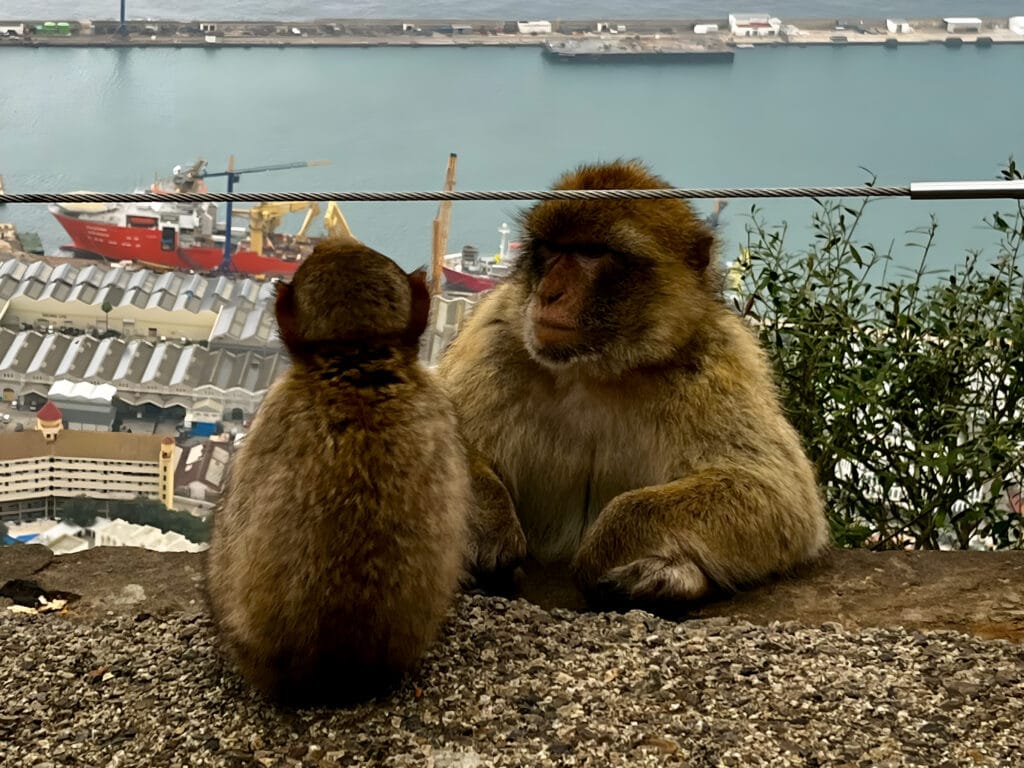
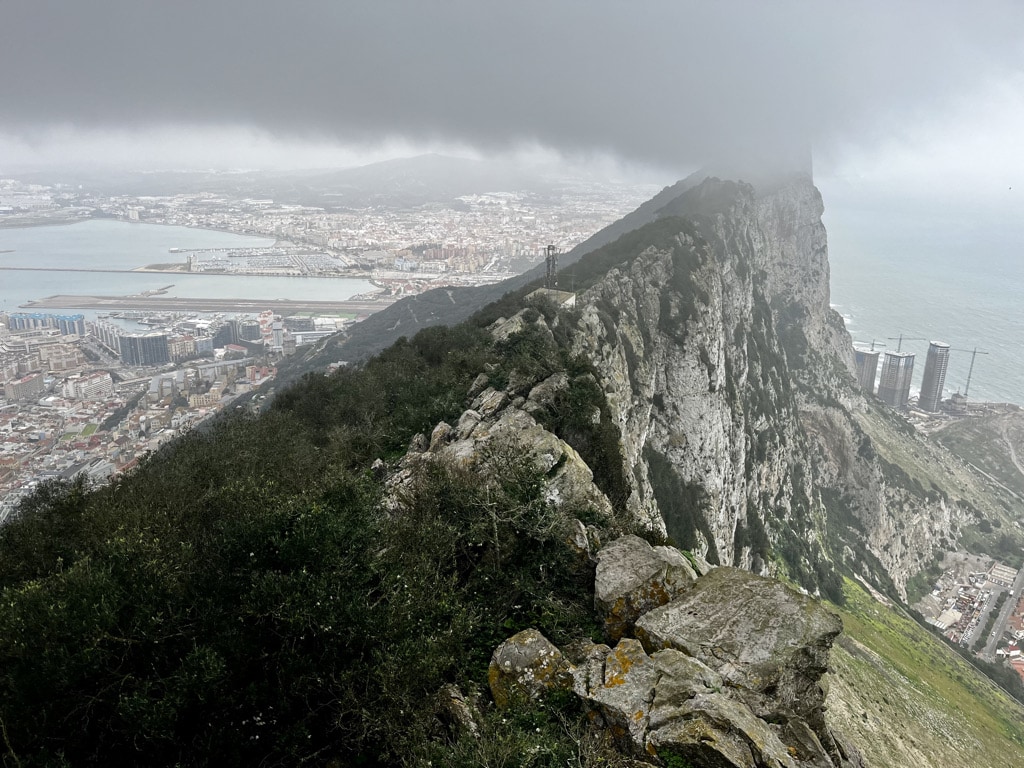
It took us to the highest point of the Gibraltar Rock. Unfortunately, clouds covered part of it when we visited, so we didn’t get the full view that would be there on clear days. Walking on the top is amazing, but one needs to beware of the monkeys. I wasn’t cautious enough, and one of them unexpectedly landed behind my neck. I’m not sure who screamed more, me or the monkey 😂. After exploring the top, we started to descend towards Michael’s Cave.

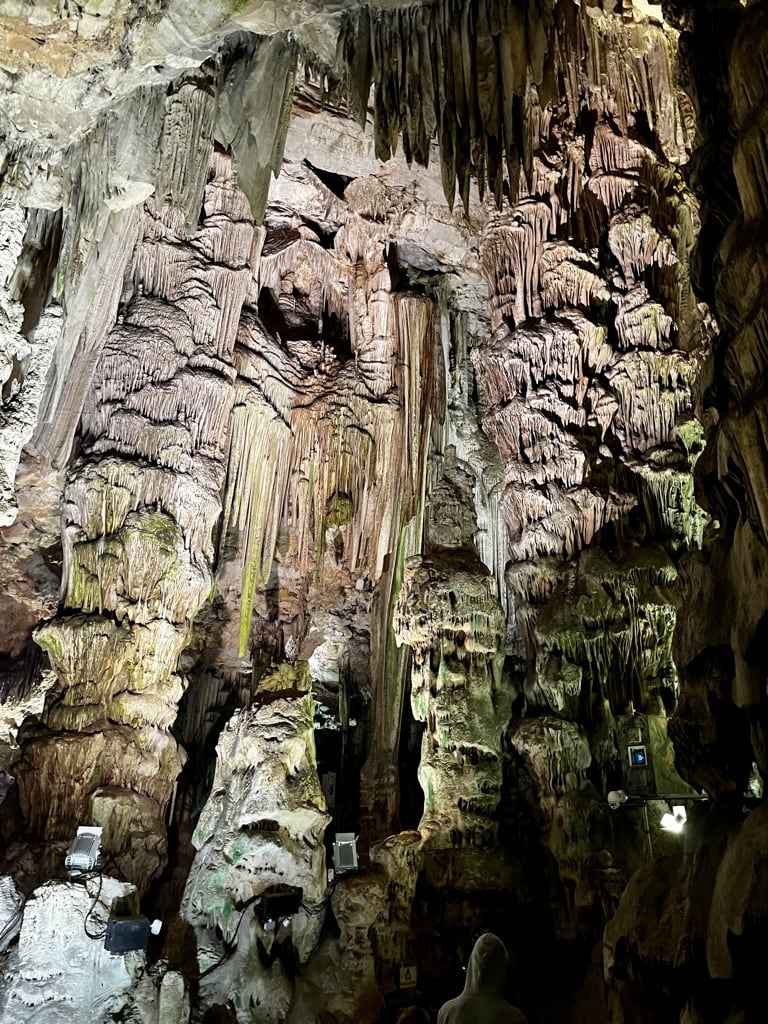
The cave, with its stalactite and stalagmite formations, has a rich history. It served as a refuge, later as a military hospital during World War II, and now is a popular tourist spot.

After visiting the cave, we walked down to the city center. Even though people drive on the right-hand side in Gibraltar (as elsewhere in Europe), the city atmosphere feels very much “British.” We found a local pub to have a late lunch and then started heading back to the border post.

Once we were on the bus, we had to stop to allow a plane landing to pass the runway. Gibraltar International Airport’s runway is unique because it intersects with a major road, Winston Churchill Avenue. When an aircraft needs to take off or land, road traffic is temporarily stopped, and barriers are activated to ensure a safe runway passage.


Day 4: Ronda

Malaga – Ronda: 102km, 1,5hours

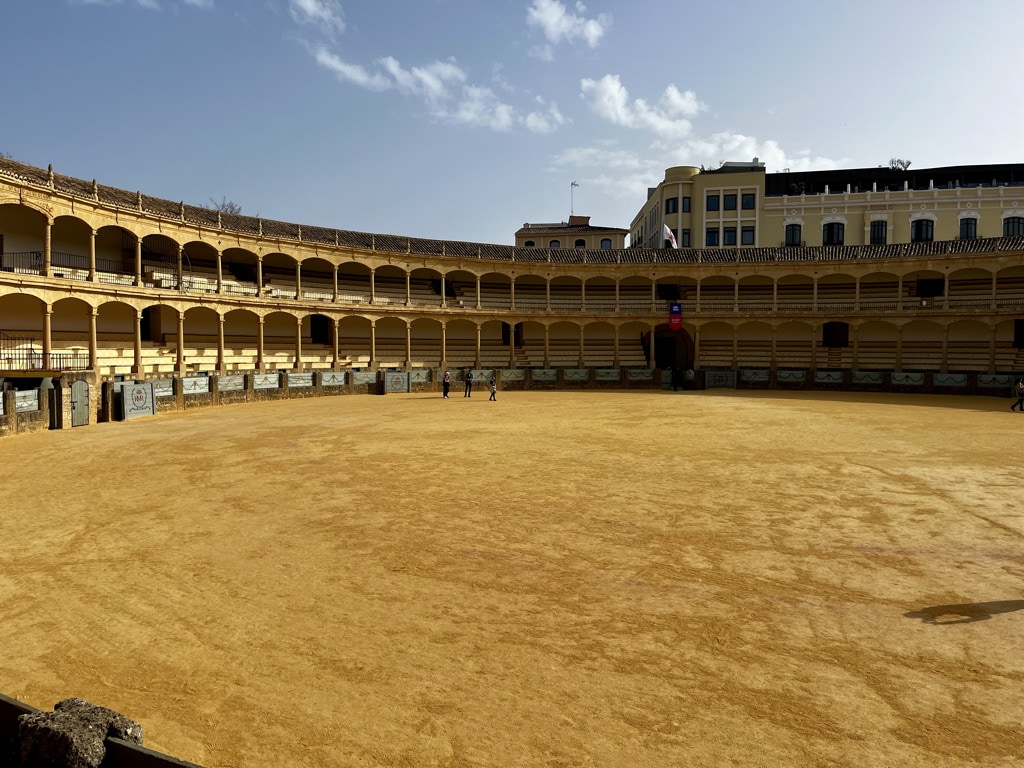
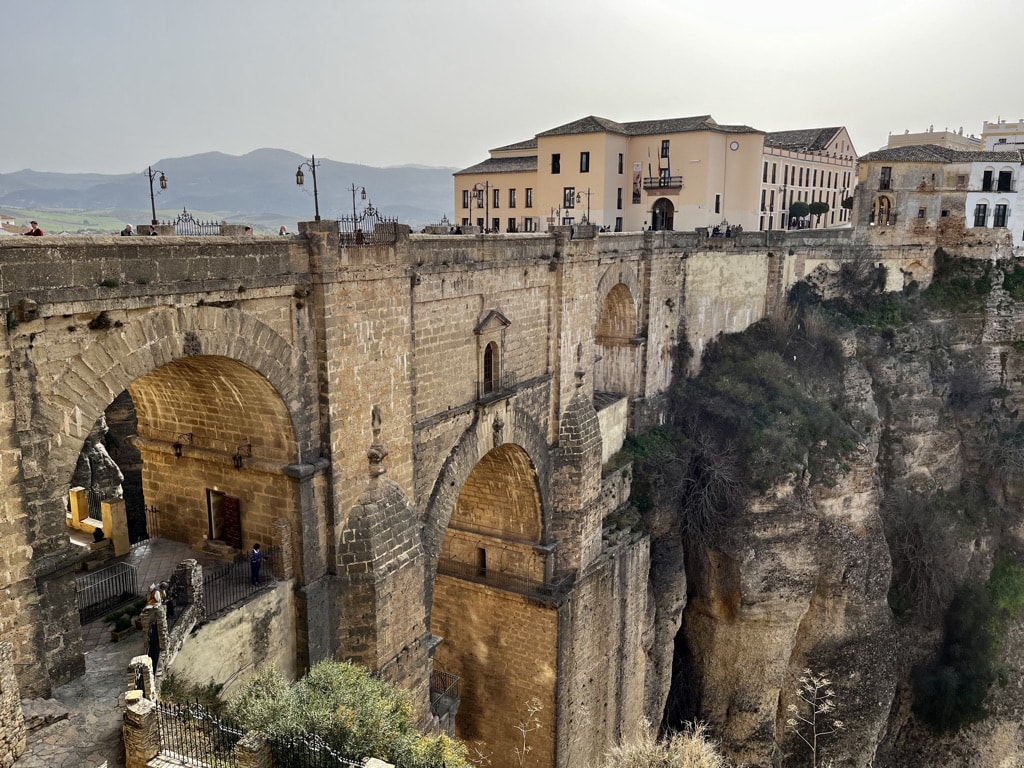
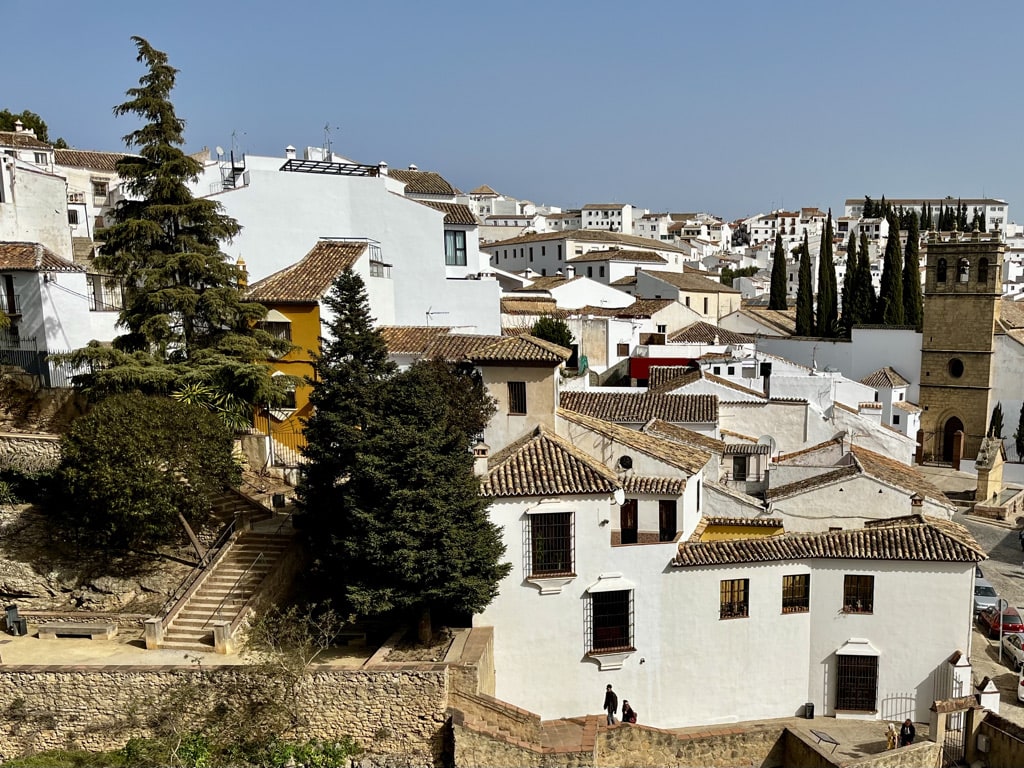
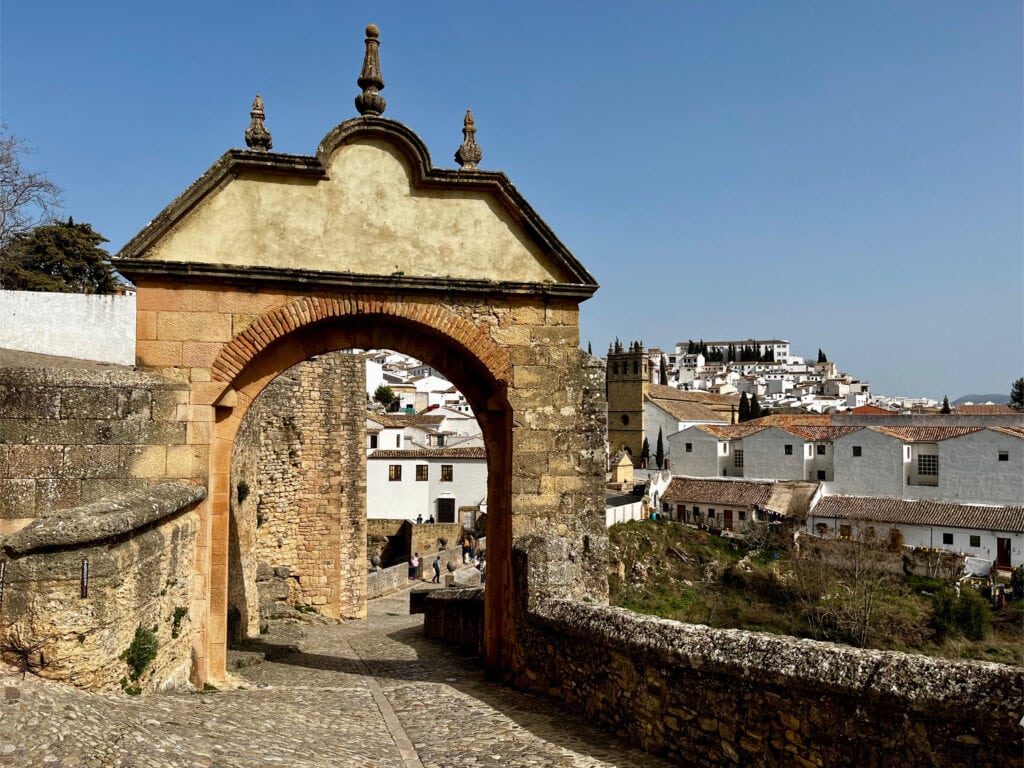
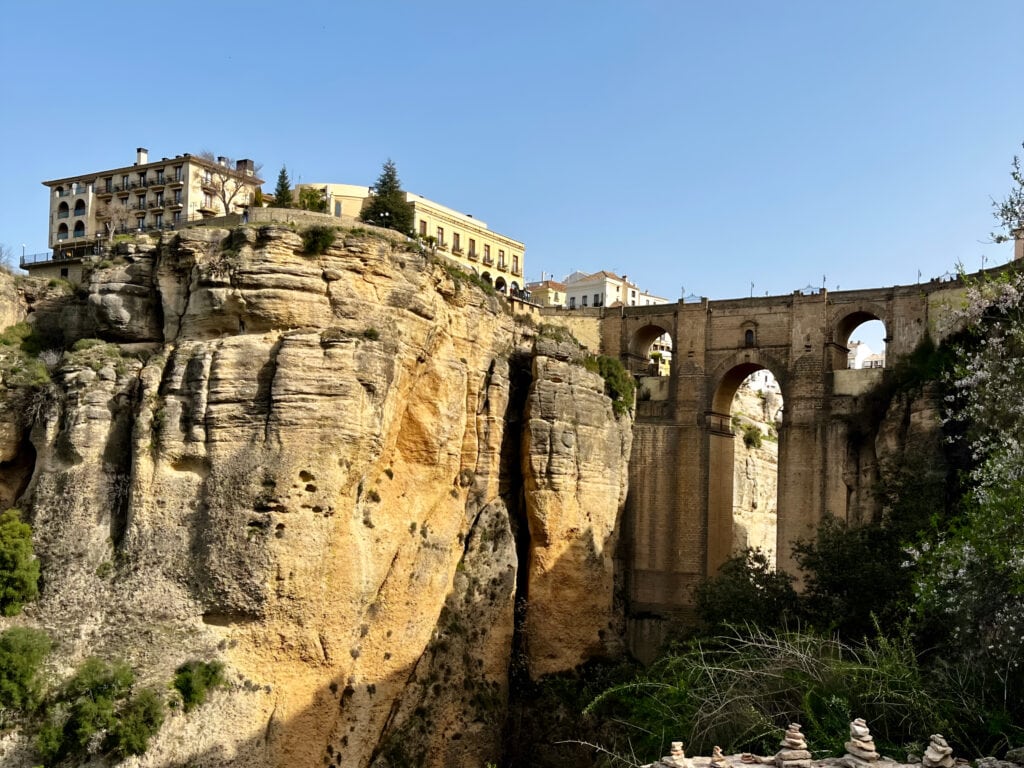
Ronda is not a big city, but it is definitely worth visiting. Perched above a deep gorge, the new and old city are connected by the famous and picturesque Puente Nuevo bridge. Ronda is considered the cradle of bullfighting.

Upon arriving in Ronda, we parked the car at Parking Publico. It took about 7 minutes to walk to the first point of interest – Plaza de Toros de Ronda.

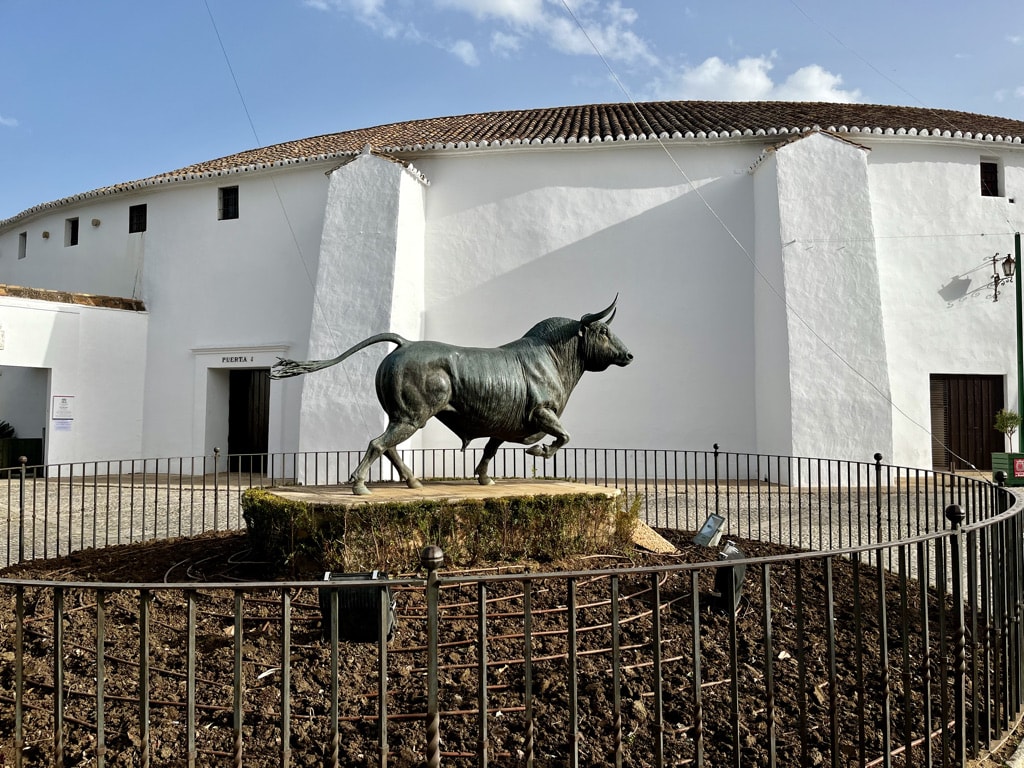
Plaza de Toros

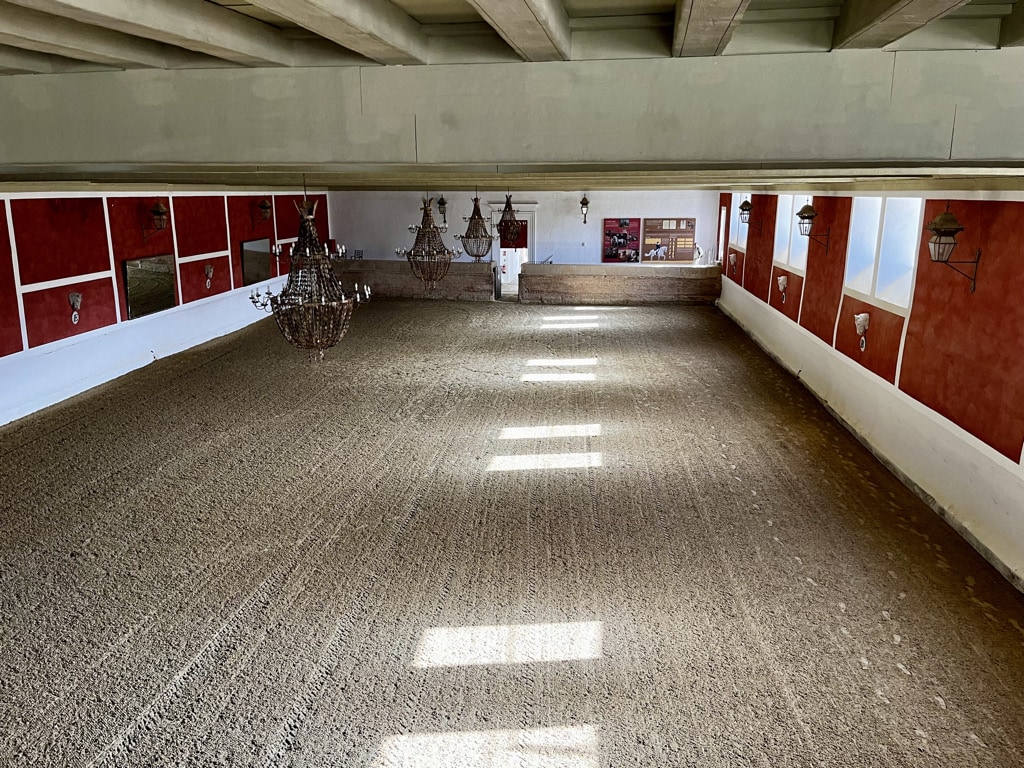
It is a historic bullring built in the 18th century, also being one of the oldest and most iconic bullrings in Spain. We purchased entry tickets on the spot, got the headphone guide, and started to explore the place. We walked through the bullring, explored the bullfighters’ rooms, and witnessed the amazing riding arena of The Royal Cavalry of Ronda, which was established in 1573.

Puente Nuovo bridge

After exploring the Plaza des Torres, we walked towards the Puente Nuovo bridge.

It is impressive. Completed in 1793, it connects the old Moorish district of Ronda with the modern part of the town. It is often considered one of the most impressive bridges in Spain.

For the rest of our stay, we continued wandering around the Old Town with its narrow winding streets and whitewashed buildings.


Day 5: Caminito Del Rey

Malaga – Caminito Del Rey: 61km, 1hour

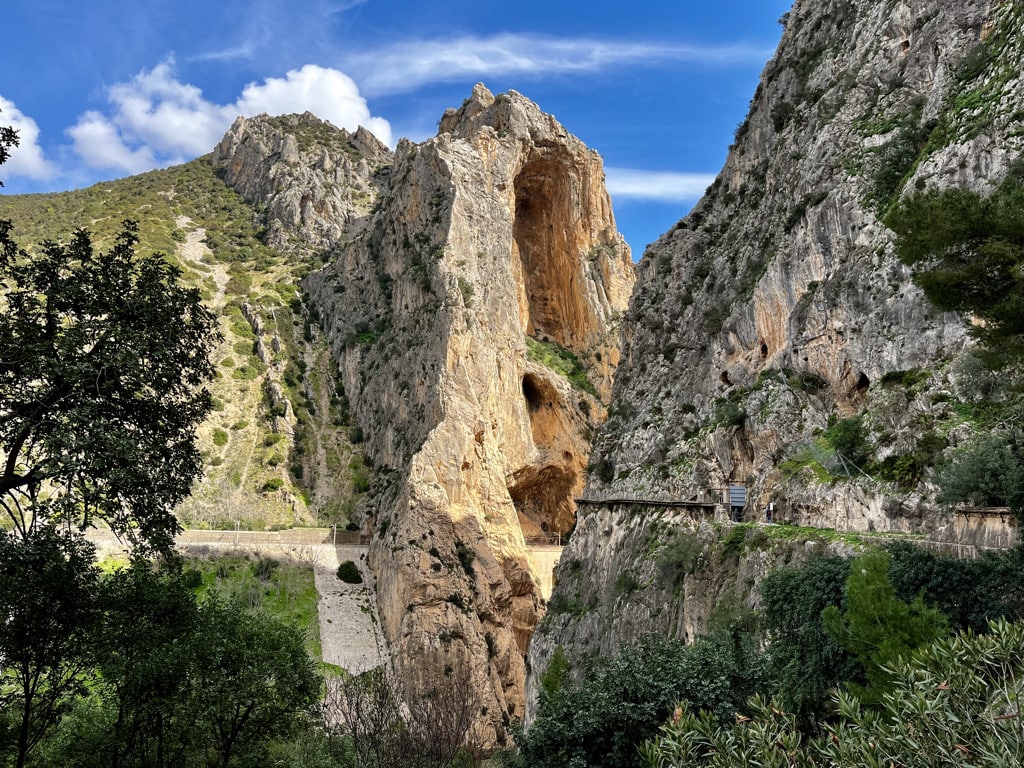
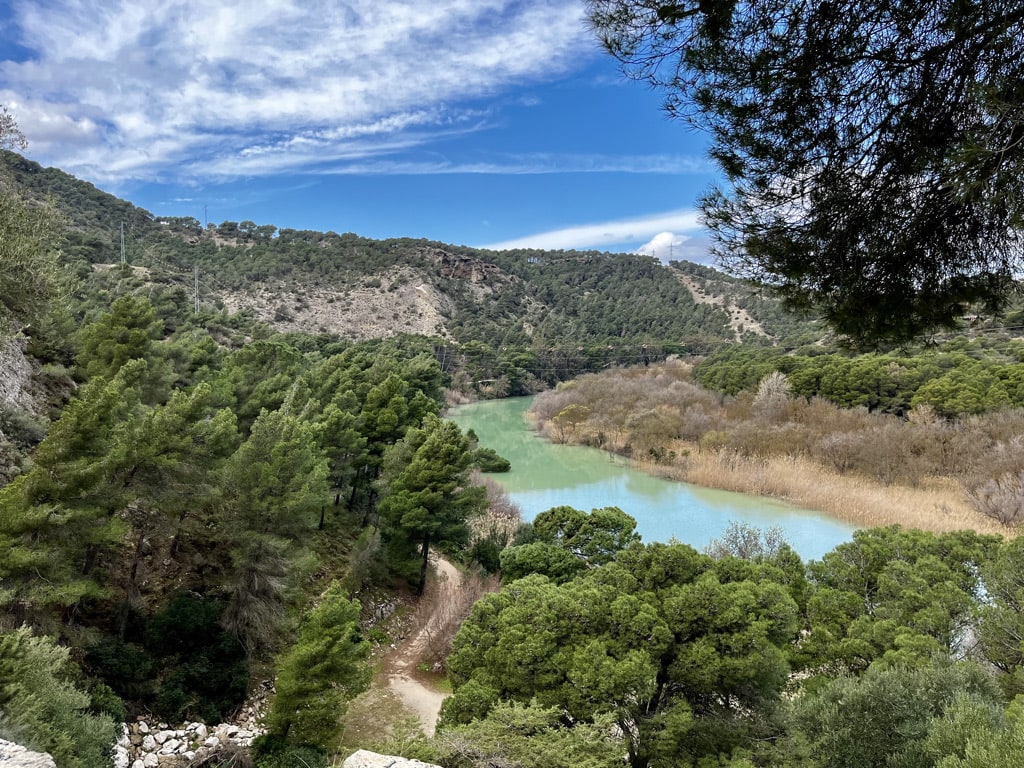
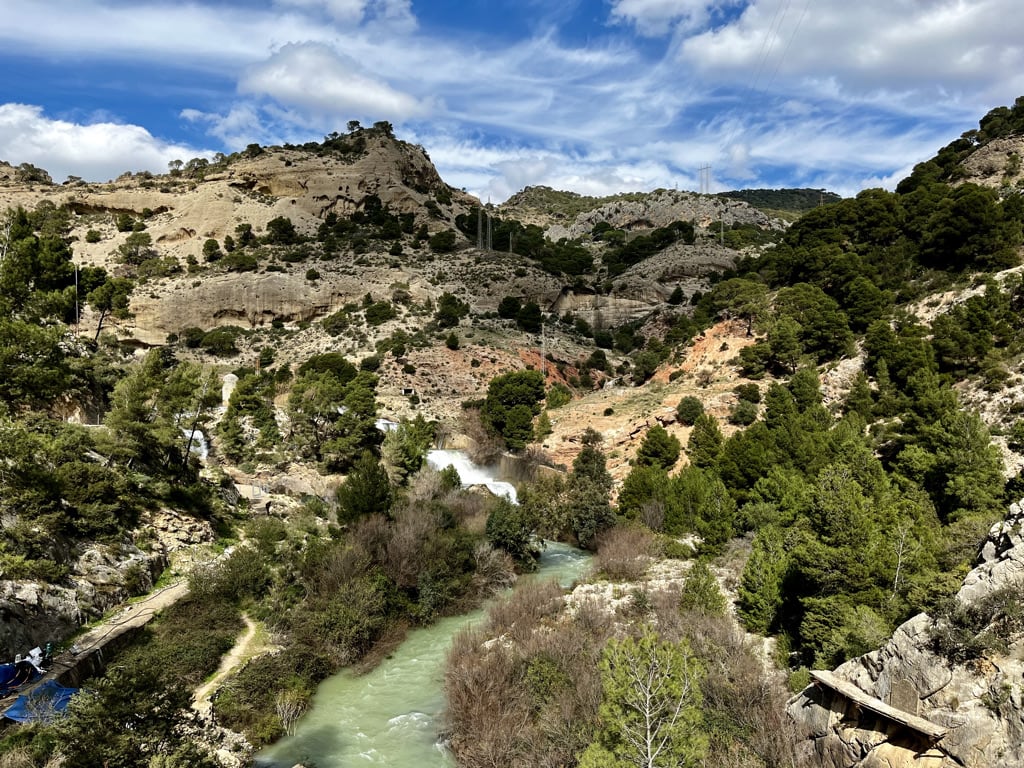
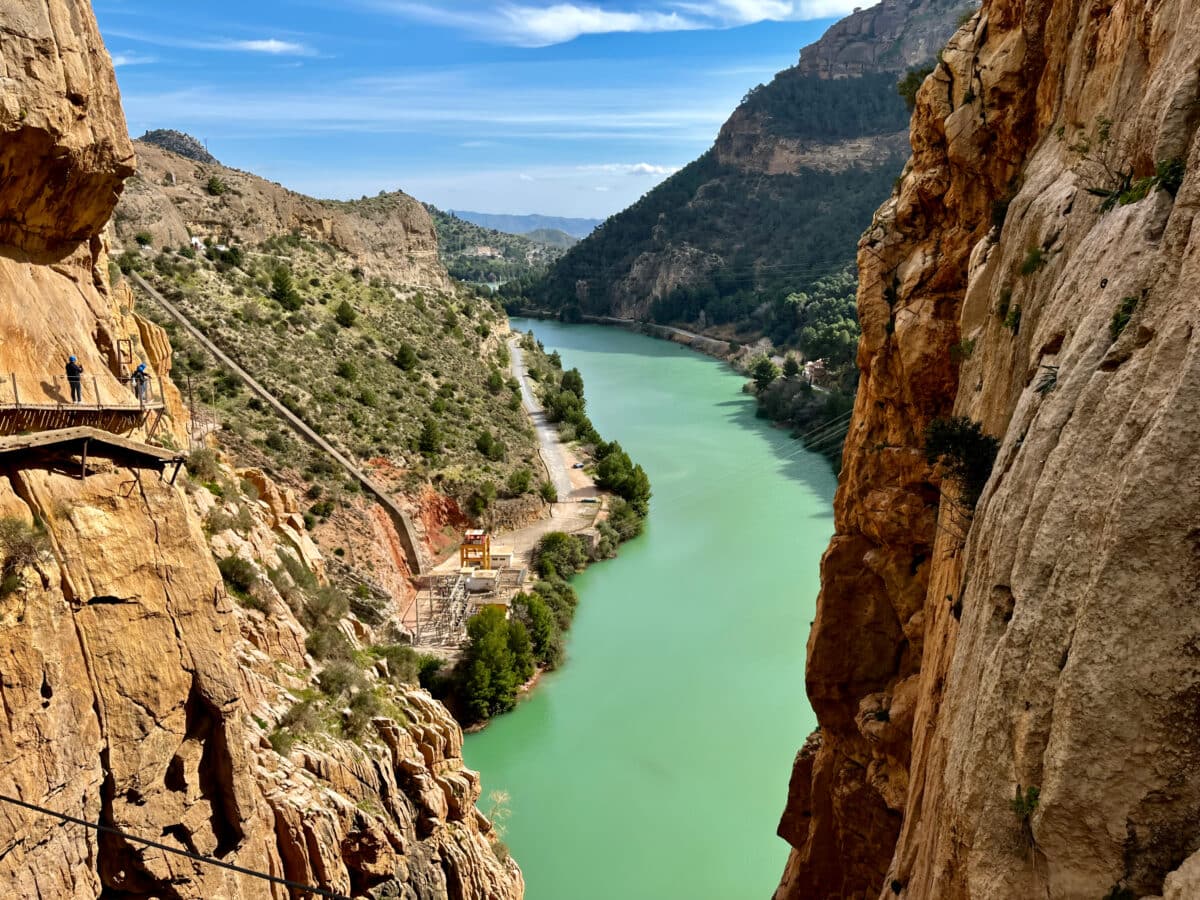
The next day, we decided to take a break from cultural experiences and enjoy some nature. Located about an hour’s drive from Malaga is Caminito Del Rey, often referred to as the ‘King’s Little Pathway.’ It is a walkway build in the walls of Gaitanes gorge. It was originally constructed for hydroelectric power plant workers. The name comes from the nickname of King Alfonso XIII, who visited in 1921.

At one point in time, the trail was damaged and became unusable, causing the connection between villages to vanish. The reconstruction began in 2014, and the trail was reopened to the public in 2015

We booked our entry tickets online several days in advance, as the number of visitors per day is limited.

Arriving at the Visitor Reception Center parking about 1.5 hours before our entry time, we caught a shuttle bus. A 20-minute bus ride took us to the restaurant/kiosk bus stop, and from there, it was a 20-minute walk to the canyon area and the start of the walking trail.

We waited for our time slot, we received helmets and headphones, and followed our guide. The walk, which takes about 2 hours, requires carrying water. We visited in February when the weather was perfect for the walk. As the entire path is exposed to the sun it must get hot during summer. The views of the canyon are breathtaking.

At the end of the trail, we returned the helmets and walked through a small village toward the shuttle bus stop. It then transported us back to the Visitor Center where we had parked our car.


Day 6: Granada

Malaga – Granada: 132km, 1,5 hour

Granada, situated at the foothills of the Sierra Nevada mountains, is best known for the Moorish palace, Alhambra.

My luck kicked in when I checked the official website in the morning, realizing most visitor slots for the day were taken. I organized our tickets, even though the process os a bit complicated – registering, and entering all details, including ID numbers. This a common system, I got across in other places in Spain, but not the easiest for on-the-spot reservations.

I wanted to park in the city center for a walk through town towards Alhambra. I chose Parking Angel Ganivet. Honestly, it is a very tight garage and it was difficult to drive in and out even with a small car.

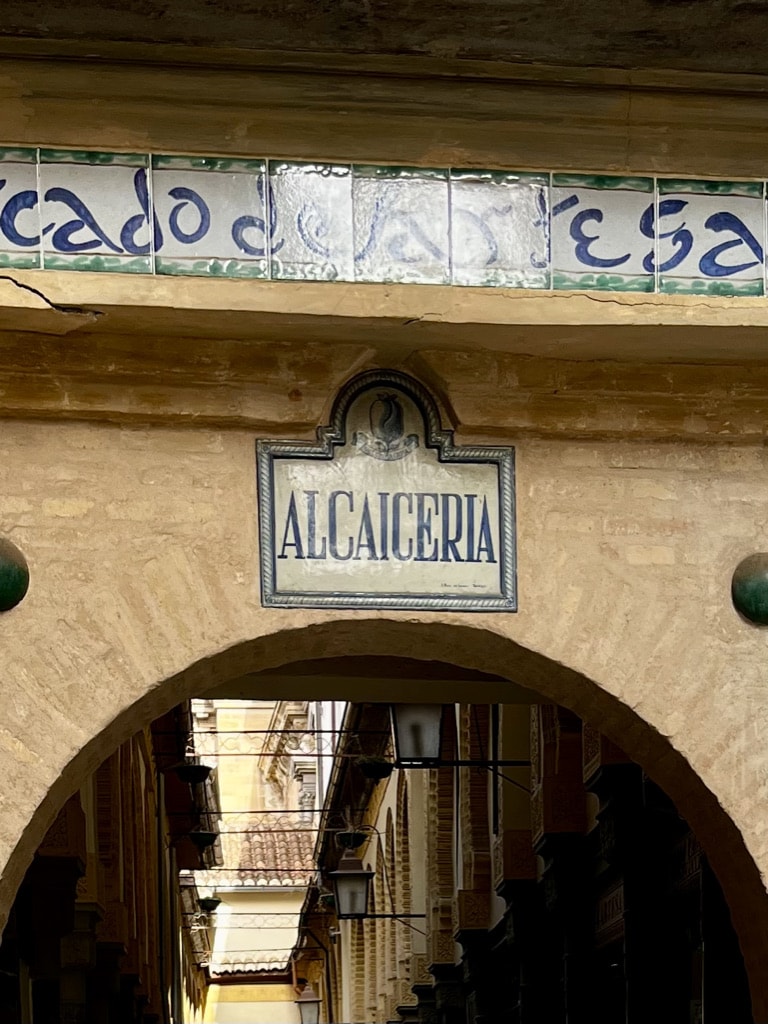
The Alcaiceria

As our first stop, we explored Alcaiceria, the Great Bazaar of Granada. Established in the 14th century, when Emperor Justinian granted Arab traders permission to open the market in Granada. They sold silk, perfumes, spices, and more in over 200 shops. Unfortunately, a fire destroyed the original market in the 19th century, and the current version is much smaller. Nevertheless, once you step in, it retains a unique atmosphere and charm.

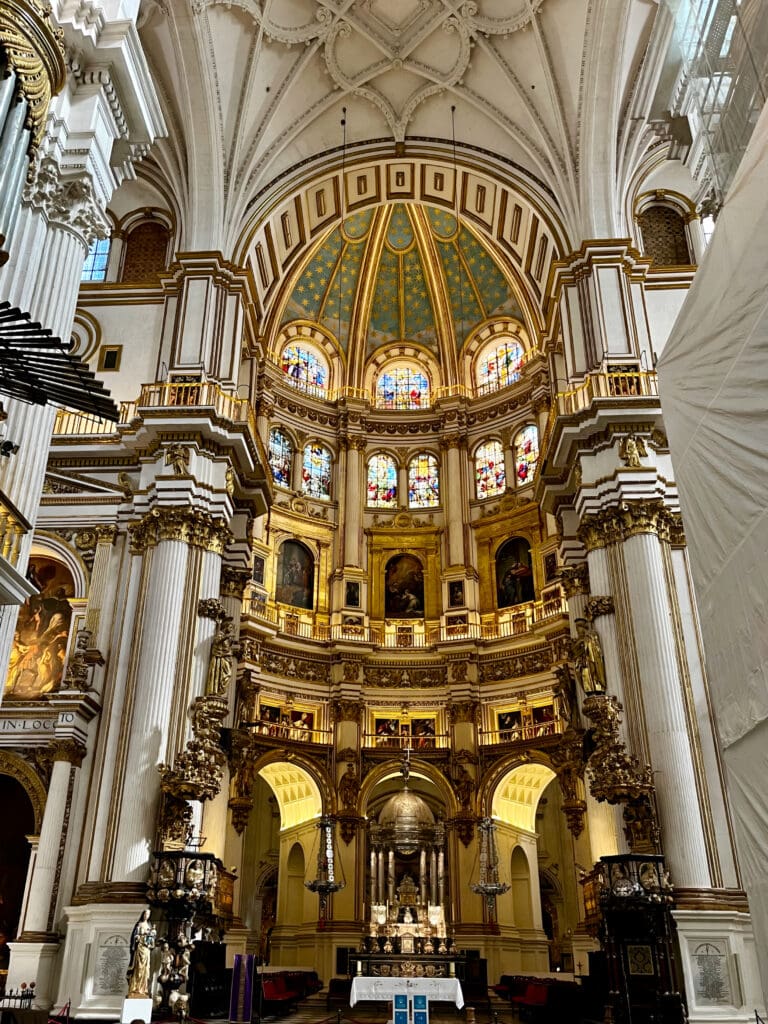
Granada Cathedral

Granada Cathedral is situated in the heart of the city. Built in the 16th century, its foundations are Gothic, but the cathedral itself is constructed in the Renaissance style. The interior is impressive and definitely worth a visit.

Alcaiceria, Granada, Spain
Alcaiceria
Inside the Granada Cathedral in Spain
Granada Cathedral

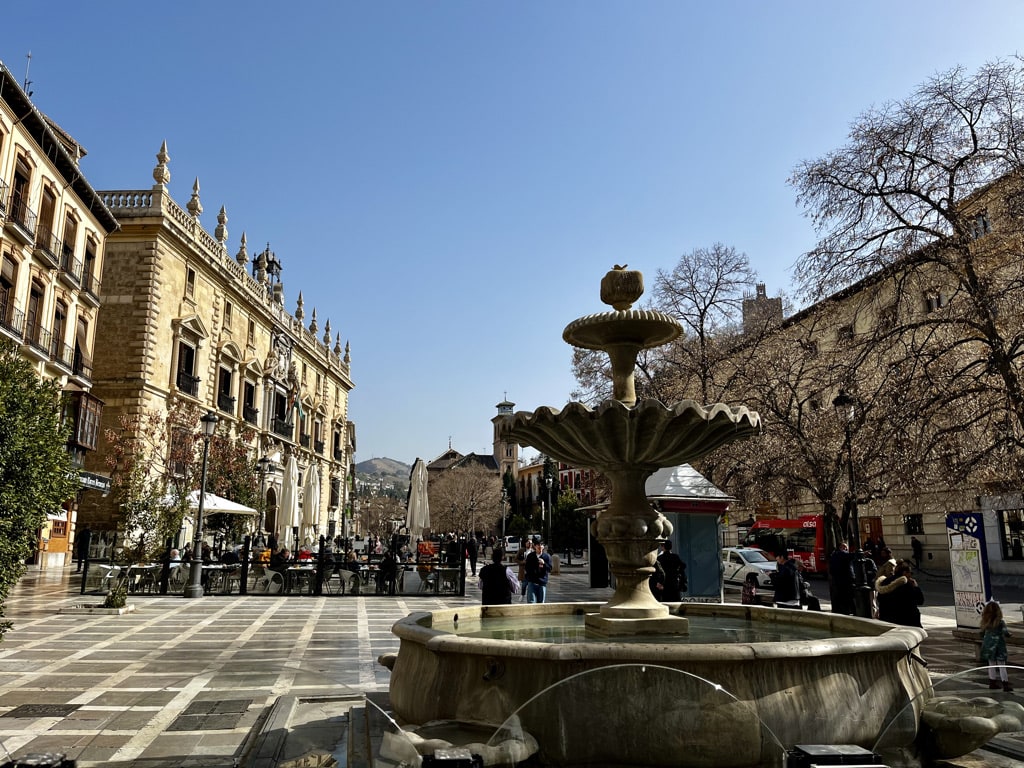
Plaza Nueva

It is one of the city’s oldest and liveliest squares. Surrounded by historic buildings and charming outdoor cafes, it offers a vibrant atmosphere. We set in the middle of February in one of the outside restaurants enjoying a coffee and soaking up the sun.

Plaza Nueva in Granada
Plaza Nueva

Alhambra

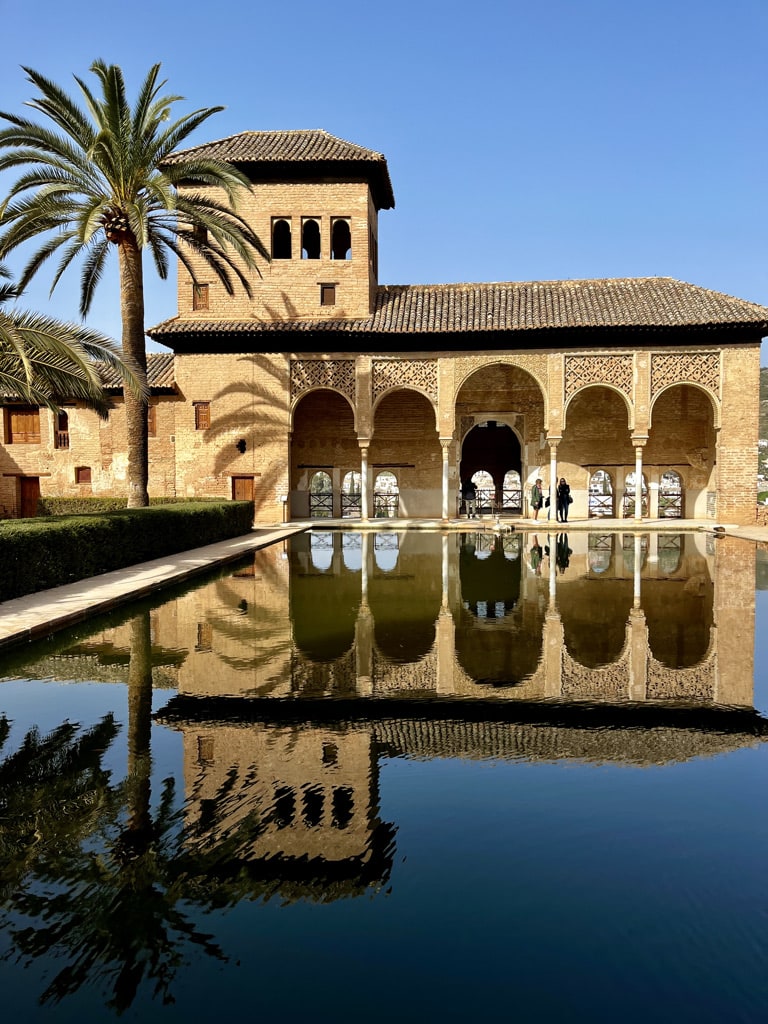
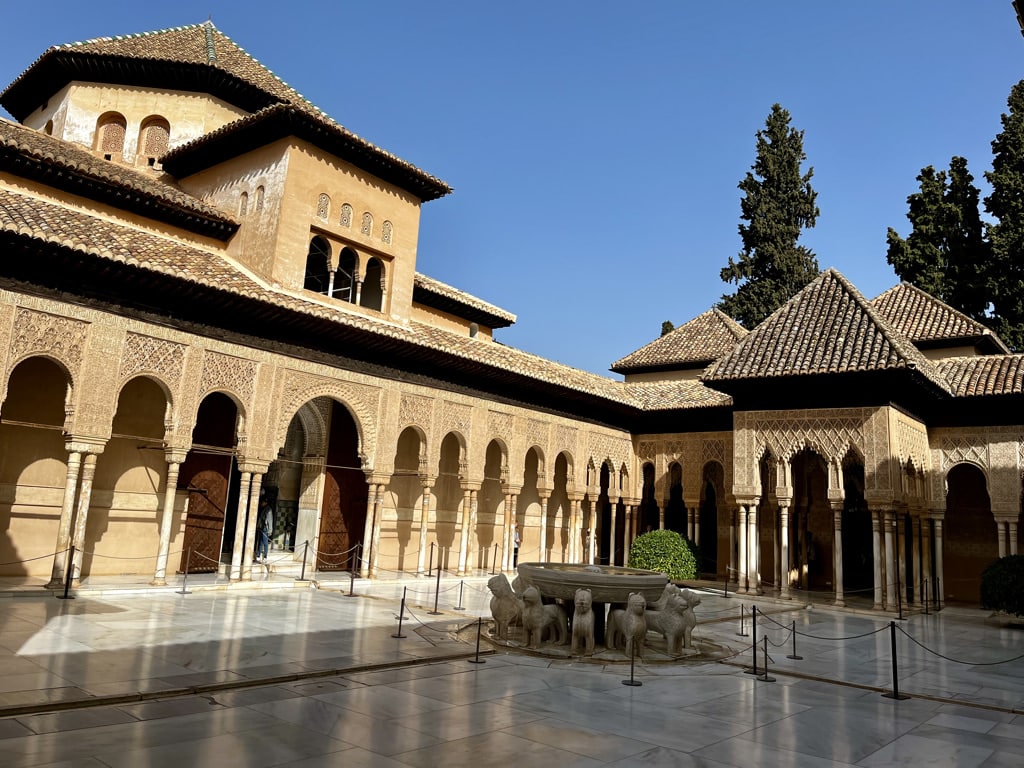
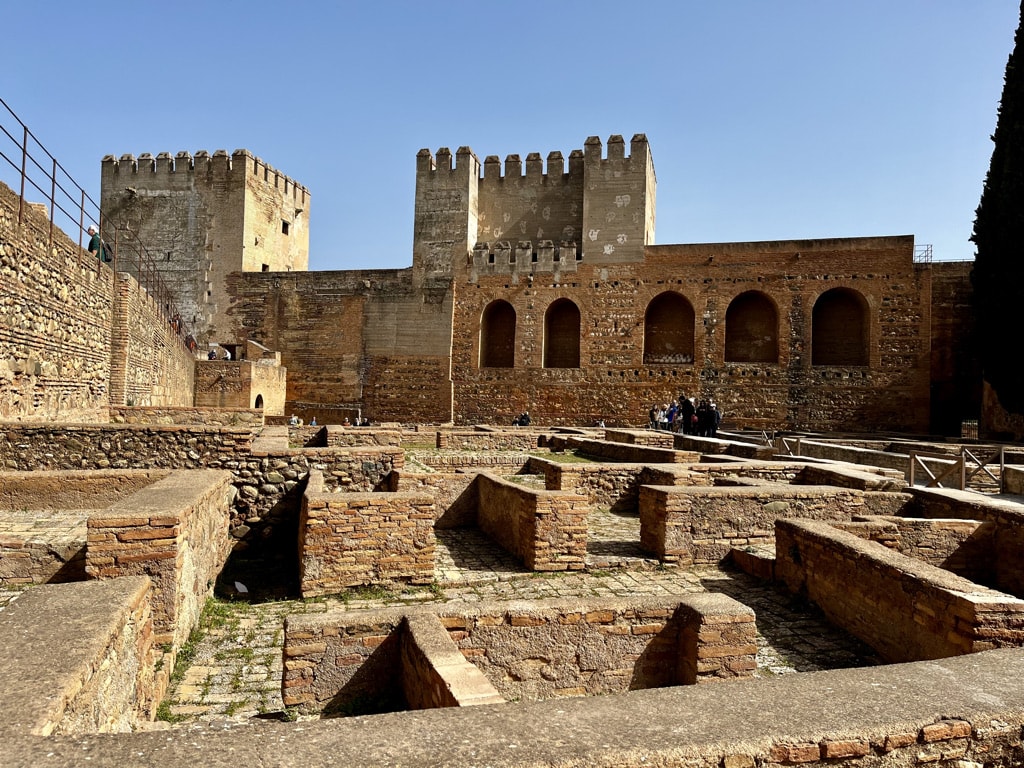
Alhambra truly stands out as a must-visit in Granada. Located on the top of a hill, it offers beautiful views of the city. Constructed primarily during the 13th and 14th centuries, it played various roles, serving as a palace, fortress, and citadel. The complex is massive and requires a few hours of exploration—we wandered through the Generalife gardens, and the Alcazaba fortress, and, at our designated time, visited the Nasrid Palaces, with its stunning mosaics.

Nasrid Palace, Alhambra, Granada
Nasrid Palace

Day 7: Seville

Malaga – Seville: 210km, 2,5hours

Seville was the only destination where I felt a day trip might be too ambitious. We checked out of our apartment in Malaga and spent the final two days in Seville. As always, I ensured our accommodation had a private parking space, and once again, it proved to be a wise choice.

I found the Catalonia Santa Justa hotel, located approximately 25 minutes on foot from the city center. When we walked through the streets of Seville’s historic center, I only then realized how narrow they are and how challenging it would be to drive through them.

Seville is a bustling tourist town even in February. It’s advisable to book tickets online for major attractions like the Cathedral de Sevilla, Giralda Tower, and Alcázar. Unfortunately, I didn’t do so, and we found ourselves waiting in a long queue. As mentioned earlier, the online ticketing system can be complicated. While in line, I attempted to book tickets online, but the process of filling in personal details, including ID numbers, made me decide it was easier to wait.

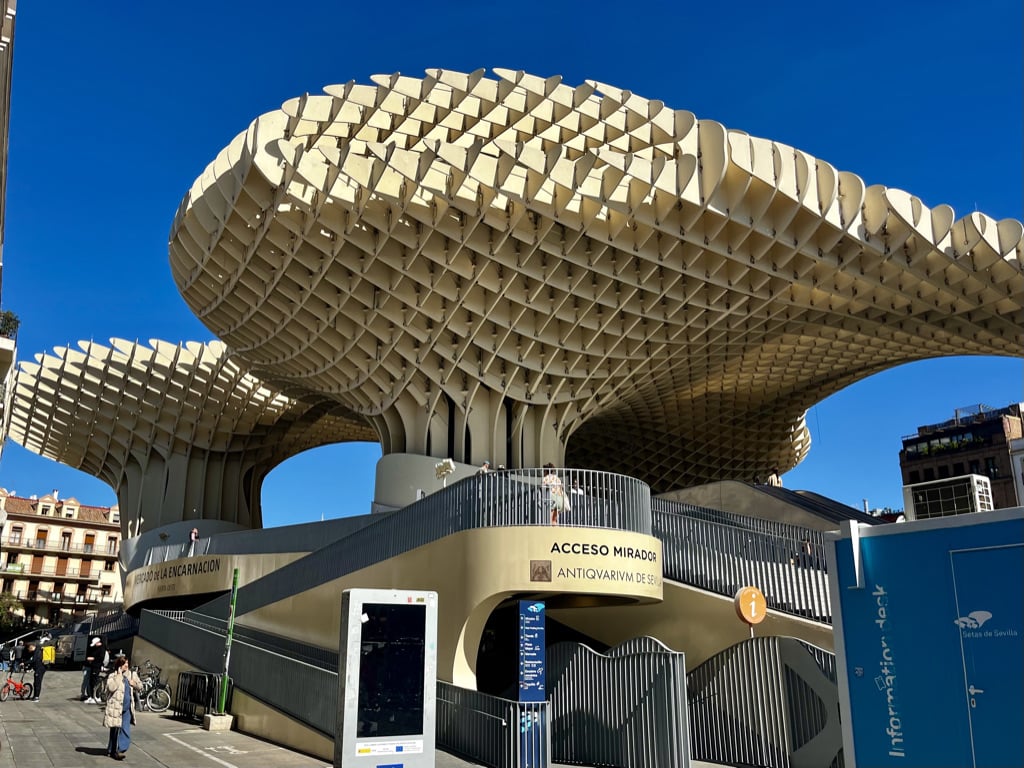
We walked from the hotel to the city, and our first stop was Metropol Parasol. It’s a super modern and the world’s largest wooden structure, designed by Jurgen Mayer in 2005. On the ground floor, there’s an entrance to the Antiquarium, an archaeological site with remains from the Roman era. Next to the Antiquarium is the entrance and lift to the lookout point.

We continued towards Casa de Pilatos, one of the first examples of Andalusian architecture. Then, we navigated through the narrow streets of Barrio de Santa Cruz, the former Jewish quarter, towards the Catedral de Sevilla.

Catedral de Sevilla

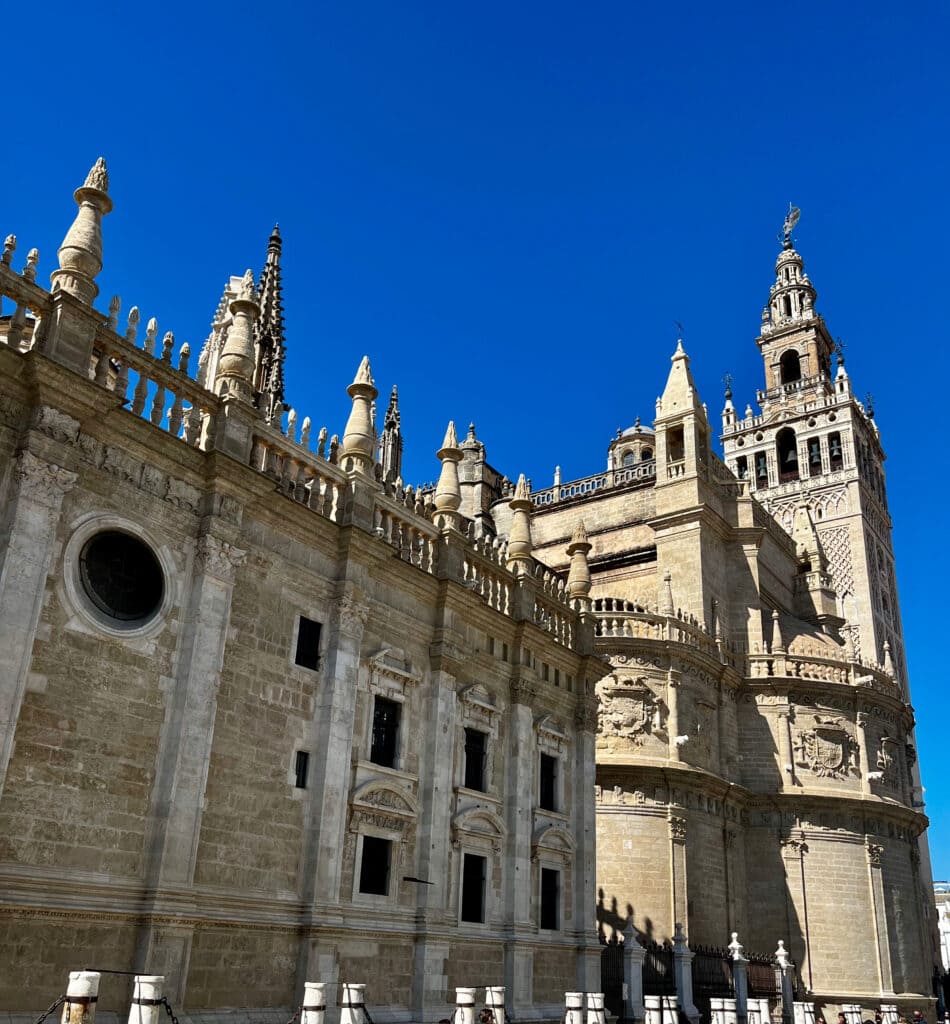
It is the third-largest cathedral in the world and a UNESCO Heritage Site. Built in Gothic and Renaissance styles, the Giralda Tower dominates the city’s skyline. The cathedral stands on the site of a former mosque, with the Giralda Tower occupying the location of the former minaret. Inside the cathedral, you can find the tomb of Christopher Columbus.”

Cathedral of Seville, Spain
Cathedral of Seville

Alcazár


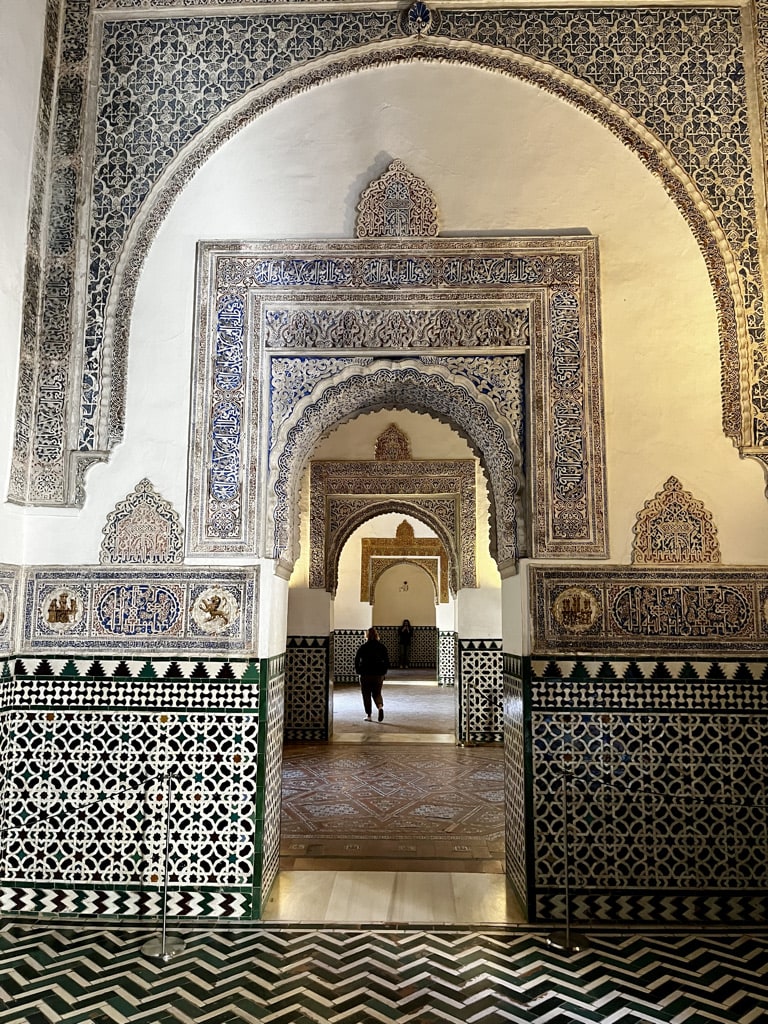
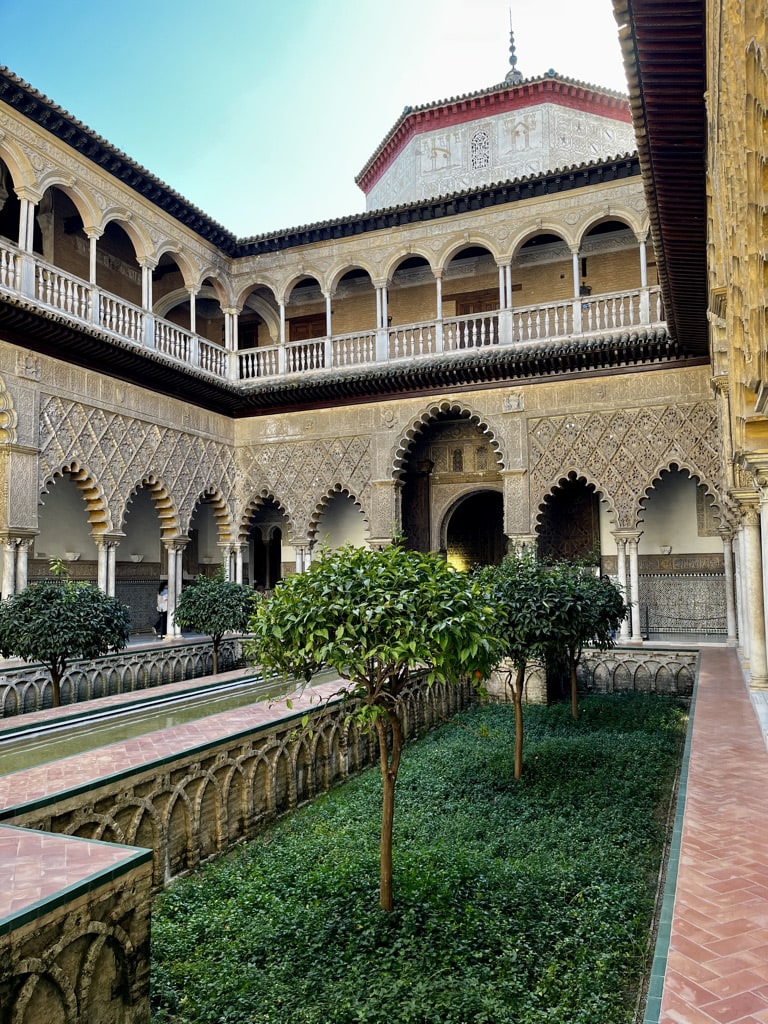
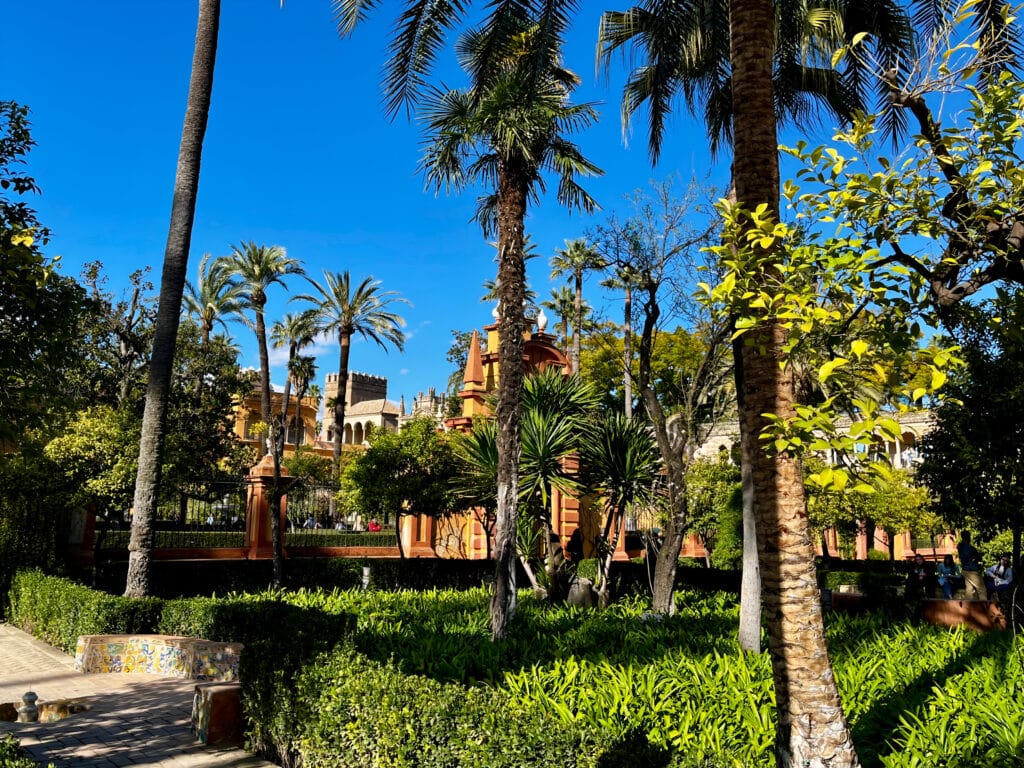
The stunning palace complex, originally built as a fortress by the Moors in the 10th century. It later underwent expansions and transformations, resulting in a mix of Islamic, Gothic, Renaissance, and Mudejar styles. We walked through the complex while admiring tilework, halls, courtyards, and gardens.
The intricate tilework, lush gardens, and ornate chambers captivate visitors as they wander through the halls and courtyards.


Day 8: Seville – Malaga – end of our road trip to Spain, Andalusia

On the last day, we packed all our belongings into the car, checked out of the hotel, and left the car in their garage. The final part of the city we planned to explore was Plaza de España.

Plaza de España

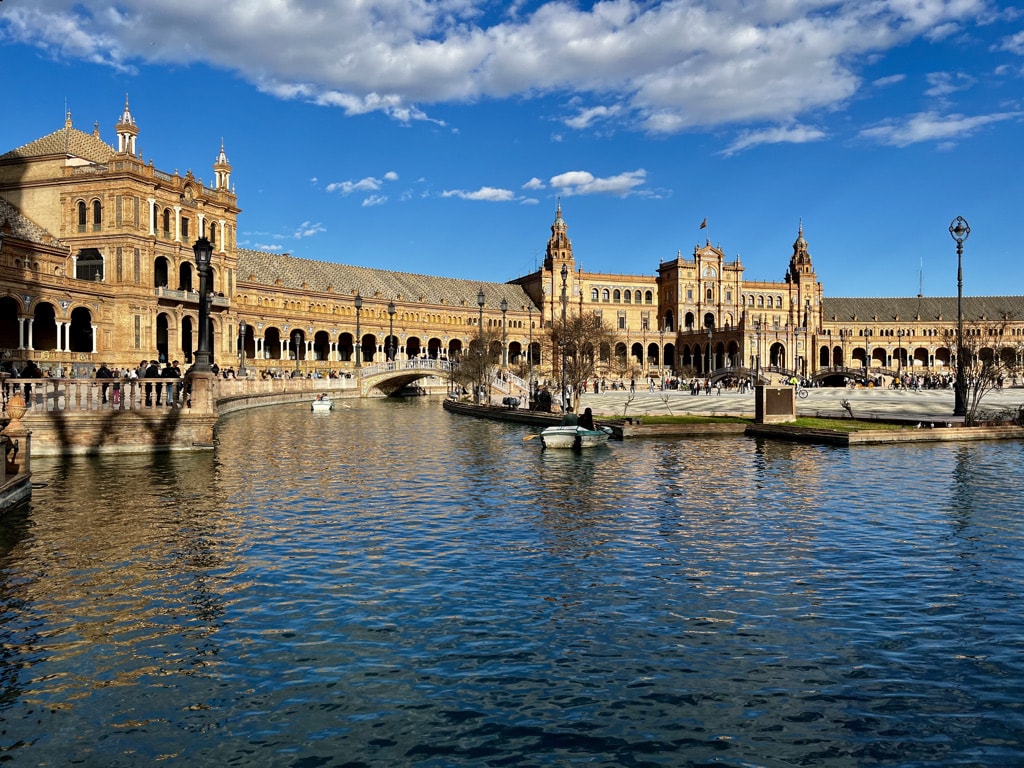
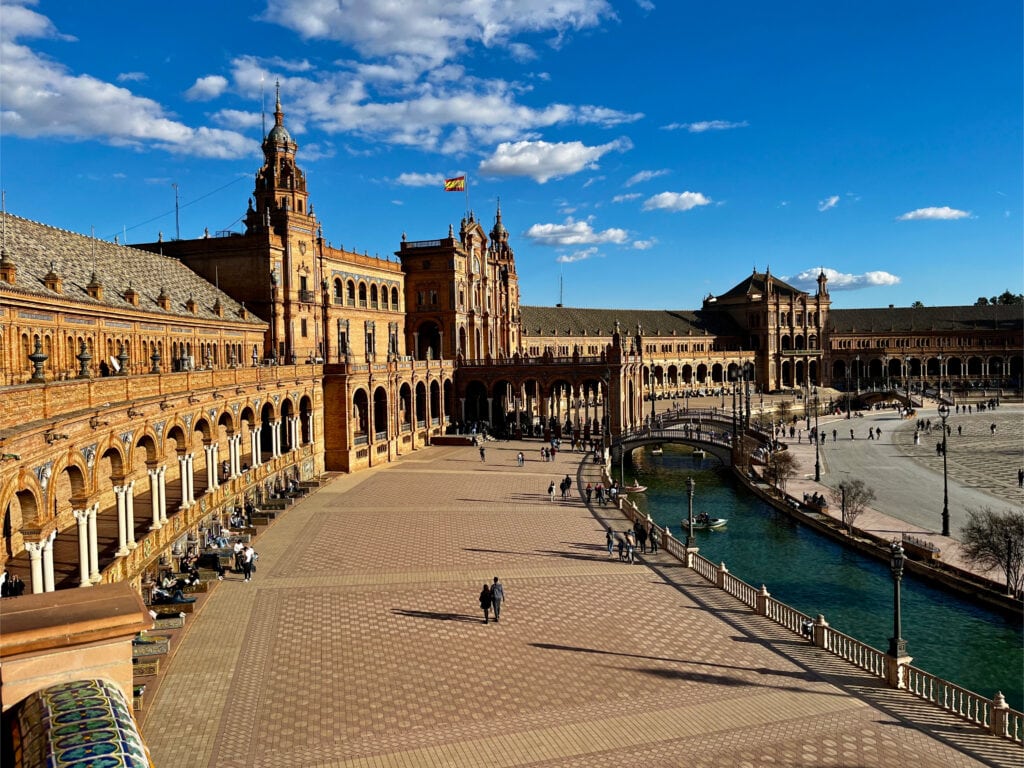
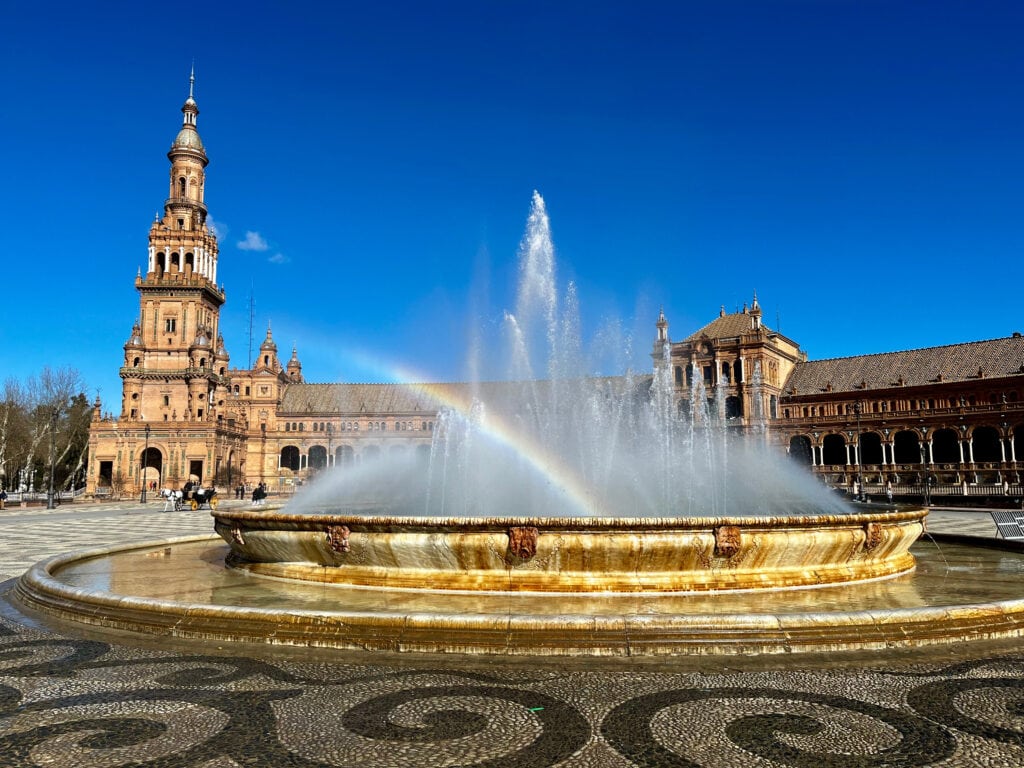
It was the highlight of the visit to Seville for me. When we arrived at the Plaza, I couldn’t help but say ‘WOW.’ Built for the Ibero-American Exposition of 1929, the semi-circular building with a central canal is decorated with colorful tiles representing different regions of Spain. The bridges over the canal lead to the central building, featuring towers, galleries, and a series of benches showcasing beautiful ceramic tilework.

At lunchtime, we bid farewell to Seville and drove back to Malaga. After returning the car at the airport, we checked in for our flight back to Prague.


Enlightening 8-Days Road Trip to Israel 🇮🇱

The decision to go on a road trip to Israel arose while searching for an easily accessible and COVID-regulation-free country in 2022. Our road trip was purely tourist-oriented; it doesn’t adhere to the footsteps of any specific religion. As a result, there may be places we miss that hold significance for certain people. I am pleased that we managed to explore this culturally unique country and I am very hopeful that travel will be possible again shortly.

Practical Insights:

As usual, I checked the visa requirements and found that we do not need to worry. However, it depends on the country of your origin and the passport you hold.

Arrival to Israel:

Upon presenting our passports, we received a printed card instead of a stamp. This card is crucial to keep, as we needed it when checking in at the accommodation and when leaving the country.

Currency:

The currency is the Israeli New Shekel, with an exchange rate of about 1 USD = 3.7 ILS (Dec 2023). ATMs are easily accessible, I recommended to keep some cash. We used it f.e. to pay for parking outside Tel Aviv. But in the majority of the places I paid with my card.

Driving:

Driving around Israel is not difficult; the roads are in good condition, and drivers generally obey the rules. In big towns, drivers can be slightly more aggressive, and honking is a “cultural” habit. It’s recommended to use Waze navigation, which displays speed limits. As always, my recommendation is to drive defensively and let the locals pass by. It is your holiday at the end. 

Petrol Stations:

Finding a petrol station is easy. The challenge is that there are often “fuelmats”, and you can get fuel only by working with the machine, which preauthorizes your card and manages the payment after you finish. It is an easy process until the moment all instructions are written in Hebrew. Fortunately, I have always found someone to assist. 

Parking:

Parking in Israel can be difficult, especially in big cities like Tel Aviv or Jerusalem. There are paid parking areas, but it will cost you. I really recommend everyone to choose accommodation with private and guaranteed parking space. Many hotels will offer parking but they have only limited amount of spots. Therefore I always check customer reviews related to parking when choosing accomodation.

Shabbat:

The Israeli Day of Rest starts on Friday afternoon and continues until Saturday evening. Tel Aviv’s Shabbat differs from Jerusalem; shops are closed in Tel Aviv on Saturday, but the Jaffa beachfront remains lively. Jerusalem is more conservative, with more closed businesses. However, the Arab community’s businesses in Jerusalem remain open. It’s better to be prepared and assume that Saturday is a quiet day.

Mobile Data:

For mobile data, I recommend using the Airalo app, which allows you to download a data e-SIM card for countries worldwide. It’s easy and hassle-free. I activate the data e-SIM in my phone settings upon arrival and I have instant access to the internet. 


Day 1: Tel Aviv – Jaffa

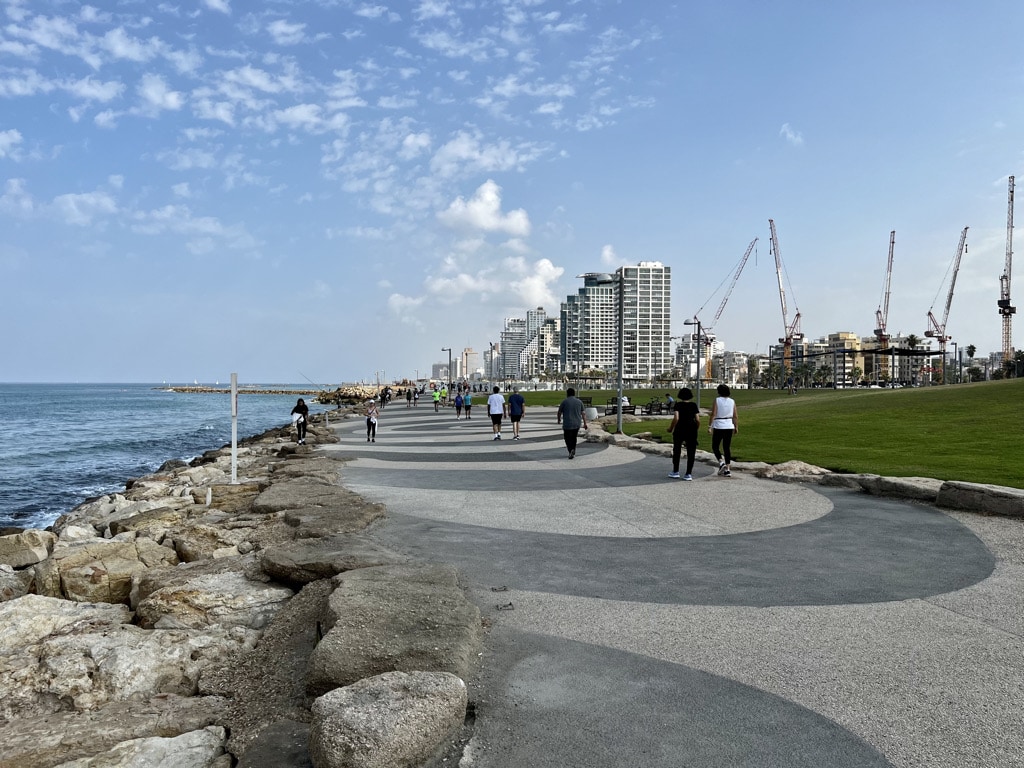
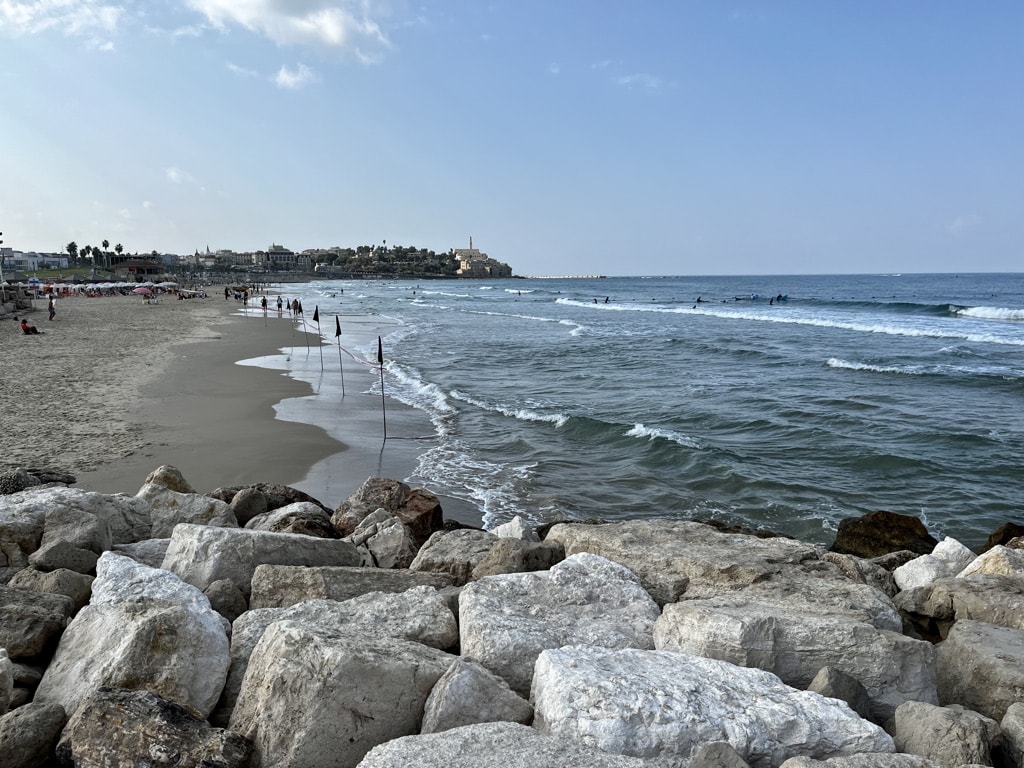
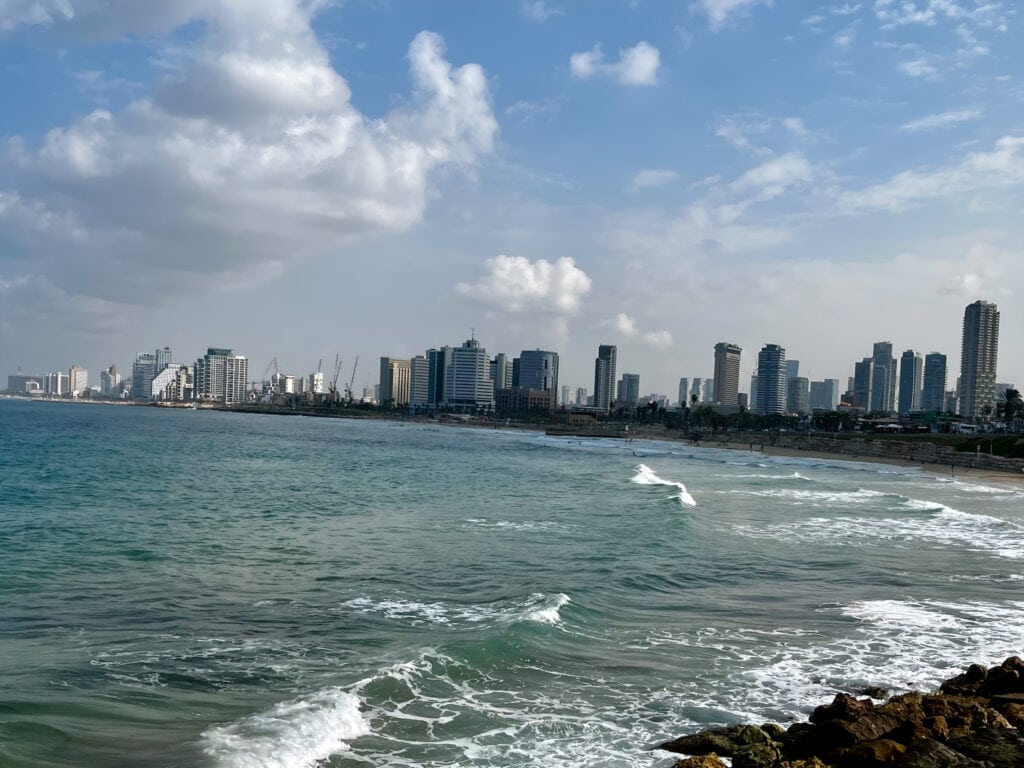
Upon our early morning arrival in Tel Aviv and completion of immigration procedures, we took a taxi to our hotel. I selected the Embassy Hotel Tel Aviv, with 24-hour reception located in very close proximity to the beach. After we woke up, our day started with a walk along the 7km beach promenade, extending all the way to Old Jaffa. It is a favorite among both locals and tourists, providing a great place to enjoy beach activities.

Old Jaffa:

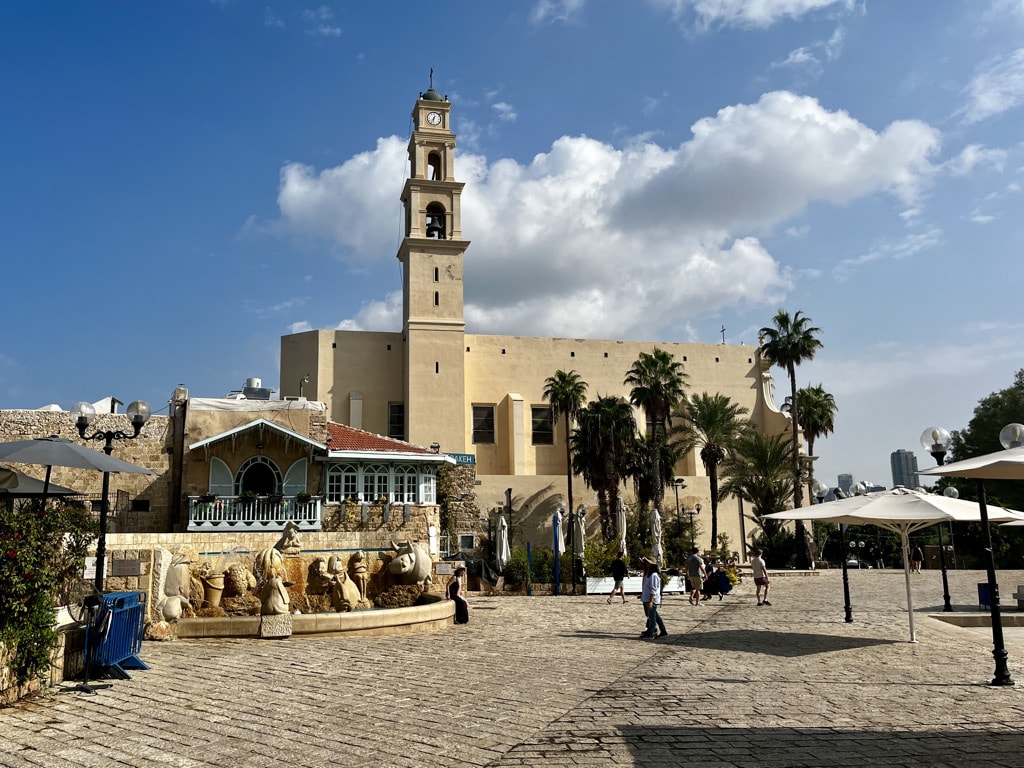
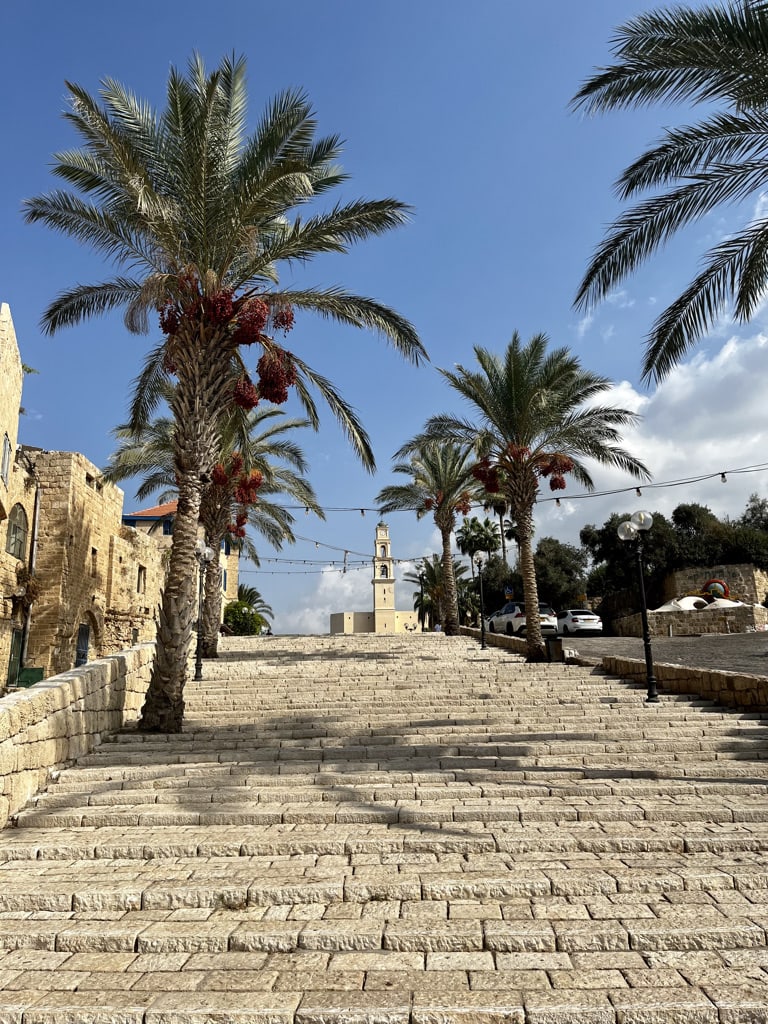
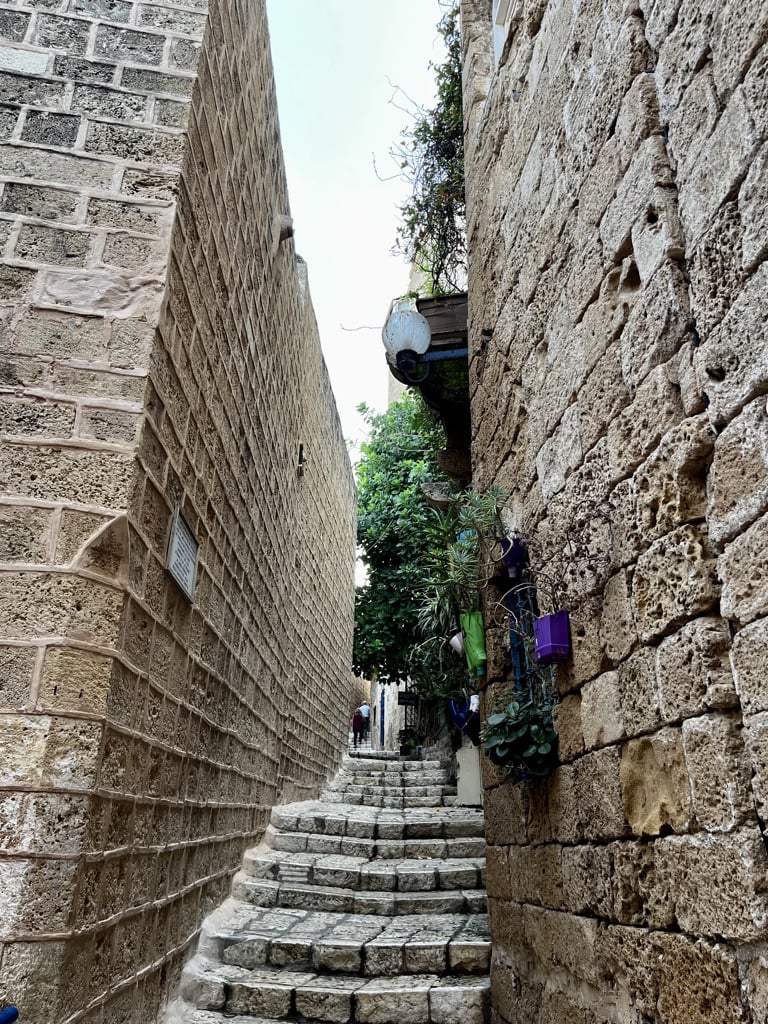
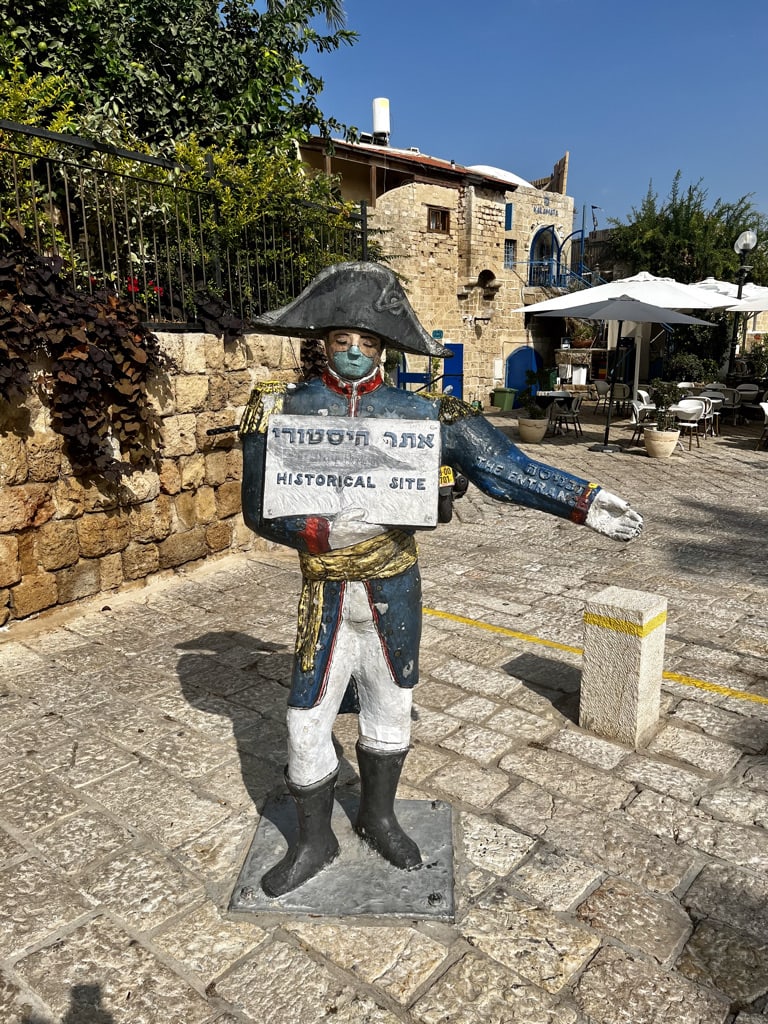
Jaffa is one of the oldest ports in the world, with a history dating back thousands of years. It is mentioned in various ancient texts, including the Bible. Stepping into Old Jaffa takes you to a different era compared to modern Tel Aviv. We walked past ancient houses, passing by galleries, and small shops. The main square is dominated by the Clock Tower. There were seven Clock Towers constructed in Ottoman Palestine. The additional towers are placed in Safed, Acre, Nazareth, Haifa, and Nablus. The one in Jerusalem was destroyed.

Following our exploration of Old Jaffa, we walked back to the beach promenade, continuing towards Neve Tzedek—the initial Jewish neighborhood established outside Jaffa. Navigating through the town, we eventually returned to our hotel.

The Beach

The rest of the day we spent on the beach, where the rental of beach chairs and umbrellas was well organized. We approached a vending machine, chose the desired quantity of chairs and umbrellas, completed the payment via card, and received a printed receipt. We then handed the receipt over the the beach attendant to get settled at our beach spot.

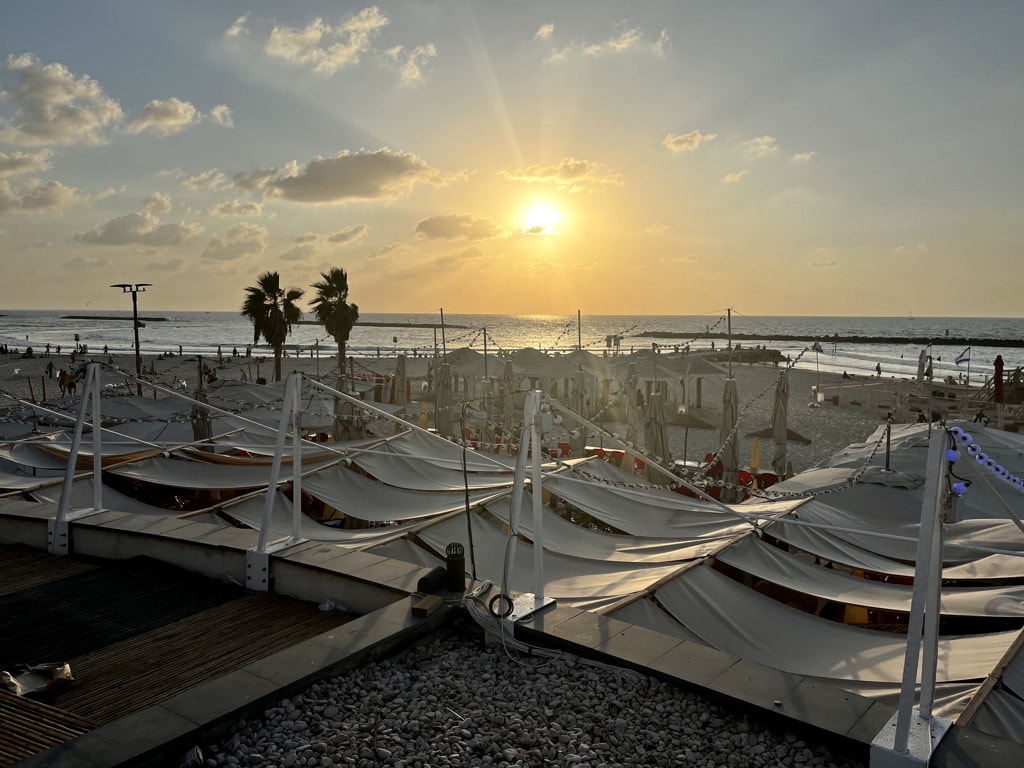
Sunset on the beach, Tel Aviv - Yafo

Day 2: Tel Aviv – Akko – Haifa

Tel Aviv-Yafo – Acre (Akko): 114km, 1,5 hour

It was time to hit the road the next day. I rented a car from Hertz and picked it up from their city office, just about a 10-minute walk from our hotel.
We loaded our suitcases and started to drive. I put on the Waze navigation and the funny thing happened – it started to speak Hebrew 😀. The lesson learned: adjust your navigation settings before hitting the road. Navigating out of Tel Aviv and onto the highway, my daughters took charge of my phone and resolved the language issue.
The navigation directed us to a parking area situated right behind the walls of the Old City. The parking was free of charge.

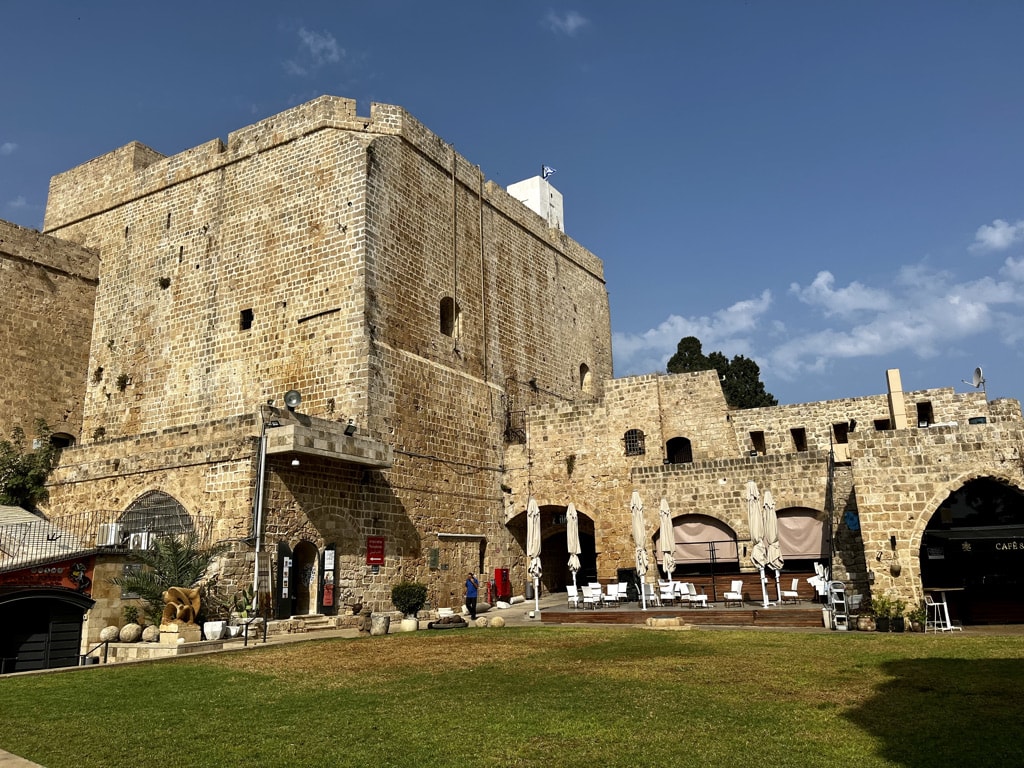
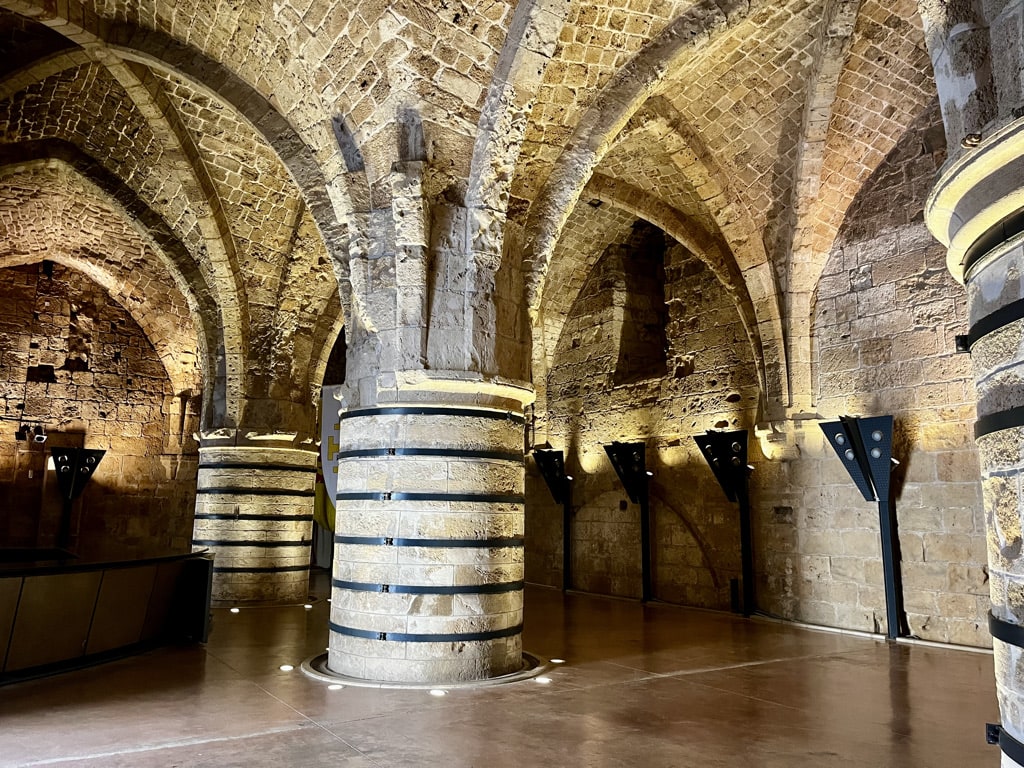
Akko is the local Hebrew name for Acre. It is one of the oldest continuously inhabited settlements on Earth. It played a crucial role during the Crusader’s times. The most important place to see is the Knights Hall.

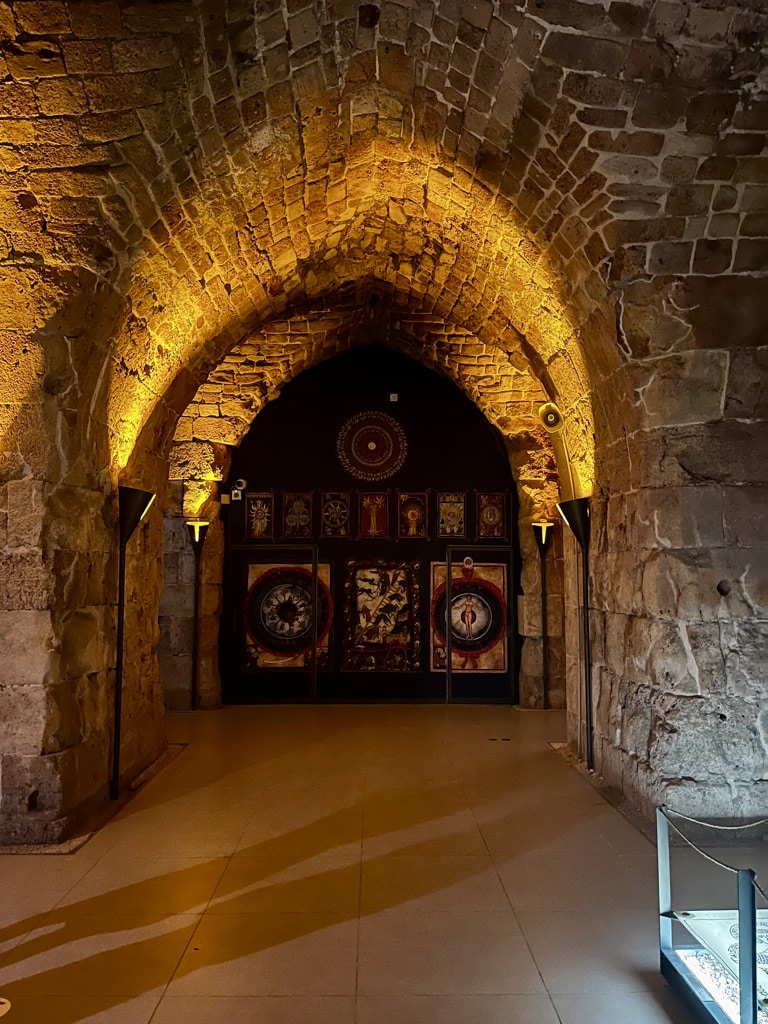
The Knights Hall
This Fortress and the nearest buildings functioned as a hospice and a hospital for the many pilgrims who came to the Holy Land during the Crusaders period in the 12th and 13th centuries.
It was awarded a World Heritage Site by UNESCO.

As we were visiting after the Covid pandemic, I didn’t organize tickets to enter the upfront. We arrived and bought it on the spot. It is, nevertheless, something that I would consider looking into if I planned the trip again.

We obtained the headphones and explored the fortress at our own pace while listening to the history of this awesome place.

After visiting The Knights Halls, we walked through the Old Town and found a great street food place to enjoy the local food. 

The Turkish Bath House:

Our visit transported us back in time to when this place served as the social center of the city. The citizens used to gather here to exchange the latest gossip.

The Templars Tunnel:

This is a must-see attraction. The 150-meter-long tunnel extends from the Templars fortress in the west to the city’s port in the east. There was great sea view once we reached the end of the tunnel

After exploring Old Akko, we set off to reach our accommodation in Haifa. 


Day 3: Haifa

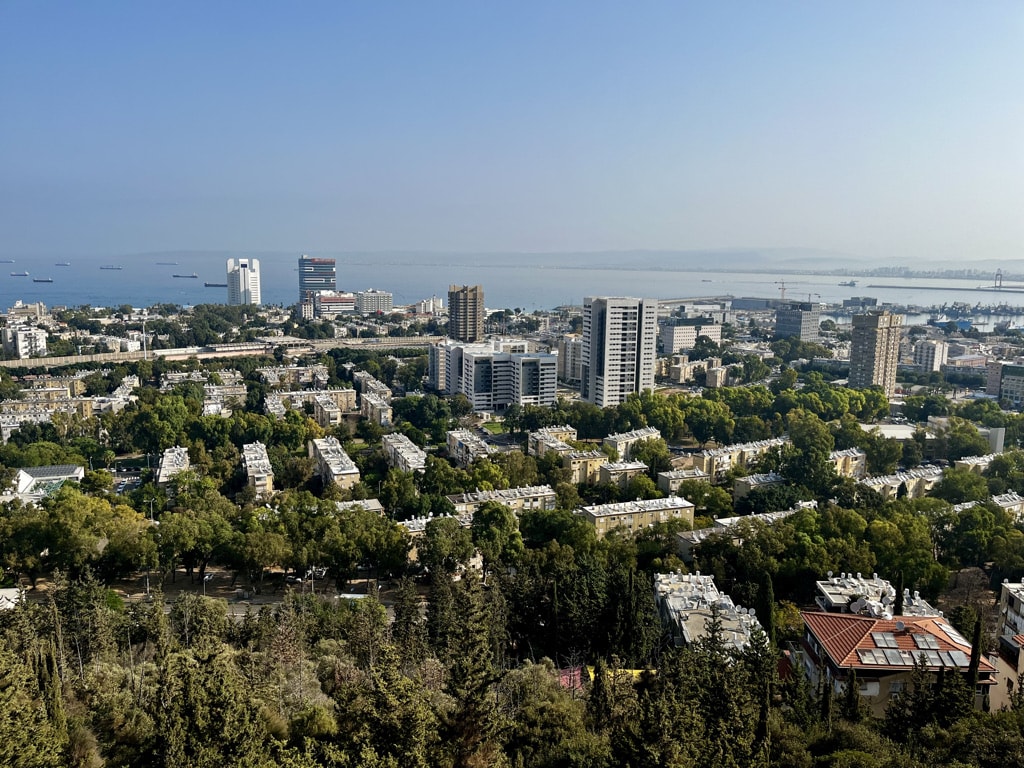
The reason I chose to stay in Haifa for a day was to explore a few landmarks in the city and enjoy some time on the beach. Haifa, the third-largest city in Israel, stretches from the Mediterranean up the north slope of Mount Carmel.

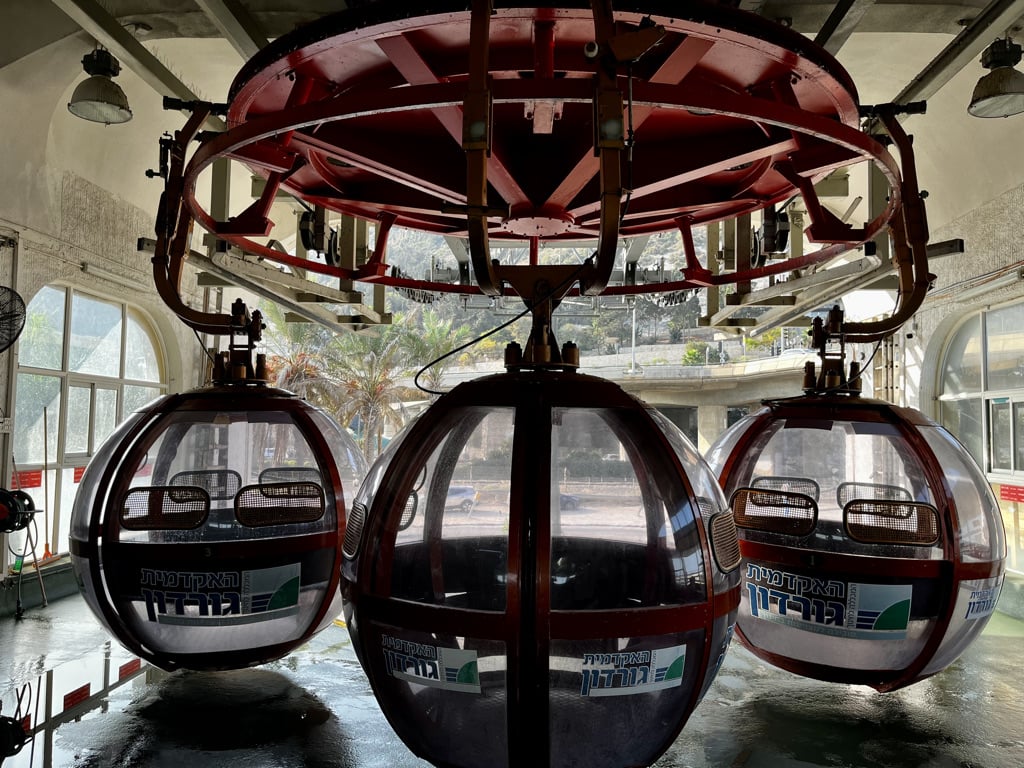
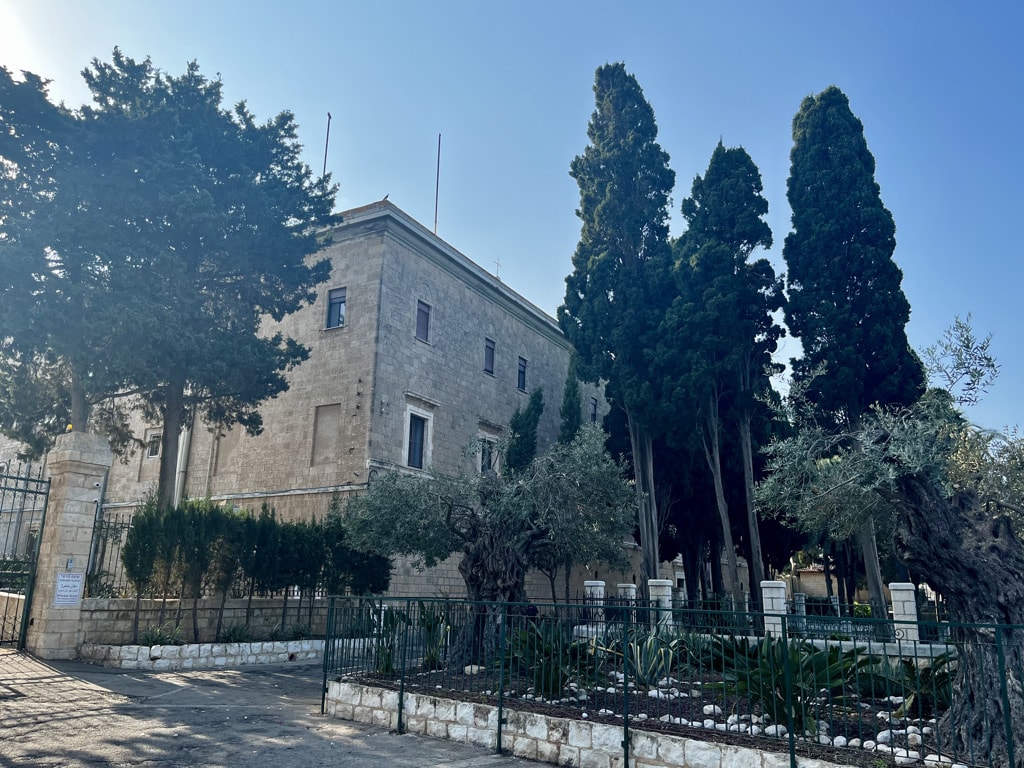
Our day began with a ride on the Haifa Cable Car, ascending Mount Carmel to visit the Stella Maris Monastery.

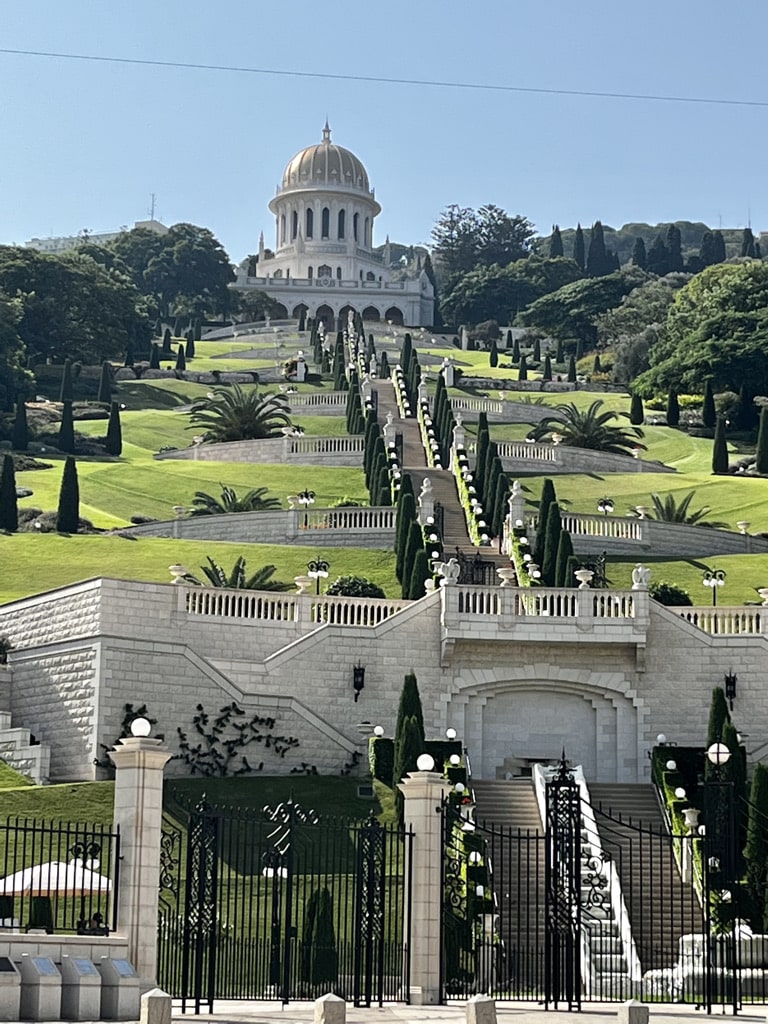
The Bahá’í Gardens in Haifa

From the mountain’s peak, we decided to walk down towards the middle of the Baha’i Gardens, assuming there was an entrance. It turned out to be quite a walk. Disappointment struck when we discovered that the gardens were closed to the public on Monday, contrary to information provided on various websites. Perhaps the opening hours were adjusted during the Covid time, but this information was not reflected on the official websites.

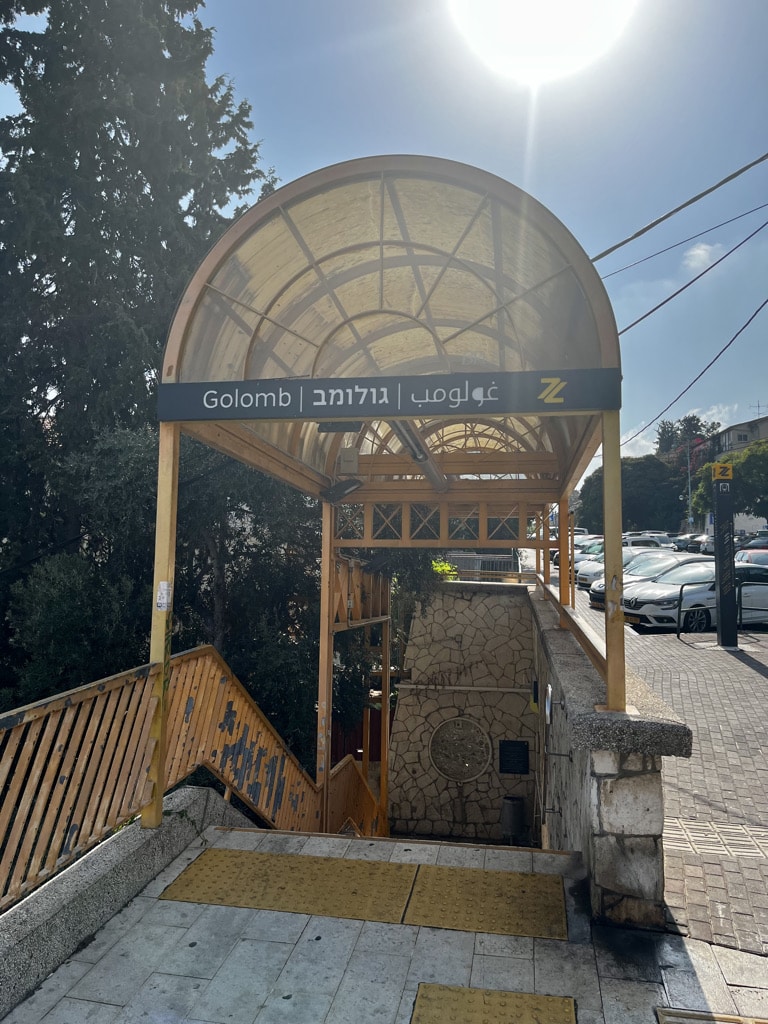
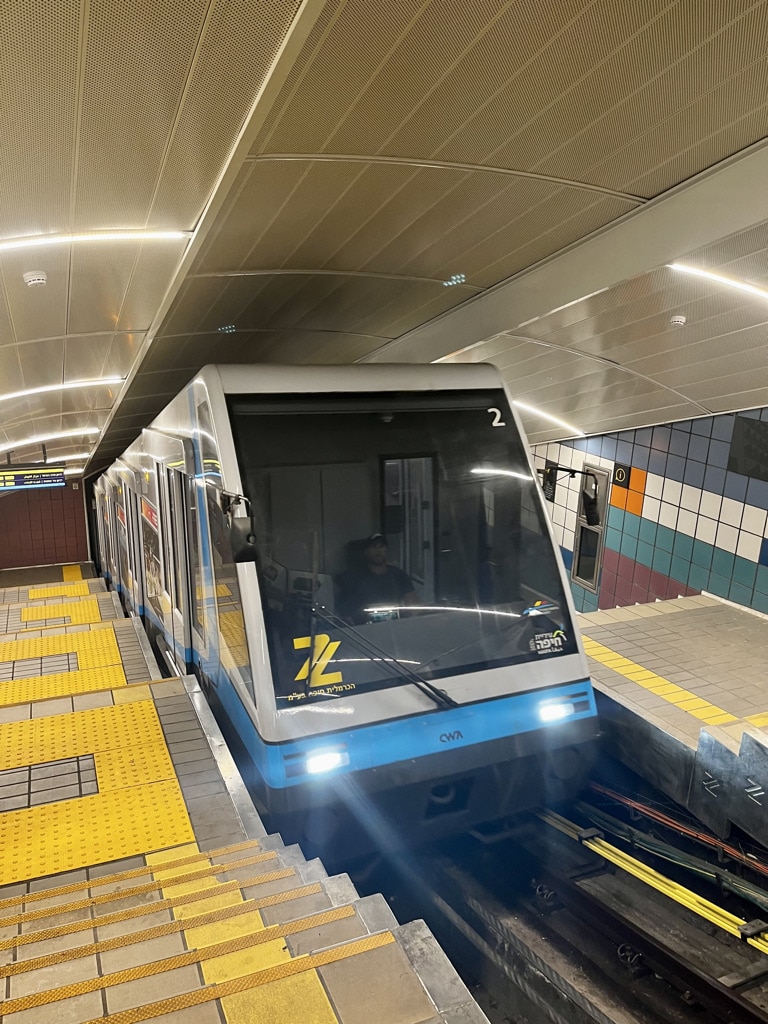
As, we couldn’t explore the gardens, we decided to experience at least the Carmelit, the underground funicular railway. After a bit of a struggle to locate the nearest station and some walking, we finally reached Golomb station and took the ride to the center of town.
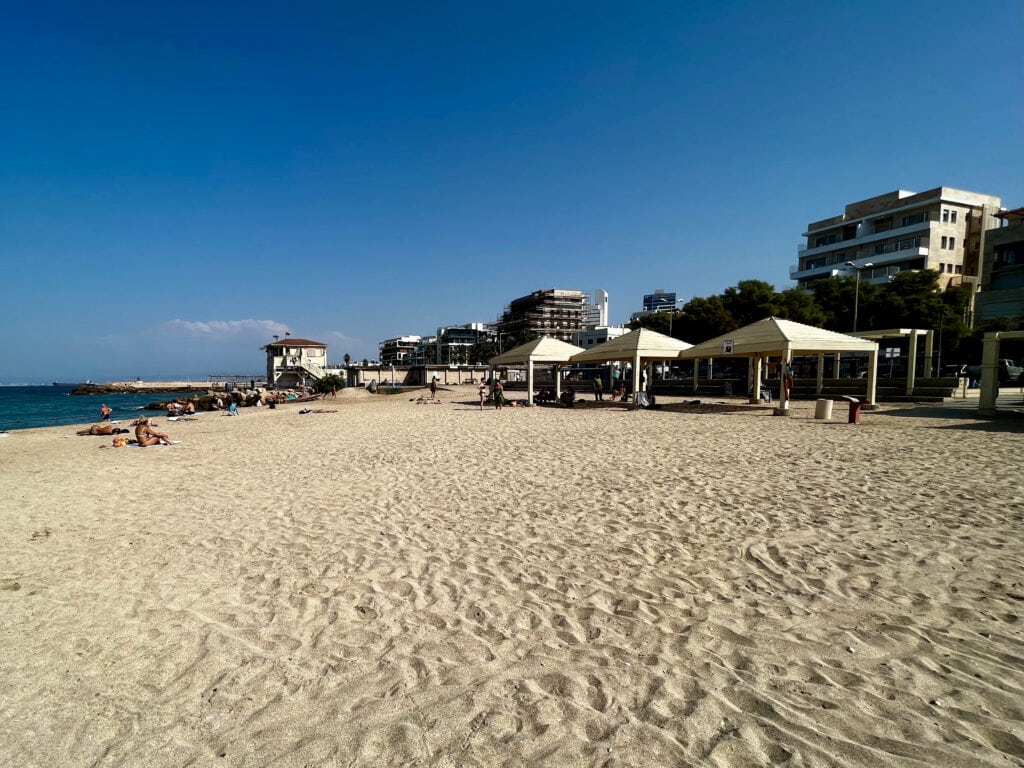
Upon returning to our accommodation, we packed up and spent the rest of the afternoon at Bat Galim Beach.


Day 4: Nazareth – Gan HaShlosha National Park – Jerusalem

Nazareth

Haifa – Nazareth: 45km, about 40min

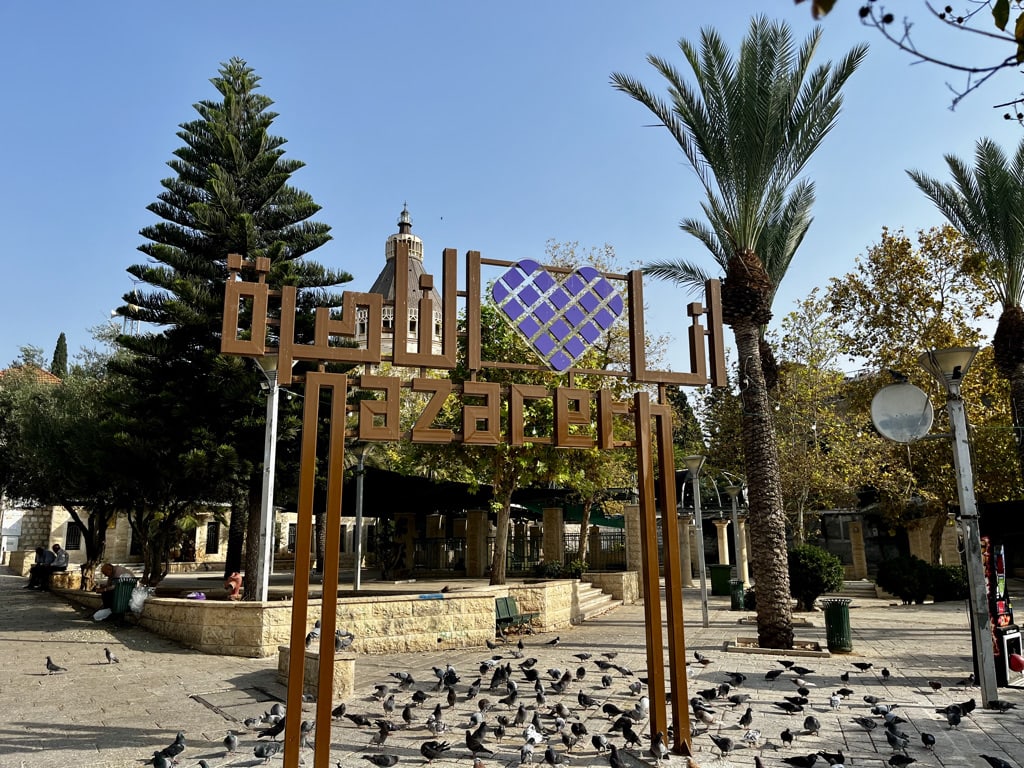
It was time to pack up in the morning, leave Haifa behind, and continue on our journey. The first destination of the day was Nazareth, the town of Galilee and the home of Mary, the mother of Jesus, as mentioned in Luke’s Gospel.

The city center of Nazareth is situated in a flat area, but the town extends to the hillside. Due to traffic conditions, or another reason, Waze navigation directed us to the hillside before guiding us to the city center. The inclines were steep, streets very narrow with numerous curves and blind spots, making the drive down a true adventure itself.

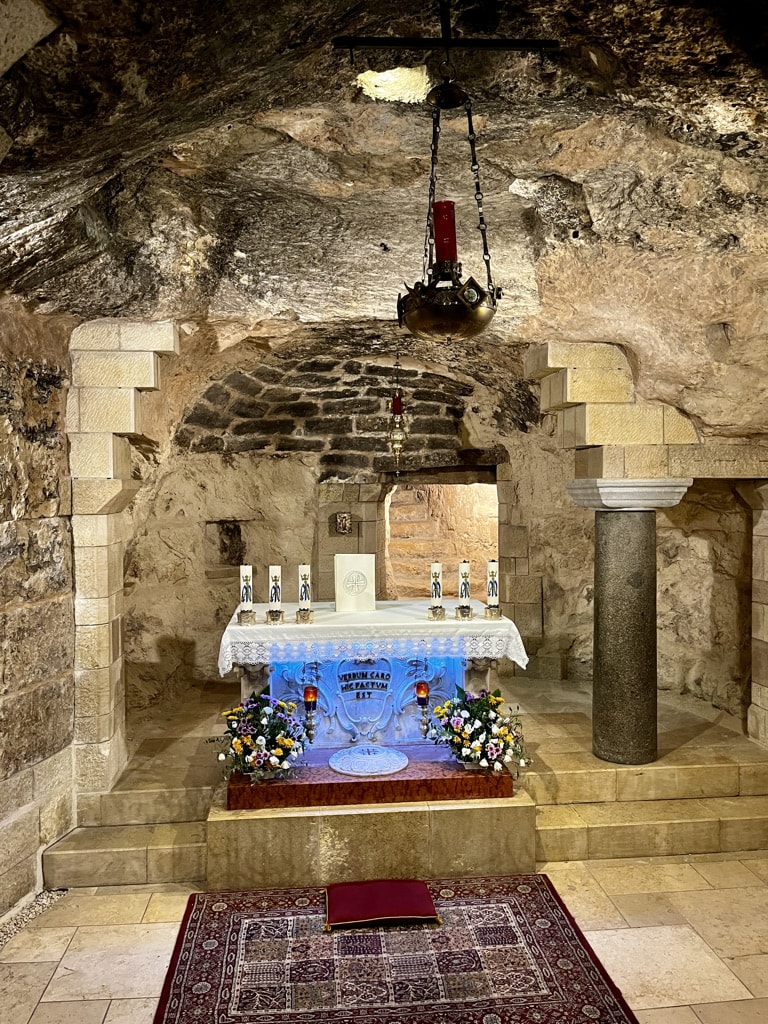
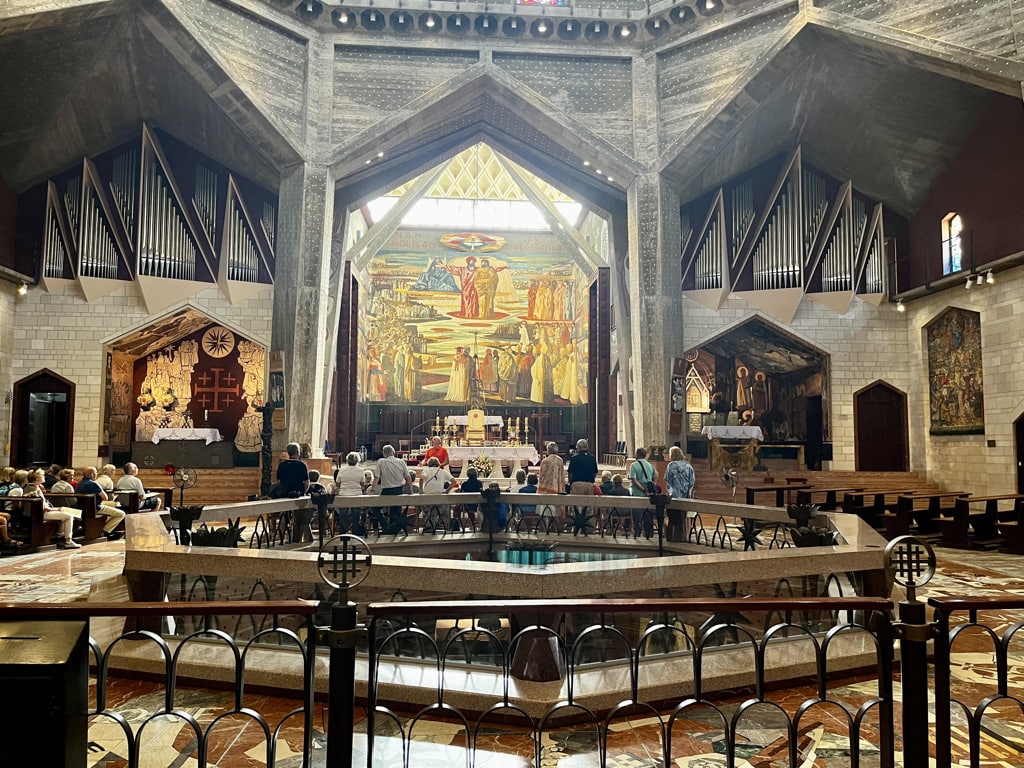
The house of Mary foundations in the Basilika of the Annuciation, Nazareth
The house of Mary

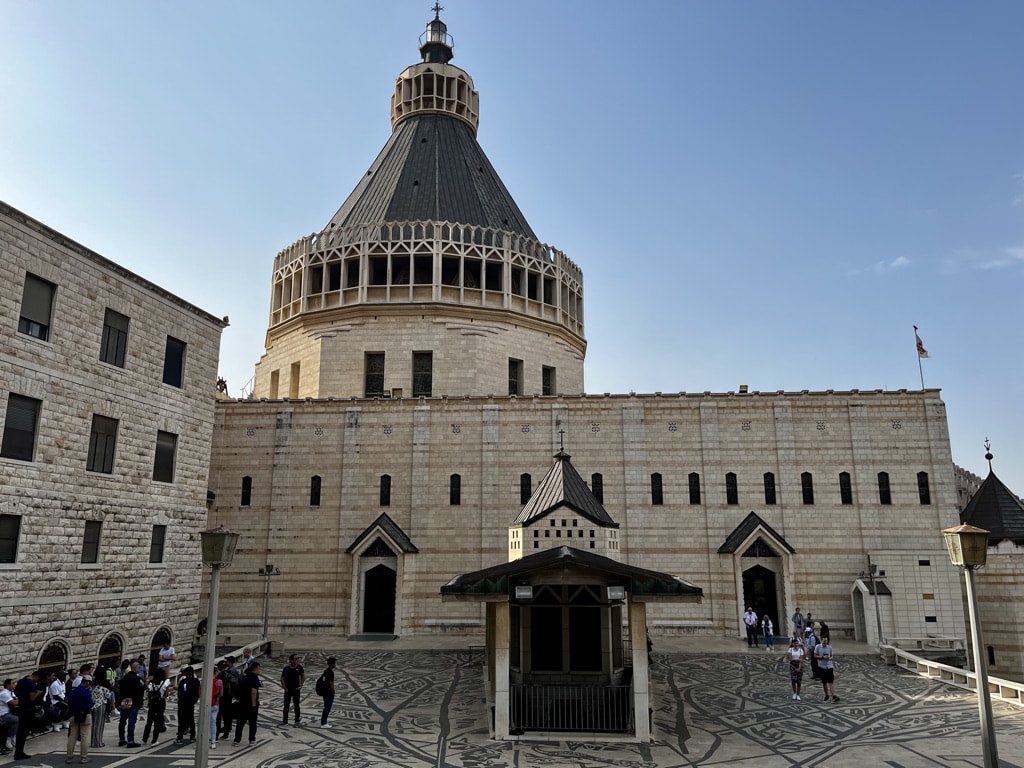
We parked in one of the private lots close to the main attraction, the Church of the Annunciation. This church is one of two contenders for the site of the Annunciation, where the angel Gabriel is believed to have appeared to the Virgin Mary, announcing the birth of Jesus. The church is believed to be where the house of the Virgin Mary originally stood.

Gan HaShlosha National Park

Nazareth – Gan HaShlosha park: 35km, 40min

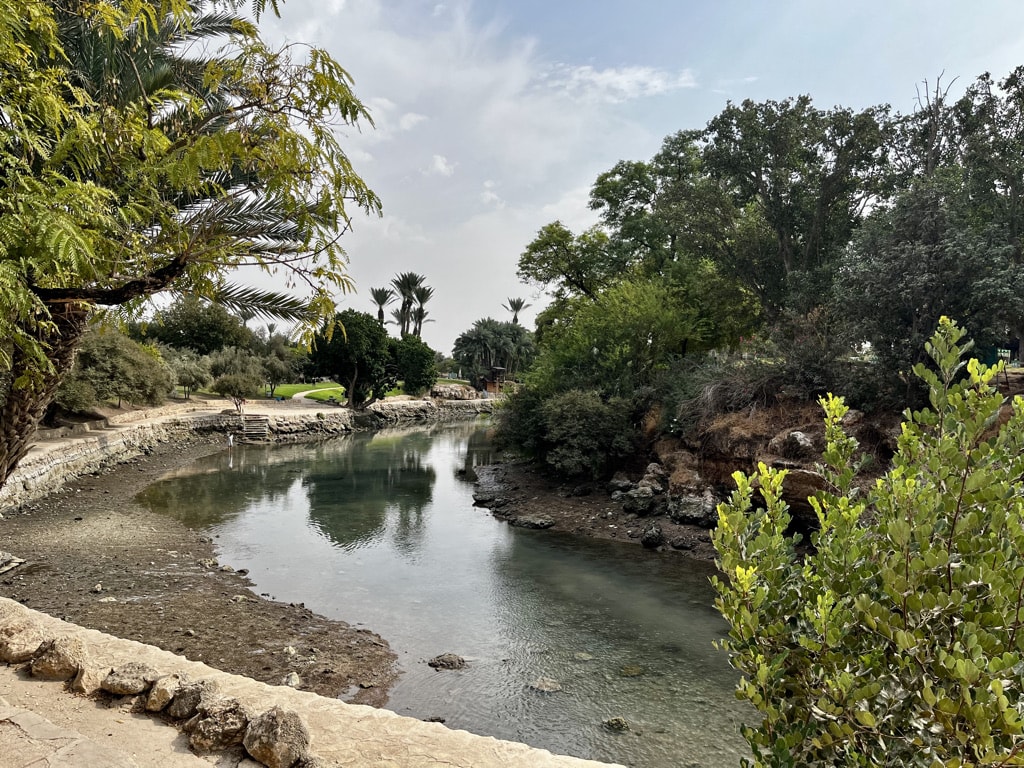
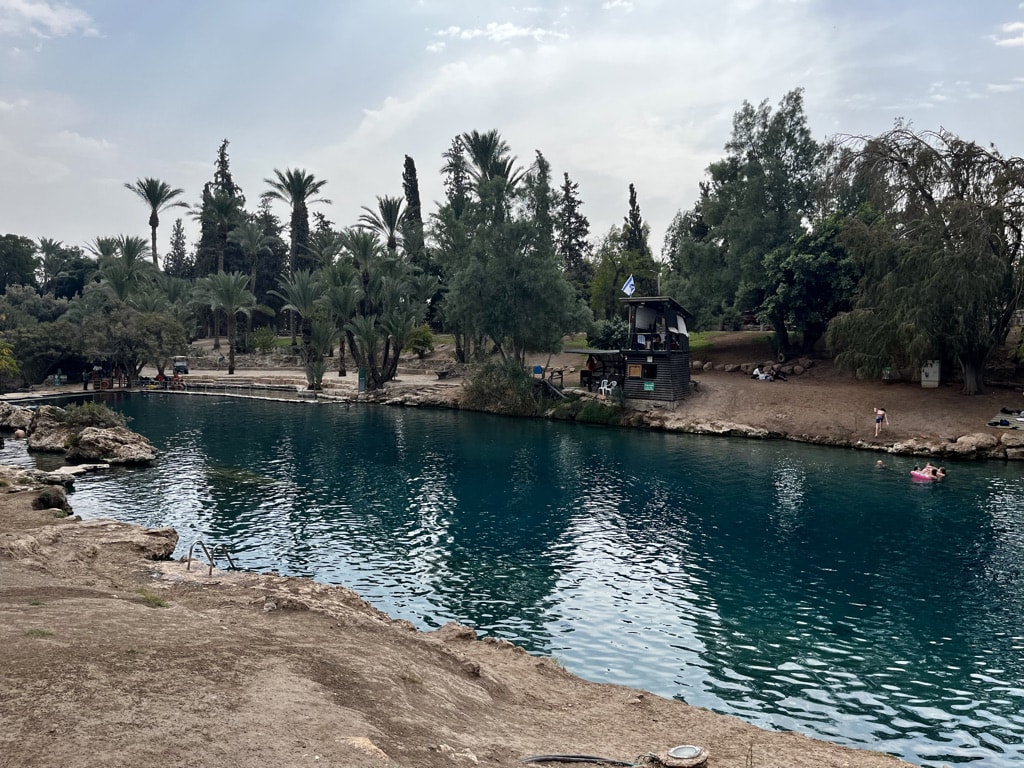
Around lunchtime, we found ourselves at a crossroads, needing to decide our next destination. We had two options: continue towards the Galilee Lake or explore Gan HaShlosha National Park with its naturally warm water lakes. While I would assume that the majority of tourists would choose option 1, we opted for option 2.
The lakes at Gan HaShlosha were amazing. We had a picnic lunch under the trees, swam in the lakes, and enjoyed the sun. It became evident that this is a destination not frequented by many tourists, as the majority of visitors were local.

Gan HaShlosha National Park – Jerusalem: 155km, 2h 15min

The final destination for the day was Jerusalem. I set up the navigation, and we hit the road, anticipating a journey of about 1.5 hours. However, reality proved a bit more complex. After driving for approximately 20 minutes, we reached the West Bank border. It was then that I realized the remainder of the trip would continue through West Bank territory. This didn’t seem like the right option, not only for security reasons (considering it was me with my two daughters in the car) but also because of concerns about the validity of the rental car insurance in the West Bank.


I made the decision to turn around, facing the challenge that both Waze and Google Maps insisted on the West Bank route. To outsmart the navigations, I input Haifa as our destination and, after about 30 minutes of driving, switched it to Jerusalem. This strategy worked, as the navigation found a route via the Yitzhak Rabin Highway (Route 6), and late that evening, we finally arrived in Jerusalem.

The most crucial aspect of planning our stay in Jerusalem was securing accommodation with guaranteed private parking. I dedicated a substantial amount of time to this search, and it proved to be a worthwhile investment.

Given the busy nature of Jerusalem, I couldn’t imagine arriving in the evening and attempting to find parking—it would be a “mission impossible” task. During my search, I also took into account reviews from other people. While I came across places offering private parking, the reviews often discouraged me, with many indicating that the parking was tight and difficult.
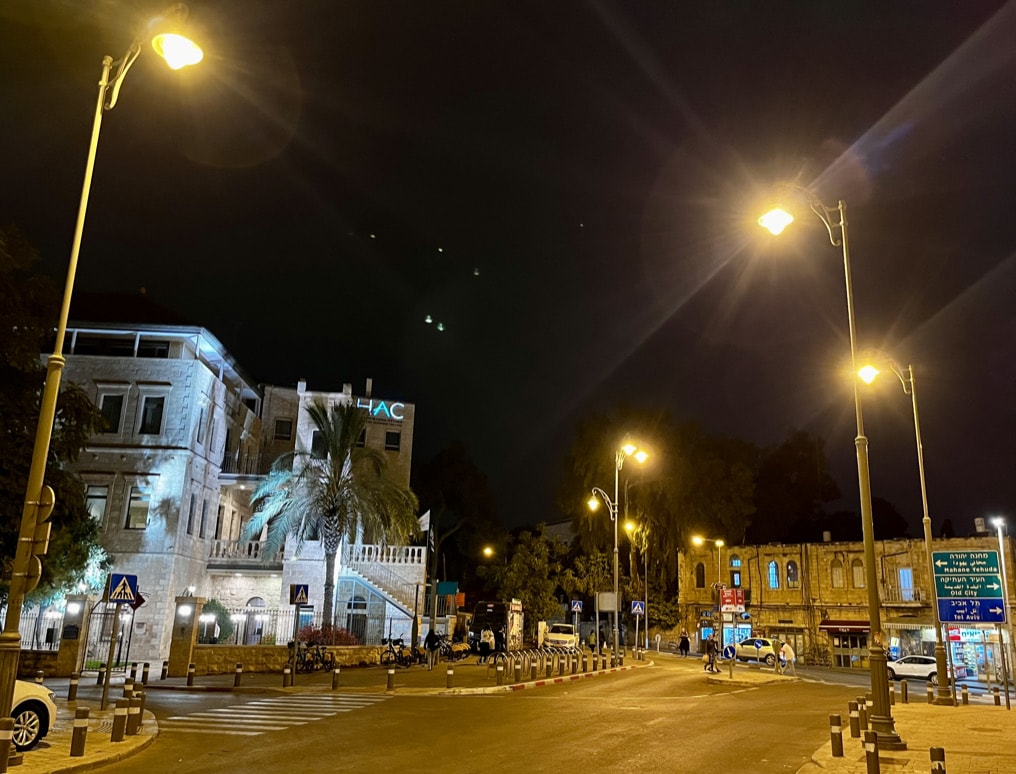
I consider myself fortunate to have found The Haneviim Court – Isrentals apartments. The building had a spacious, easily accessible underground garage, making parking hassle-free. Additionally, the apartment was located approximately a 10-minute walk from the Jerusalem Old City—a perfect and convenient place to stay.

Evening in Jerusalem

Day 5-6: Exploring Old Jerusalem

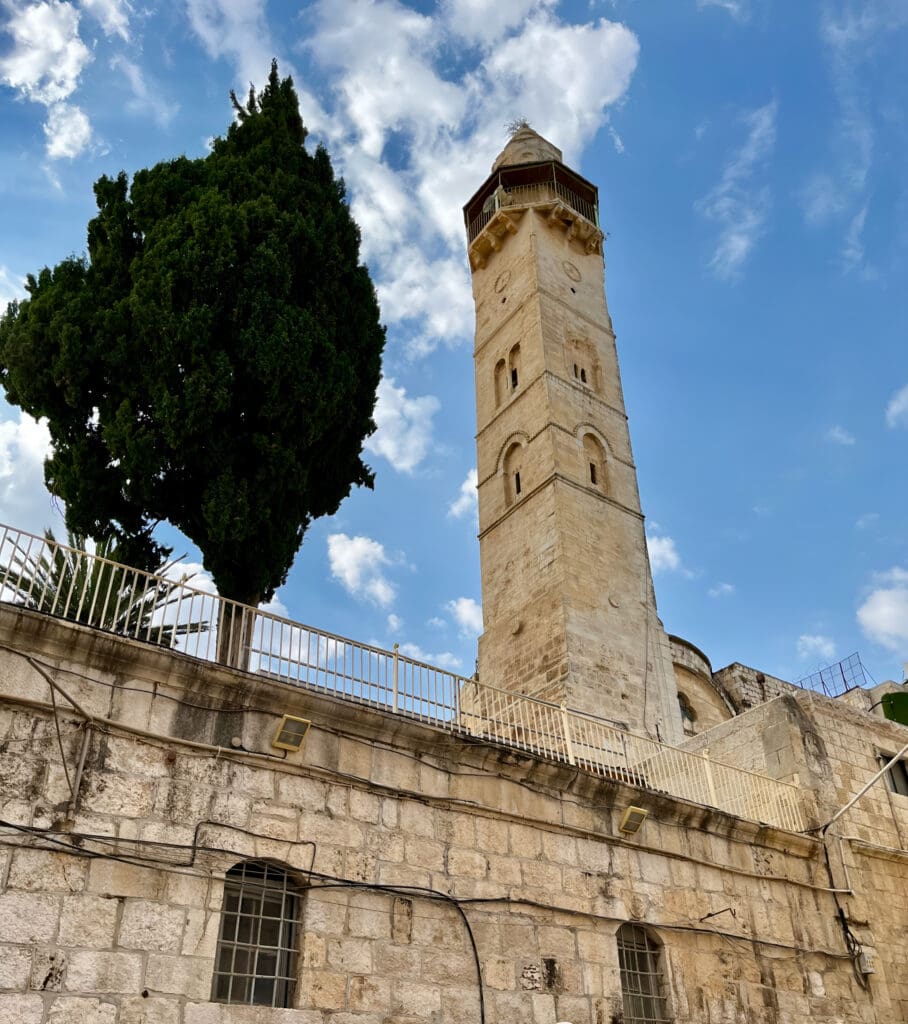
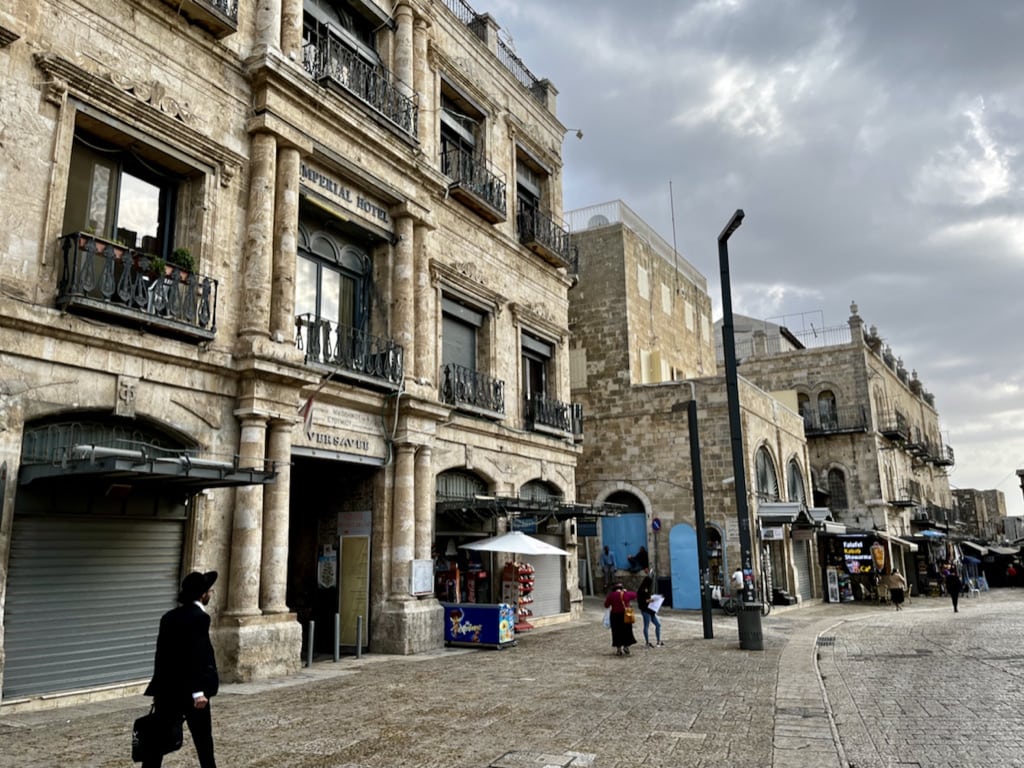
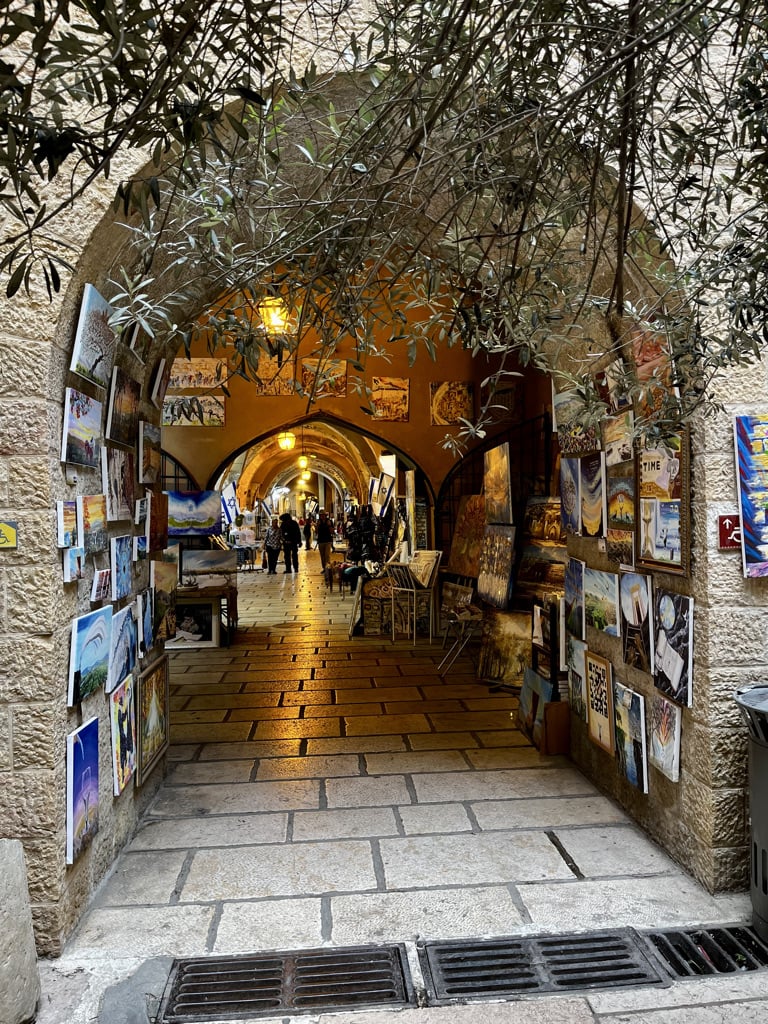
The moment we stepped into Old Jerusalem, we felt like we had entered a different world. The city is divided into four quarters: The Jewish Quarter, The Armenian Quarter, The Christian Quarter, and The Muslim Quarter. Each quarter is unique

The Christian Quarter:

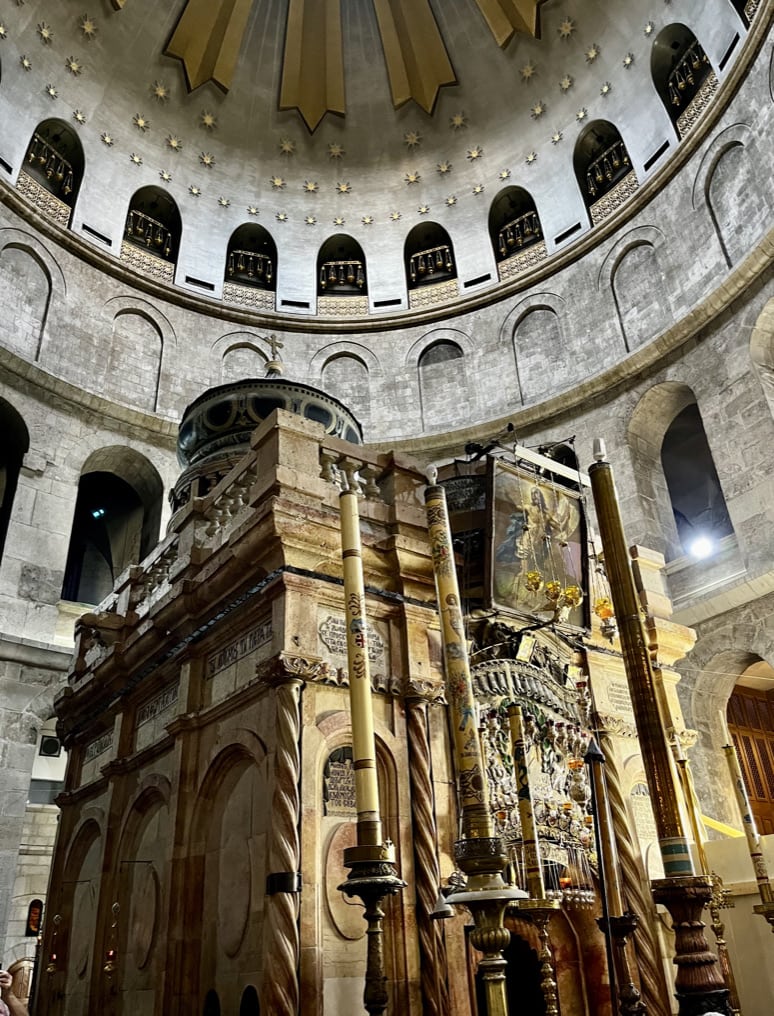
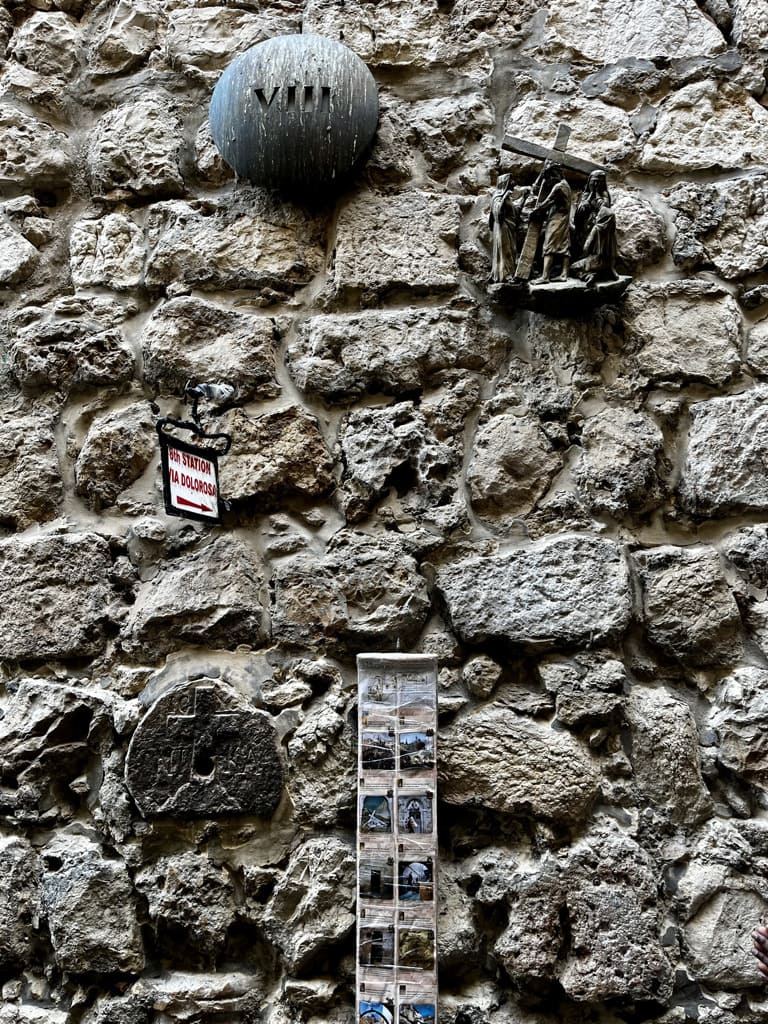
With the Via Dolorosa, the path that Jesus took, compelled by Roman soldiers, on his way to crucifixion. We met numerous prayer groups walking from one station to another along this path. The journey concludes at the Church of the Holy Sepulchre, considered the holiest site for Christians worldwide, housing Jesus’s empty tomb, where he was buried and resurrected.

The Jewish Quarter:

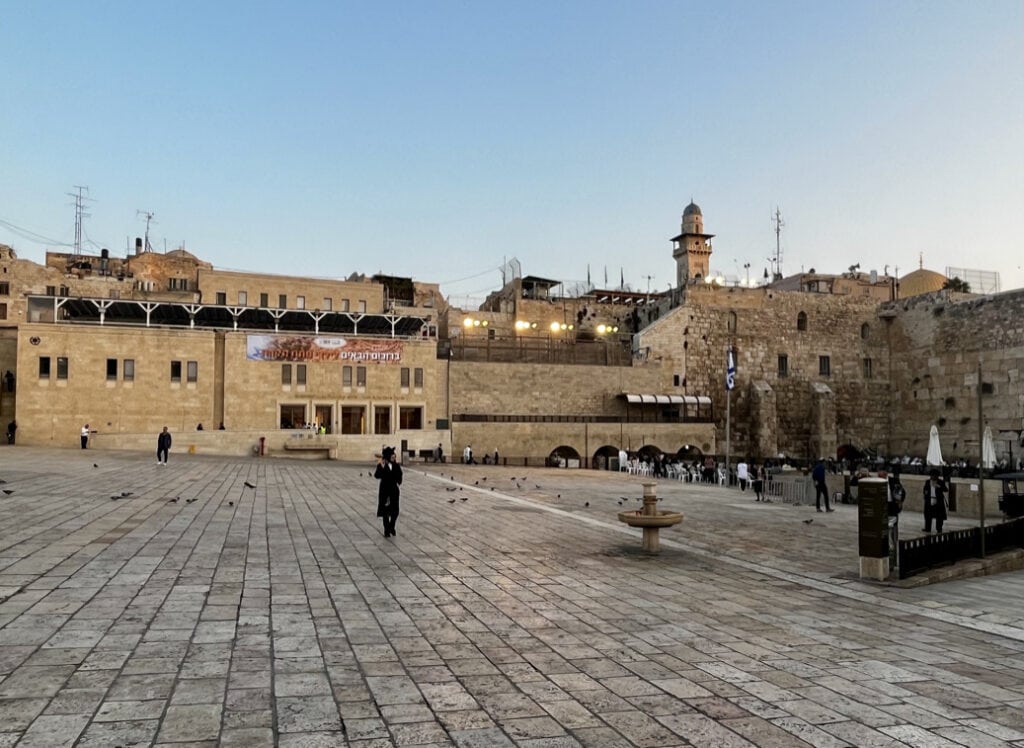
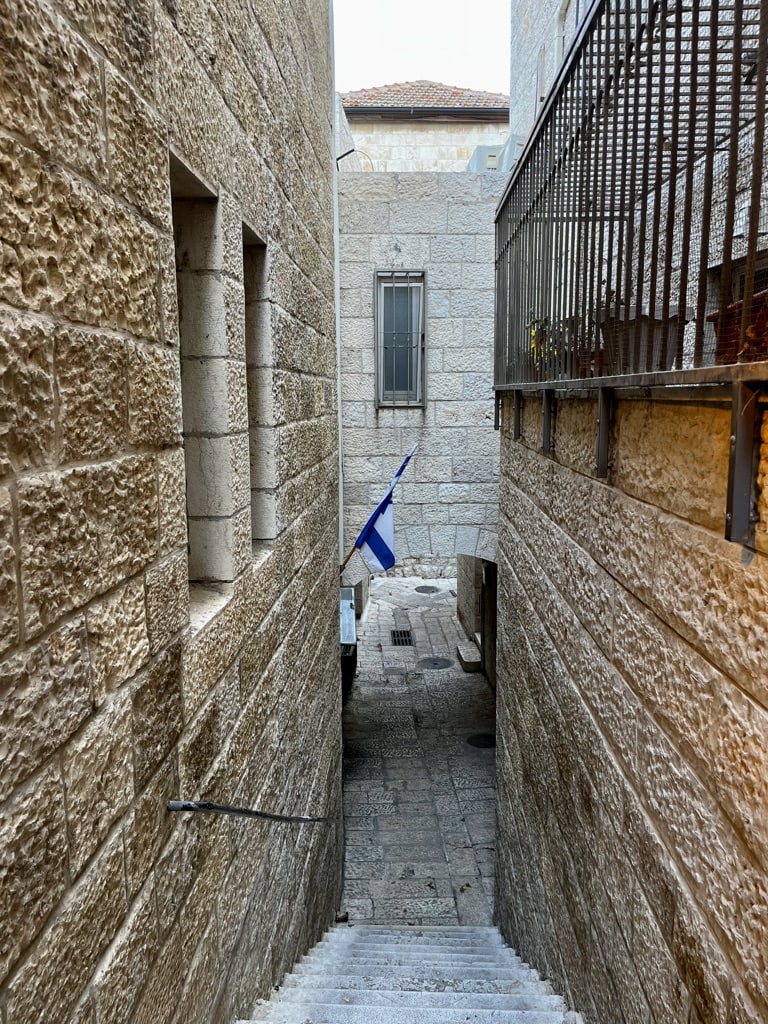
This quarter represents calmness, characterized by houses of Ultra-Orthodox Jewish families leading their everyday lives. 

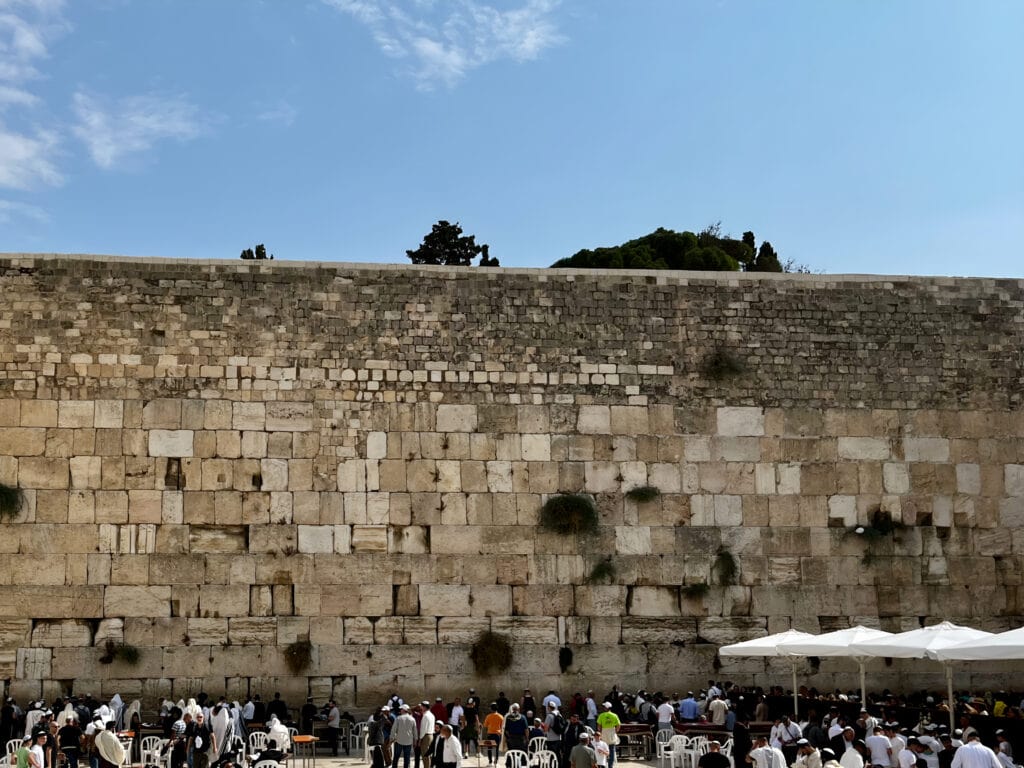
The Western Wall Plaza, home to the famous Western Wall, is situated here. The areas for men and women are segregated, to approach the wall, one must choose the appropriate area. 

Unfortunately, we missed the Western Wall Tunnels as tickets for the days we were in Jerusalem were sold out.

The Muslim Quarter:

It is characterized by bustling streets and vendors offering a variety of products. As the largest and most populous of the four quarters, it stretches from the Lions’ Gate in the east, along the northern wall of the Temple Mount in the south, to the Damascus Gate—Western Wall route in the west.

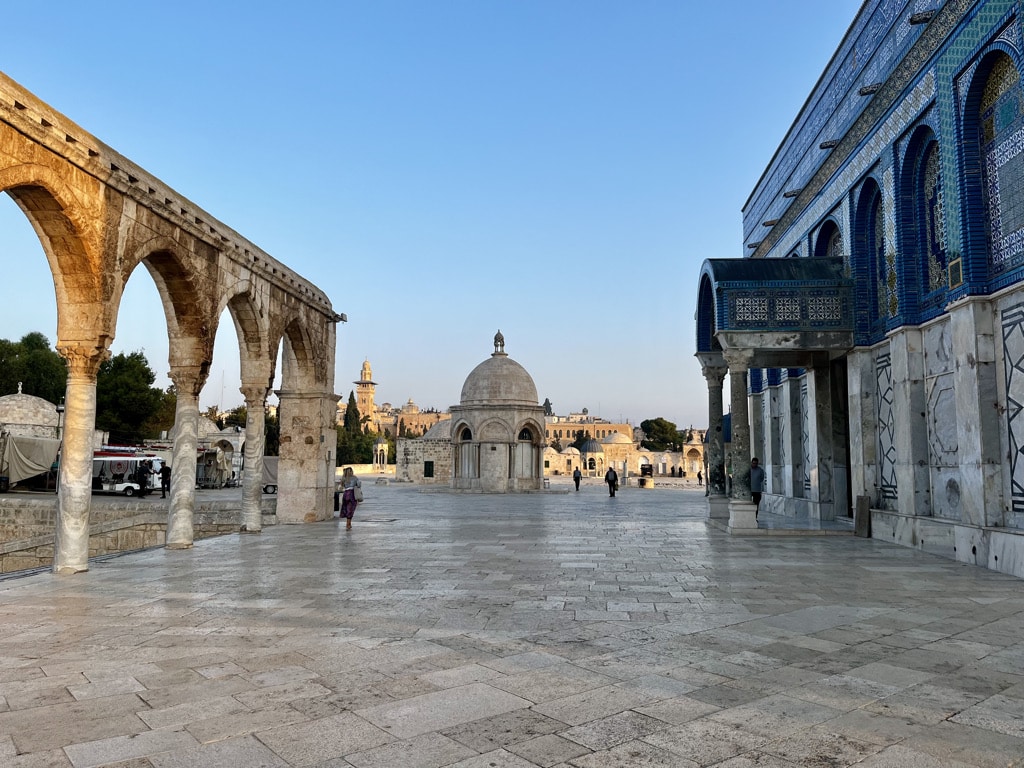
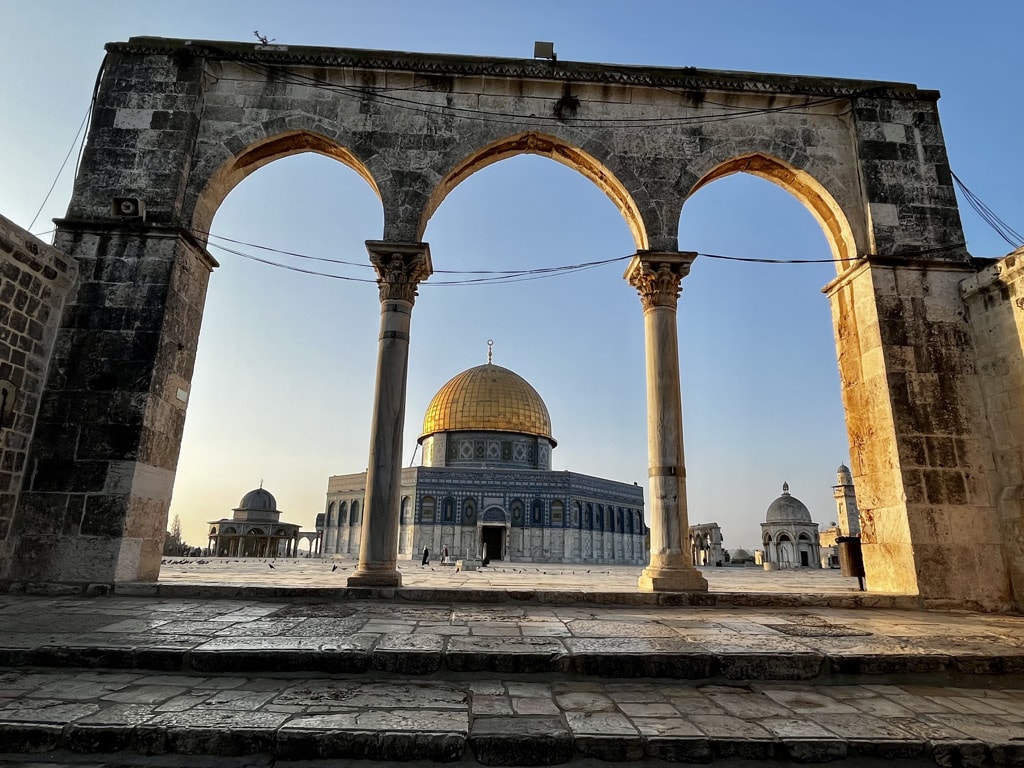
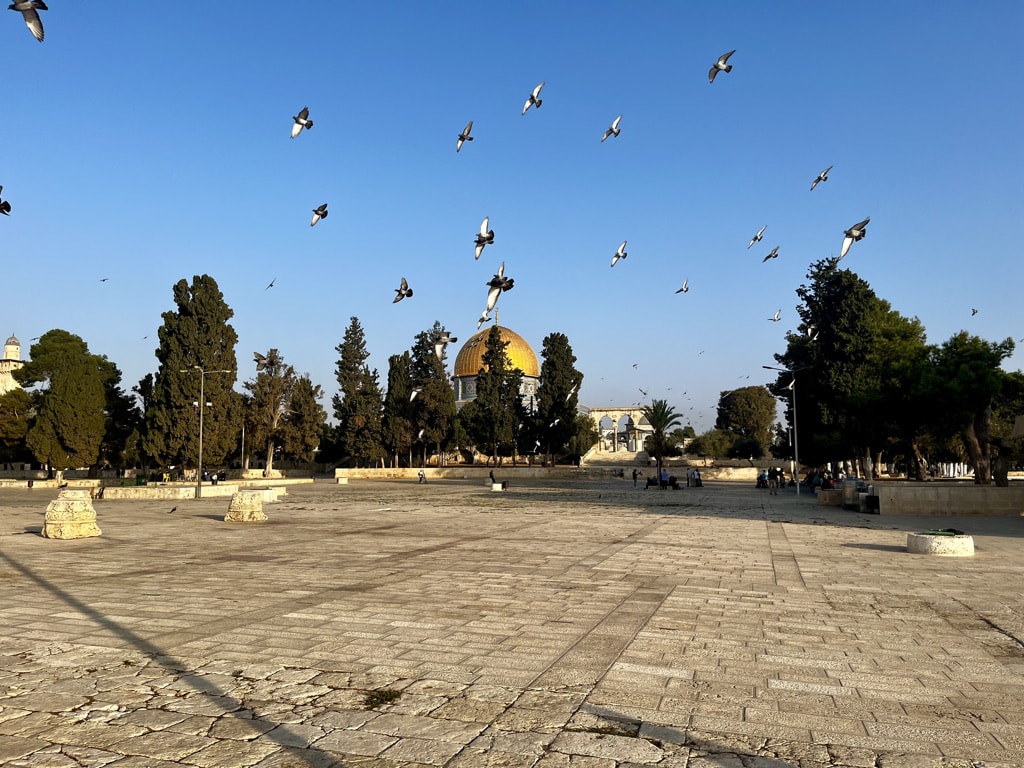
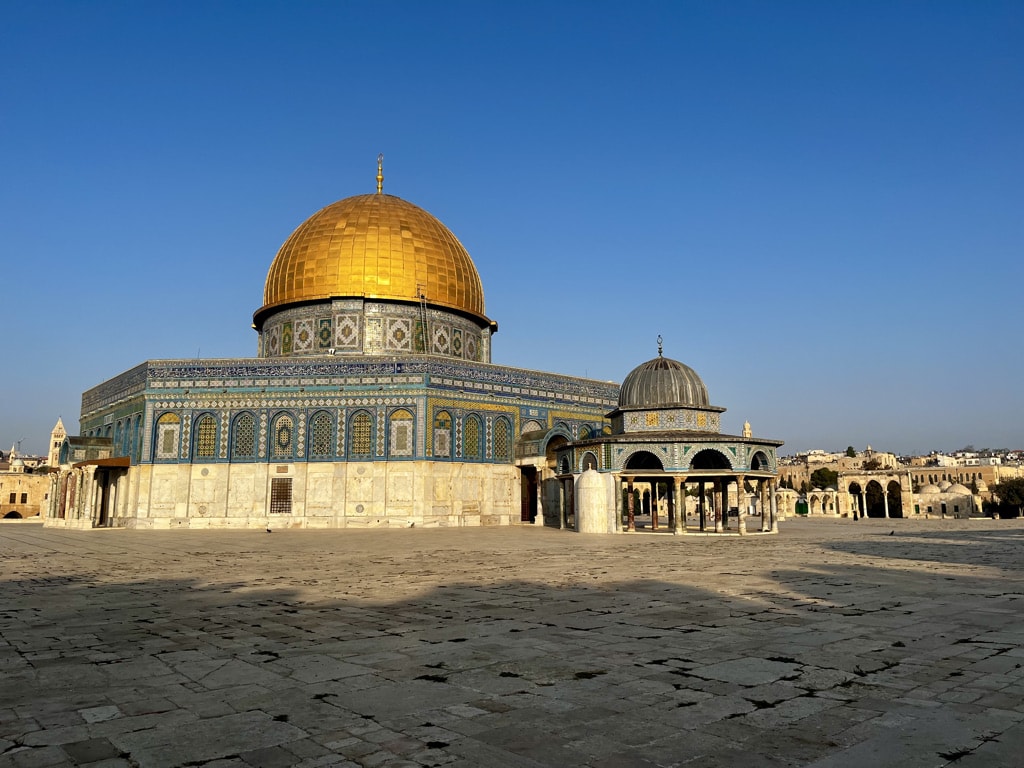
The Temple Mount:

As the third holiest site for Muslims after Mecca and Medina, it’s a must-see place. Access is limited to certain days and hours. While we couldn’t make it on our first day, we woke up early on the second day for an amazing experience. Walking through the empty streets of Old Jerusalem around 7 am, we reached the Temple Mount as some of the first visitors. This allowed us to experience and absorb the unique vibe of this place.

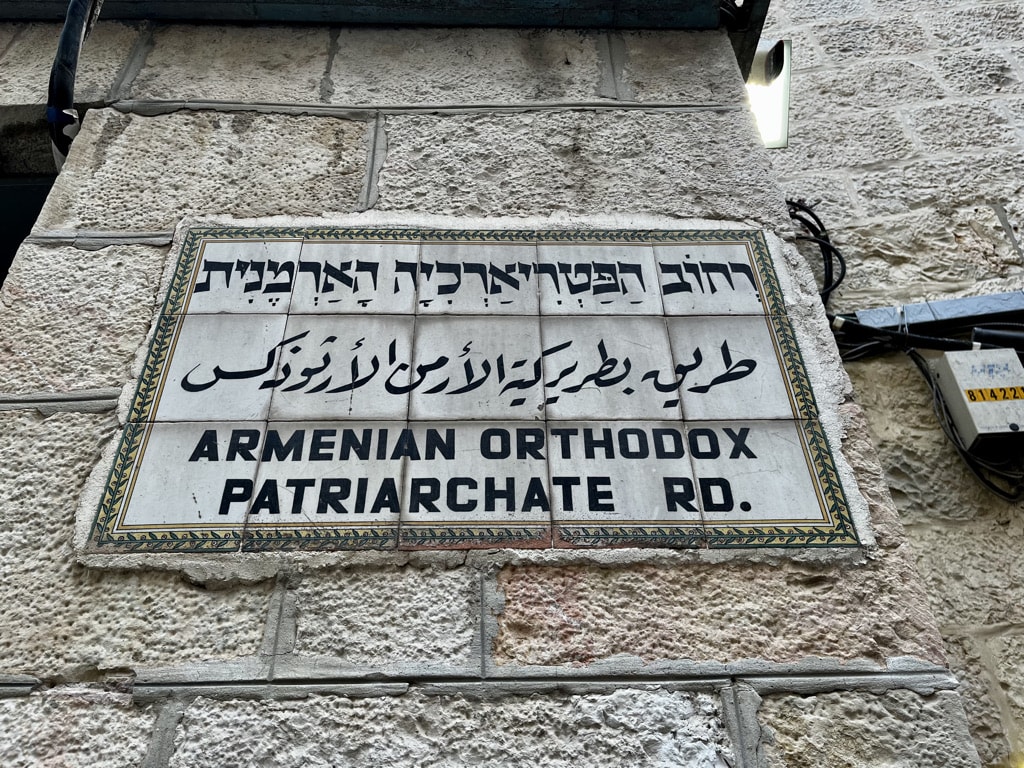
The Armenian Quarter:

A town area in which Armenians formed a self-sustaining community. The enclave includes churches, schools, public and social institutions, residences, and historical monuments. Central to it is the St. James Armenian Convent and the Armenian Patriarchate.

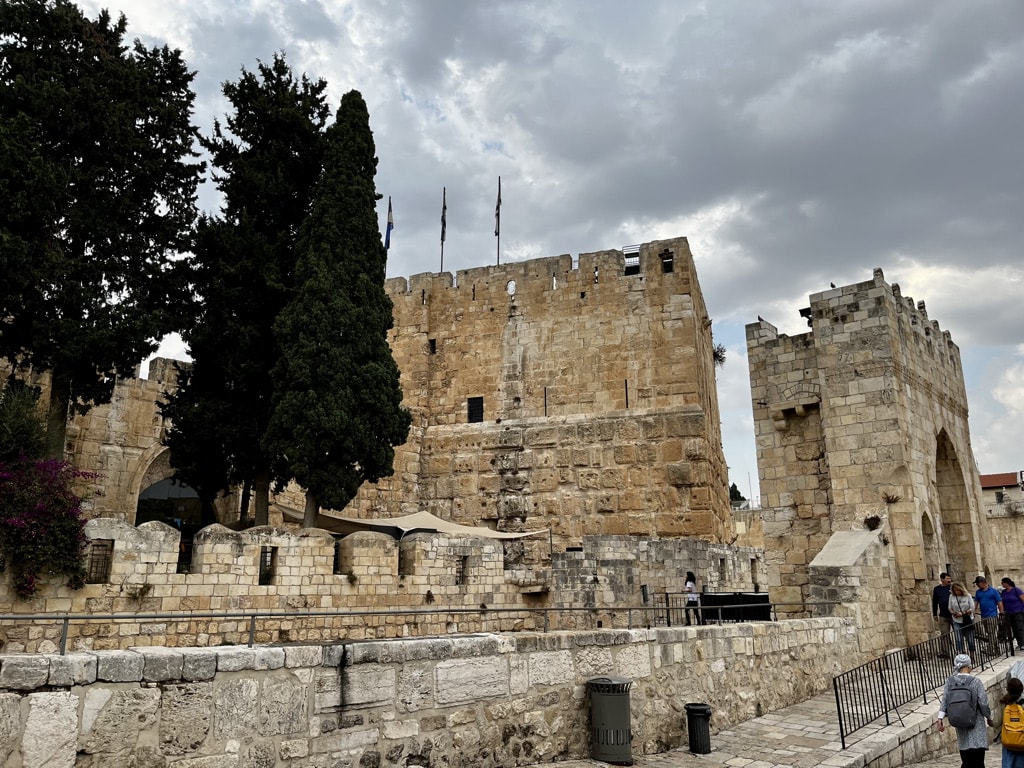
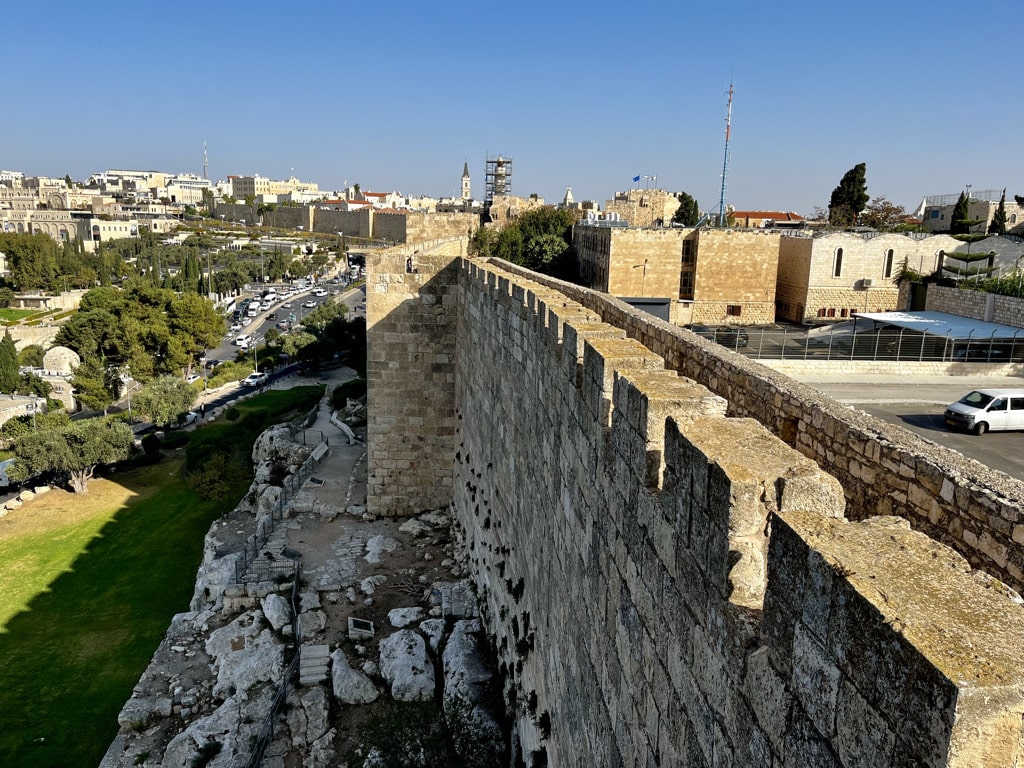
Walls of Jerusalem

To see Jerusalem from a different perspective, we did a walk around the Walls of Jerusalem. There are 2 sections, so we did one, had a coffee break, and then did the other one. We really enjoyed it as it offered views of the entire city.

The Walls of Jerusalem, Israel

Day 7: Jerusalem – Masada Fortress – Dead Sea – Jerusalem

Masada

Jerusalem – Masada: 99km, 1,5hour

Visiting Masada and the Dead Sea makes for a perfect day trip from Jerusalem, and key recommendations are: arrive at Masada early in the morning, it does get hot there. Don’t forget to take water with you. And book entry tickets in advance.

We visited Israel just after the Covid crisis, I didn’t feel the need to book tickets. Luckily, as we were among the first visitors, we managed to buy tickets on the spot. But we were asked if we had an online reservation.

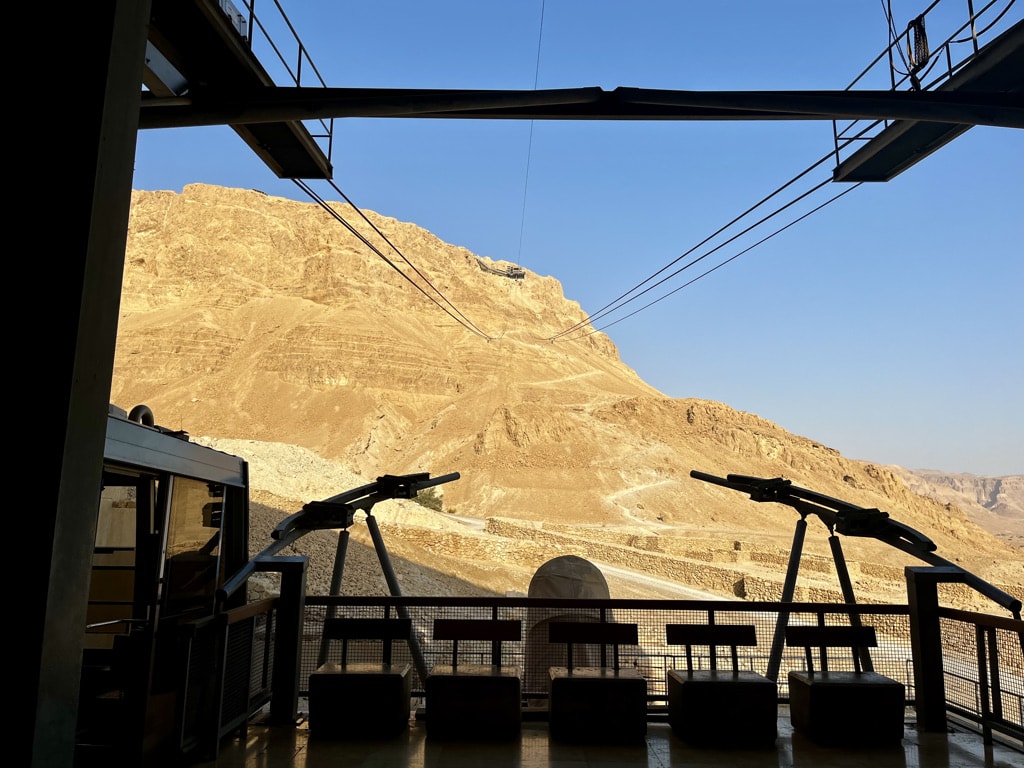
Parking at the lot below the main entrance hall, we chose the cable car ride to reach the Masada fortress over the voluntary walk that some tourists undertake.

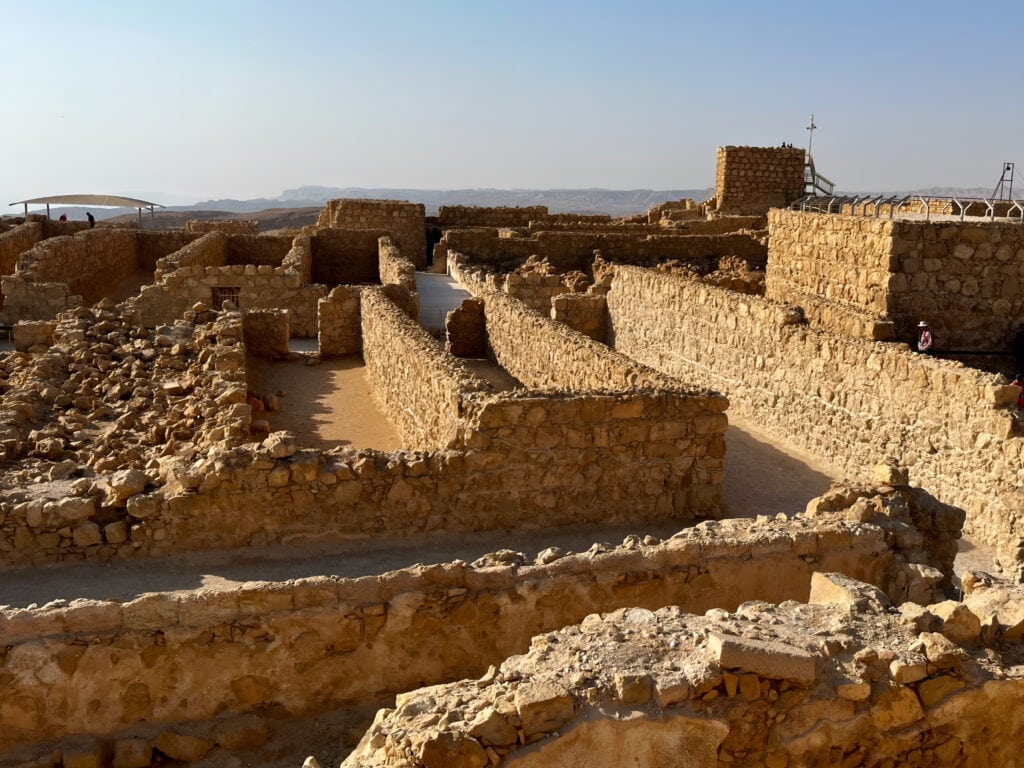
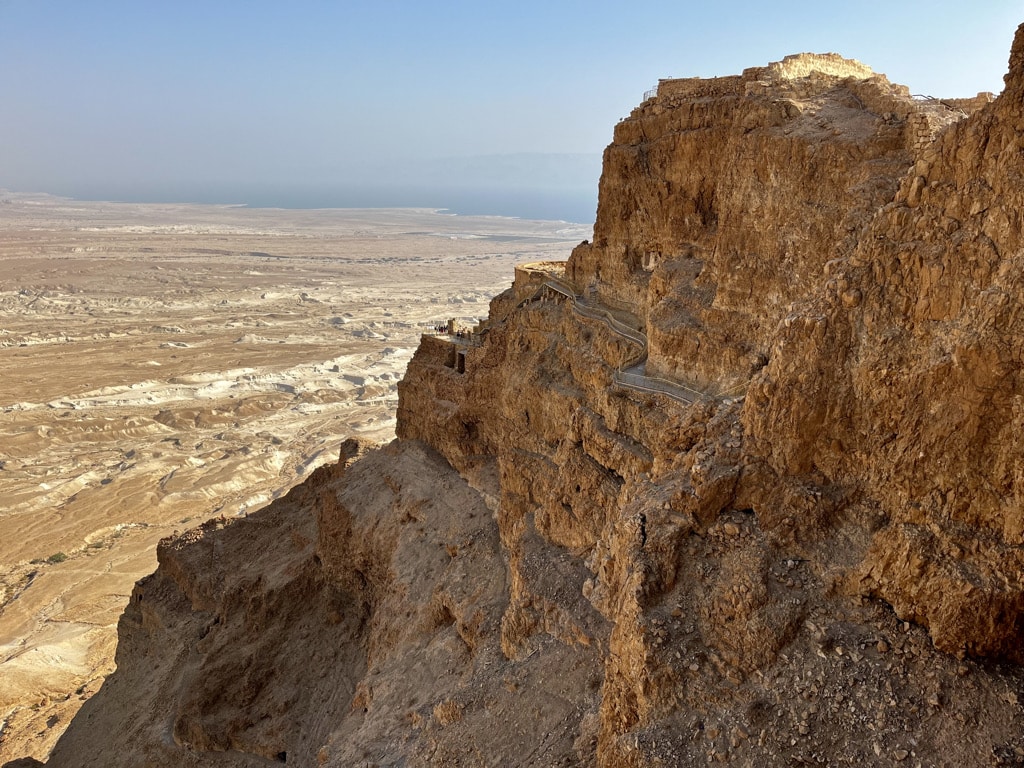
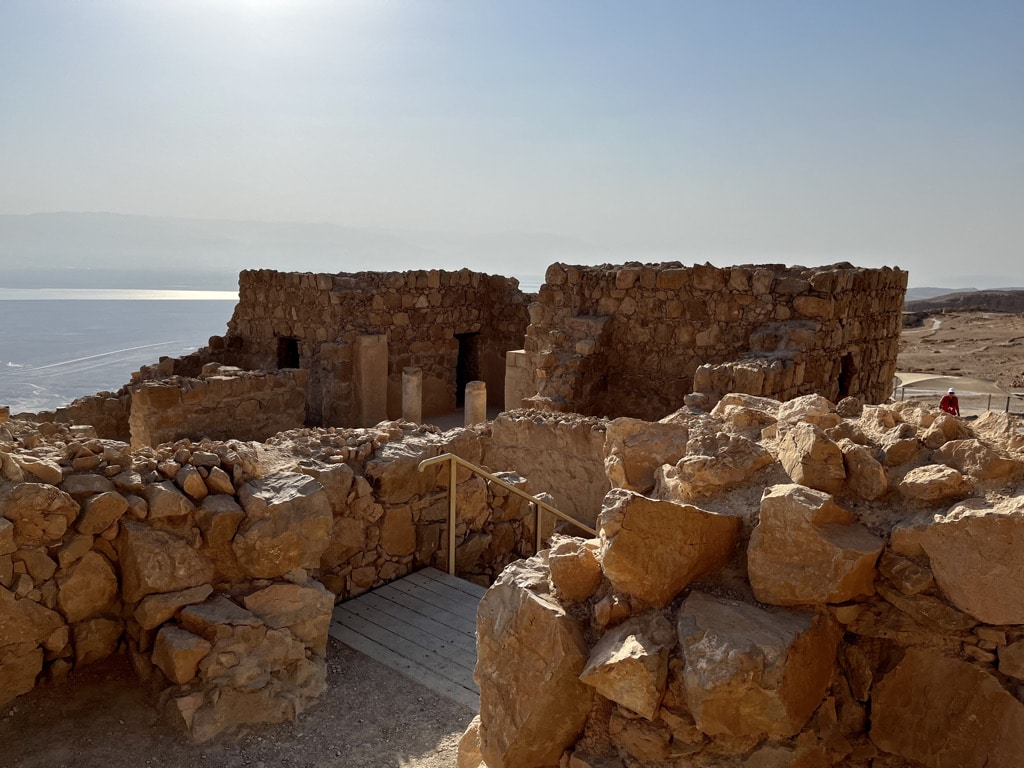
Masada is a fortress in the Judaean Desert, offering beautiful view of the Dead Sea. Originally built as a palace complex during the early Roman Empire by King Herod the Great, it stands as a symbol of the ancient kingdom of Israel. Masada recounts the story of its violent destruction and the heroic last stand of Jewish patriots against the Roman army in 73 A.D.

Ein Bokek, Dead Sea

Masada – Ein Bokek: 19km, 20min

We completed our exploration of Masada around 10:30 am, and the heat was already intense. We had a cool drink at the entrance coffee shop and then continued to the Dead Sea.

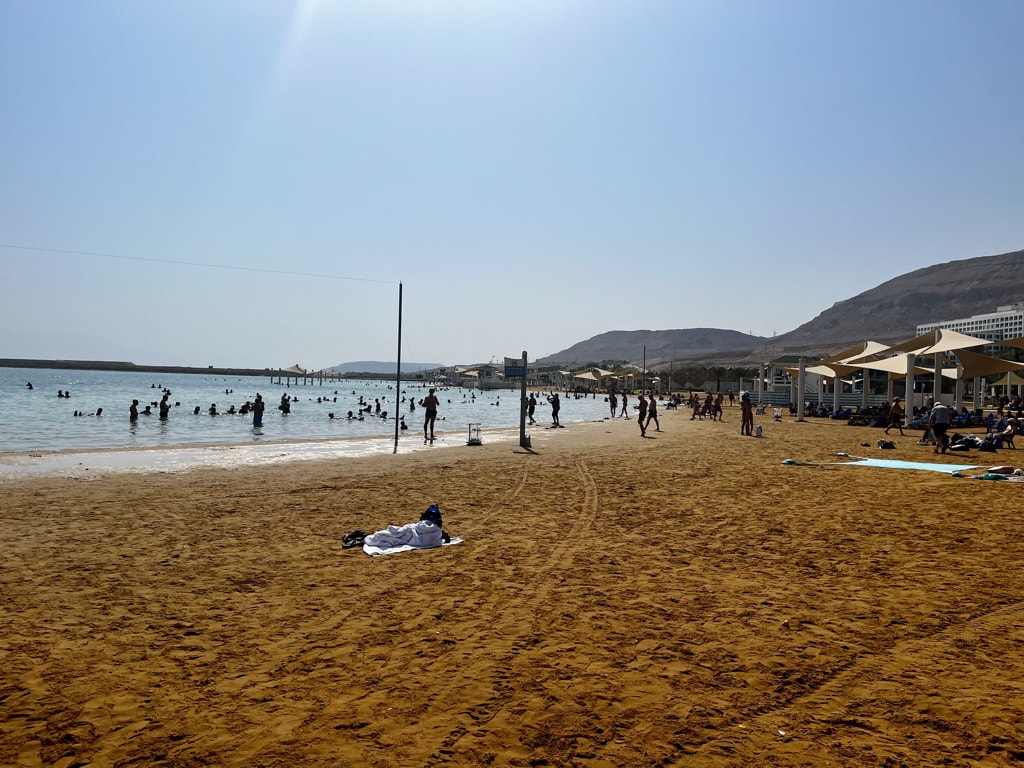
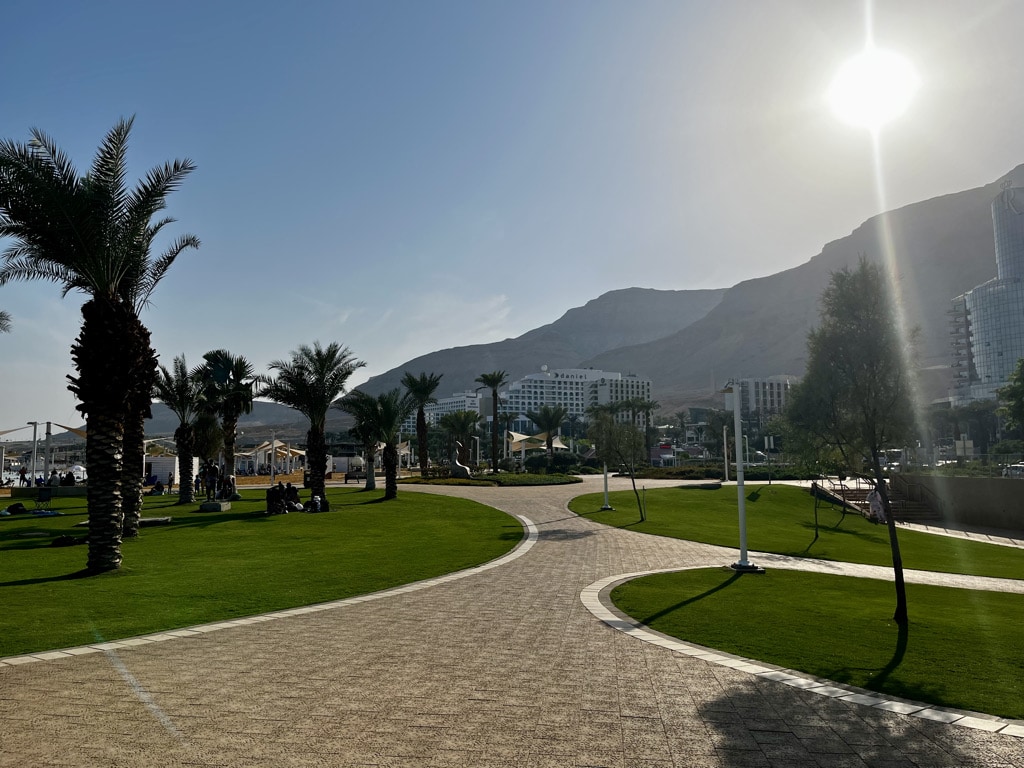
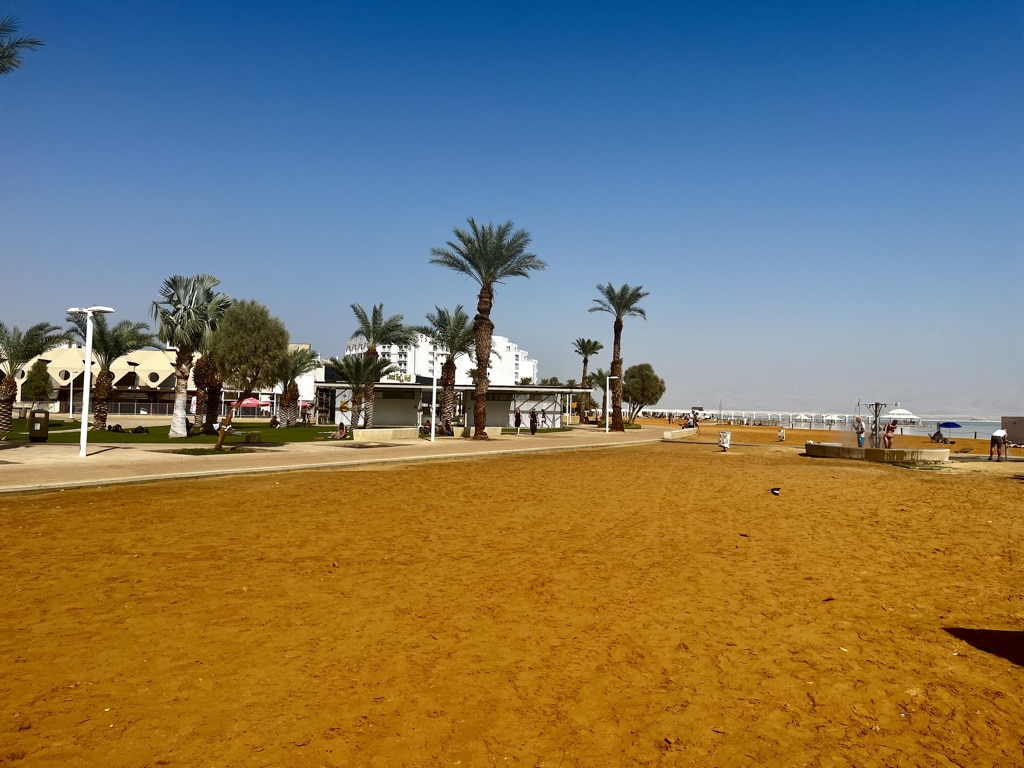
I studied the Dead Sea beaches a lot. It is not always easy to grasp where to go. Many resorts have private beaches but those are for their clients only. Anyway, the place for the half-day Dead Sea experience is Ein Bokek public beach. It is equipped with facilities like toilets, beach showers, chair rentals, and beach guards. The only drawback is that Dead Sea mud isn’t freely available; you can purchase it at a local shop near the beach.

We parked at the paid parking space opposite the Dead Sea Mall. Note that there are park meters, and cash was required during our visit—perhaps they’ve upgraded to card payment machines by now.

Floating in the Dead Sea is truly amazing, and we spent a delightful afternoon savoring the experience.

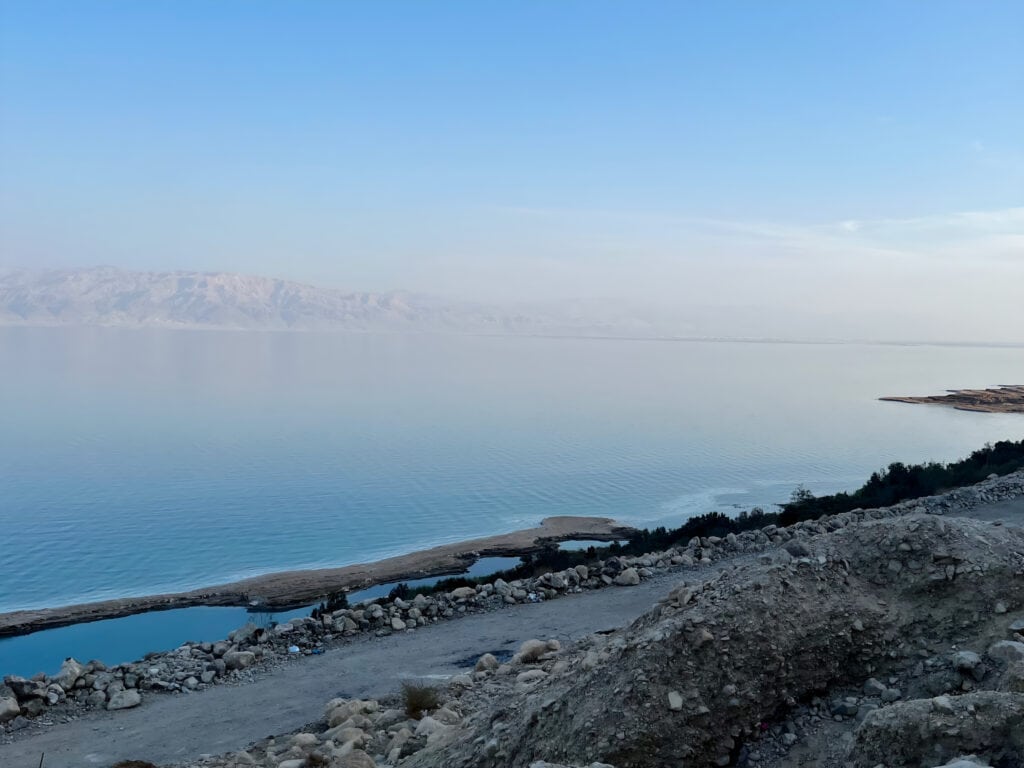
View of the Dead Sea in Israel
Dead Sea

Day 8: Jerusalem – Tel Aviv – return to Prague from our road trip to Israel

On the final day of our road trip, we packed up in Jerusalem to enjoy a half-day at the Tel Aviv beach before catching our flight back to Prague. Returning the car was convenient, thanks to the Hertz rental office right at the airport terminals.

The road trip to Israel was truly amazing, and I hope tourists will be back soon to this beautiful, culturally rich country.

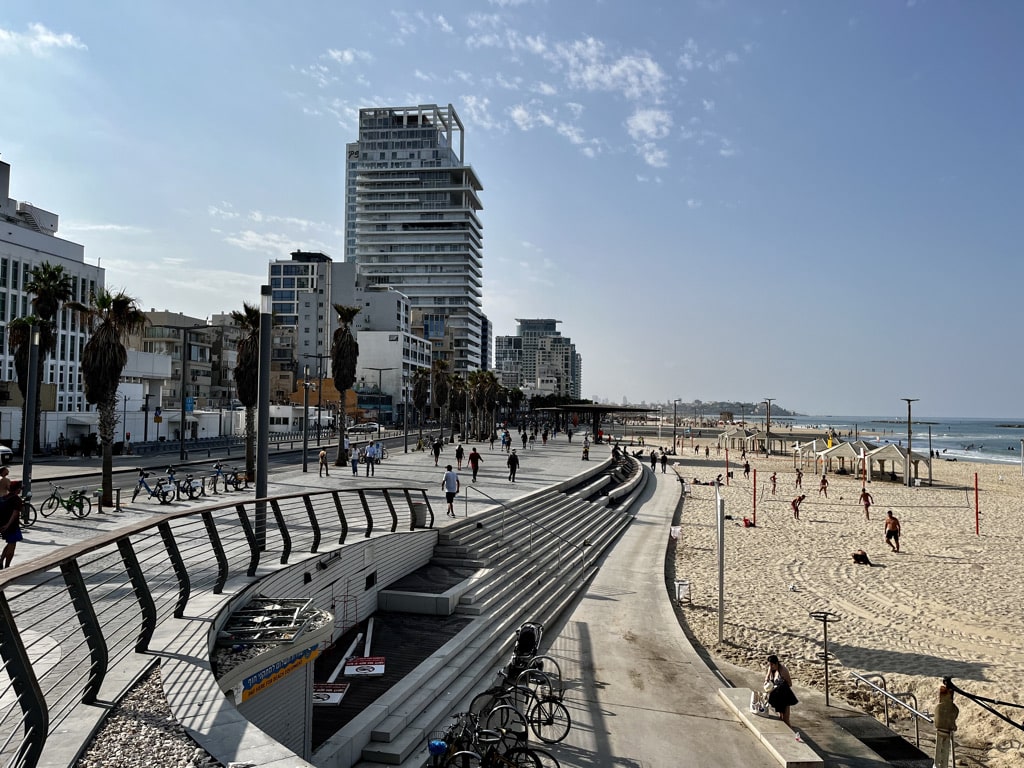
Tel Aviv Beachfront, Israel
Tel Aviv Beachfront


Enchanting 9-Day Road Trip to Jordan 🇯🇴, the home of Petra

As October comes to a close, Europe experiences a drop in temperature, prompting many to seek warmer destinations to extend the summer vibes. Following visits to Dubai and Israel during this period, the road trip to Jordan emerged as the ideal choice.


Practical insights for the road trip to Jordan

Jordan Visa and Travel Essentials:

Before booking our flight, I checked the Jordan visa requirements. This time, an e-visa was necessary, and I applied through the official page of the Jordan Ministry of Interior: Jordan E-Visa.

Jordan Pass:

Consider the Jordan Pass for seamless entry to tourist landmarks. It offers numerous advantages, saving time and eliminating the need for individual entry tickets. Our e-visa was complimentary by entering the Jordan Pass number in the visa application. For more information, visit Jordan Pass.

Mobile Data:

Discovering Airalo was a game-changer, especially for phones with e-SIM functionality. Download it to avoid the hassle of swapping physical SIM cards. Airalo allows easy purchase of e-SIM cards for almost every country, including regional options like Europe or Africa. I opted for the Jordan 30-day, 3GB data plan for USD18.

Local Currency:

The official currency is the Jordanian Dinar (JOD). Cash was essential, especially for accommodation payments, as many places required it. ATMs were available for cash withdrawals, and cards were accepted at shops, restaurants, and petrol stations.

Taxi:

In Amman, we relied on Uber for safe and efficient city travel.

Car Rental:

Choosing Monte Carlo Car Rental was a wise decision. They delivered the car to our hotel, and the process was seamless, with paperwork and payment done by card. Returning the car at their office near Amman airport was convenient, and the company provided excellent service, including full insurance and no surcharge for a second driver. Check out my Google review. 

Driving in Jordan:

Driving in Jordan was a straightforward experience. Departing from Amman on a Sunday likely contributed to an easier exit from the city, avoiding major urban rush hours. The main Jordan Desert Highway was smooth, while some other roads demanded heightened awareness due to the presence of potholes.

Dress code


Modest dress is advisable. I have definately avoided shorts and tank tops in the cities and historic areas. I wore t-shirts and skirts covering the knees and felt comfortable doing so. On the other hand I felt comfortable wearing t-shirts and little longer shorts around Dead Sea, in Wadi Rum desert or in Aquaba.


Day 1: Discovering Amman

We arrived in Amman during the early morning hours, taking a taxi to reach our hotel. Finding an accommodation with a 24-hour reception ensured a seamless check-in process. We stayed in Shams Alweibdeh Hotel Apartments. After few hours of sleep, we started our exploration of Amman. Given the city’s size, we decided to use Uber for our first destination – the Amman Citadel.

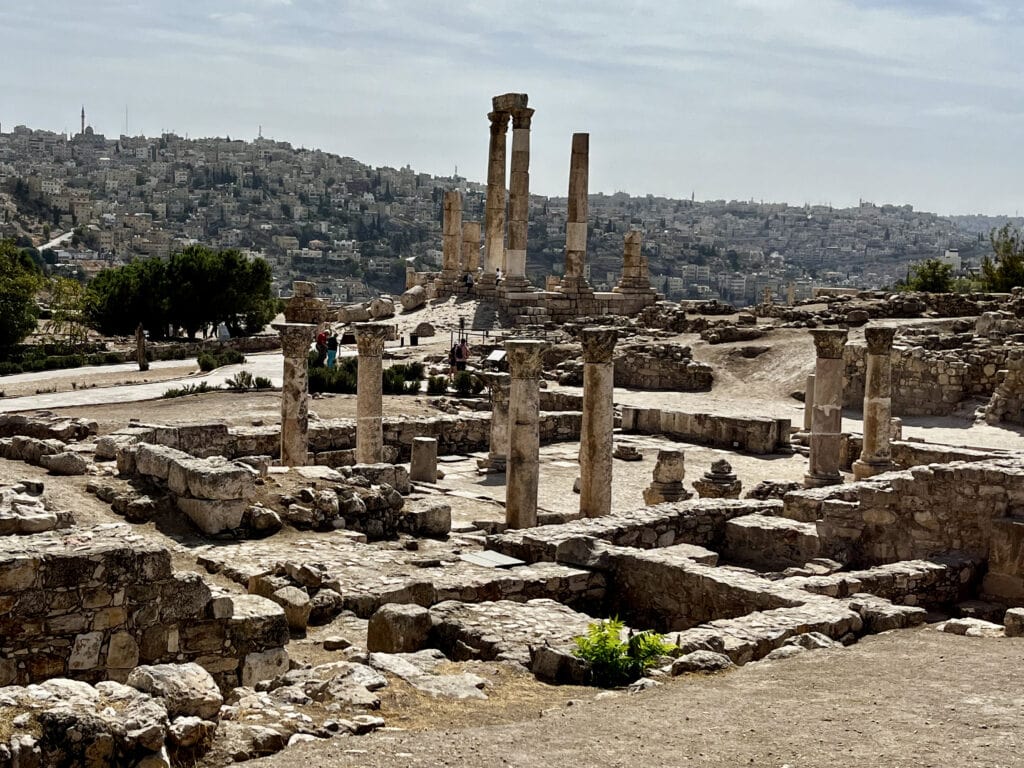
The Amman Citadel

Located on the highest hill in Amman, the Citadel is a place to see artifacts spanning the Bronze and Iron Ages, along with remnants from the Roman, Umayyad, and Byzantine periods. Presenting our Jordan Pass at the entrance, we proceed to explore the area.

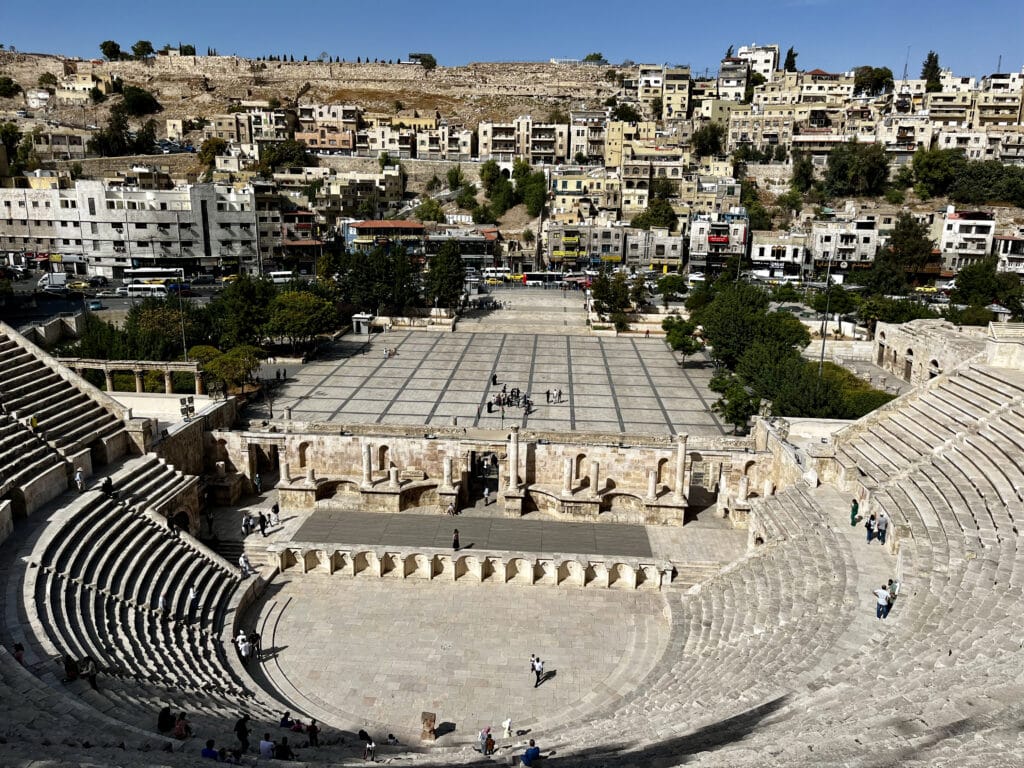
Roman Theater:

Our journey continued with a walk from the Amman Citadel to our next destination, the Roman Theater. The history of the place dates back to 2 AD. It seated up 6000 people.
Making use of our Jordan pass we entered the site. It is impressive. Climbing all the way up the stairs, sit there for a bit and observe the city was absolutely worth it.

Rainbow street

After visiting the Roman Theather, our journey led us to the Grand Husseini Mosque. Unfortunately, ongoing construction and renovations spoiled our view of the mosque. Up next was the Rainbow street. We had walk uphill to reach the street. Rainbow streets is a plesant place with coffeshops and shops. We set down in one of the restaurants to have some lunch.

The Amman Citadel, Jordan
The Amman Citadel
The Roman Theather, Jordan
The Roman Theather
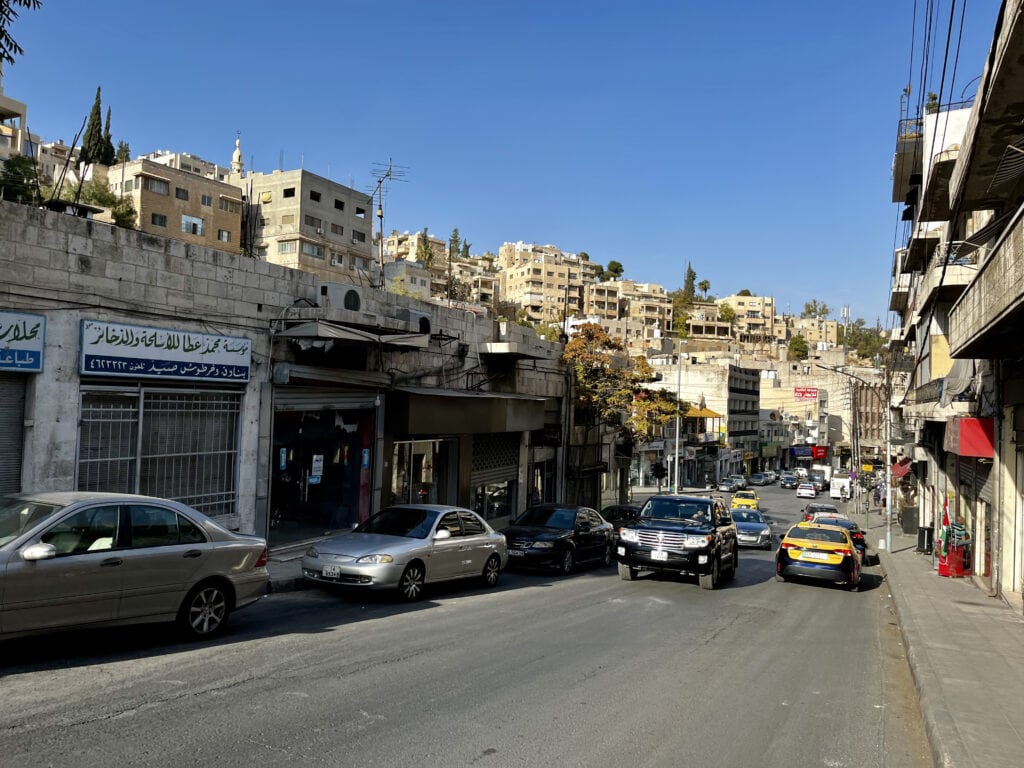
A street in Amman
A street in Amman

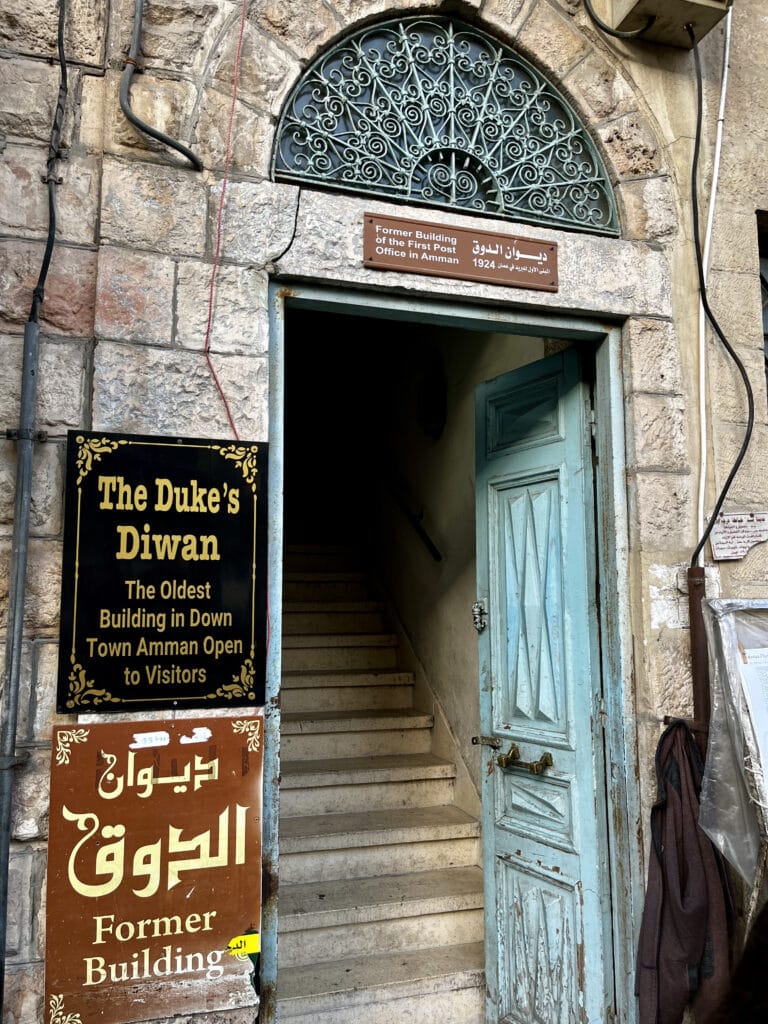
Our exploration of Amman continued through the busy Downtown streets as we wanted to see The Duke’s Diwan house, which served as the city’s first post office. I must admit that we nearly missed the house in the busy street. After taking a picture we concluded our afternoon program, catching Uber back to our hotel.

Duke Diwan House, Jordan

Day 2: Amman – Jerash – Dead Sea

Jerash

Our journey started with the convenient delivery of our rental car by Monte Carlo Car Rental to our hotel.
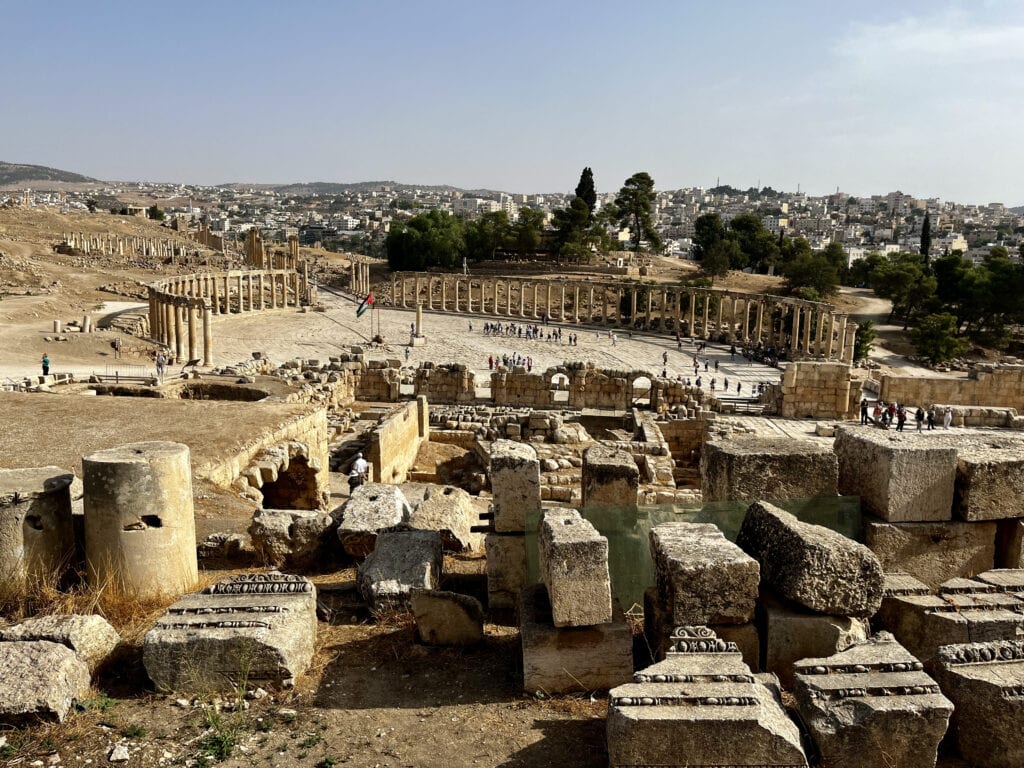
Our first destination was Jerash, situated approximately 52 kilometers away from Amman, a drive that took us around 55 minutes. Upon arrival, we parked at the Jerash Visitor Free parking area, right in front of the landmark entrance. Making use of our Jordan Pass, we entered the area to explore the ruins of the walled Greco-Roman settlement of Gerasa.

Walking around Jerash, we looked at:

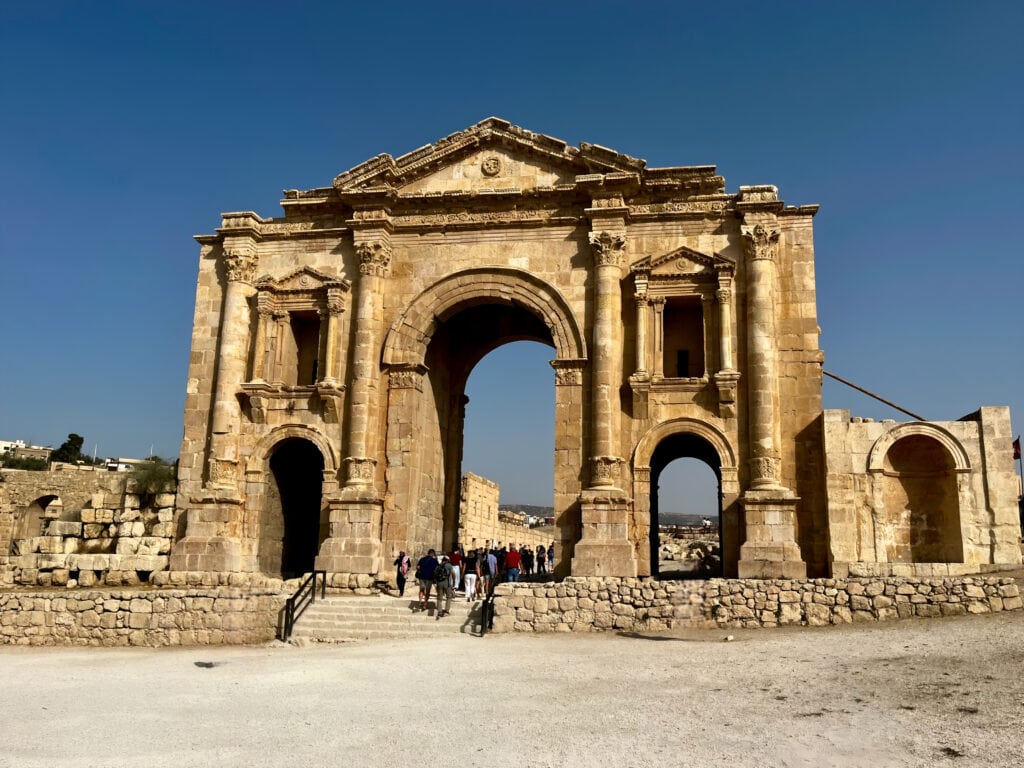
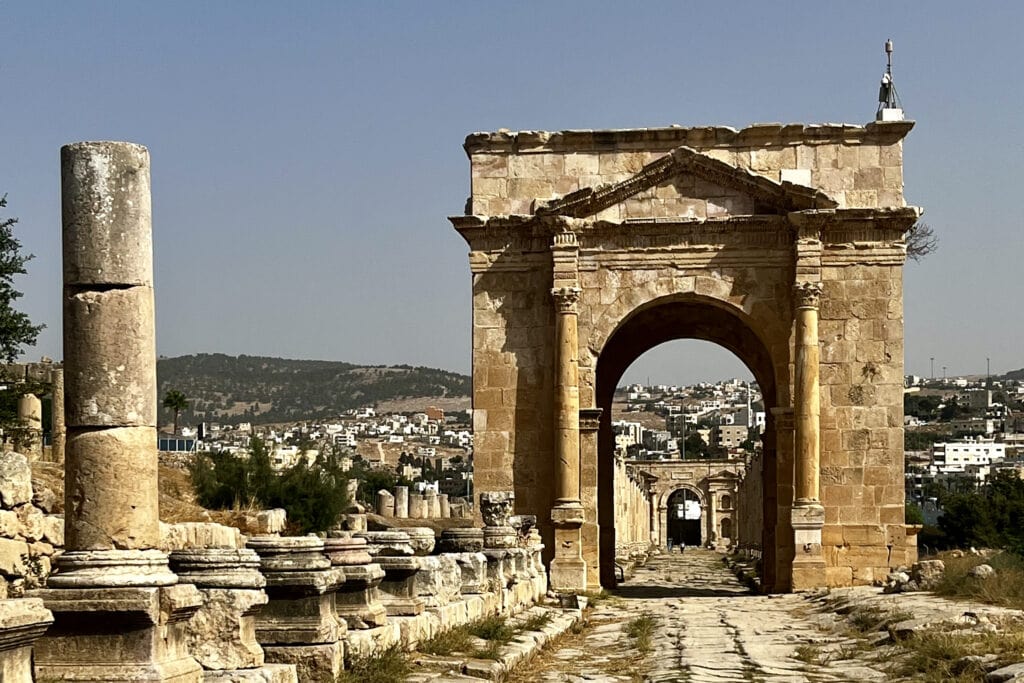
Hadrian’s Arch

It was built in 129 AD and was erected to honor and celebrate the visit of the Emperor Hadrian.

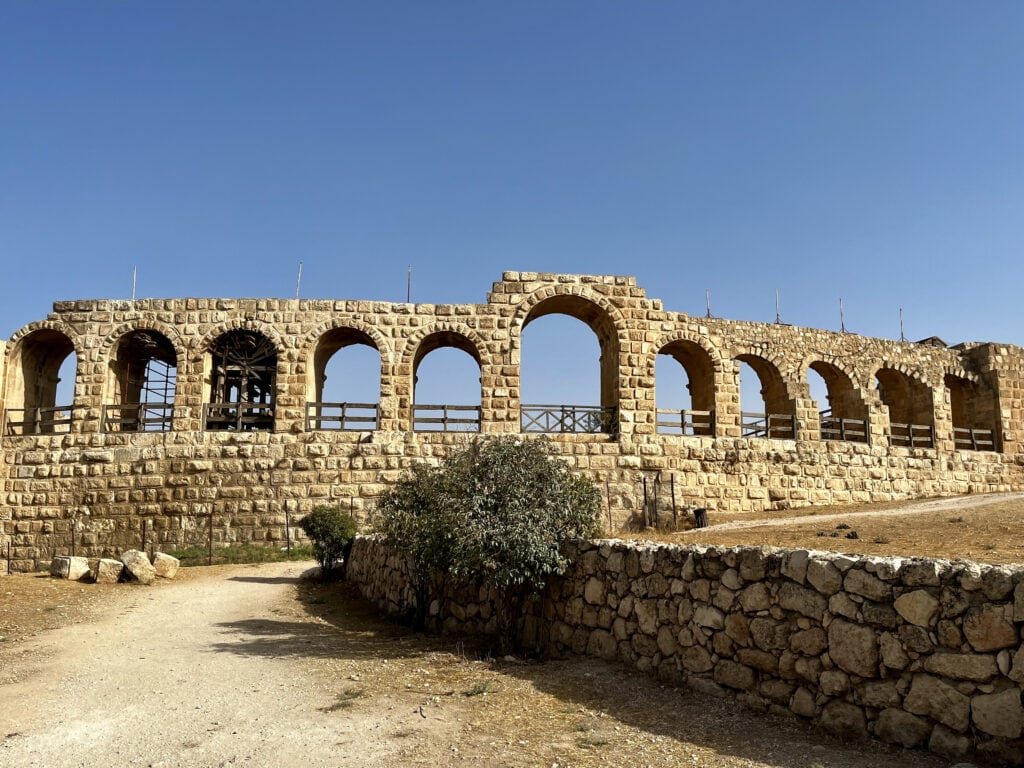
Hippodrome:

It dates back to the Roman period, reflecting the city’s historical significance during the Roman Empire. The hippodrome in ancient times was a large stadium or arena primarily used for chariot races and other public spectacles.

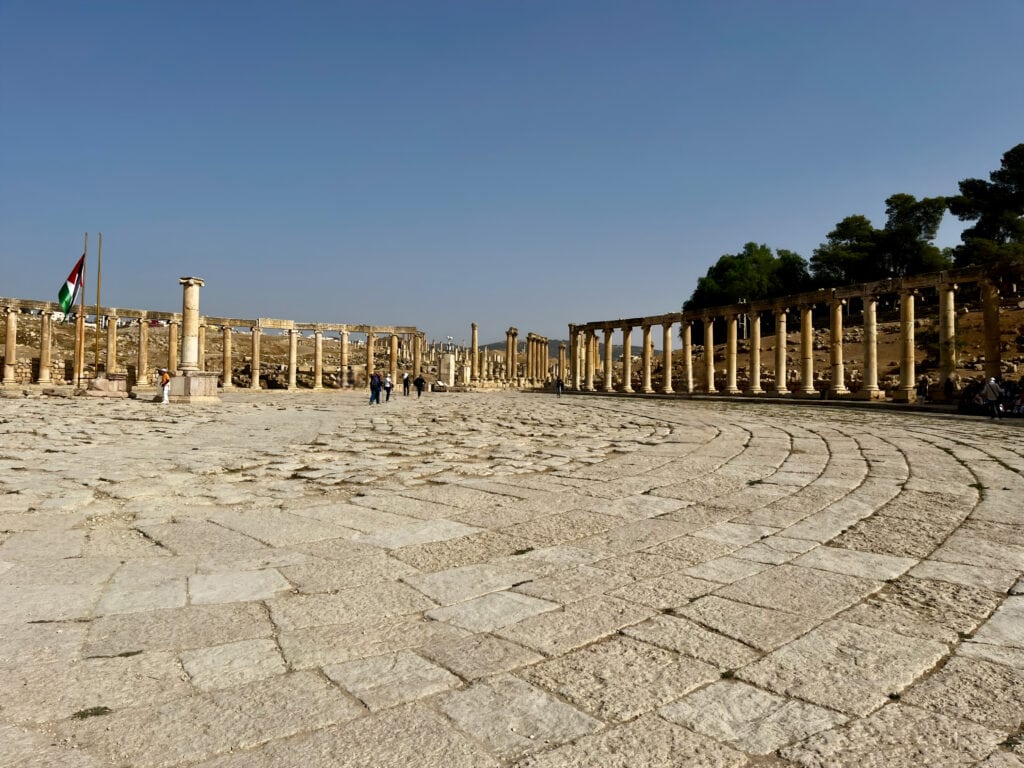
The Cardo Maximus

It was likely constructed in the 1st century AD and expanded during the 2nd century AD. The columns are topped with Corinthian capitals, adding to the grandeur of the street. The street itself is paved with large stones, and the remnants of a drainage system can still be seen.

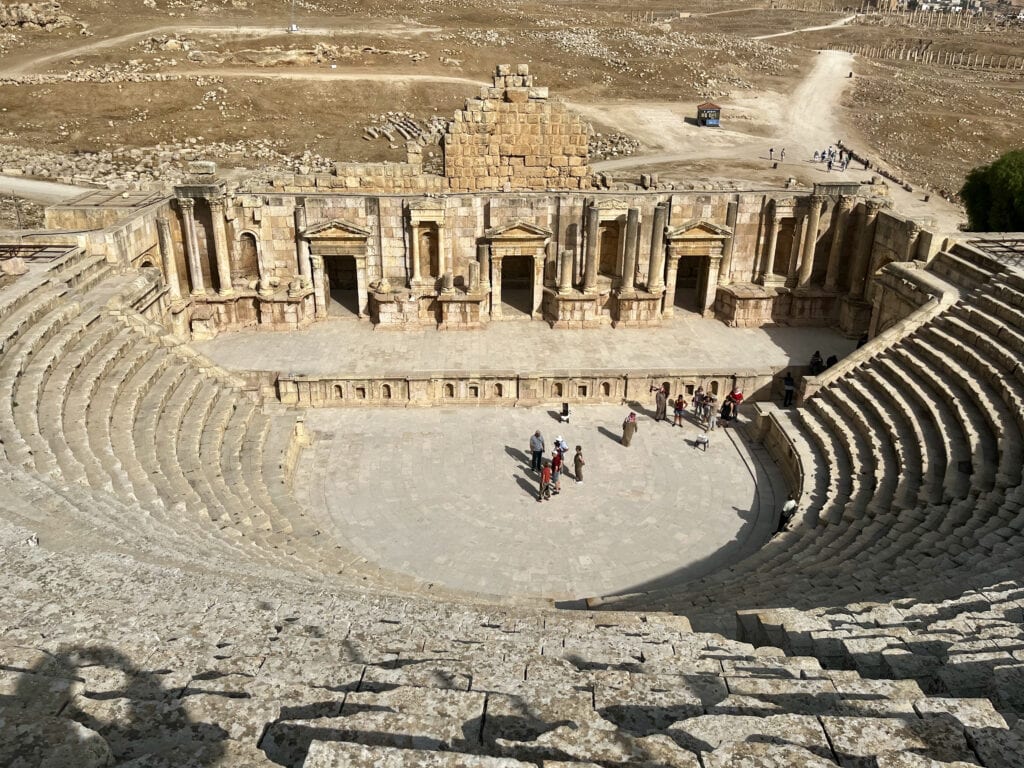
South Theather

A classic Roman-style theater with a semi-circular orchestra and a tiered seating area. It can accommodate a large number of spectators. The theater is known for its impressive acoustics, allowing performances to be heard by the entire audience.

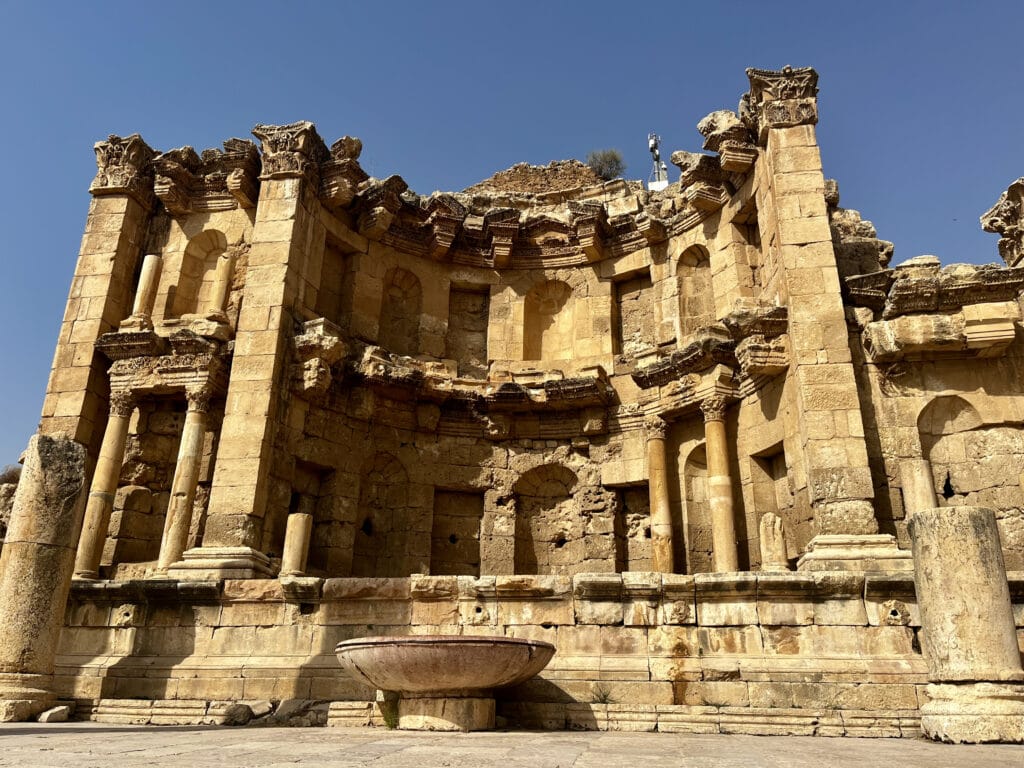
Nymphaeum

The Nymphaeum, finished in 191 AD, is a substantial fountain situated on the Cardo. Its primary function was to enhance the numerous small public fountains already present along the Cardo by serving as a central water source.

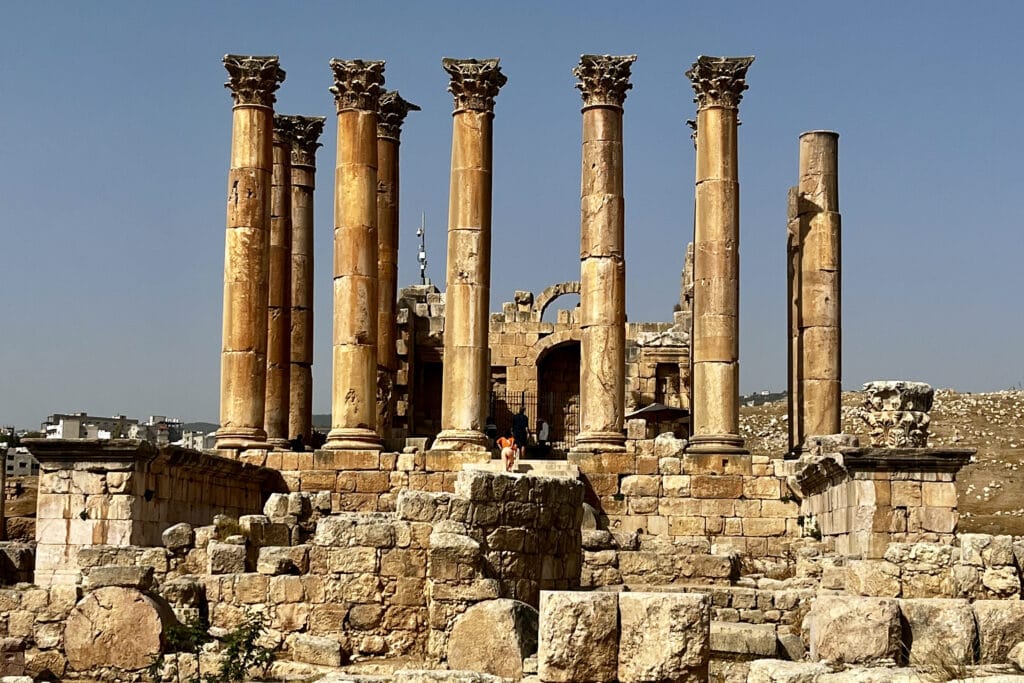
Artemis Temple

The temple is dedicated to Artemis, who was a significant deity in ancient Greek and Roman mythology. Artemis was often associated with the hunt, wilderness, and nature.

The North Gate is an impressive structure featuring a monumental entrance arch, columns, and other architectural elements characteristic of Roman city gates. Such gates served as both functional entrances and symbolic markers of the city.


Dead Sea

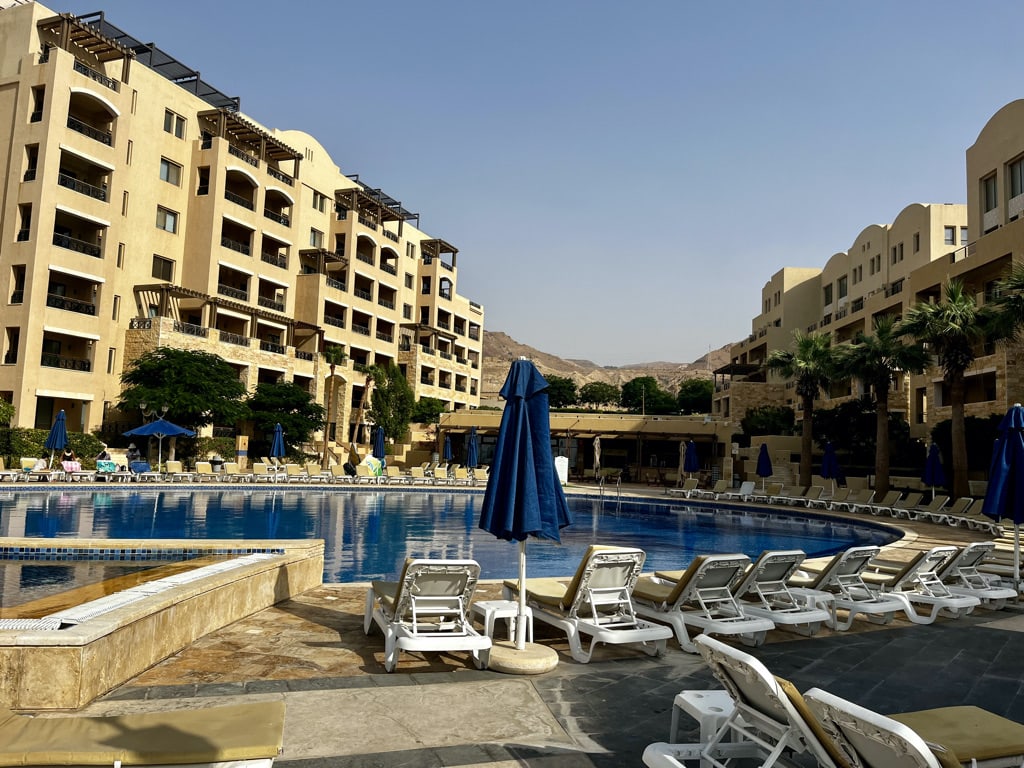
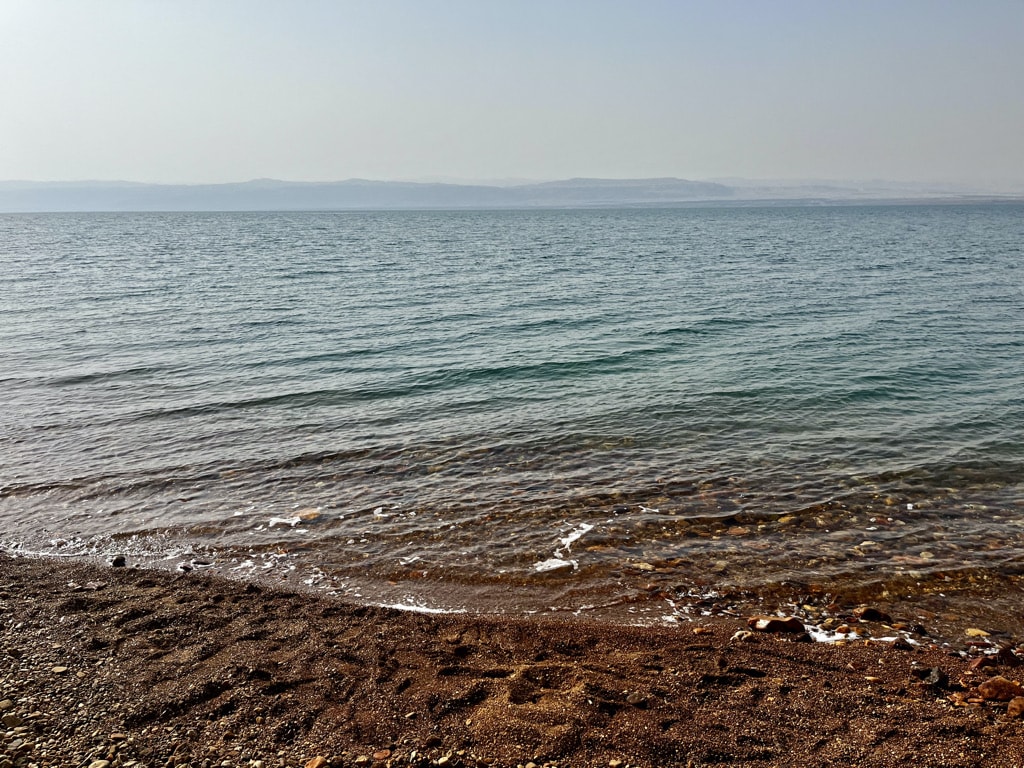
After touring the ruins of Jerash, we set off for our drive to the Dead Sea, covering approximately 95 kilometers in about 1.5 hours. Our accommodation was booked in one of the apartments at Samarah Dead Sea Resort. We proceeded through the resort’s front gate, where our host awaited us and guided us to the private parking lot.
After stopping at Samarah Mall for lunch, we later checked into our accommodation. We spent the afternoon floating in the Dead Sea, applying to rejuvenate Dead Sea mud as well as enjoying the resort swimming pools.


Day 3: Dead Sea – Kerak Castle – Wadi Musa

The following day, we resumed our journey, sticking to the route along the Dead Sea and making our way to Wadi Mujib. We were eager to explore one of their adventure trails, but unfortunately, we discovered that the trails were restricted to adults aged 18 and above, and we had our teenage daughters with us. While this was fairly disappointing, I quickly came up with an alternative plan: a visit to Kerak Castle.

The drive from Samarah Dead Sea Resort to Kerak took approximately 1.5 hours. The journey was pretty interesting as the city sits at an elevation of about 1000 meters above sea level, while Samarah Dead Sea Resort is situated at -390 meters below sea level.

We parked our car in the Kerak Castle car park, which isn’t the official parking area you might expect at the castle entrance. It’s a private space where parking comes at a cost unless you opt to dine at the owner’s restaurant. Given the owner’s hospitality, we chose to visit the restaurant and enjoy the local meal after the castle visit.

Kerak Castle

We accessed the castle by showing our Jordan Pass.

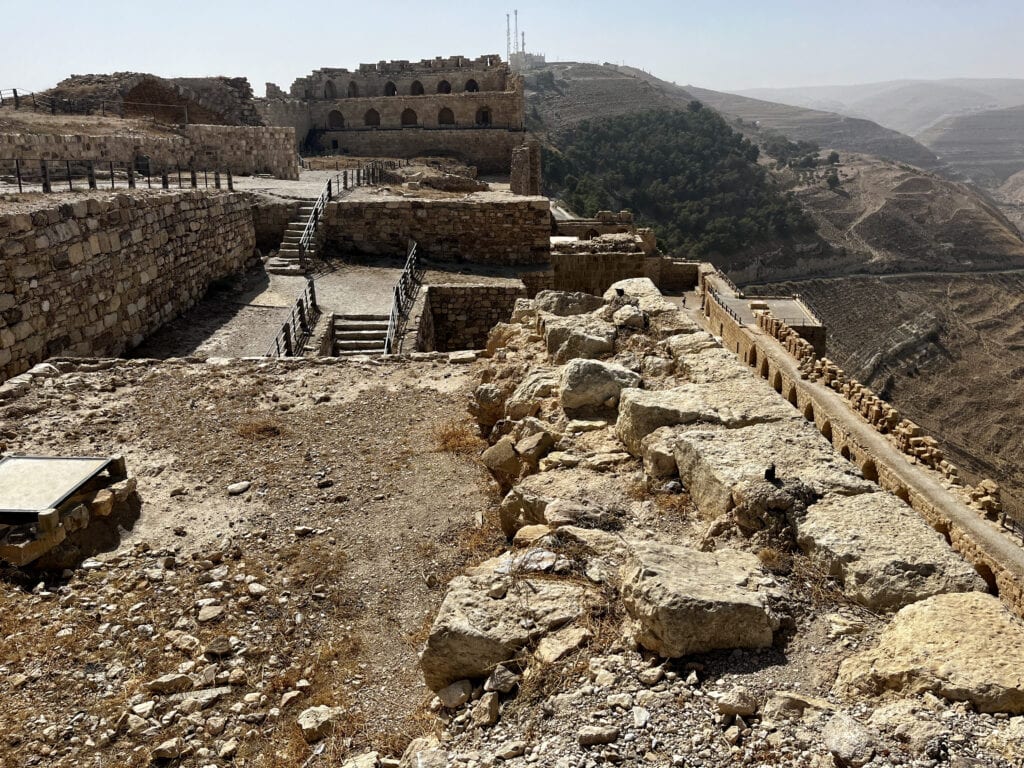
The castle sits on a hilltop, providing great views of the surrounding area.
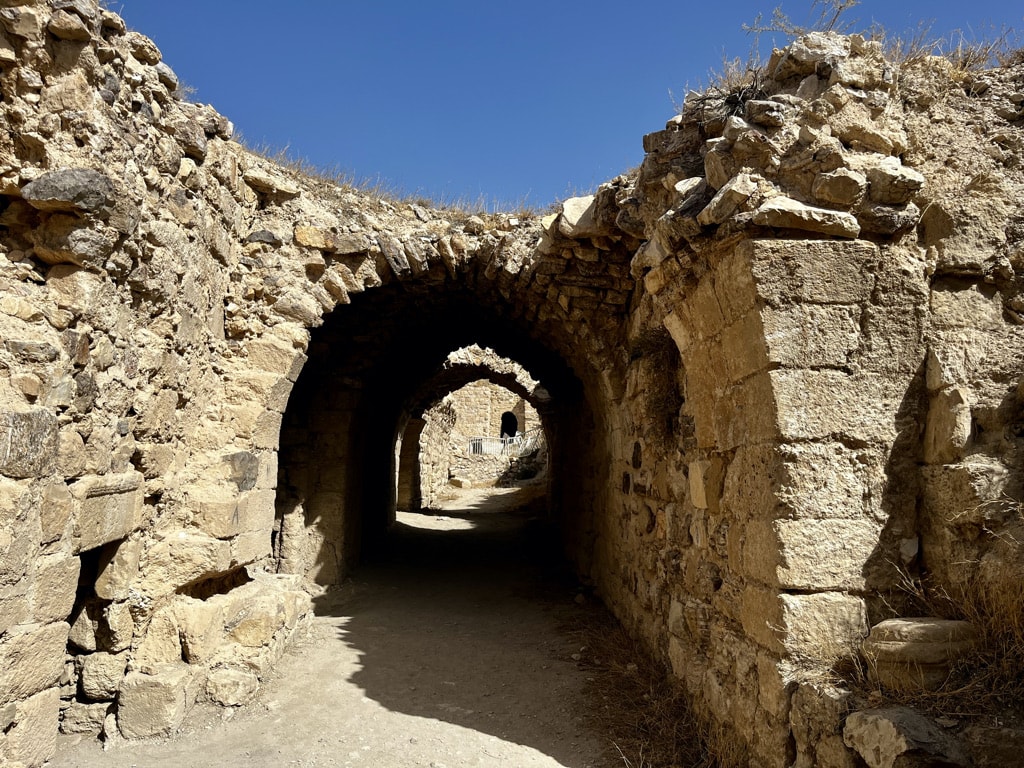
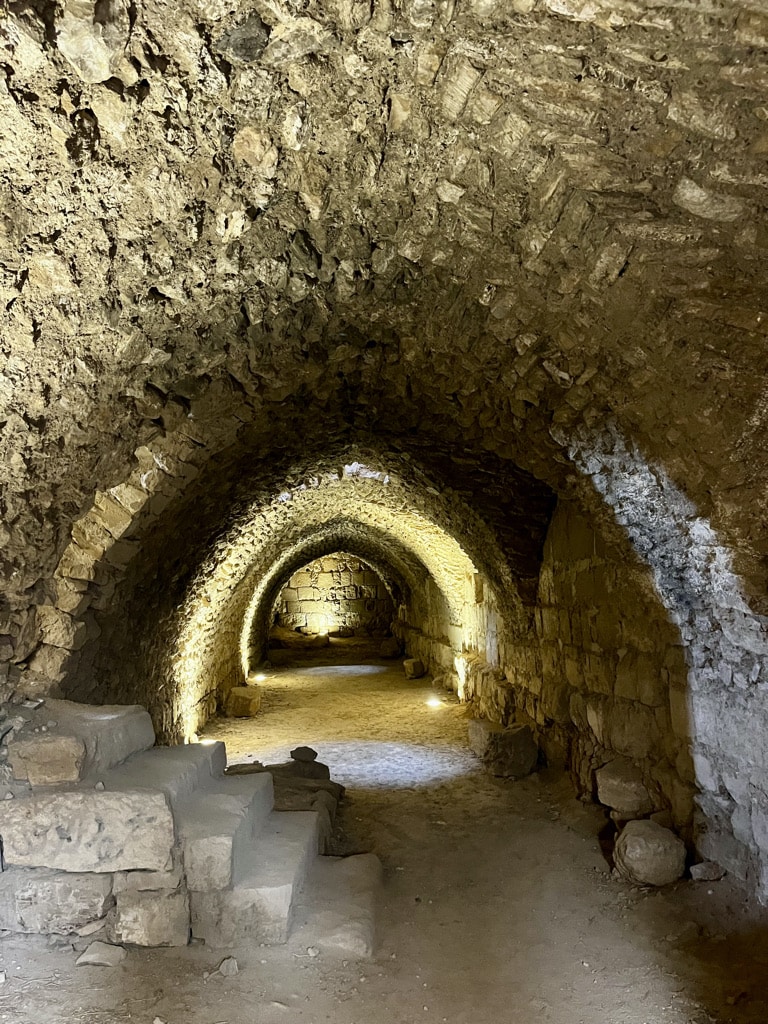
Originating in the 12th century, the castle underwent continuous expansion and fortification by various rulers, such as the Crusaders and the Mamluks. Its strategic positioning along the historic trade routes connecting Egypt and Syria played a pivotal role in the medieval conflicts between Crusaders and Muslims in the region.


Wadi Musa

Following lunch, we started our drive to Wadi Musa, the town next to the ancient city of Petra. Our route from Kerak led us to the Desert Highway (Highway 15), the primary thoroughfare linking the north and south of Jordan. The drive covered approximately 180 kilometers and took around 2.5 hours.

There are many places to stay in Wadi Musa, from expensive hotels right next to the entrance of Petra to different private apartments scattered around the town. We booked our accomodation with Stay Classy Apartments. The parking was available right in front of the house and the Petra visitors parking was about 5min drive.


Day 4: Ancient City of Petra

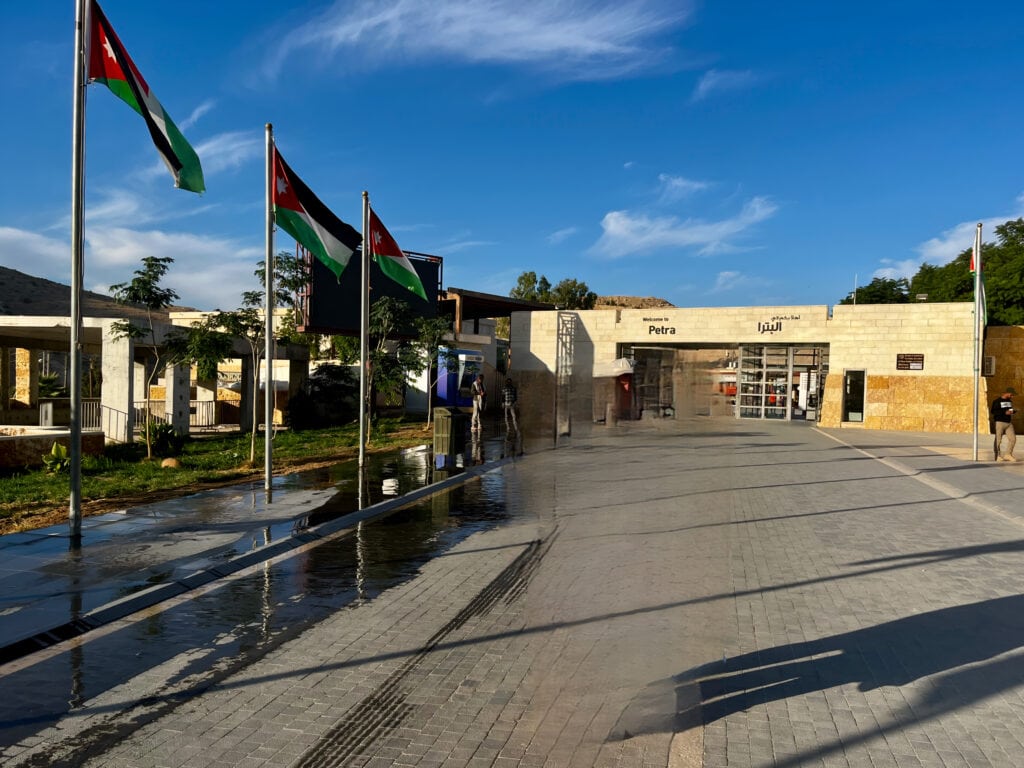
Petra is the ancient Nabataean caravan city, situated between the Red Sea and the Dead Sea. It was an important crossroads between Arabia, Egypt, and Syria-Phoenicia. It is a UNESCO World Heritage Site since 1985. Petra is sometimes called the ‘Lost City’, as it was completely lost to the Western world until the Swiss traveler, Johann Ludwig Burckhardt rediscovered it in 1812.

To avoid crowds and the heat, it’s good to arrive in Petra early in the morning.

We parked our car at the free parking area located in front of the visitor center.

As you enter the area, you’ll see the ticket office. Even if you have your Jordan Pass, it’s necessary to proceed there. Upon presenting the pass, they will issue tickets for entry into Petra town. Since we were unaware of this process, we had to backtrack from the entry point.

What did we explore in Petra:

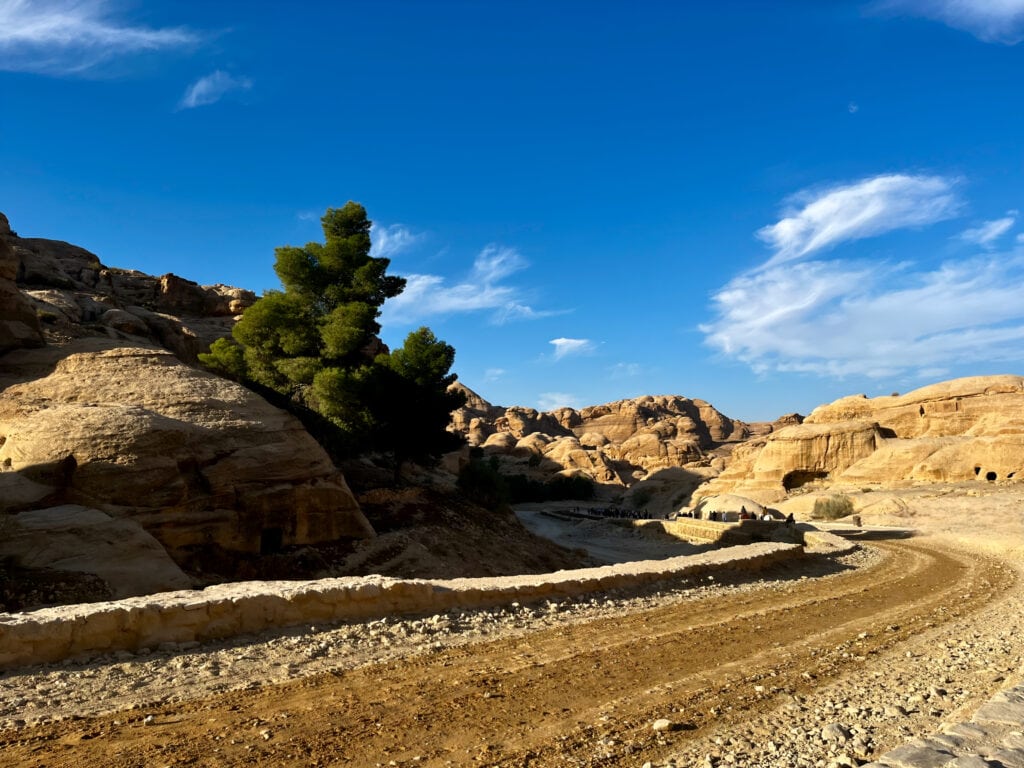
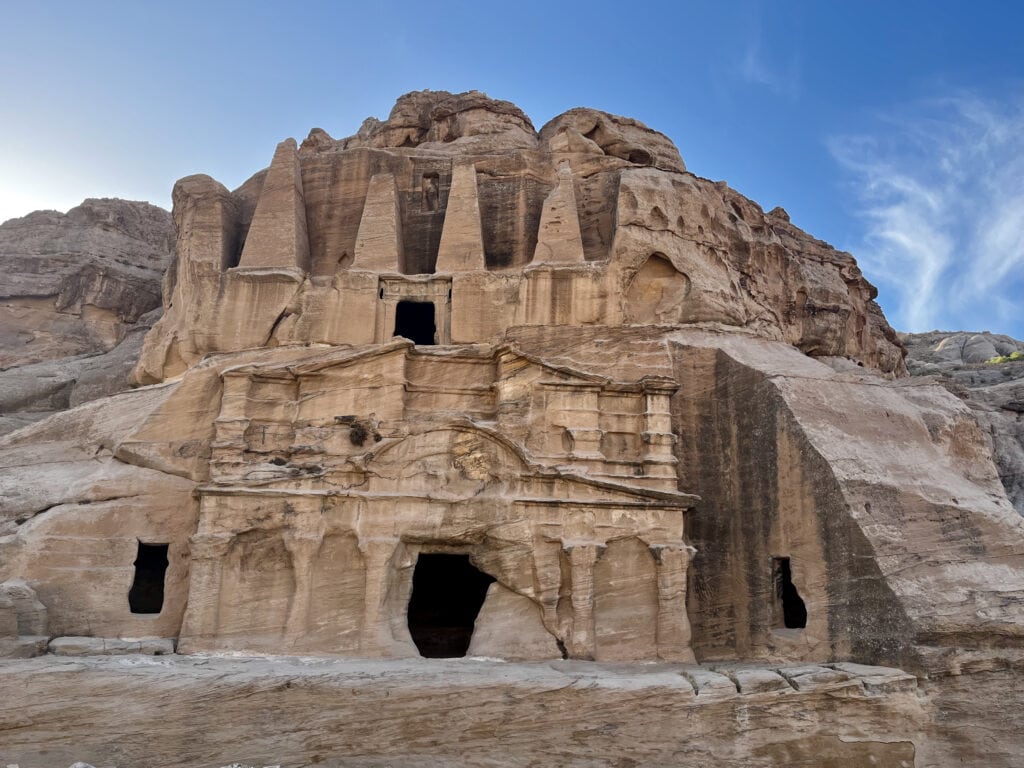
After entering Petra, we walked on a dirt road toward the main city. On the way, we passed by the first of many beautiful sights, The Obelisk Tomb, the burial place the Nabateans built around 40-70AD, and Bab as-Siq Triclinium. The triclinium is a dining room with three benches on which the guests reclined while feasting.

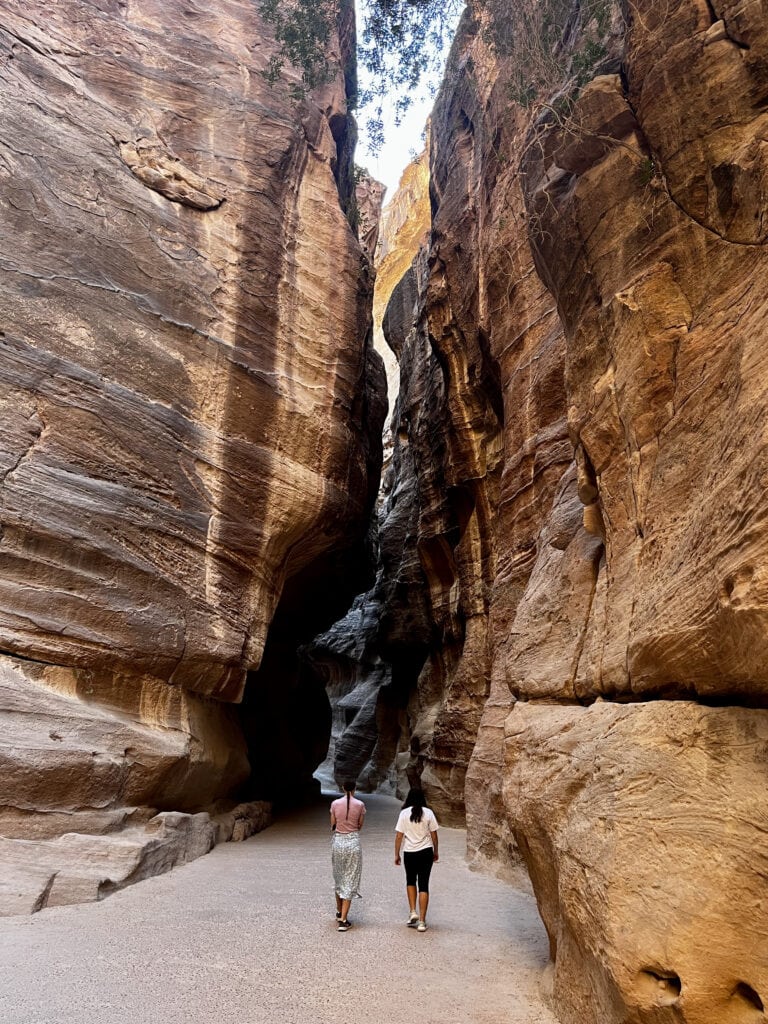
The Siq

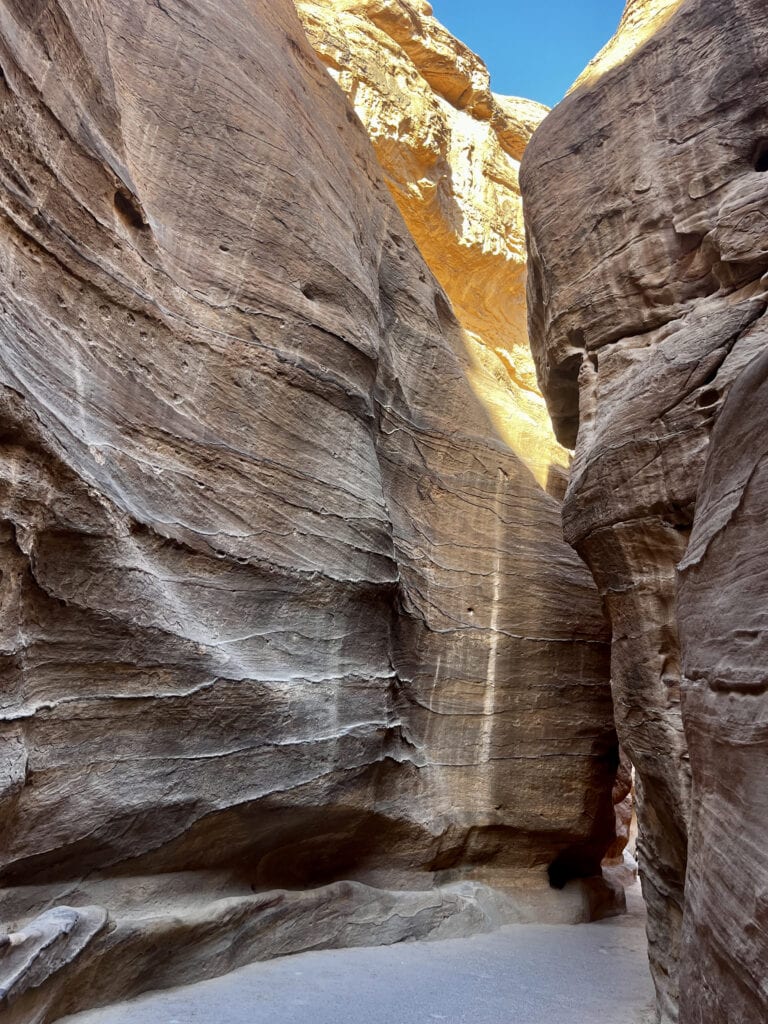
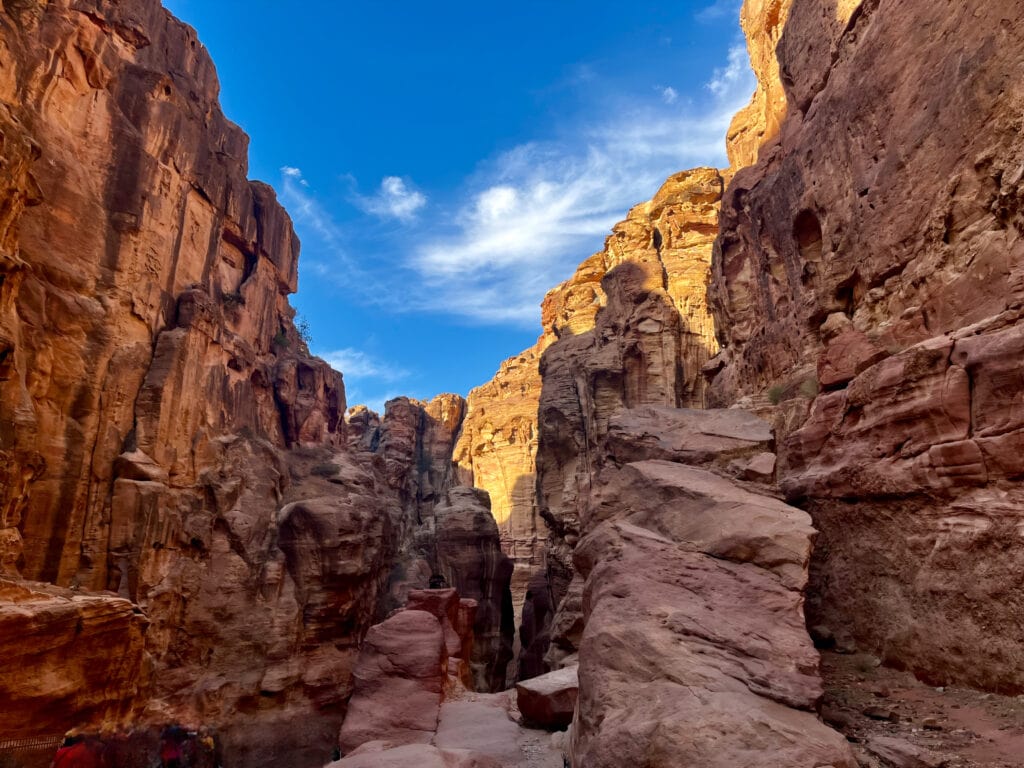
After a short walk, we arrived at the Siq, a breathtaking gorge marking the main entrance to Petra. Local vendors near the entrance provided services such as horse rides, but we opted not to take advantage of these offers and continued into the gorge. I must admit, the experience was truly breathtaking. The towering walls of the Siq shielded us from the sun, providing a cool environment not just in the morning but also as we exited in the early afternoon when concluding our visit to Petra.

The Treasury

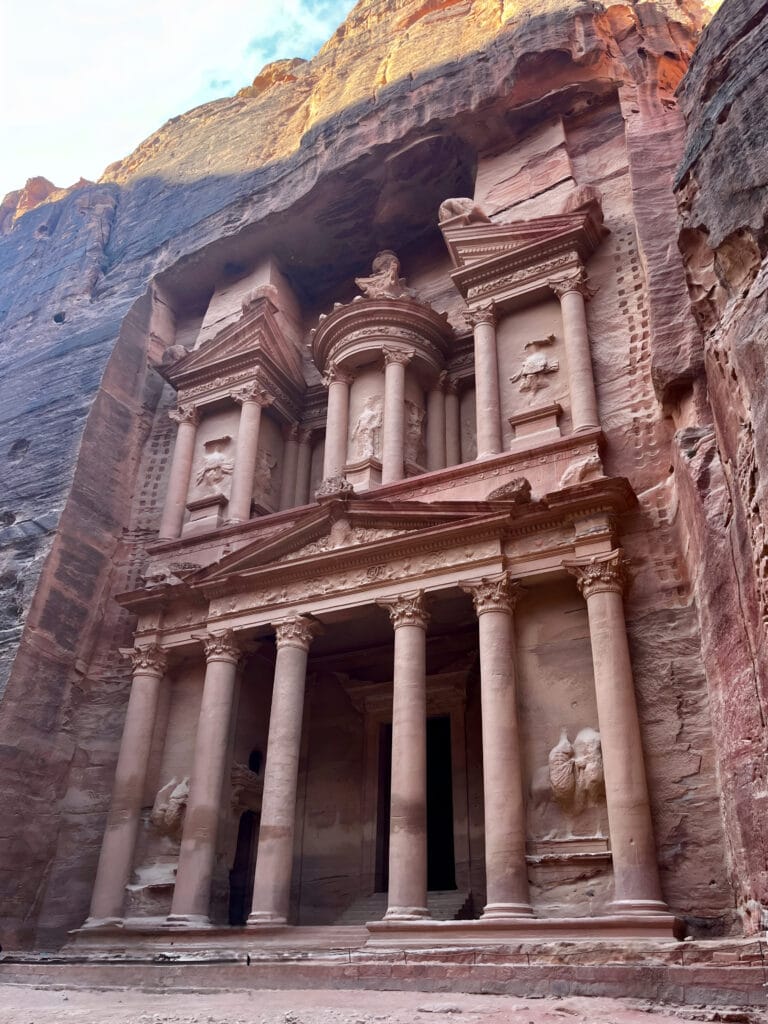
At the end of The Siq Gorge is the iconic place that comes to mind when you mention Petra: The Treasury. The images of this site are widely recognized, and for good reason—it’s truly amazing.

The Treasury, known as Al-Khazneh in Arabic, is a rock-cut tomb constructed as a mausoleum and crypt at the start of the 1st century AD. According to local legend, there is a suggestion that “ancient pharaonic treasures” were concealed in the urn positioned right at the top of the tomb.

The Treasury, Petra
The Treasury

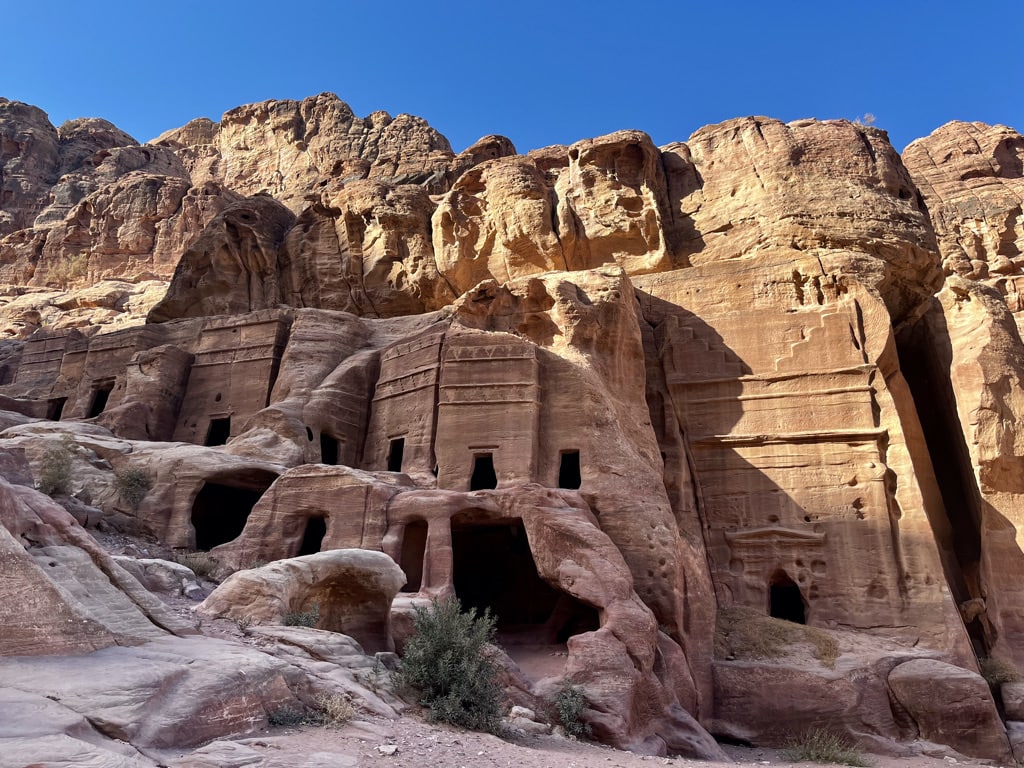
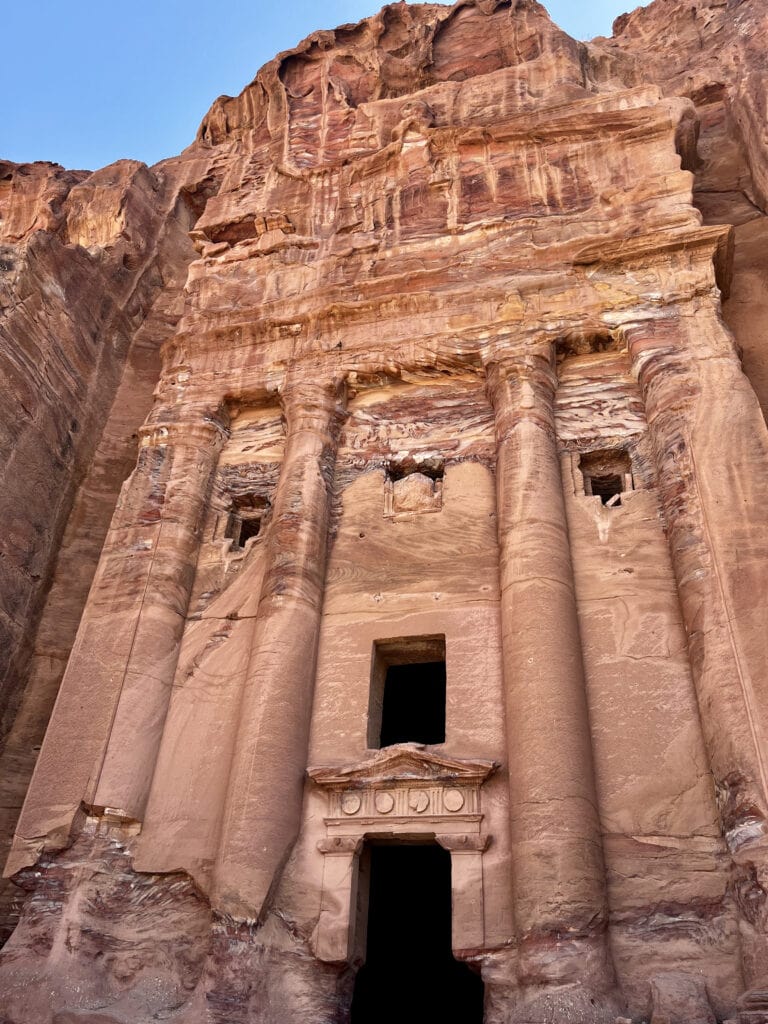
The Streets of Facades

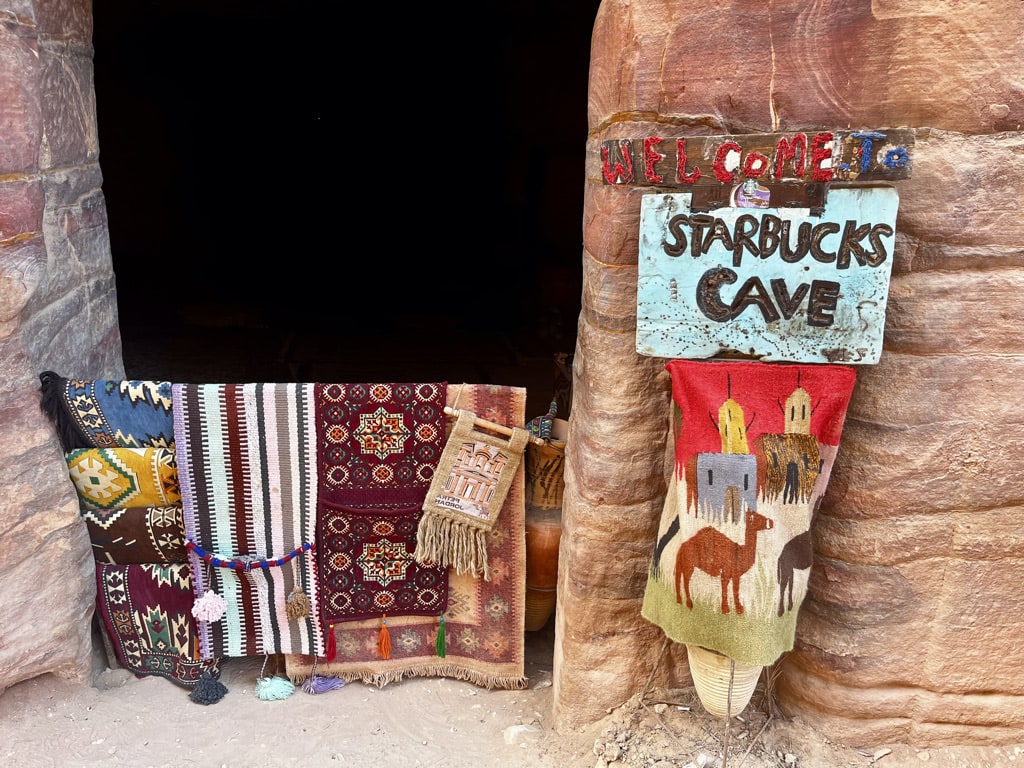
It serve as the primary thoroughfare extending from the Treasury into the ancient city. Along this route, numerous tombs and remnants of ancient Nabatean houses can be found. We were amused by the entrepreneurial spirit of the local Bedouins with one particular highlight – the Starbucks cave,
To manage expectations—don’t anticipate a traditional Starbucks cappuccino experience here. They only offers coffee from the Starbucks coffee pods 😀.


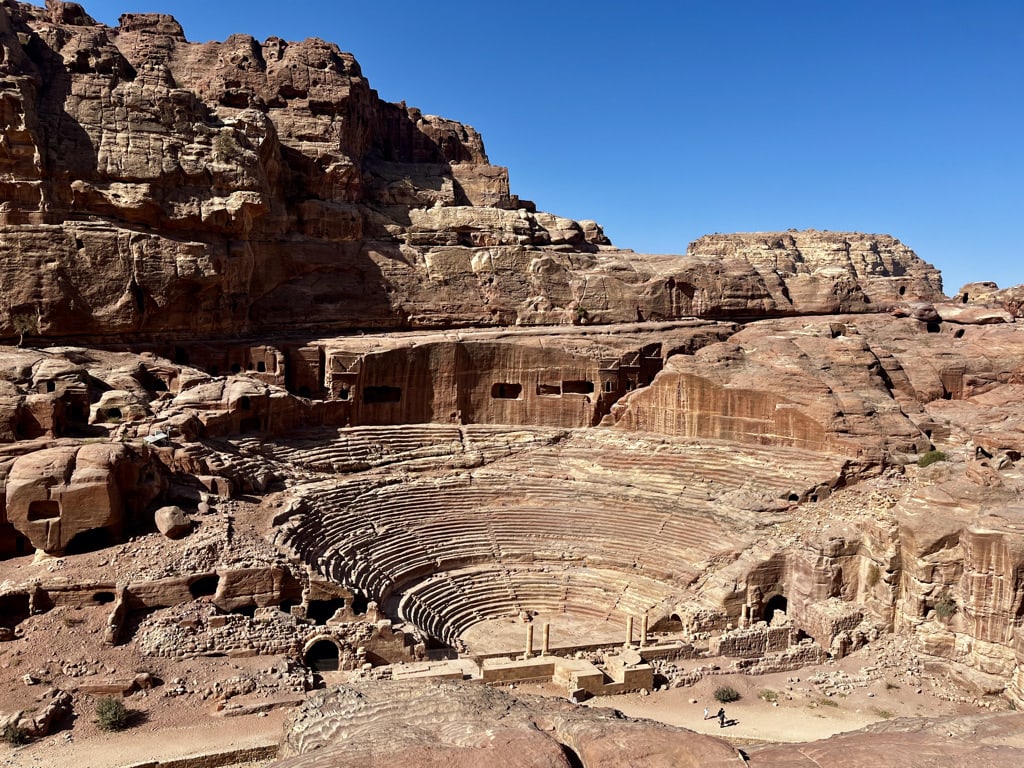
The Theater

It was constructed in the first century AD. A big part of the theater was carved out of solid rock. The theater’s auditorium consists of three horizontal sections of seats separated by passageways and seven stairways to ascend. The theater could accommodate approximately 8500 people

The Theater in Petra, Jordan
The Theater

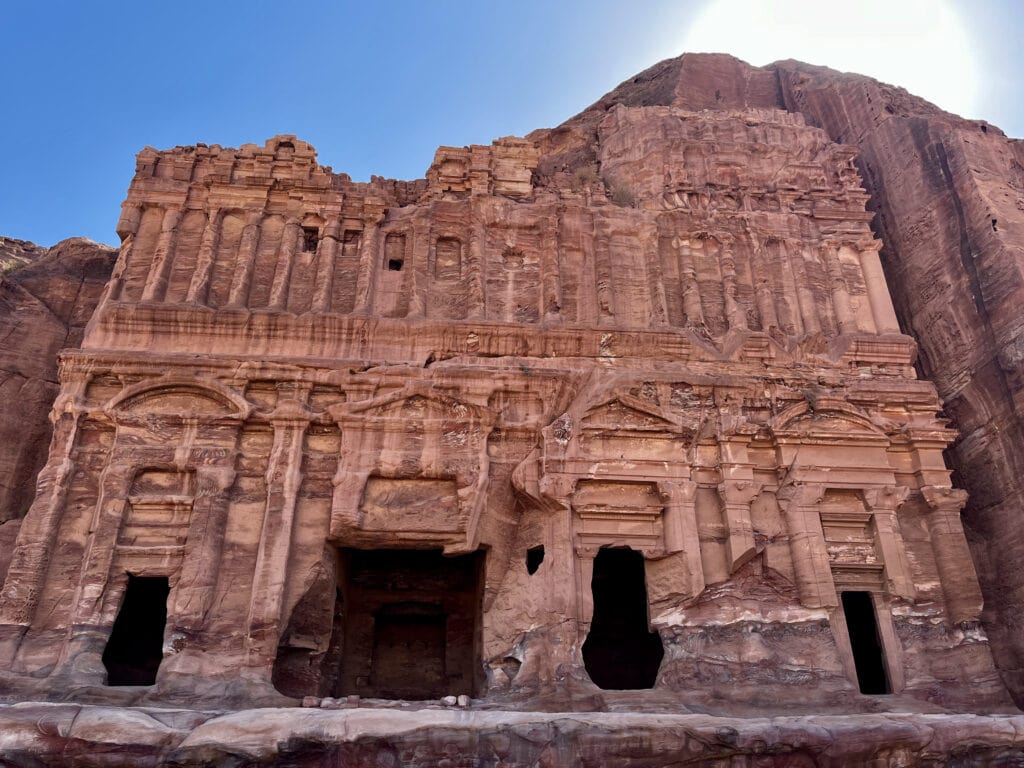
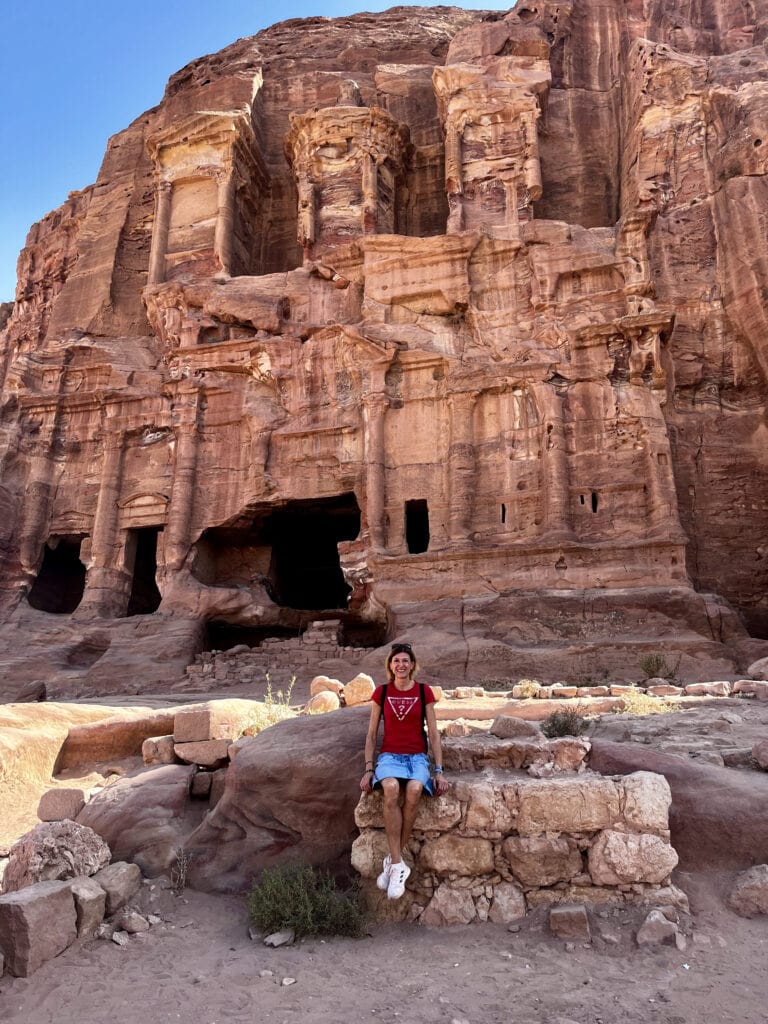
The Royal Tombs
Opposite the Theather is the cliff where the Royal Toms were carved into. Reaching the Royal Toms takes a bit of climbing but it is definitely worth it. The tombs served as the final resting places for Nabataean kings over 2,300 years ago.
Exploring the interiors of these tombs offers a unique experience, allowing one to feel the vibe of those places.

While there’s plenty more to explore in Petra, I must confess that after approximately six hours under the sun in this stunning ancient city, we gave it a rain check and started returning back to the parking place while cooling down in the Siq gorge on the way.


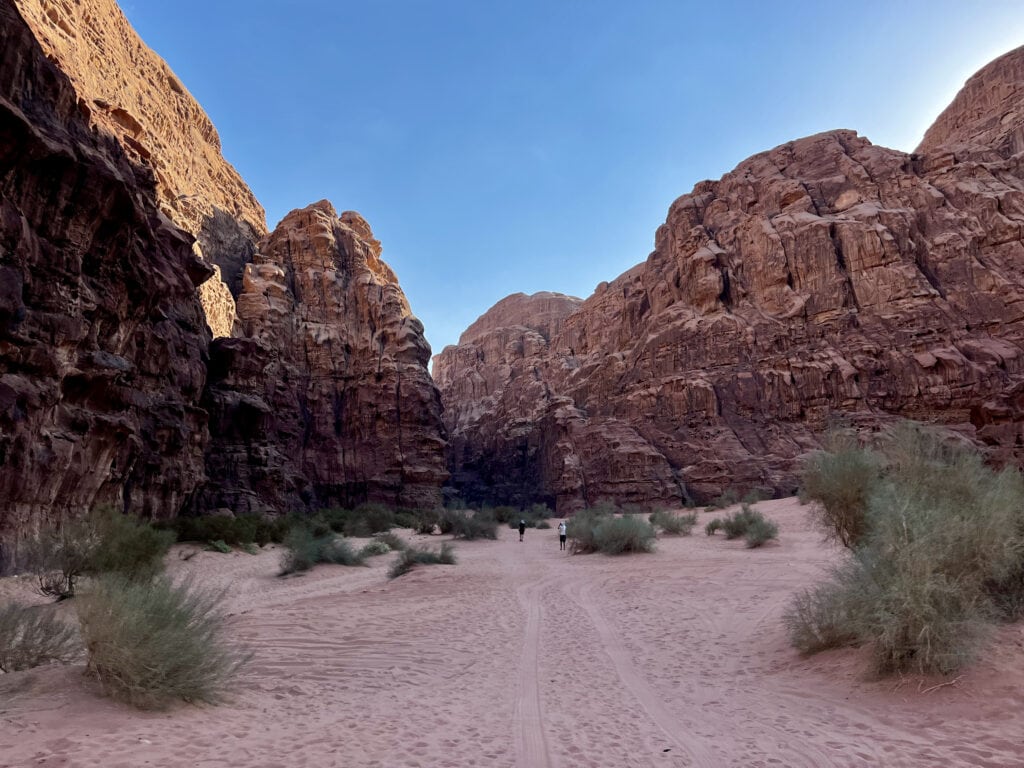
Day 5: Wadi Rum

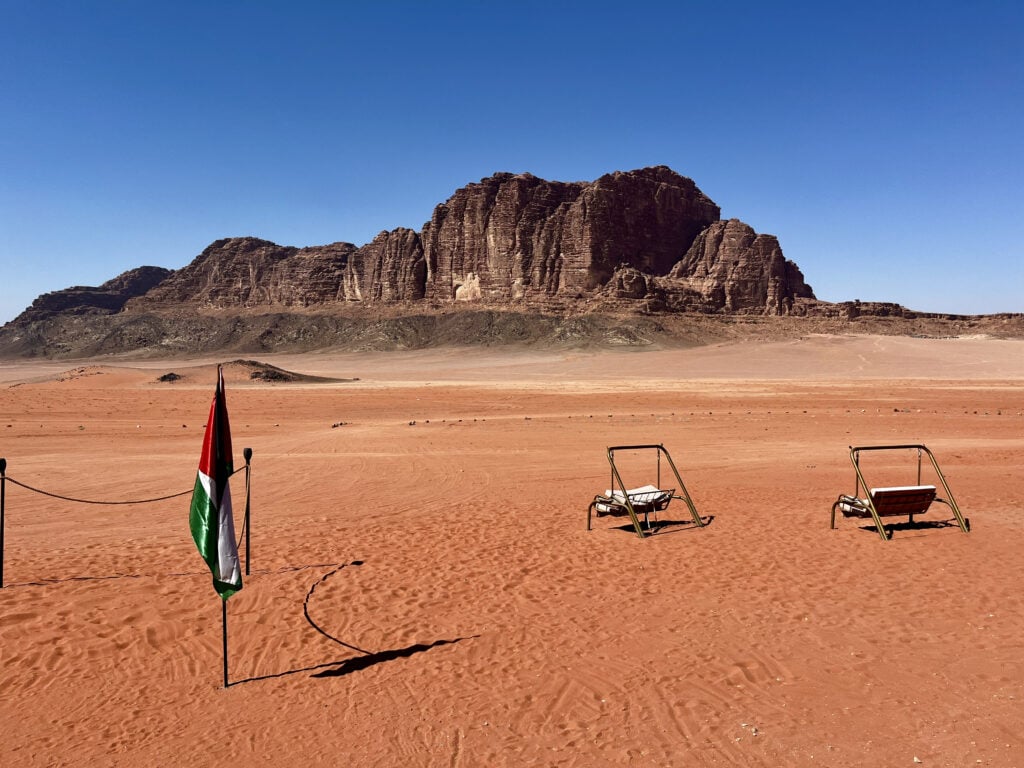
The drive from Wadi Musa to Wadi Rum, the famous desert in Jordan, takes about 2 hours. While planning our itinerary, I contemplated spending two nights in the desert. Eventually, I decided to reduce it to just one night, a choice I believe was correct.

Based on our experience, I would recommend the ideal way to visit Wadi Rum is to arrive after lunch and take the afternoon 4-hour drive. Our drive commenced at 3 pm, and judging by the presence of people and cars from other camps, it seems that they all start around that time. We arrived a bit early to Wadi Rum, settled in the camp, but, honestly, there isn’t much to do except wait for the drive.
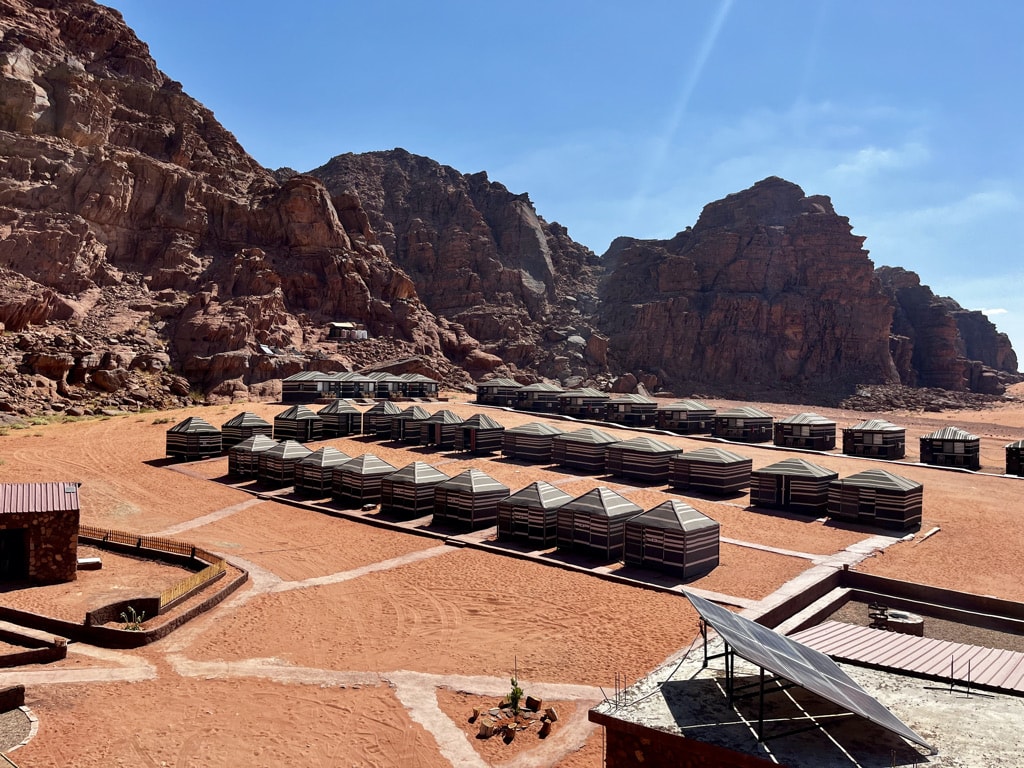
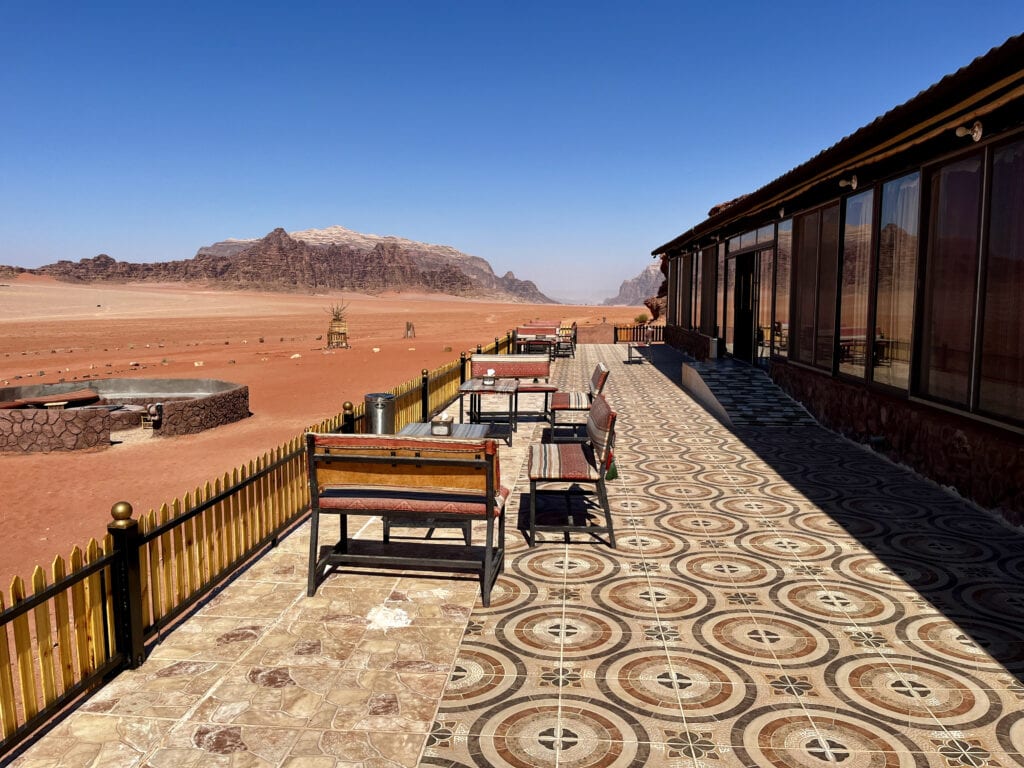
We stayed at Wadi Rum Bedouin Camp. However, with numerous camps scattered throughout the desert, there’s a wide variety to cater to individual preferences.

It is not permitted to drive in the Wadi Rum desert independently. The individual from the Wadi Rum Bedouin camp coordinated to meet us in the village. Before reaching the village, we had to go through the Wadi Rum visitor center, situated near the village on the main road. At the gate, we were halted and directed to their visitor office to showcase our Jordan passes.
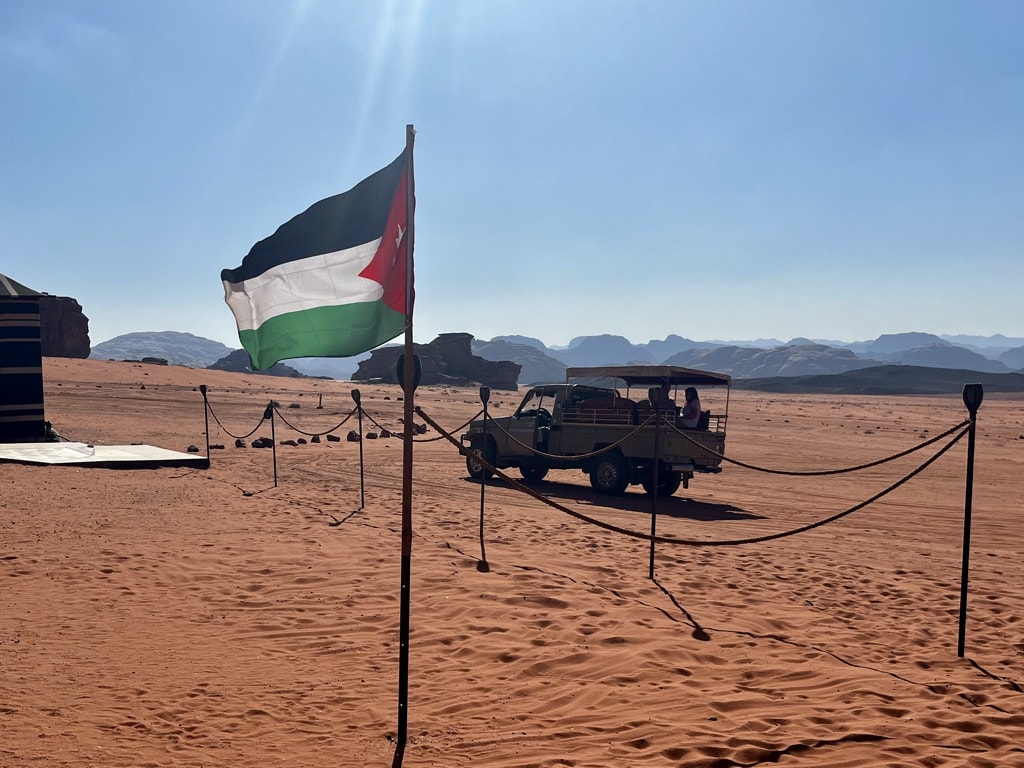
Upon meeting our local guide in Wadi Rum, he drove us in a 4×4 truck to the camp, leaving our car securely parked on their premises.

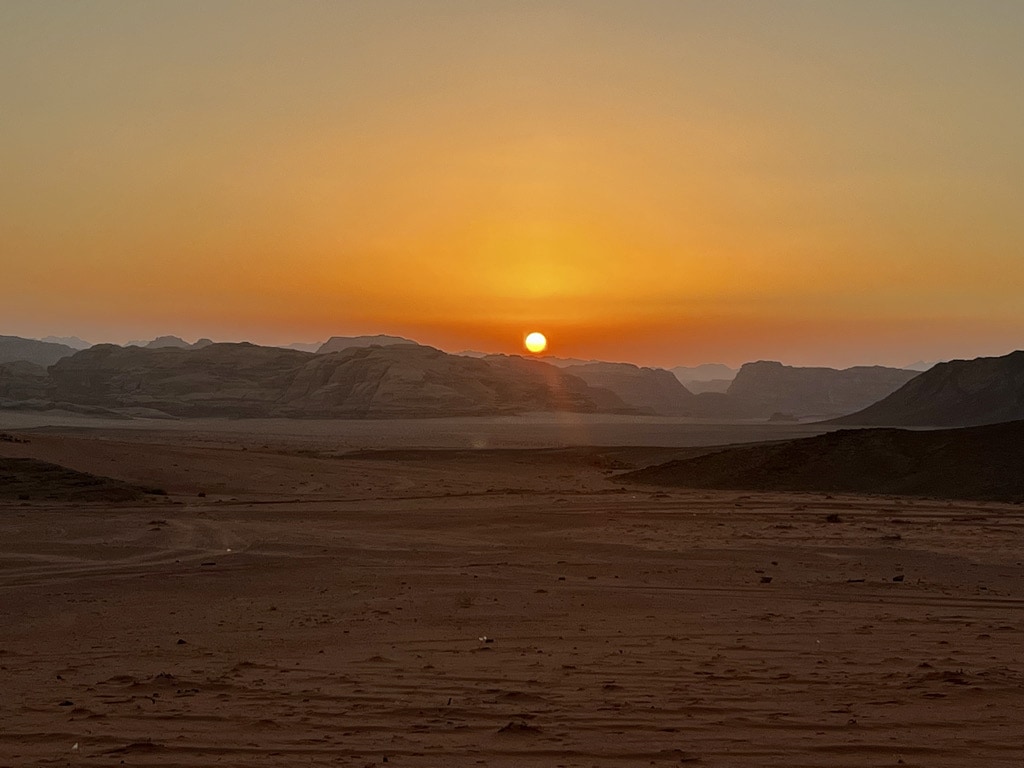
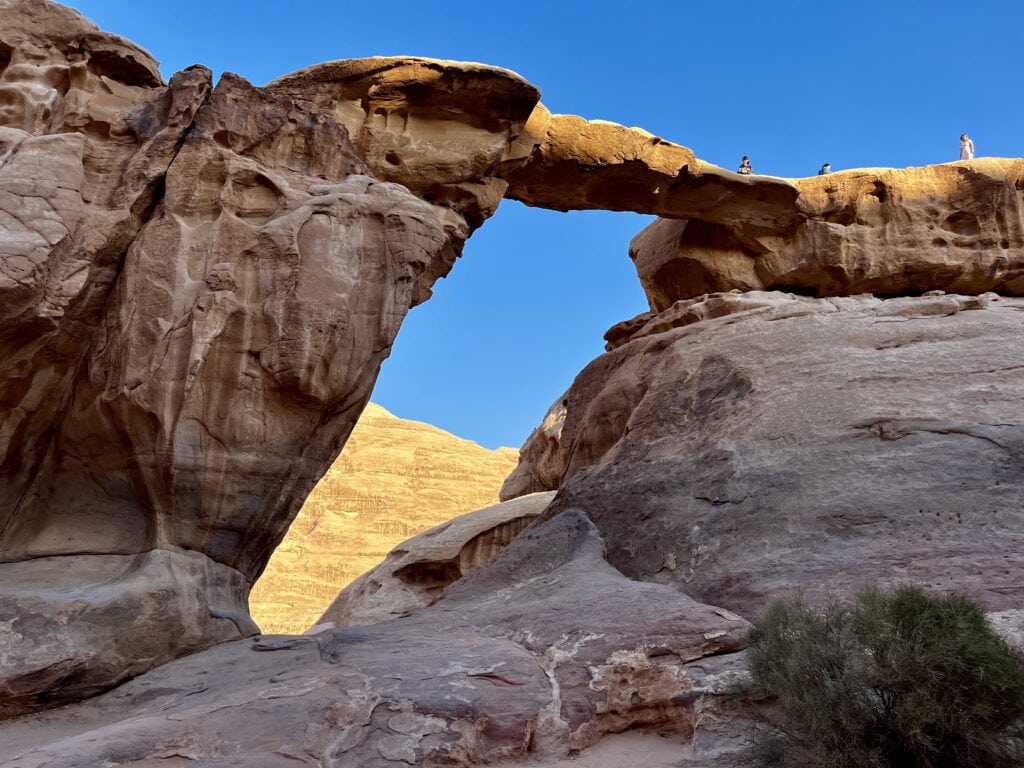
Our afternoon drive through the desert was incredible. It blended the thrill of driving with on-foot exploration, finished by watching sunset while drinking a cup of Bedouin tea.


Day 6: Aqaba – Tala Bay Aqaba

We explored numerous cultural and natural landmarks during the earlier days of our journey, so on day 6, it was time to head to Aqaba for some beach relaxation.

Departing from Wadi Rum in the morning after enjoying breakfast at the camp, the drive to Aqaba via the Desert Highway took approximately 1 hour.
Upon arrival in Aqaba, we left the car at the Free City Center parking near the beachfront. We wanted to explore Aqaba before heading to our final destination, Tala Bay Resort.

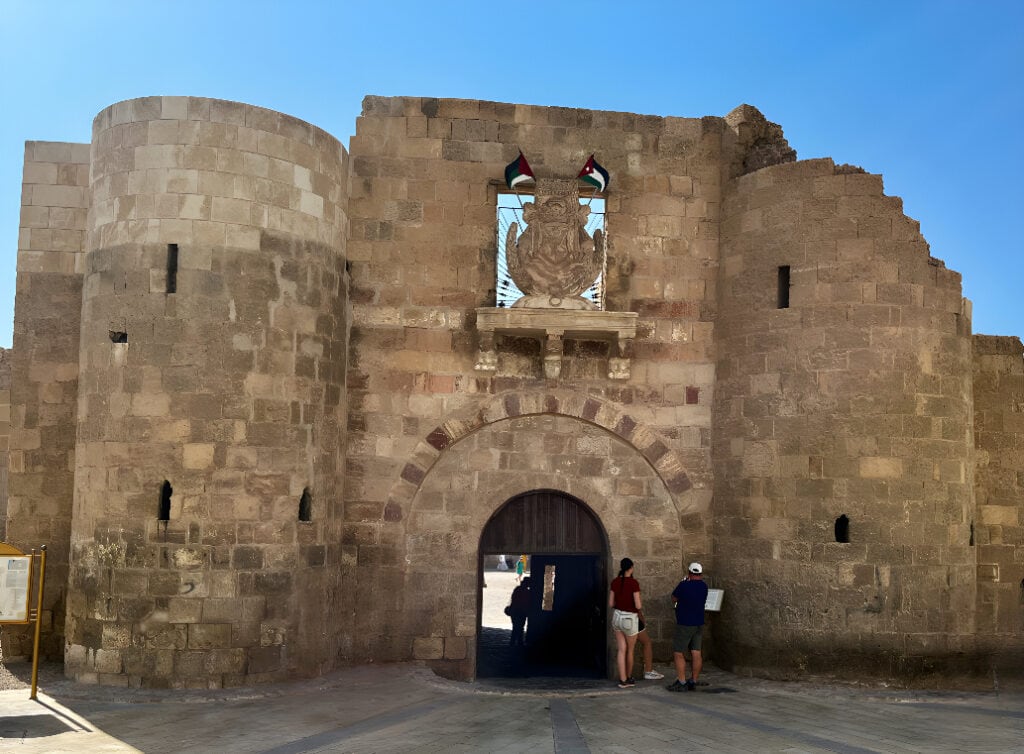
Walking along the Al-Ghandour Beach promenade, we made our way to Aqaba Castle. This Mamluk and Ottoman fortified caravanserai, situated on the pilgrimage route to Mecca and Medina, has preserved its current form primarily from the 16th century.

After exploring Aqaba, we drove to Tala Bay Resort, our final destination on this road trip to Jordan.


Days 7-8: Tala Bay Resort

Why did I choose the Tala Bay Resort over the stay in Aqaba?

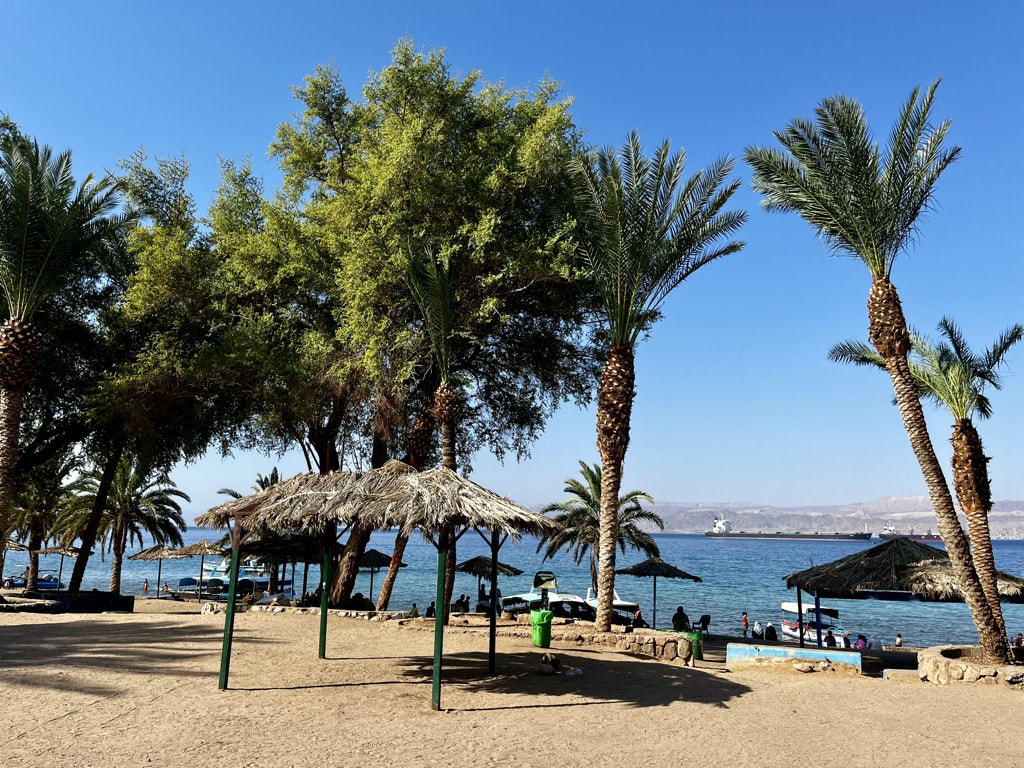
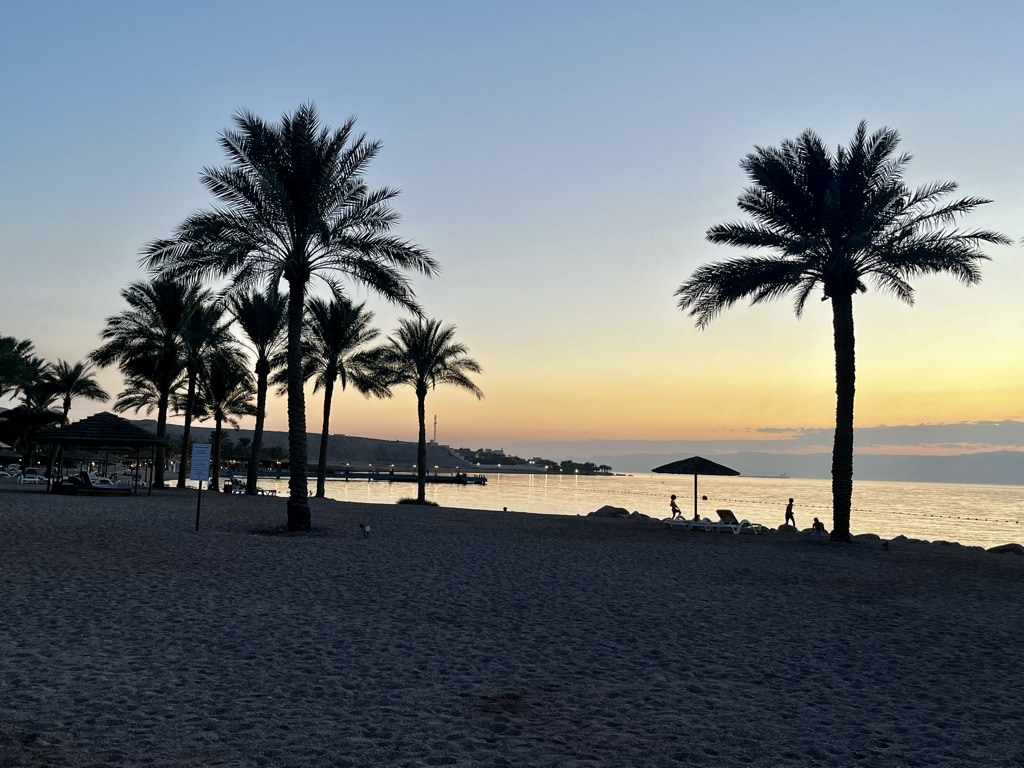
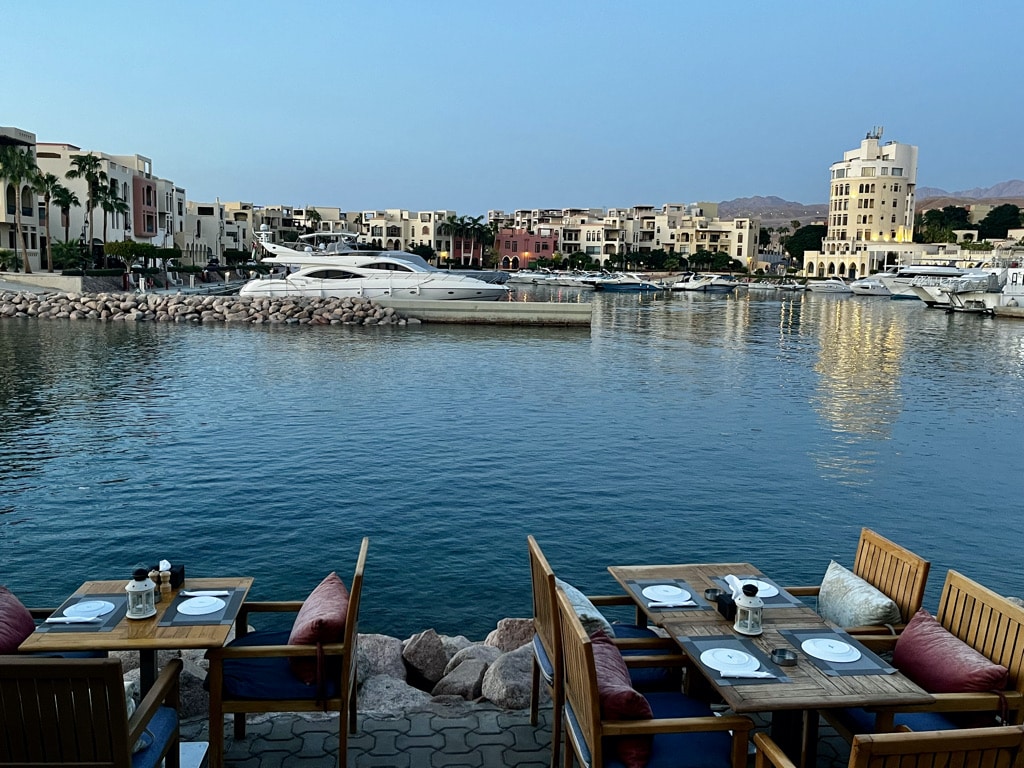
Tala Bay, located about 20km from Aqaba, offers a comprehensive resort experience with beaches, restaurants, swimming pools, and shops. After we explored Aqaba, I was pleased with our decision to stay at Tala Bay. Unlike Aqaba, where public beaches are used by locals and might not be suitable for standard beach activities, Tala Bay provides a more resort-like atmosphere.
During our accommodation research in Aqaba, we noticed that many hotels offer transfers to the Berenice Beach Club, a paid private club located approximately 10km from Aqaba in the direction of Tala Bay.

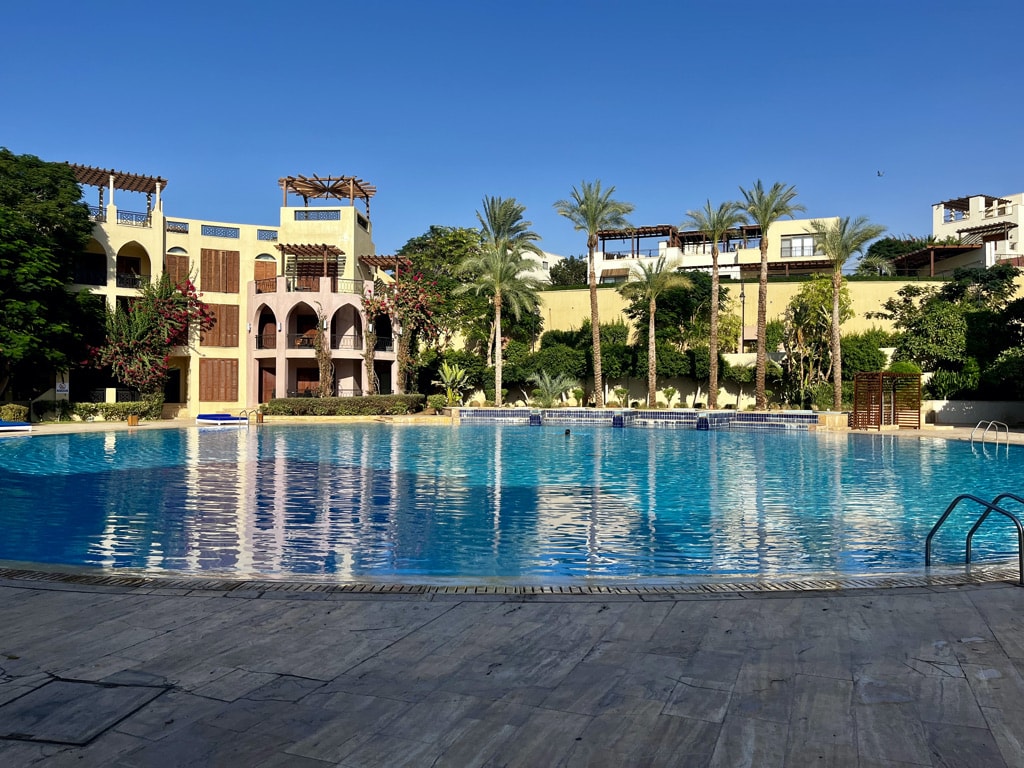
We rented an apartment with one of the many swimming pools just steps away, while the beach was conveniently down the road. It was a delight to soak in the sun before returning to the onset of the European winter.


Day 9: Amman – traveling home from our road trip to Jordan

Our final day was a travel day. Covering approximately 320 km on the Desert Highway, the journey back to Amman took around 4 hours. We returned our rental car to the Monte Carlo Car Rental office, conveniently situated just a 5-minute drive from the Airport Departure terminal. After completing the paperwork, we were transported to the airport (no need to wait for a shuttle bus).

Another fantastic trip. And I have already planned a trip to our next destination.


An Exciting 9-Day Road Trip to Georgia 🇬🇪

The idea of embarking on a road trip to Georgia came to mind during a late-night layover at Dubai airport. Contemplating which region to explore, the post-Soviet republics captured my attention.

Planning the road trip commenced with securing suitable flights to Tbilisi. Opting for LOT (Polish Airlines) via Warsaw emerged as the best choice. Visa requirements were duly checked, and fortunately, no visa hurdles awaited us—smooth sailing.

Determining the places to visit within our timeframe was the next step. Given Georgia’s vast expanse, the selection of areas and regions to explore became a “must”. Details of our choices can be found below.


Practical Tips:

Mobile Data:

The discovery of Airalo proved revolutionary. For phones with e-SIM functionality, I highly recommend downloading it to avoid the constant swapping of physical SIM cards. Airalo allows effortless purchase of e-SIM cards for nearly every country worldwide, offering regional options like Europe or Africa.

Local Currency:

The Georgian Lari is the official currency. Cash was indispensable, especially for accommodation payments, as many places required it. While larger cities’ shops and restaurants generally accepted cards, ATMs were available for cash withdrawals.

Taxi:

In Tbilisi, Uber may be absent, but Bolt operates on a similar principle. Download the app for reliable and affordable rides. Beware of taxi drivers at Tbilisi airport claiming to be Bolt drivers; ordering through the app is safer to avoid exorbitant charges.

Car Rental:

Opting for Tbiliso Car Rental proved a wise decision. They delivered the car directly to our hotel and arranged a convenient airport meeting for return. Despite the local cash payment norm, the company provided excellent service, including full insurance and no surcharge for a second driver. Check my Google review.

Driving in Georgia:

Despite warnings about the challenges of driving in Georgia, I found it totally manageable. Georgian drivers can be “hectic”, overtaking in unconventional places. Roads vary in conditions, and roaming animals are common. Adopting a defensive driving approach, staying calm, and allowing overtaking ensured a pleasant journey. After all, it was a holiday—no need to rush.

Petrol stations are conveniently located in close proximity to each other and are easily accessible for drivers. In the majority of cases, they accept card payments.

One crucial tip to note is that Google Maps often estimates shorter travel times between destinations. Despite the relatively short distances, road conditions may not always be optimal.


Days 1: afternoon in Tbilisi

Rustaveli Avenue:

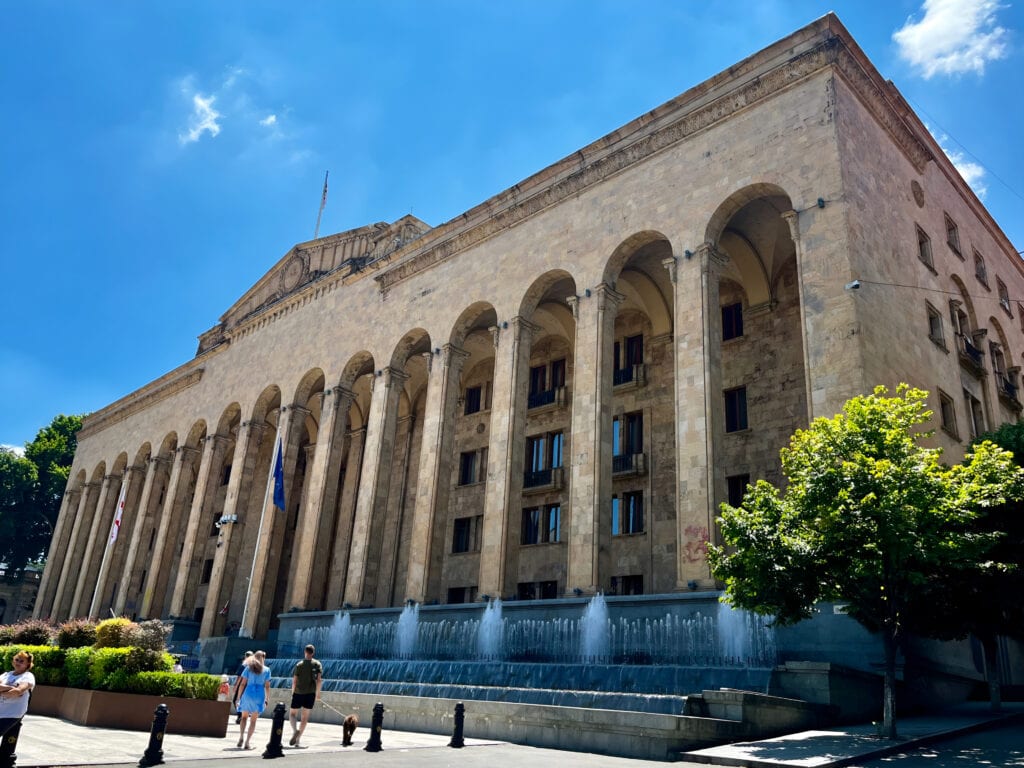
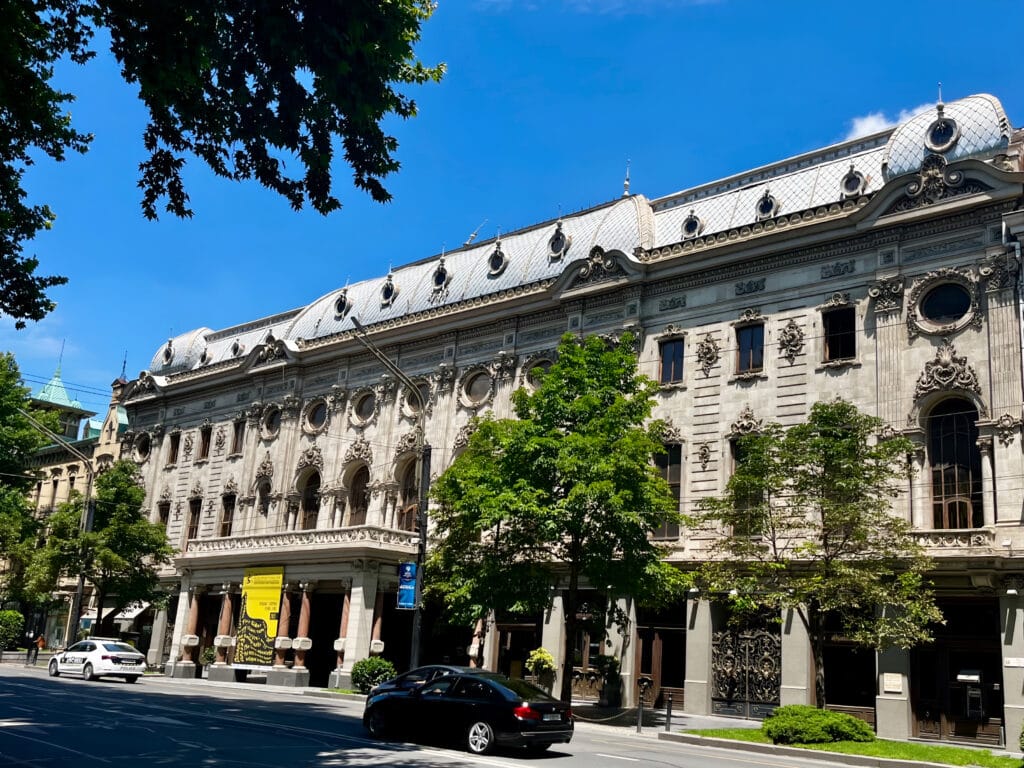
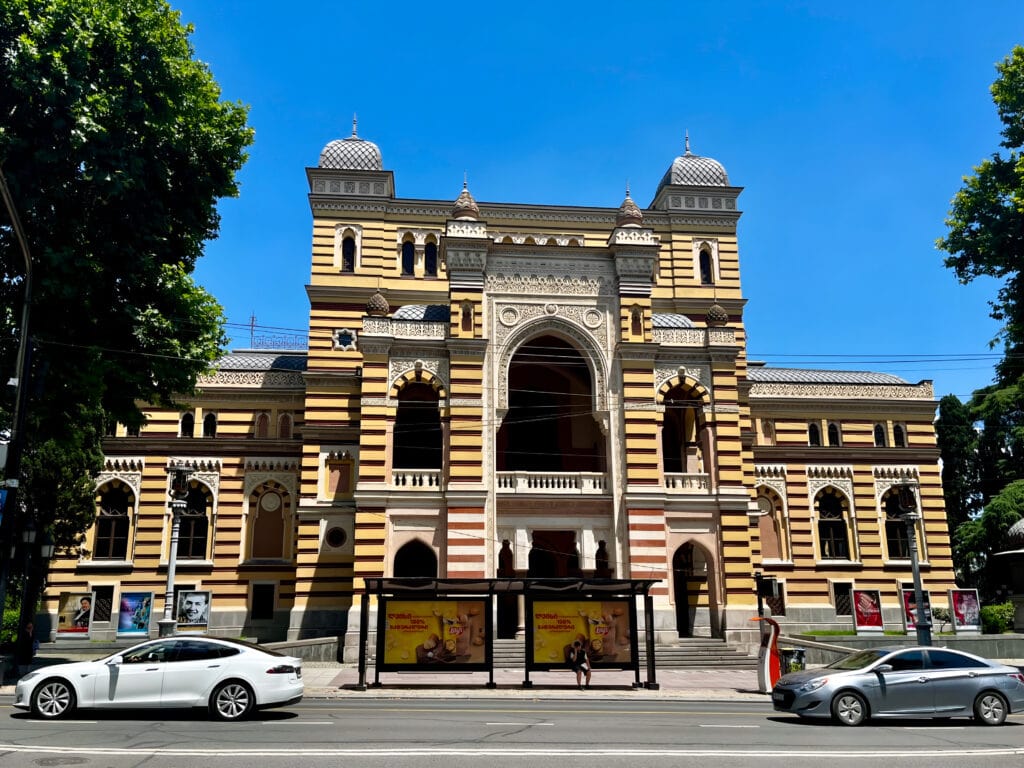
Tbilisi’s main thoroughfare, Rustaveli Avenue, proved to be a perfect introduction to the city. It is the “home” of significant landmarks such as the Georgian Parliament, the Georgian National Opera Theater, and the Georgian Academy of Sciences. The avenue is lined with shops and restaurants. Fortunately, our timing aligned perfectly, allowing us to visit the local market, which is open only on specific days of the week.

Parliament of Georgia

The Parliament building complex was originally constructed as the House of Government of the Georgian Soviet Socialist Republic in the 19th century. It consists of “upper” and “lower” buildings interconnected by a courtyard with staircases and fountains. 

Rustaveli Theater

It is the largest and one of the oldest theaters in Georgia. Named after Shota Rustaveli, a medieval Georgian poet, the theater’s rich history dates back to its establishment in 1887. It was fully renovated between 2002 and 2005.

National Opera Theater

Founded in 1851, the Tbilisi Opera takes center stage as the main opera house of Georgia and one of the oldest in Eastern Europe. 

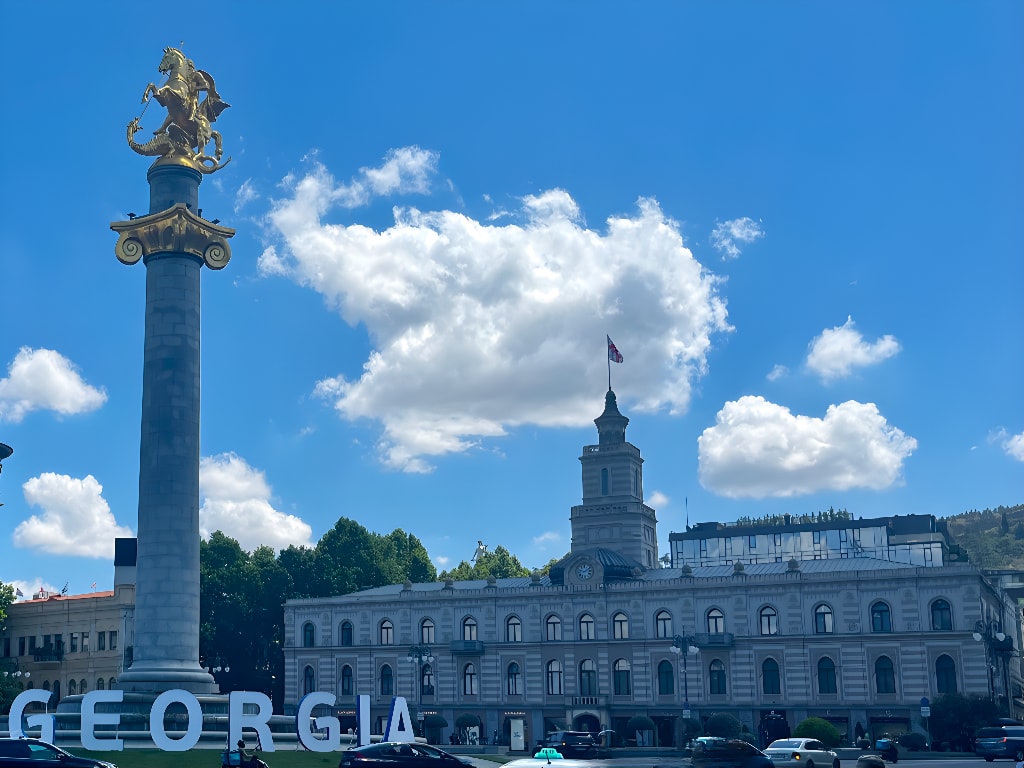
Liberty Square
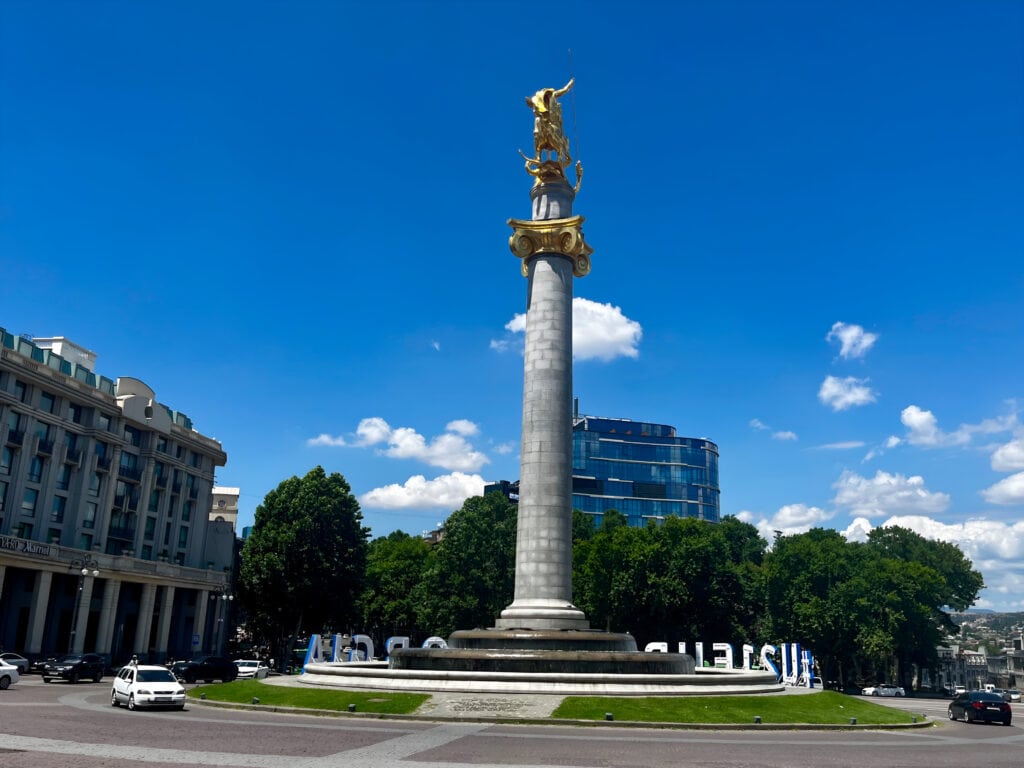
Rustaveli Avenue guides you to Liberty Square, a busy plaza. It is packed with the constant motion of cars and people rushing around. The statue of St. George slaying the dragon dominates the square. It is the symbol of freedom and independence. There are several landmarks such as the Georgian National Museum, or Tbilisi City Hall on the square.

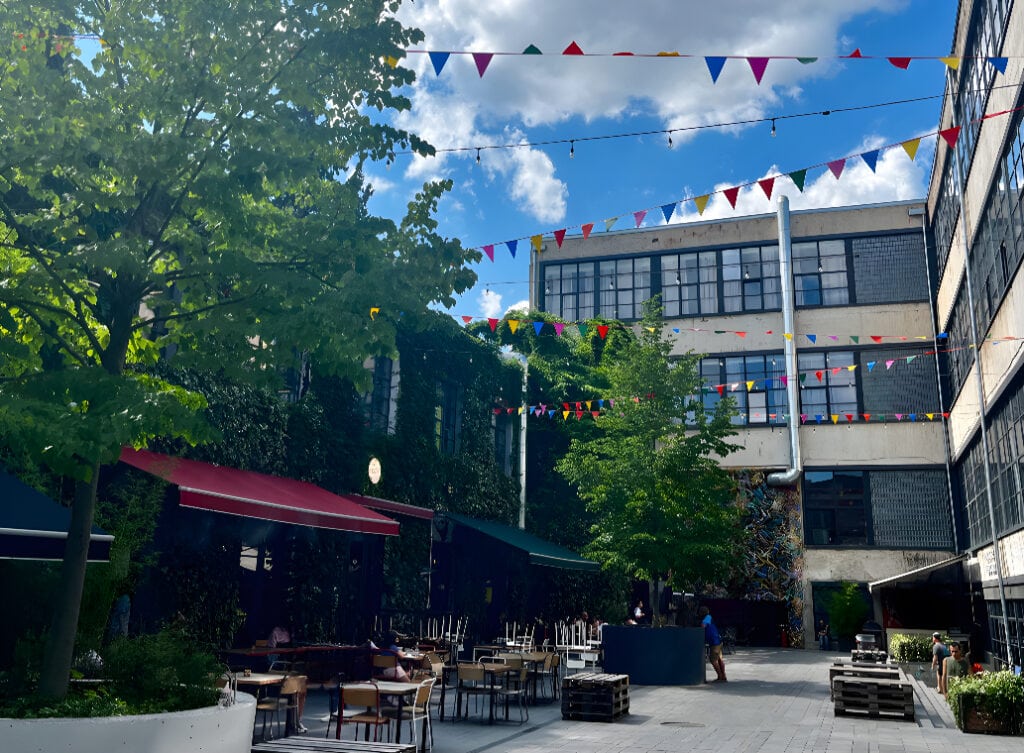
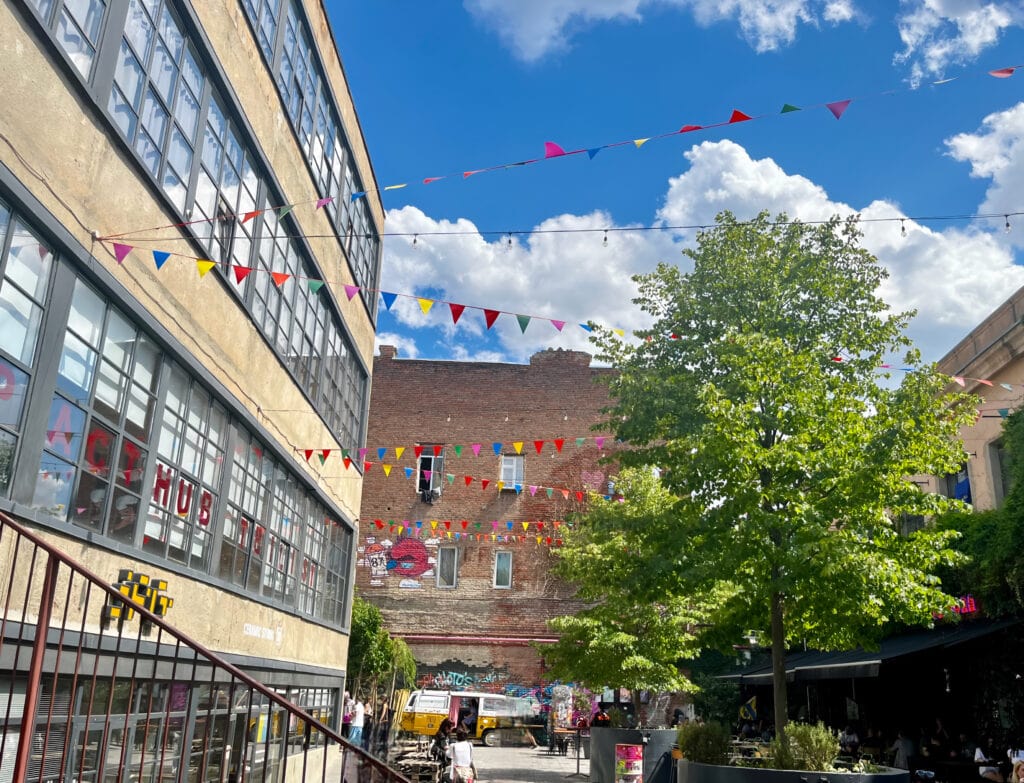
After strolling through Rustaveli Avenue, we decided to have a dinner at Fabrika. It is located in the creative Vera district of Tbilisi. The space was originally a Soviet sewing factory, and the Fabrika complex has repurposed this industrial setting into a vibrant hub for creativity, culture, and social interaction. It offers mix of open cafes and resturants.


Day 2: Exploring Tbilisi

After having a breakfast, we walked from our hotel, via the familiar paths of Rustaveli Avenue, towards Liberty Square. From there, our journey extended to discover new and unexplored landmarks.

The Clock Tower

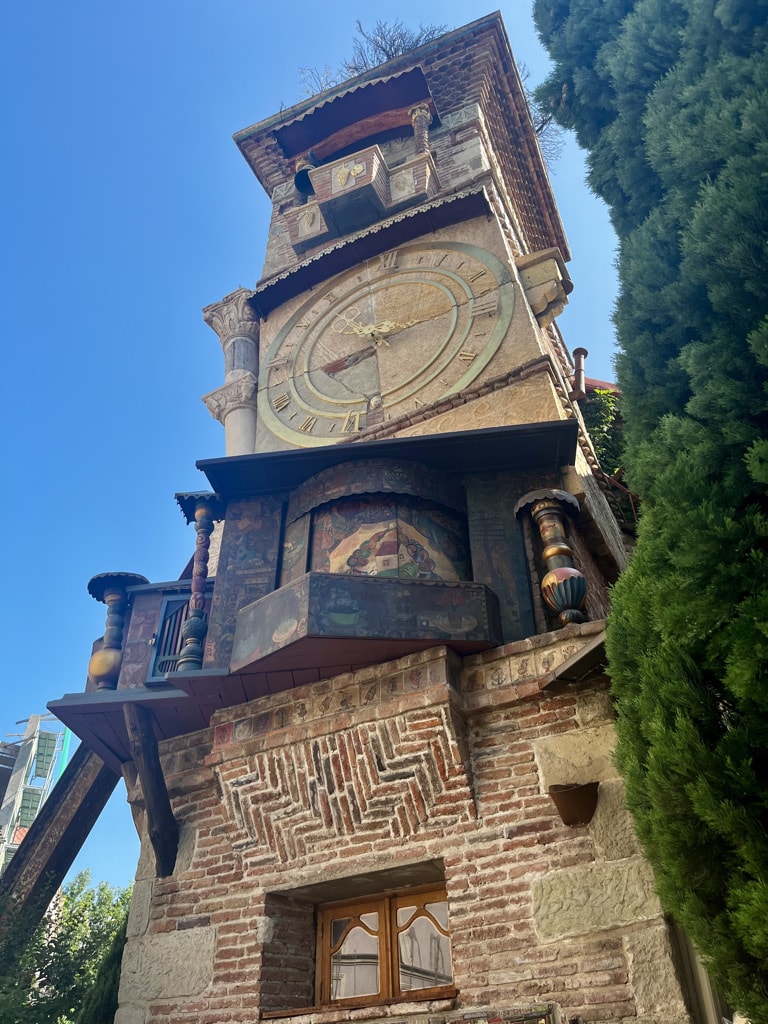
Heading from Liberty Square, we walked towards the Clock Tower. Adjacent to the marionette theatre, this distinctive tower, built by Rezo Gabriadze in 2010, is a true masterpiece. Every hour, an angel comes out to ring the bell with a small hammer.

Bridge of Piece

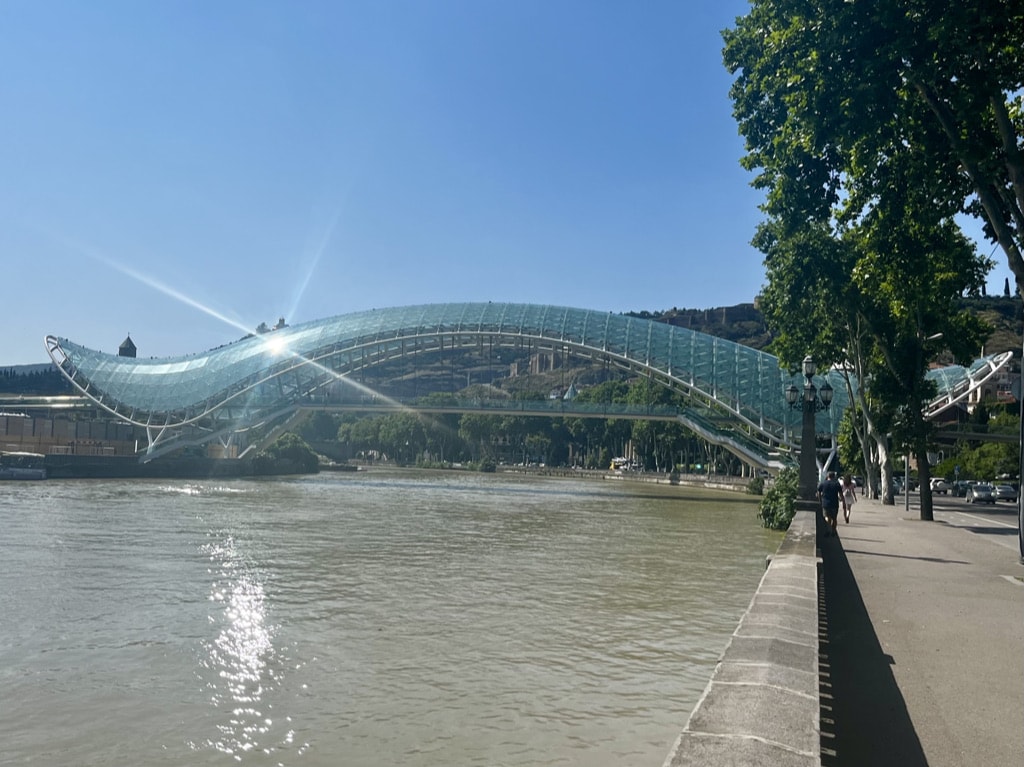
Our next destination was the Bridge of Peace, a captivating structure that opened to the public in 2010. This construction is a pedestrian-only bridge crafted from a combination of glass and steel making it a unique and visually interesting landmark.

Rike Park, Cable Car station

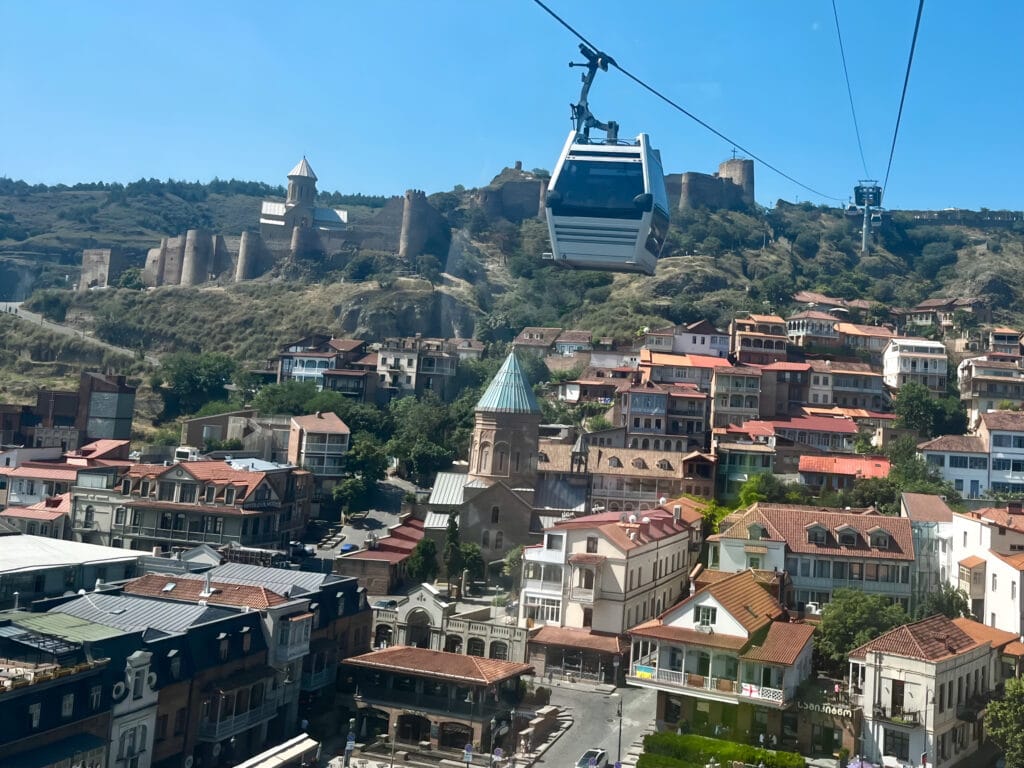
After crossing the bridge, we reached the opposite side of the Mtkvari River, concluding our journey in Rike Park. A stroll through the park led us to the cable car station, the next leg of our adventure that would transport us to the historic Narikala Fortress.

Narikala

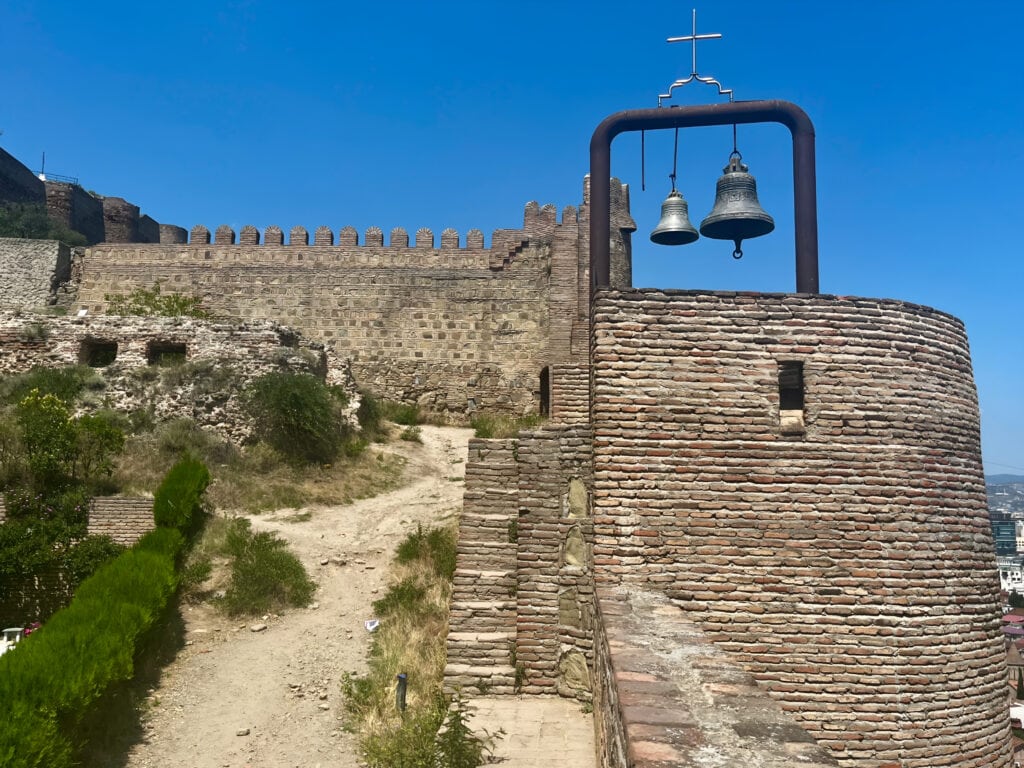
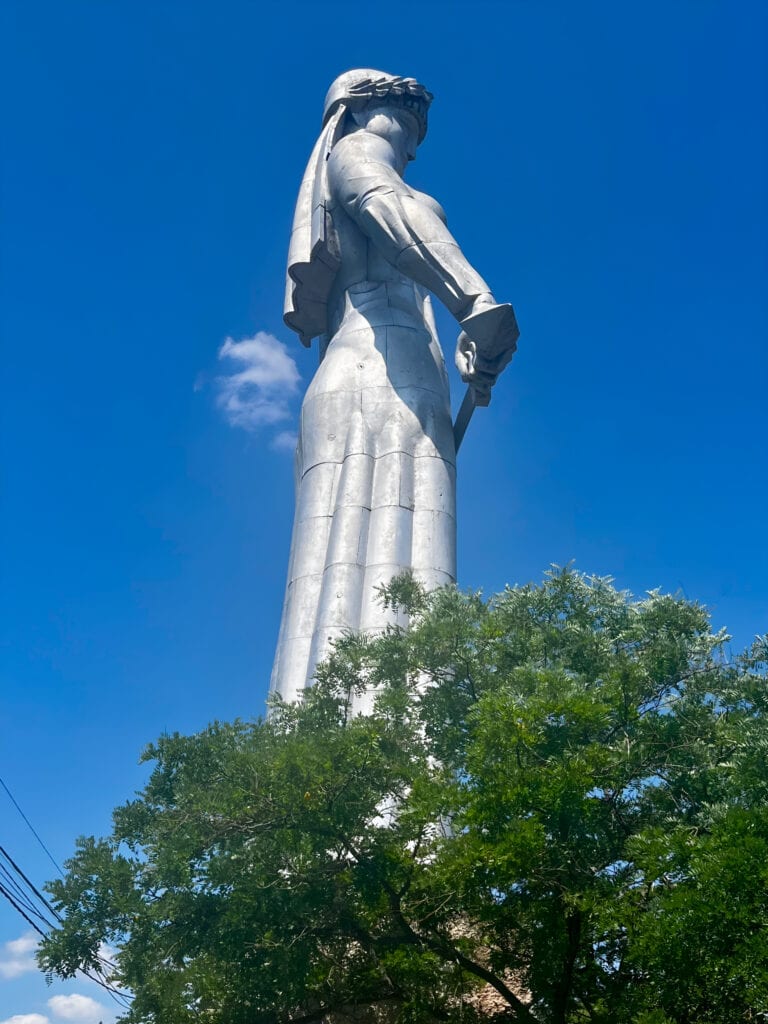
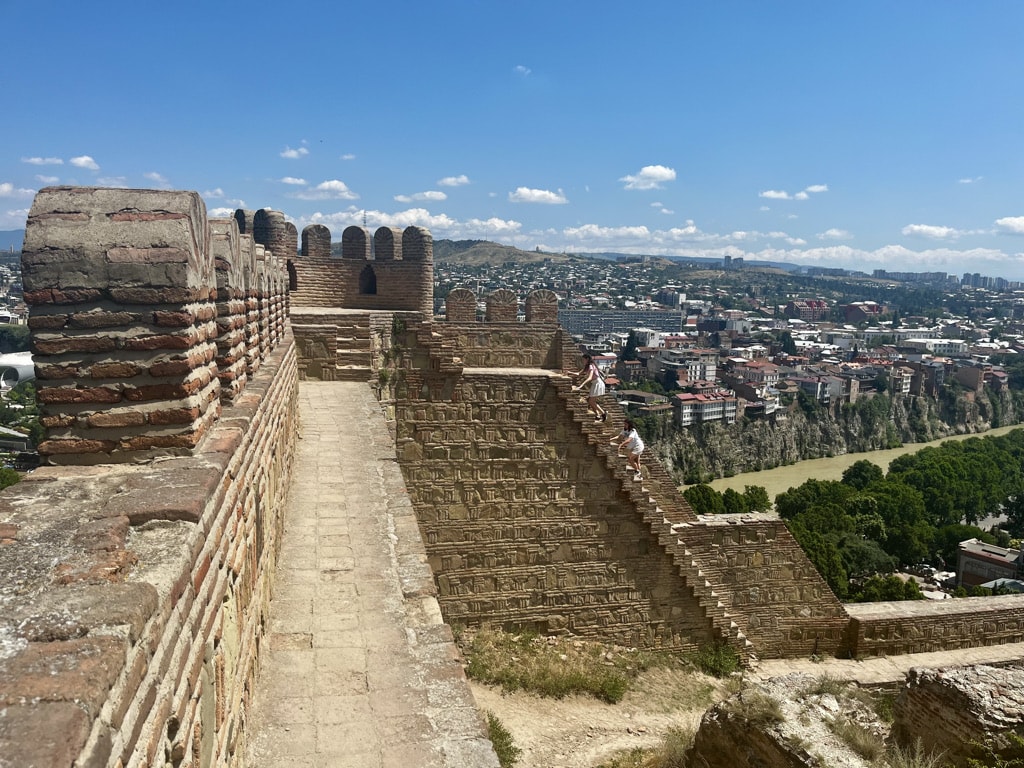
It is an ancient fortress on a hill overlooking Tbilisi and the Mtkvari River. Positioned on a steep incline, we walked through the fortress remnants. Our exploration extended to the remarkable “Mother of Georgia” statue, a symbolic representation of Georgian national character. With a bowl of wine in her left hand, she welcomes friends, while a sword in her right hand signifies readiness to confront enemies.

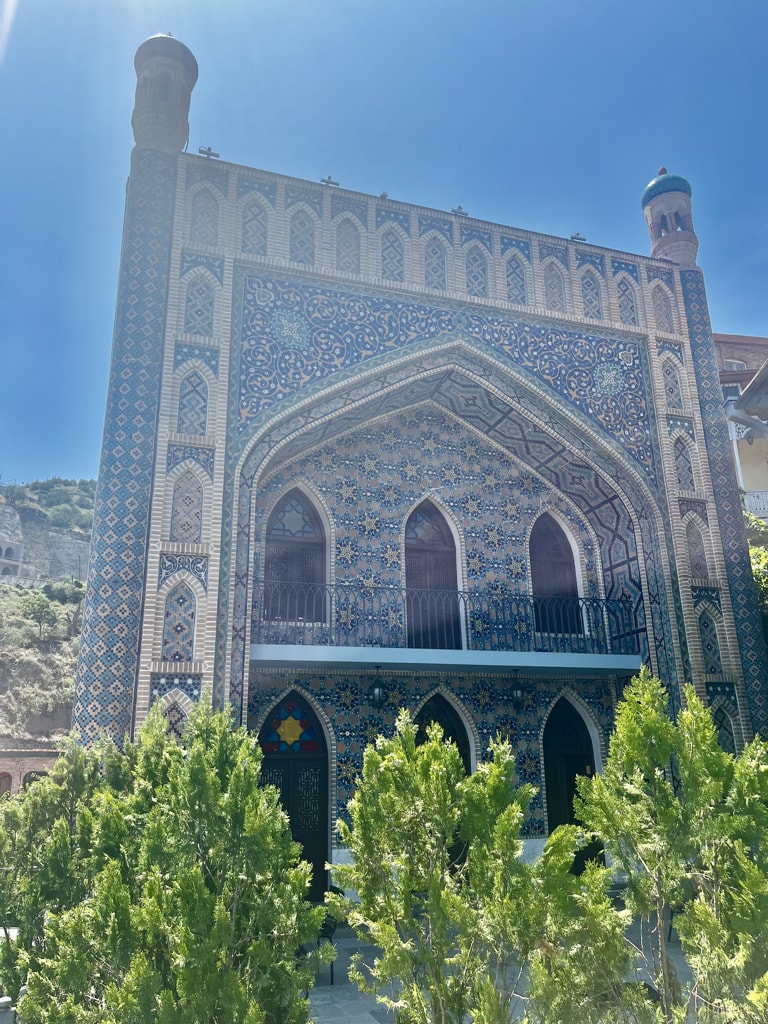
The Chreli-Abano Sulphur bath.


The Chreli-Abano Sulphur Bath is situated at the base of the Narikala Fortress, a location steeped in legend. According to the tale, it is believed to be the spot where the falcon of the King of Iberia, Vakhtang Gorgasali, fell. This event led to the discovery of the hot springs and, in turn, the establishment of a new capital.

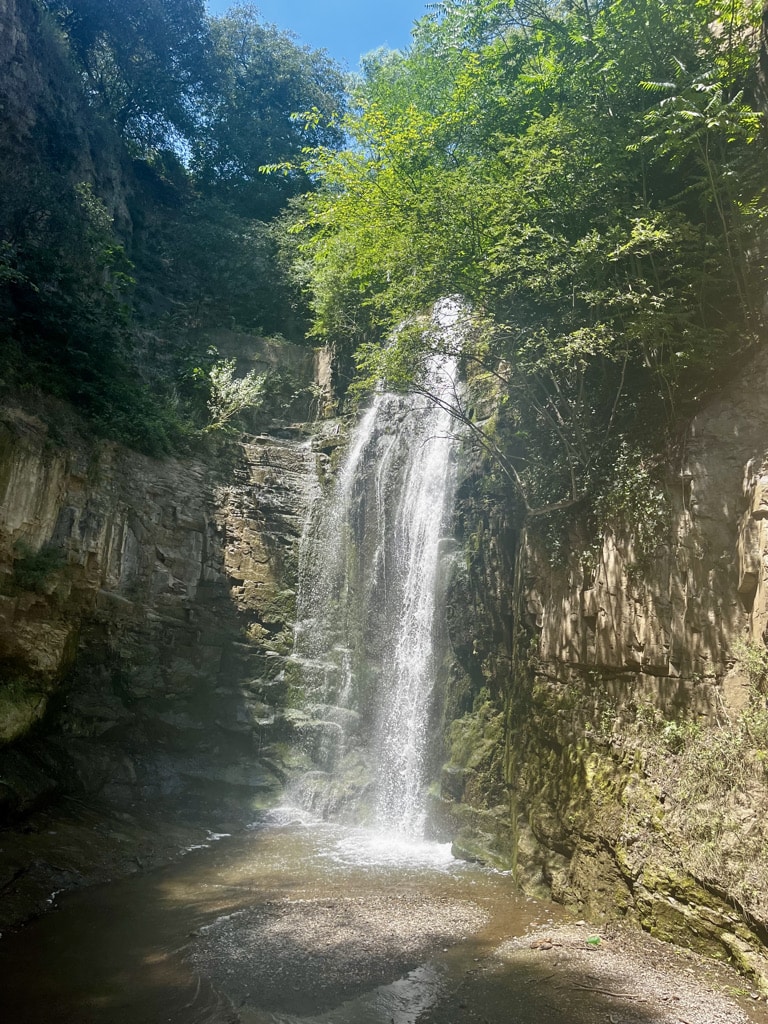
Leghvtakhevi Waterfall

We walked from the sulfur bath complex through the stunning Leghvtakhevi canyon, guiding us to the stunning waterfall at its conclusion. A place certainly deserving of exploration.

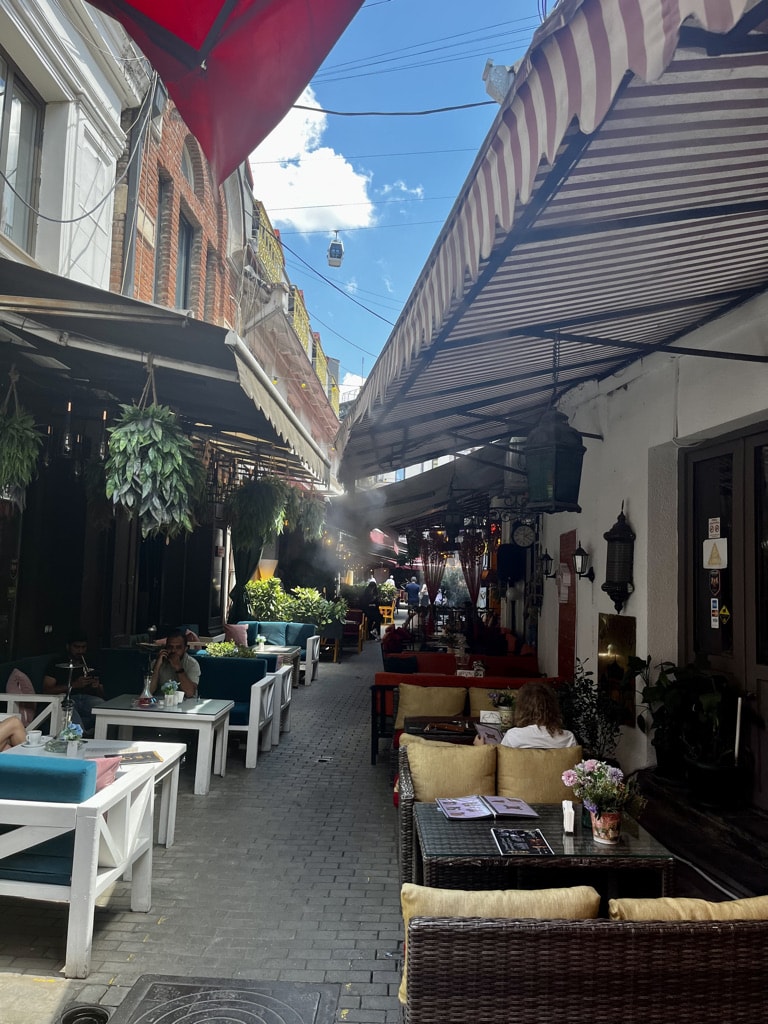
Old town restaurants

Following a day filled with exploration, it was time for a meal at one of the charming old town restaurants.


Day 3: Georgian Millitary Road

Tbilisi – Stepantsminda: 158km

On Day 3, the Tbiliso Car Rental company delivered our car right to the hotel doorstep—a fantastic bonus. Our plan for the day was to drive from Tbilisi to Stephantsminda (also known as Kazbegi) via the famed Georgian Military Road.

Stretching 212 kilometers from Tbilisi (Georgia) to Vladikavkaz (Russia), the Georgian Military Road is a historic route utilized by invaders and traders over the ages. My pre-road trip readings had painted a picture of a potentially hazardous route, marked by obstacles like landslides, potholes, and free-roaming animals. Naturally, I wondered what the reality would be. Surprisingly, it turned out to be fine.

Perhaps my perspective is influenced by my experience driving on African roads, many of which are in a dire state. There was a challenging section around Gudauri where a portion of the road had collapsed, leading to a self-regulated flow of traffic. However, we navigated through that part fairly swiftly.

As mentioned earlier, Georgian drivers can be somewhat hectic, overtaking in seemingly ridiculous places. Nevertheless, the journey offers numerous landmarks to stop and explore along the way. I had allocated the entire day for sightseeing and driving, ensuring an easy going pace.

Places to visit on Millitary Road

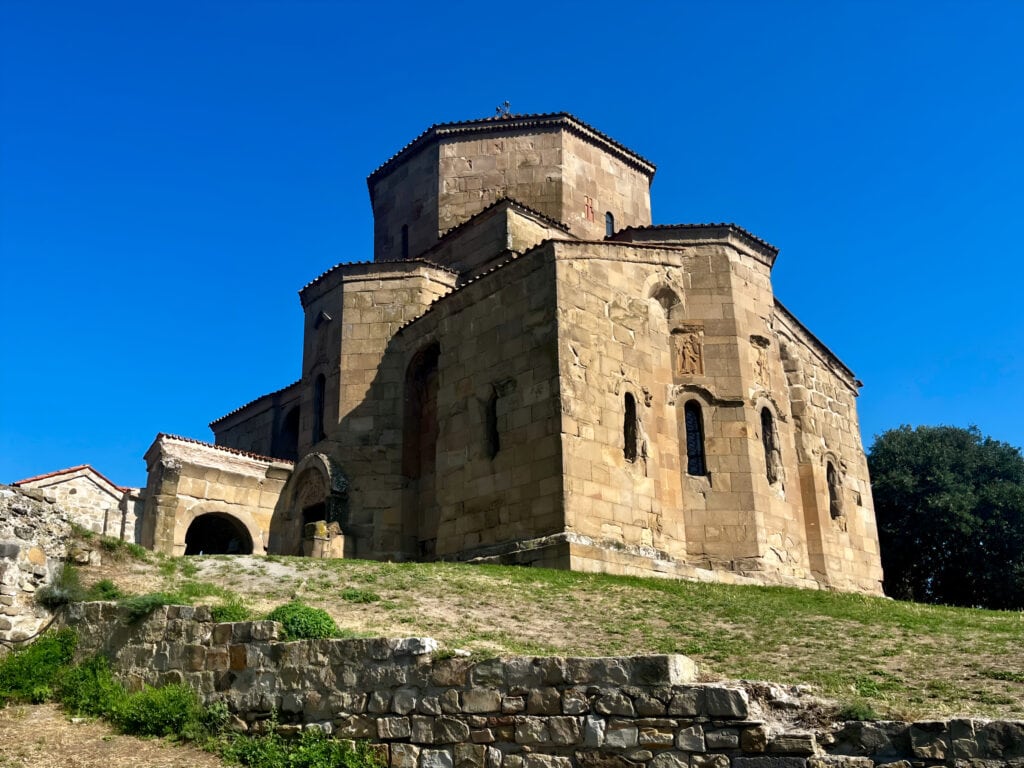
Jvari monastery

Tbilisi – Jvari: about 27km
Jvari Monastery is situated on a hill overlooking the confluence of the Mtkvari and Aragvi rivers, near the town of Mtskheta. Mtskheta is one of the oldest continuously inhabited cities in the world and is considered a UNESCO World Heritage Site. We saved the visit to Mtskheta for our drive back to allow time to visit the other landmarks on the Millitary road.

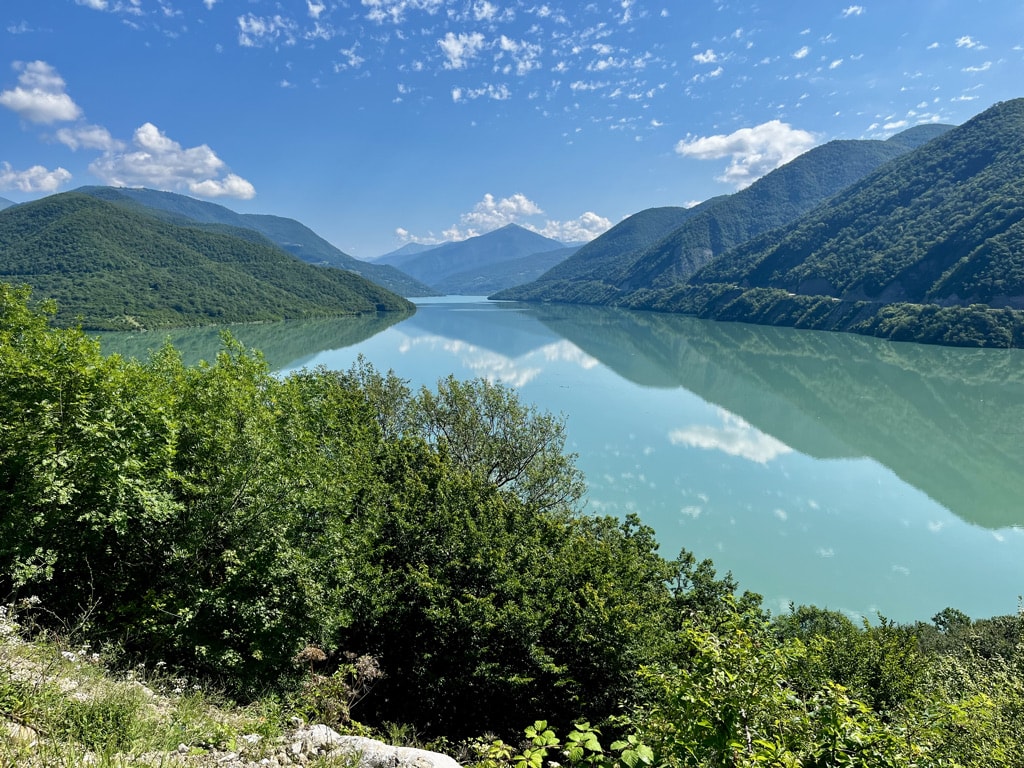
Zhinvali Reservoir

Jvari – Zhinvali Reservoir: about 45km
The reservoir is totally impressive. It is located on the Aragvi River and it serves multiple purposes, including hydroelectric power generation, water supply, and flood control. There are few stops to pull over and enjoy the view.

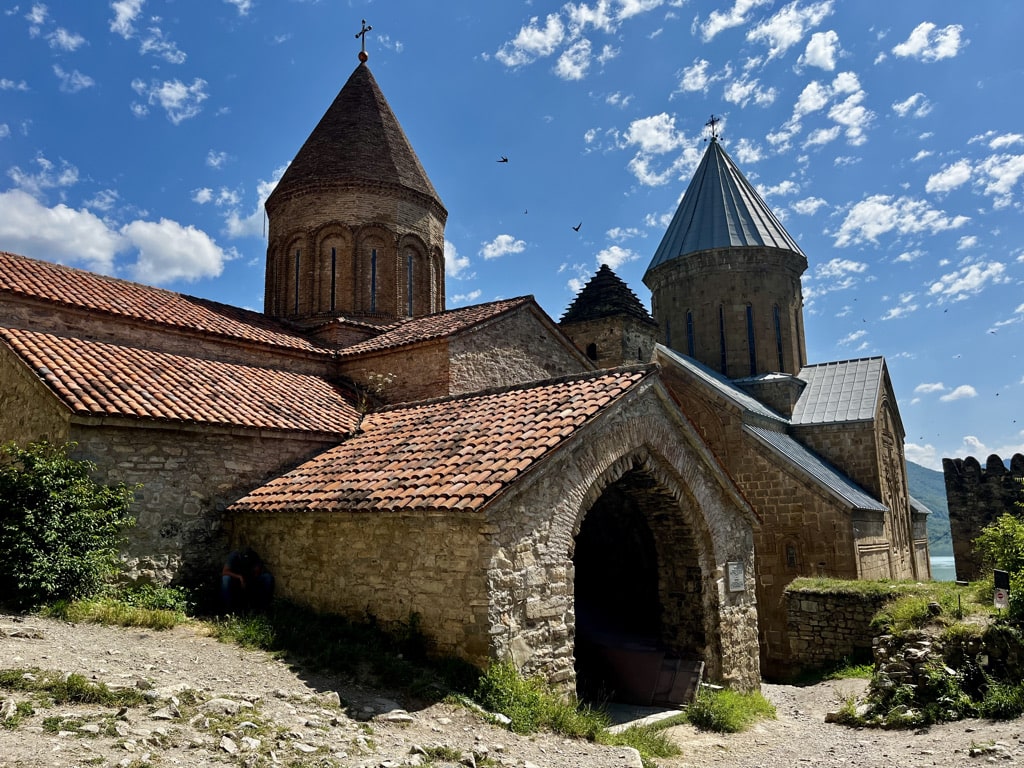
Ananuri Fortress

It is located near the Zhinvali Reservoir. It is a significant historical site, with its roots dating back to the 17th century. The complex served as the residence of the Dukes of Aragvi, a feudal dynasty that ruled this region of Georgia.
The site offers stunning views of the Zhinvali Reservoir and the Caucasus Mountains.

Pasanauri

Ananuri – Pasanauri about 30km
Following our exploration of Ananuri Fortress, we continued with our journey towards Pasanauri, a small village along the Military Road. We chose to make a stop in this small village for lunch.

Panorama Gudauri

Pasanauri – Panorama Gudauri: about 37km
Referred to as the Georgian-Russian Friendship Monument, this structure was constructed in 1983 to commemorate the bicentennial of the Treaty of Georgievsk, symbolizing the enduring friendship between Soviet Georgia and Soviet Russia. Positioned on the Georgian Military Highway, nestled between the ski resort town of Gudauri and the Jvari Pass, the monument takes the form of a sizable circular stone and concrete structure, offering panoramic views of the Devil’s Valley in the Caucasus mountains.

Stepantsminda (Kazbegi)

We passed Gudauri, the Georgian skiing resort on the way. Houses were scattered around the main road and hills, but we decided not to make a stop, as it didn’t look all too interesting to explore further. Surely, the winter scenery must be beautiful in that area. Our ultimate stop for the day was Stepantsminda, formerly known as Kazbegi. Arriving in the late afternoon, we quickly located our accommodation. Our accommodation for the next two nights was Kheta Apartments, a charming dwelling offering a splendid view of the iconic Gergeti Trinity Church and Mount Kazbeg.


Day 4: Gergeti Trinity Church – Juta – Chaukhi Lake

Gergeti Trinity Church

The following morning, we drove up to visit the Gergeti Trinity Church, an important landmark in Stepantsminda. While many choose to embark on a day trip, hiking up the steep hill, we decided on an alternative plan for the rest of the day. Dating back to the 14th century, the Gergeti Trinity Church remains an active institution within the Georgian Orthodox and Apostolic Church.

Following our exploration of the church and relishing the breathtaking views of Mount Kazbeg, we made our way back to Stepantsminda and then proceeded toward the village of Juta.

The journey to Juta

Before our drive, we were advised that reaching Juta demands a 4×4 vehicle and some driving expertise. This proved accurate. As we left the Military Road, driving deeper into the valley, the road conditions deteriorated. Eventually, only a “dirt” road ascended to Juta, highlighting the necessity for a 4×4 vehicle.

Juta – Chauki Lake hike

Arriving at Juta village, recognized as the highest inhabited settlement in Georgia, we reached the starting point for an approximately 8km round trek to Chauki Lake.
After parking our car, we sought guidance from a local to locate the trailhead. Though I had read descriptions of the trail being fairly easy, the reality hit us during the initial 1km of a steep ascent before reaching the more level plateau of the valley. Once we conquered that section, the valley unveiled itself before us, affirming that the effort was indeed worthwhile.

Continuing along the trail, navigation was straightforward, with little chance of getting lost. However, a new challenge emerged near the summit as we approached the lake. We needed to cross a river stream, and there was no apparent crossing point. Following the lead of other tourists, we found the most convenient spot, hopping from one substantial rock to another. Finally reaching the lake, its size was not as expansive as we had envisioned, but the mountain views were breathtaking.

On our way back to Juta village, we made a misjudgment. Upon reaching Chaukhi Lake, we spotted another trail leading to Juta village. Having read about the possibility of completing a circular route, it appeared to be an excellent idea for our descent. However, this choice proved to be wrong.

As we neared the valley plateau, it became evident that there was no viable way to cross the river. The river flowed swiftly, and its width posed a challenge. Unwilling to backtrack the entire way, we sought the calmest and narrowest section. Eventually, we identified the best option, though not without its challenges. Removing our shoes, we began the crossing. The water was freezing cold. At the midpoint, we contemplated turning back, but we pressed on and successfully crossed.
This experience serves as a cautionary note for those reading this post—be mindful not to make the same mistake.


Day 5: Mtskheta – Gori

Stephantsminda – Gori: about 250km

Mtskheta

The next day, we prepared for our journey down the Military Road, with our initial destination being the town of Mtskheta—one of Georgia’s oldest cities and among the world’s continuously inhabited urban areas.
Upon reaching Mtskheta, we parked our car. Before exploring the city , we took a break at Tatin Coffee Shop.

The town is relatively compact, with the focal point being the Svetitskhoveli Cathedral, acknowledged by UNESCO as a World Heritage Site. Interestingly, for us Europeans, the entrance to the cathedral was unexpectedly free of charge.

Having explored the cathedral, we took a leisurely stroll through the city before embarking on the final leg of our day’s journey to Gori.

Gori

An intriguing aspect of Gori is that it serves as the birthplace of Joseph Stalin, the leader of the Soviet Union. While there is a museum dedicated to Stalin, we chose not to visit it.
Arriving in Gori later in the afternoon, we opted for a leisurely stroll through the town. We also explored the Fortress situated above the city. I would stick to the pleasant exterior view next time.


Day 6: Gori – Uplistsikhe Cave Town – Batumi

Gori – Batumi: 279km

Uplistsikhe Cave Town

While Gori itself may not be a standout destination, the nearby Uplistsikhe cave town is an absolute must-visit. Recognized by archaeologists as one of the oldest urban settlements in Georgia, Uplistsikhe is situated approximately 10km from Gori and is currently on the UNESCO tentative list.

After breakfast, we made our way there. I would recommend exploring the cave town either early in the morning or late in the afternoon as it is quite exposed to the sun. Upon arrival, we parked in the designated area right in front of the entrance, purchased our tickets, and freely roamed the settlement. Walking into the caves, we envisioned how people once lived there.

Setting off on a lengthy journey, we headed towards Batumi in the afternoon following our visit to the cave town. While a portion of the route involves a highway, other sections take us along national roads characterized by heavy traffic and, in some instances, roads that are not impeccably maintained. There is a highway under construction but during our visit in July 2023 the travelling was not easy.

Batumi

Upon our arrival in Batumi, we encountered absolutely terrible traffic, requiring at least an hour to navigate through the city to reach our accommodation. Despite booking an apartment by the seafront a few kilometers away from Batumi city center, our assumption of private parking was incorrect. Parking in Batumi in July proved to be a “mission impossible”. Fortunately, luck was on our side as we managed to secure a parking space that became available just as we arrived. Observing the challenging parking situation, we opted not to consider using the car for the duration of our stay.


Days 7 & 8: Our stay in Batumi

Batumi, a Black Sea resort and port city, serves as the capital of the Georgian republic of Adjara. It is a blend of modern skyscrapers and weathered old buildings where locals still reside.

While some may choose to spend the entire day lounging on the beach, our inclination is always to explore the surroundings.

The beach promenade

It spans 8km and provides an excellent walking path. There are many restaurants, coffees, and ice cream stands on the promenade. At the end of the promenade stands The Alphabetic Tower

The Alphabetic Tower

This 130-meter-high structure symbolizes the uniqueness of the Georgian alphabet and its people. After purchasing tickets, we took the elevator all the way up the tower, providing a fantastic vantage point to overlook the city.

The Octopus

An interesting structure awaits in Batumi Park. Housing the Fantasy Café, it serves as a popular meeting point for both Batumi residents and numerous guests.

We took a walk through the streets, exploring the local shops and discovering a few coffee spots that caught our attention

Among them were:

  1. The Batumi version of Starbucks: While bearing the Starbucks logo, the coffee shop presents a unique design distinct from the traditional Starbucks.
  2. Kafune TrdelNik: Since Trdelník is popular in Prague, being sold on every corner of the city, we couldn’t resist trying the Batumi version.
  3. CoffeeTopia: This coffee shop stood out with its intriguing interior design and good coffee.

Another attraction in Batumi is the Dolphinarium, but we chose not to explore it.


Day 9: Batumi – Tbilisi – flying home from our road trip to Georgia

On our final day, we got up early to navigate through Batumi without encountering traffic jams. Driving back to Tbilisi, we met with the Tbiliso Car Rent representative at the airport. After handing over the car, we checked in for our flight back home. This road trip was truly enjoyable, and we hope it inspires your own adventures.


Unforgettable 9-day road trip to Albania🇦🇱

In the spring of 2023, as the season for planning summer holidays approached, my teenage daughter suggested an unconventional destination.

Albania, must-visit country trending on Instagram. 

It sounded interesting. I had never considered Albania before, but I love the idea of exploring places beyond the typical tourist circuit. A quick check of the distance from Prague and our available time revealed that reaching Ksamil is a stretch. But navigating the northern part of Albania seemed feasible. Decision made. My daughters and I embarked on a road trip to Albania. It was in August 2023.

Practical insights:

The journey began with extensive map study and online research. Questions like the distance, the likelihood of driving on highways, and general expectations occupied my thoughts. Some outdated articles painted Albania as a “mafia” country, with car theft beyond the border. It is just so wrong.  Albania is amazing and I can not wait to return next year. 

  • Mobile Data:

Unfortunately, Albania falls outside the “roam like at home” EU zone, a circumstance shared by other non-EU Balkan countries. For the most convenient access to mobile data, I recommend using Airalo.

Discovering Airalo has been a game-changer for me. If your phone supports e-SIM functionality, I highly recommend downloading it. This eliminates the hassle of constantly swapping physical SIM cards. Airalo allows you to effortlessly purchase e-SIM cards for nearly every country worldwide. Additionally, they offer regional SIM cards, such as for Europe or Africa. It truly works like magic.

  • People: 

Albanians are a very welcoming nation. As three women exploring the country, we felt at ease and comfortable throughout our journey. Although we fortunately didn’t require any special assistance, I felt that if we needed one, we would get instant help. There is no problem with English in cities and tourist areas. People try to assist and if they don’t speak English, they will get someone to translate.

  • Cash-Centric Culture:

Albania remains predominantly cash-oriented. While larger establishments, restaurants, and petrol stations accept cards, it’s advisable to inquire beforehand about their card payment policies.

According to a World Bank report highlighted in the newspaper, Albania holds the lowest percentage globally of individuals aged 15 and above using digital payments. In 2021, this figure stood at a mere 35%.

  • Currency:

The official currency is the Albanian LEK. The Euro is widely used in Albania, with a straightforward conversion of 100  LEK = 1 Euro. Euros are commonly accepted for various transactions, ranging from beach chair rentals to small parking fees and local shops. Accommodation expenses can also be settled in euros. Local ATMs provide a convenient option for cash withdrawal, but be mindful of withdrawal fees, which vary among banks. I recommended to explore multiple ATMs to assess withdrawal fees before deciding on the most economical option.

  • Driving in Albania:

Albanian roads exhibit varying qualities, with some sections in good condition and others riddled with potholes. Vigilance is crucial, even on double-lane highways. During our summer visit, we noticed numerous vehicles with Italian, German, or UK registrations, sparking curiosity about the influx of foreign tourists. However, a simpler explanation unfolded: many of these vehicles were owned by Albanians residing abroad, returning for their summer holidays.

Petrol stations are nearby of each other and easy to drive. They, in the majority of the cases, accept card payments. It is recommended to inquire.
Driving a diesel SUV, I found myself contemplating the diesel options available at petrol stations, namely Blu diesel and Euro diesel. Opting for Euro diesel is recommended, as it aligns with the quality standards observed in the EU. Even if the price is slightly higher,


Day 1: Prague – Belgrade

Prague – Bratislava – Budapest – Belgrate: 895km on highways

Highway stamps:

Necessary for Czechia, Slovakia, and Hungary. Serbia has toll gates. 

The stamps can be purchased online. Below are links for the official shops in each country.

– Czechia: https://edalnice.cz/en

– Slovak: https://eznamka.sk/en

– Hungarian: https://ematrica.nemzetiutdij.hu/en

Documents: 

Ensure you have your car documents and Green card insurance ready for border crossing control. Also, arrange written consent for driving someone else’s car, even if it belongs to a family member who isn’t traveling with you. 

We crossed all the borders during the trip with our Czech ID cards. We didn’t need passports at all. I still had them in my bag anyway, just in case.

Belgrade:

Arriving in Belgrade in the afternoon, we took the opportunity to explore the city center, enjoying its vibrant atmosphere with numerous restaurants and coffee shops.


Day 2: Belgrade – Durrës

Belgrade – Skopje – Pristina – Durrës: 770km.  Mostly on highways except for the last approximately 100km in Albania.

What is the best route?

Planning the route proved slightly tricky as Google Maps suggested a shorter but less favorable route through Montenegro’s winding roads. 

The quickest option was to drive from Belgrade to Skopje, and through Kosovo to Albania. When researching this option, I was getting some contradictory information. The questions I had in my head were: Is it safe to travel through Kosovo? Are going to spend a long time on the border post? Will we travel on highways? Are there any specific requirements to enter Kosovo? 

Driving through Kosovo

Despite the complexities surrounding Kosovo’s status as a self-declared country, taking this route turned out to be the right choice. 

We hit the highway in Belgrade and drove all the way towards Skopje. We continued and followed the direction of Pristina/Kosovo. Eventually, we got off the highway to follow the state road towards N.Macedonia/Kosovo border. Driving this road made me a little nervous. It was not in perfect condition. Luckily, it is only about 24km until you reach the border. 

Note: the EU Green car insurance card is not valid in Kosovo. You need to pull off at the border post and buy insurance at a dedicated place. We bought one for 15 days for 30 euros.

We crossed into Kosovo without a major delay on the border. And what a pleasant surprise. A great new highway leads from the border to Pristina and the Albanian border. 

While the border crossing into Albania was fast, the highway’s condition deteriorated. There is a double-line highway with a speed limit of 80km/h likely due to the less-than-ideal road conditions. But we made it all the way to Durrës.

Durrës check in

For me, one of the key considerations in planning a road trip is always PARKING. It turned out to be a critical factor in selecting accommodation in Durrës. Parking in Durrës during the peak season can be a daunting task, with cars seemingly filling every available space. This challenge is, I believe, due to the lack of underground garages in most apartment buildings and hotels.

To stay at the Wavebeachfront apartment was a perfect decision. With a limited number of private parking spaces, informing the owners in advance is essential, but their responsiveness and willingness to accommodate are truly amazing. Despite driving in and out of Durrës daily, they consistently ensured a parking spot for me, going the extra mile to assist with the somewhat tricky parking situation.

Choosing accommodation right along the beachfront promenade is ideal. You are steps away from the beach, ocean, and many restaurants, bars, and coffee shops. The walk on the promenade is super cool. 

The beaches are filled with chairs and umbrellas which you have to rent. There are only a few beach areas where you can put your own towel down. Nevertheless, we enjoyed the comfort of the rented equipment.


Day 3: Exploring Durrës city

The city stands as one of the oldest in Albania. With a rich history, it even claimed the title of Albania’s capital in modern history. What makes Durrës special? 

It is the history, beaches, and its role as a gateway to Western Europe; thanks to its strategic port location and proximity to the Italian coastline. 

In my eyes, Durrës wears a dual identity. The city, nestled around the port, resonates with the daily life of the locals, revealing the heart and soul of Durrës. On the other hand, the “beach” part of the city atmosphere has evolved around the holidaymaker’s buzz. 

About a 15-minute drive from our apartment brought us to Durrës city center. We headed to one of the watched, paid parking spaces. I am happy to pay the parking fee for the assurance that my car won’t be towed away by local authorities.

Our day began with a visit to Mulliri Vjeter coffee shop, the Albanian equivalent of “Starbucks.” This local coffee chain won us over with its unique interior design, inviting atmosphere, and, of course, excellent coffee, cakes, and sandwiches.

Walking around Durrës is easy allowing us to visit key points of interest

Durrës Amphitheater 

The remains of a Roman Amphitheater dating back to the 2nd century AD. While the site might not meet high expectations due to its somewhat shabby condition, we enjoyed observing it from the outside without entering.

Durrës Castle

We strolled around the fortification walls and explored the Venetian tower. There is a nice city view from the top of the tower.

Sheshi Liria square

We walked around the main town square with many fountains. Surrounding the square, you’ll find an array of shops, offices, and restaurants.

Royal Villa of Durrës

For those willing to take a walk up the hills to the upper part of Durrës, the Royal Villa awaits. Once a summer residence for King Zog, we discovered that it was unfortunately closed, hidden behind imposing walls. However, the journey offered a rewarding ocean view.

Beach Promenade

The real highlight for us was the beach promenade. After reaching its end, we decided to have a light snack lunch in one of the promenade coffee shops while enjoying the ocean view. 


Day 4: Tirana

Durrës – Tirana: 38km, about 1h via SH2 highway.

The journey from Durrës to Tirana is easy, with a continuous highway leading the way. However, be prepared, the traffic can get hecting upon entering Tirana. If your destination is the city center, a helpful tip is to stay in the middle lane. The right lane tends to be congested with stationary vehicles, while the left often designates a left-turn-only lane, leaving you reliant on someone in the middle lane to allow you in.

Parking in the city center: 

Consider utilizing “Parking per Ju“, a convenient paid underground garage close to Skanderbeg Square, the heart of Tirana.

Places not to be missed

Skanderbeg Square:

Navigating Tirana’s city center on foot is straightforward, and like many tourists, our journey began at Skanderbeg Square. Covering a vast 40,000 square meters, the square’ is truly impressive.

Skanderbeg Square

Skanderbeg Statue

A monumental statue honoring the Albanian feudal lord and military commander who spearheaded the rebellion against the Ottoman Empire.

National Museum of history

Easily identifiable by its adorned mosaic, this building stands out on the square.

Et’hem Bey Mosque

Closed during the Albanian communist era, the mosque reopened in 1991. Adjacent to it is a clock tower.

Beyond Skanderbeg square

Europa Park

Positioned behind the Skanderbeg statue, this park symbolizes Albania’s aspirations to become an EU country.

Bunk’art 2

A mere two minutes from Et’hem Bey Mosque, Bunk’art 2 awaits. This video museum exhibition is dedicated to the victims of communist terror.

Tirana Castle 

It may not meet expectations of a castle; historically, it served as a fortress. Upon arrival, you’ll see remnants of ancient walls. Beyond these walls lies a vibrant area, filled with restaurants and shops.

Blloku

Blloku, once an exclusive district reserved for the Albanian dictator, Enver Hoxha, the party elite, and their families, stood sealed off by police and secret agents during the communist era. Nowadays it is one of Tirana’s trendiest and liveliest neighborhoods.

During our visit, we explored the Enver Hoxha house, now vacant. However, the latest news from October 2023 suggest plans to transform it into an art center, accessible to the public.

In close proximity to the former residence, another another interesting building not to be missed is the Pyramid of Tirana. Initially inaugurated in 1981 as a museum, it underwent various roles post-communism, serving as a conference center and a NATO base during the Kosovo war in 1999. Presently, following renovations, it operates as an IT center for Creative Technologies.

We concluded our visit to Tirana with a bit of shopping. There are plenty of small shops which sell brands and non-brands to explore. Also, Toptani Mall is conveniently located near Skanderbeg Square. We enjoyed a cup of coffee and spent time exploring some of our favorite retail brands that, unfortunately, aren’t available in Prague.


Day 5: Berat 

Durrës to Berat: 90km, approx 1,5h

Easily accessible and ideal for a day excursion, Berat is often referred to as the “City of a Thousand Windows”. The journey took approximately 1.5 hours, with the first half cruising along the highway and the latter part weaving through the Albanian countryside on state roads. We chose to park at the Camper and Car Parking Hoxha which is conveniently located close to the town center.

Berat Castle

Prepare for a steep ascent if you choose to walk to the Berat castle area from the town center, particularly on a hot day like the one we experienced at 32°C at 10am. Alternatively, driving up to the castle is an option, exploring the area, and then returning to park in the city. Keep in mind that parking near the castle is limited.

With a history dating back to the 4th century BC, the Berat Castle is located on a stepped hill, offering beautiful views of the city below. We spent about 1.5 hours wandering through this ancient fortress, strolling along its walls, and exploring the various churches within its confines. 

The city

Following our castle exploration, we descended to the town, crossing the river on the New Bridge and continuing our stroll towards the historic Gorica Bridge on the opposite side. As one of the oldest Ottoman bridges in Albania, the Gorica Bridge adds to Berat’s charm. 

Before leaving town, we made sure not to miss Shtepia e Kafes Gimi. They offer delicious coffee, pancakes, and other treats. Note that during our visit, they accepted cash only.

After our coffee break, we embarked on the drive back to Durres, arriving in the middle of the afternoon, just in time to enjoy a bit of sun and the beach.


Day 6: Dhërmiu beach

Durrës to Dhërmiu Beach: 185km, 2 hours and 50 minutes

After exploring cities, we decided, it was time to enjoy a day on the beach. And we wanted to get to the Albanian Riviera, currently a trending destination. Albania’s coastline is divided by two seas—the Adriatic Sea in the north and the Ionian Sea, home to the Albanian Riviera.

Considering our time constraints during this trip, we could not make it all the way down to Ksamil, reserving that experience for our upcoming summer road trip in 2024. 

We chose Dhërmiu beach, apparently one of the most beautiful ones on the Albanian Riviera. 

How to get there

We took the SH4 Highway leading to Vlorë, often considered the starting point of the Albanian Riviera. At the onset of Vlorë, we transitioned onto the Vlorë bypass, navigating around the city and getting to a scenic route. Along this route, we pass by several spots perfect for pulling over and enjoying the view.

Eventually, we reached the LLogara passwindy roads with very sharp turns to conquer. The road climbs up to over a thousand meters and reaches The Llogara National Park on the top. After reaching the highest point we started to descend, again on the windy road with sharp turns to reach our destination – Dhërmiu Beach.

Dhërmiu Beach

We found a parking spot in one of the local host-operated small paid parking areas. Luckily, we arrived fairly early as the parking spaces were taken quickly. After gathering our belongings, we walked down to the beach, reaching a beach promenade with various restaurants and bars. The beach itself is segmented into areas typically affiliated with individual restaurants. We chose a spot, that we liked and purchased our beach chair and umbrella. Unsurprisingly, the rental cost exceeded that of Durrës , totaling 20 euros. However, we were offered to enjoy an oversized bean bag complementing our two chairs and umbrella. Additionally, we were granted access to the restaurant’s facilities throughout the day.

The beach is covered with pebbles while the Durrës beach is sandy. The Ionic Sea is absolutely amazing—crystal blue, transparent, and pleasantly warm. What a perfect setup for a beach day while we still saw a lot from Albania during our drive. 


Day 7: Shkodër

Durres to Shkodër: 106km, 3hours!

It looked like a good idea to make a day trip to Shkodër. It turned out to be a regrettable decision—one I hope others can learn from. The mistake, I made, was planning the trip in the evening when there was an “evening” traffic. So according to Google Maps, it should have taken us around 1,5 hours to get there. However, the reality was different. The road between Durrës and Shkodër proved to be one of the most congested ones. Our 106km drive, initiated at 8 am, unfolded into a terribly slow 3-hour journey due to persistent traffic.

This challenging start undoubtedly influenced our perception of Shkodër and its attractions. 

Rozafa Castle

Our first destination was the Rozafa Castle, assumed as one of Albania’s significant fortresses. Parking at the castle is difficult. We managed to find a spot, but its legitimacy was questionable.

The expansive castle grounds offered beautiful views of Lake Shkodra and the entire city.

The city

After we explored the castle, we drove down to the city. To find parking seems to be mission impossible. We drove round and round and we eventually decided it might not be worth it anymore. Setting off for the road back to Durrës, we spotted a parking space and decided to take it. At last.

Exhausted, we walked to the city center and gratefully settled into the first coffee shop we found. After the much-needed break, we wandered around for a bit. We visited one of our favorite retailers to get the strength for our trip back.

The return journey mirrored our earlier struggles, prompting us to conclude that the experience was not worth it.

I guess, the lesson learned is to consider incorporating Shkodër into your entry or exit Albania plans. The city is very close to the border with the Montenegro. Ironically, the border post, we planned to drive through on our way back to Prague the next day. 


Day 8: Durrës – Sukošan (returning from the road trip to Albania)

Via MonteNegro & Bosnia and Hercegovina. About 620km, 10hours

Time to commence our journey back as our available time prevented a longer stay. Contemplating the route, my primary concern revolved around potential delays at the border, particularly at the Serbia-Hungary checkpoint (entry to the Schengen zone), where we had seen an extensive queue. Eager to avoid queueing for too long, we opted for an alternative route through Montenegro. It meant driving through Shkodër.

Having learned the lessons from the previous day, we set out in the early morning hours to reach Shkodër without the bad traffic congestion. The strategy paid off, allowing us to proceed through Montenegro and Bosnia and Herzegovina. The drive through Bosnia and Hercegovina was on really windy scenic roads. Occasional lapses in mobile signal coverage made me hope our car would remain trouble-free. Although time constraints prevented us from exploring Bosnia and Herzegovina extensively, it has earned a place on our bucket list.

By late afternoon, we arrived in Sukošan, Croatia. Seizing the opportunity, we enjoyed some beach time before returning to our daily life in Prague.


Day 9: Sukošan – Prague

Sukošan – Zadar – Graz – Prague: 967km, approx. 11hours

The final stretch of our drive unfolded seamlessly, and we successfully returned to Prague. Our time in Albania was a delight, and without a doubt, we’re looking forward to returning.


error: Content is protected !!